

The Second Amendment to the United States Constitution is one of the most debated and misunderstood sentences in American history. It is quoted often, argued fiercely, and interpreted very differently depending on who is speaking.
To understand what it means today, it helps to slow down and look at where it came from, what the words meant at the time, and how courts have interpreted it over the years.
History of the Second Amendment
The Second Amendment is part of the United States Constitution. It was ratified in 1791 as one of the ten amendments that make up the Bill of Rights.
Its full text is only 27 words long:
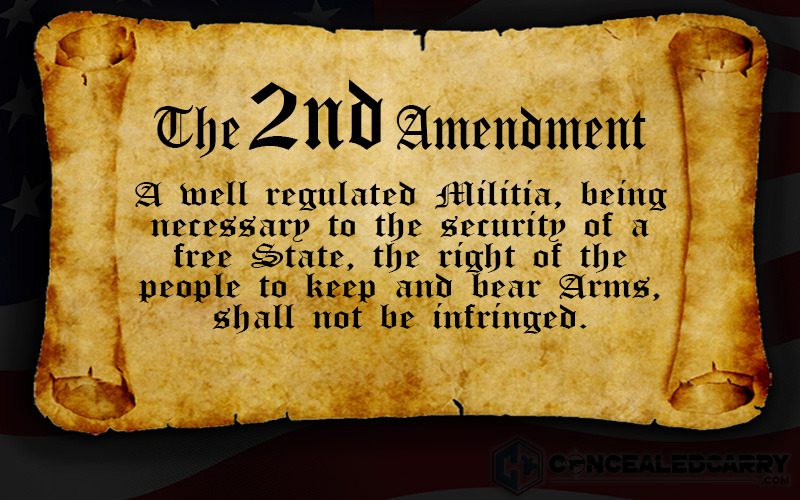
Those 27 words have fueled more than two centuries of political and legal conflict.
To understand why the amendment exists, you have to picture the world the Founders lived in. The United States had just fought a war against the British Crown. Colonists deeply distrusted standing armies controlled by a powerful central government.
The Founders
In England, the king had used professional troops to suppress dissent and enforce his rule. Many Americans feared that a strong federal army could one day be used the same way.
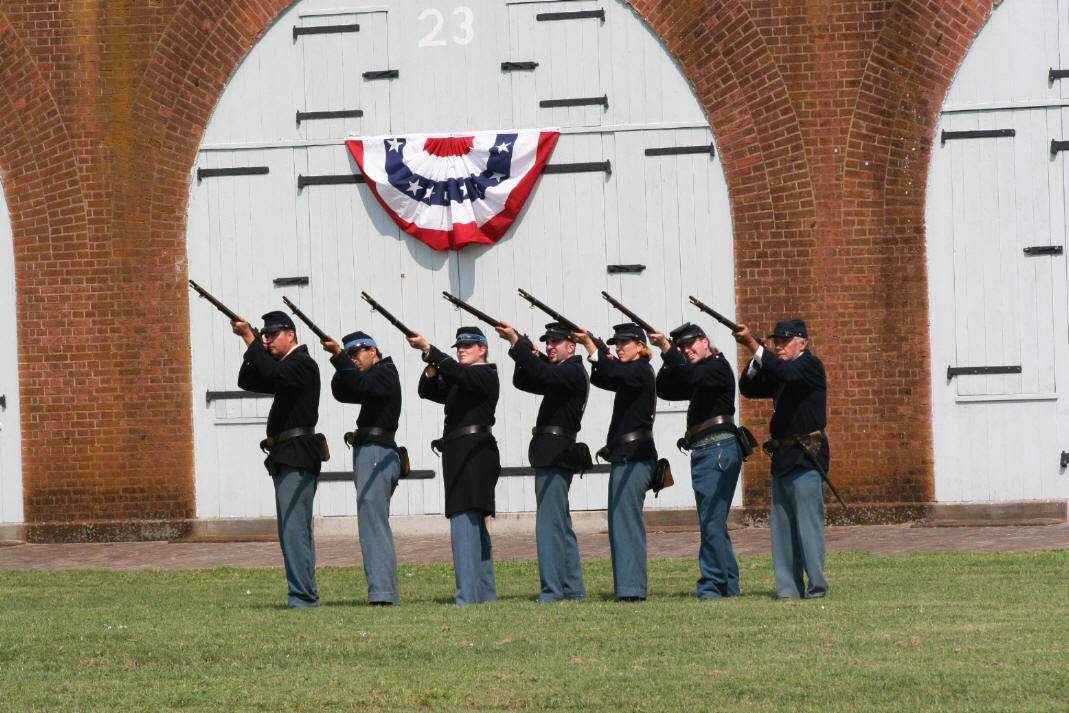
At the time, there was no permanent U.S. military like we know today. Defense relied heavily on local militias. These militias were made up of ordinary men, usually white property-owning men, who were expected to bring their own weapons when called upon.
Militias were controlled by states, not the federal government, and were seen as a safeguard against tyranny. Some people say the militias of our founding fathers still exist. Today, they are called National Guard—groups of armed men [and women] controlled by the state.
This fear of centralized power is key to understanding the Second Amendment. The amendment was written to reassure states that the new federal government would not disarm their militias or leave them defenseless.
The phrase “well regulated Militia” often gets skipped in modern debates, but it mattered a great deal in the 18th century. “Well regulated” did not mean unregulated or lawless. It meant organized, trained, and functioning properly.
Militias had rules, leadership, and obligations. They were not loose collections of armed individuals acting independently.
The word “militia” also had a specific meaning. It referred to a state-organized defense force, not private citizens acting alone. The Founders were thinking about collective security, not personal self-defense in everyday life.
Another phrase that causes confusion is “the right of the people.” This wording appears in other amendments as well, such as the First and Fourth Amendments.
In those cases, it clearly refers to individual rights. This overlap has fueled arguments that the Second Amendment must also protect an individual right to own guns.
For much of American history, however, courts did not treat the Second Amendment as guaranteeing unlimited personal gun ownership. Instead, it was closely tied to militia service and state defense.
The Second Amendment and the Supreme Court
States passed gun laws throughout the 19th and early 20th centuries without courts striking them down as unconstitutional.
That began to change in the late 20th century, as gun rights organizations pushed a new interpretation focused on individual ownership rather than militia service.
The turning point came in 2008 with the Supreme Court case District of Columbia v. Heller. In that case, the Court ruled for the first time that the Second Amendment protects an individual’s right to possess a firearm for lawful purposes, such as self-defense in the home.
This was a major shift. Writing for the majority, Justice Antonin Scalia argued that the amendment protects an individual right, even though it mentions militias.
At the same time, the Court said the right is not unlimited. It allowed for restrictions on certain types of weapons, gun ownership by felons, and regulations on where guns can be carried.
Two years later, the Court expanded this ruling in McDonald v. Chicago, holding that the Second Amendment applies to state and local governments, not just the federal government.
More recently, the Court further strengthened gun rights in New York State Rifle & Pistol Association v. Bruen. That decision limited states’ ability to require permits for carrying concealed weapons in public, emphasizing historical tradition over modern public safety concerns when judging gun laws.
These rulings have reshaped American gun policy and made it harder for governments to pass new regulations.
Still, even under current Supreme Court precedent, the Second Amendment does not mean “anything goes.” The Court has repeatedly said that some regulations are allowed. Background checks, age limits, restrictions on automatic weapons, and bans on gun ownership for certain individuals have all been upheld in various forms.
The Second Amendment in Modern Society
What the amendment does not do is clearly spell out modern answers to modern problems. The Founders lived in a world of single-shot muskets that took time to reload. They could not have imagined high-capacity magazines, assault-style rifles, or mass shootings in crowded public spaces.
That gap between an 18th-century text and 21st-century technology is at the heart of today’s debates.
It is also important to note who the Second Amendment originally applied to. Enslaved people, Indigenous people, women, and many poor Americans were excluded from militia service and gun ownership in practice. The idea that the amendment was written for “everyone” equally is more myth than history.
Discussion and Debate
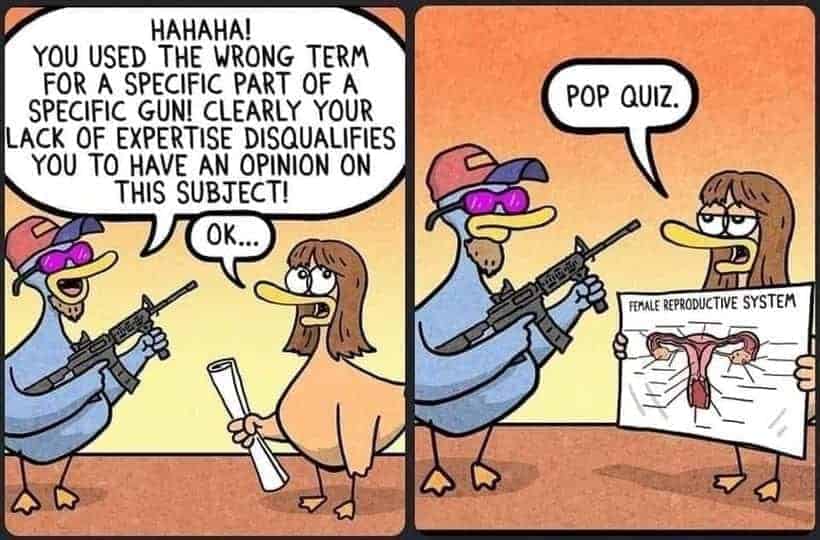
Today, people often talk past each other when discussing the Second Amendment. Some see it as a sacred personal liberty that protects against both crime and government overreach. Others see it as a historically specific rule meant to solve a problem that no longer exists, now causing enormous harm in a heavily armed society.
Both sides often quote the same sentence while emphasizing different words.
Understanding the Second Amendment requires holding two truths at once. It was written for a very different time, with fears and realities that no longer exist. And yet it is still part of the Constitution, interpreted by courts and enforced as law today.
The real debate is not whether the Second Amendment exists, but how it should be applied in a modern democracy that also values public safety, equality, and the right to live without fear.
That debate is ongoing, and it is unlikely to end anytime soon. But it becomes far more productive when grounded in history, plain language, and an honest look at what the amendment was written to do, and what it was not.
Read the companion explainer that looks at the difference between nations in terms of gun rights and laws.