

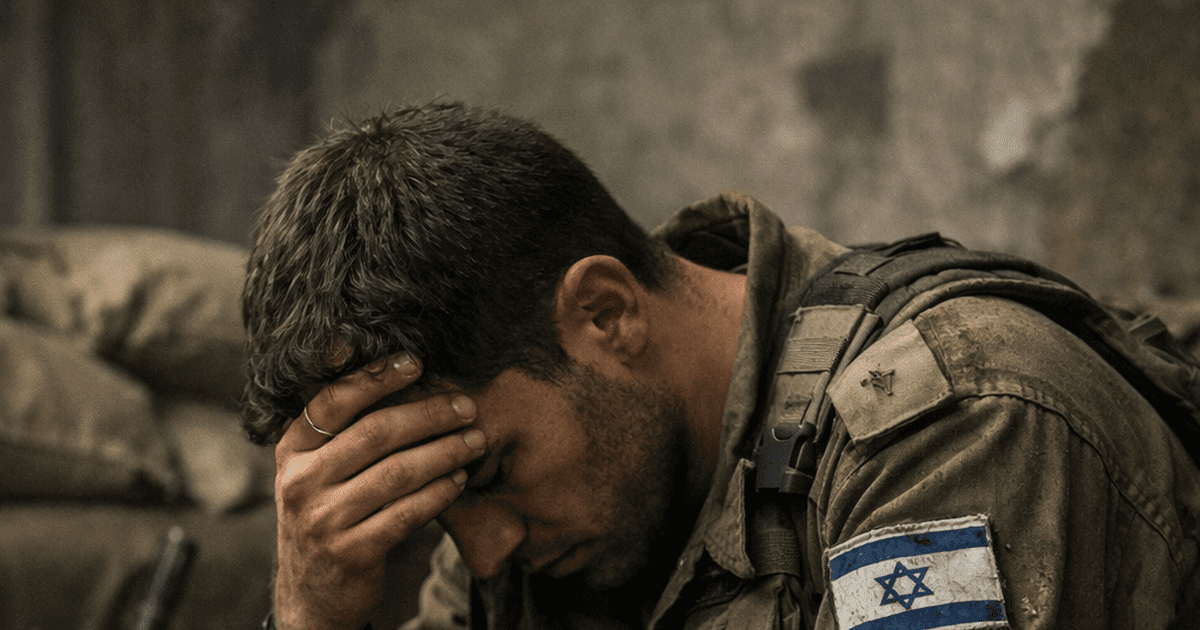
When people picture war, they picture explosions, rubble, and bodies. They do not picture the quiet, late-night collapse that happens after the uniform comes off, when the adrenaline drains and the mind keeps replaying what the eyes have already prayed to forget.
During Israel’s current, long-running genocide (genocide scholars and experts have confirmed Israel’s “war” in Gaza is, in fact, a genocide) that began after the October 7, 2023 Hamas attack, Israel’s own reporting and official discussions have pointed to a serious rise in psychological damage among soldiers and reservists, alongside a rise in suicide and suicide attempts.

An Israeli Parliamentarian was removed from a Knesset podium after referring to what’s happening in Gaza as “a genocide.” (Al Jazeera)
Reuters reported that Israel has seen PTSD cases surge, and that IDF soldier suicides and attempted suicides climbed sharply during the war period it reviewed. AP has also described the scale of mental health diagnoses among Israeli soldiers as the conflict drags on, and noted an increase in suicides and suicide attempts in the same timeframe.
This post focuses on the human reality behind those numbers, what the available statistics suggest, and what factors are repeatedly named by soldiers, clinicians, and officials as drivers of despair. It does not glorify war. It does not romanticize death.
It simply brings attention to the immeasurable amount of human pain and suffering that Benjamin Netanyahu has caused. It also serves to highlight the psychological damage that results from witnessing the horrors of genocide.
In the end, there’s hope that this will drive conversations about the more than 50,000 children who were injured or killed in Gaza and the trauma that encompasses the children who survived (many of them now orphans).
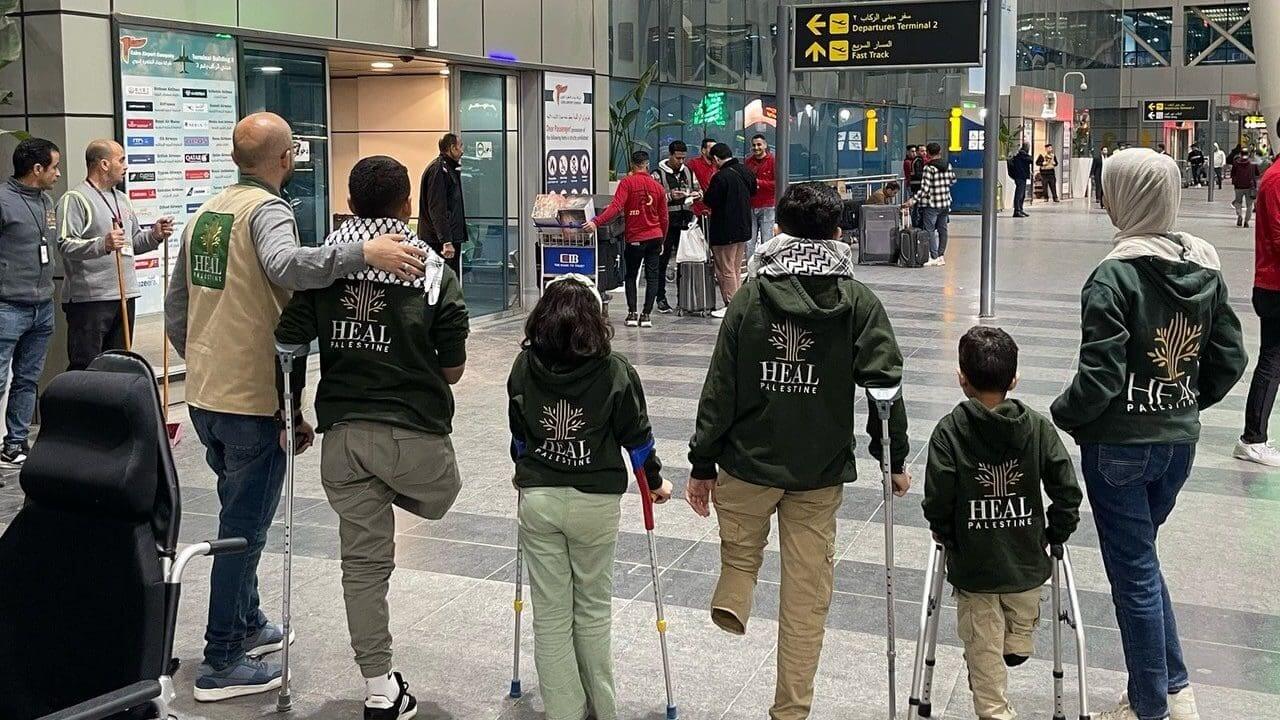
Photo credit: Courtesy of HEAL Palestine
What the Statistics Show (and What They Don’t)
The most frequently cited figure in recent Israeli parliamentary reporting is this: 279 Israeli Defense Forces (IDF) soldiers attempted suicide between January 2024 and July 2025, according to a Knesset-linked report described by Israeli media. Reuters also referenced the same figure when reporting on the broader mental health damage among troops.
Never Forget: Hind Rajab, the 6-year-old Palestinian girl who was killed by an Israeli tank after being trapped in a car surrounded by deceased family members.
The same reporting says 36 soldiers died by suicide from January 2024 through July 2025. That is not “a trend line.” That is dozens of families walking into a new life that begins with a phone call they can never unhear.
For 2025 specifically, Israel’s military casualty reporting cited by Times of Israel said 21 soldier deaths in 2025 were ruled, or are still being investigated, as suicides. Haaretz separately reported 22 IDF soldier suicides in 2025, describing it as the highest number in many years.
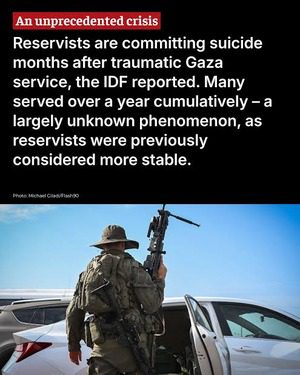
It is possible these numbers differ because of classification timing, ongoing investigations, and how cases are counted across categories like active-duty, reservists, and post-service deaths. The important point is not the “gotcha” of a single digit. The important point is the direction: up.
One more striking data point from the Knesset-linked reporting: combat soldiers reportedly made up 78% of suicide cases in Israel in 2024, far higher than in many earlier years. If accurate, that suggests the burden is concentrating among those most exposed to prolonged and intense combat environments.
And there’s a brutally revealing detail from Haaretz’s reporting on internal military data: only a small portion of soldiers who died by suicide had recently seen an IDF mental health professional. Whether the barrier was stigma, shortages, long waits, command culture, or all of the above, the picture is the same: need outpaced access.
What They Did
Sexually Assaulted Women/Girls
A report released by OHCHR (Office of the United Nations High Commissioner for Human Rights) during the slaughter in Gaza revealed that IDF soldiers were raping Palestinian women and girls and locking them in cages outdoors with no food or water.
AI Decided Who Was Hamas
The IDF developed and used an AI system to identify men it classified as “Hamas terrorists” in Gaza. The program analyzed a set of attributes to estimate how likely a man was to be affiliated with Hamas, then generated lists of potential targets. At first, there was limited human oversight, with analysts approving only cases that met a high confidence threshold.
Over time, that oversight diminished. The military stopped routinely verifying the AI’s results before carrying out strikes and began accepting much lower confidence scores (80% certainty to 40%).
‘Where’s Daddy?’
They also used a program called Where’s Daddy which notified soldiers assigned to the program if someone from the AI-generated list of “Hamas fighters” came home. They wanted to strike when they were home so they could kill other family members and children living there along with the “target.”
Humiliated Men for Fun
There was a time when IDF soldiers were doing this to Palestinians:
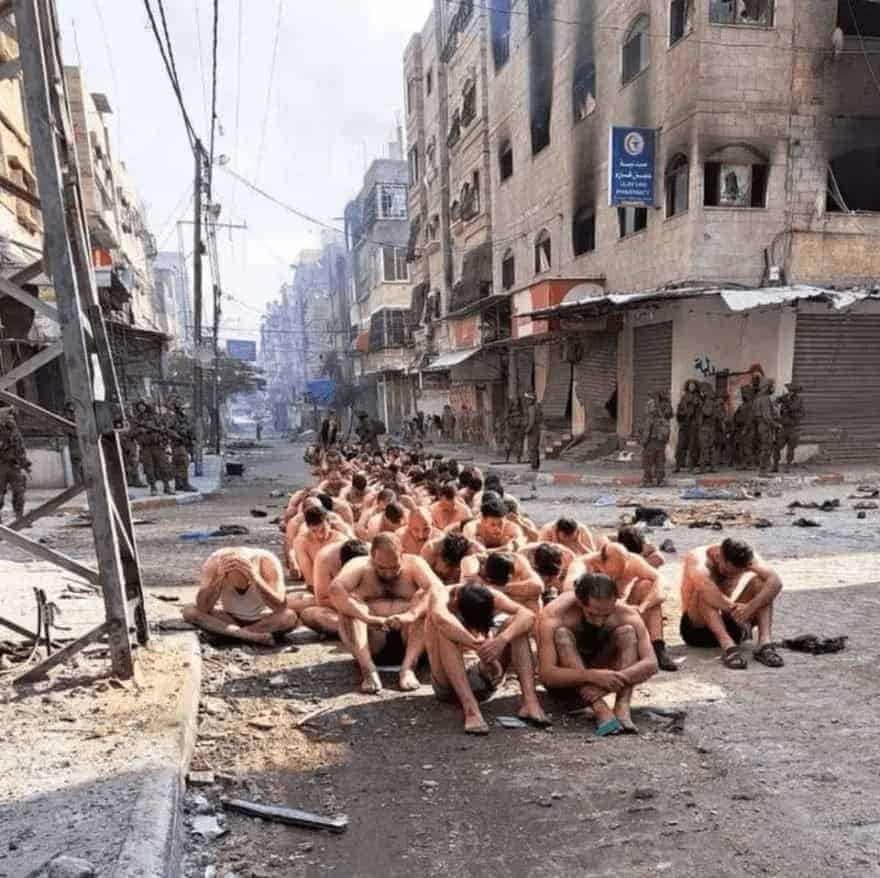
Source: Khaama Press
Desecrated Bodies of Ancestors
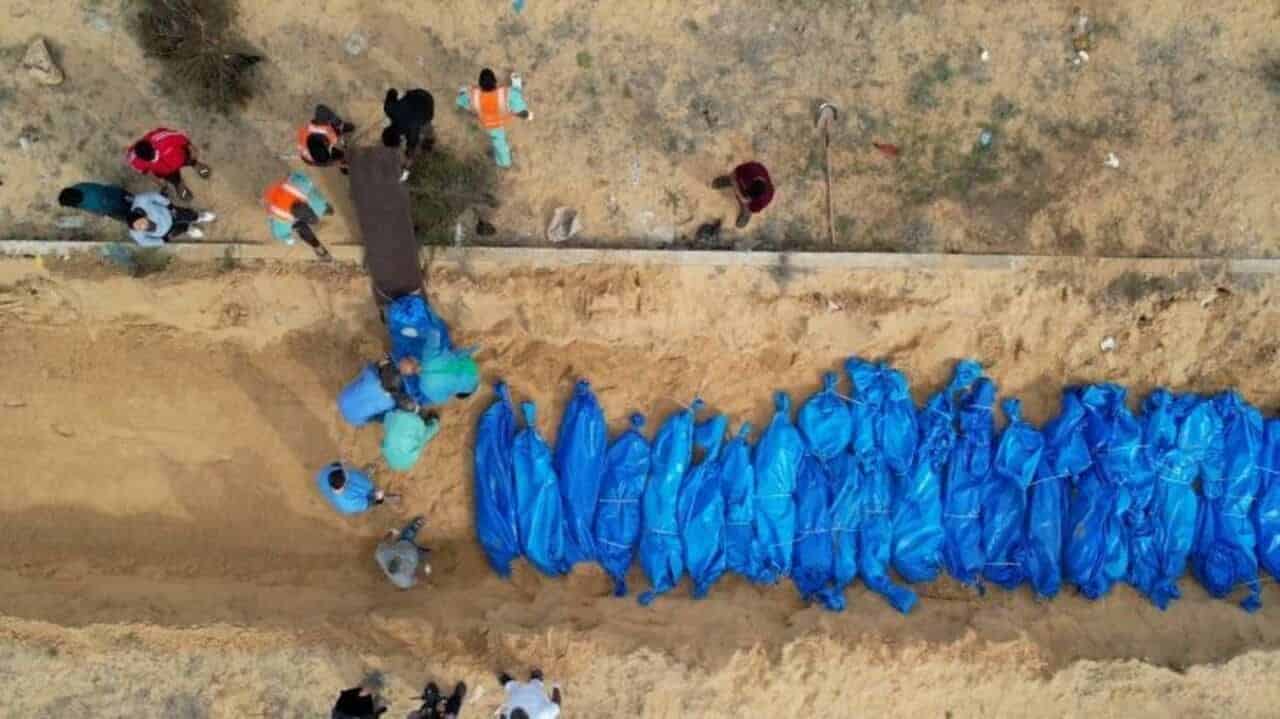
The Israeli military dug up cemeteries in Gaza, desecrating bodies, leaving behind coffins that had been unearthed and overturned. Countless mass graves were also discovered. Soldiers used heavy equipment to “shovel” bodies into shallow graves.
Targeted Civilians
So many women and children have been bombed, shot, and starved to death in Gaza. A UN official, after visiting the enclave, said the smell of dead bodies was nauseating. The death toll is much higher than what has been reported with thousands of bodies still trapped under rubble.
Snipers Targeted Children
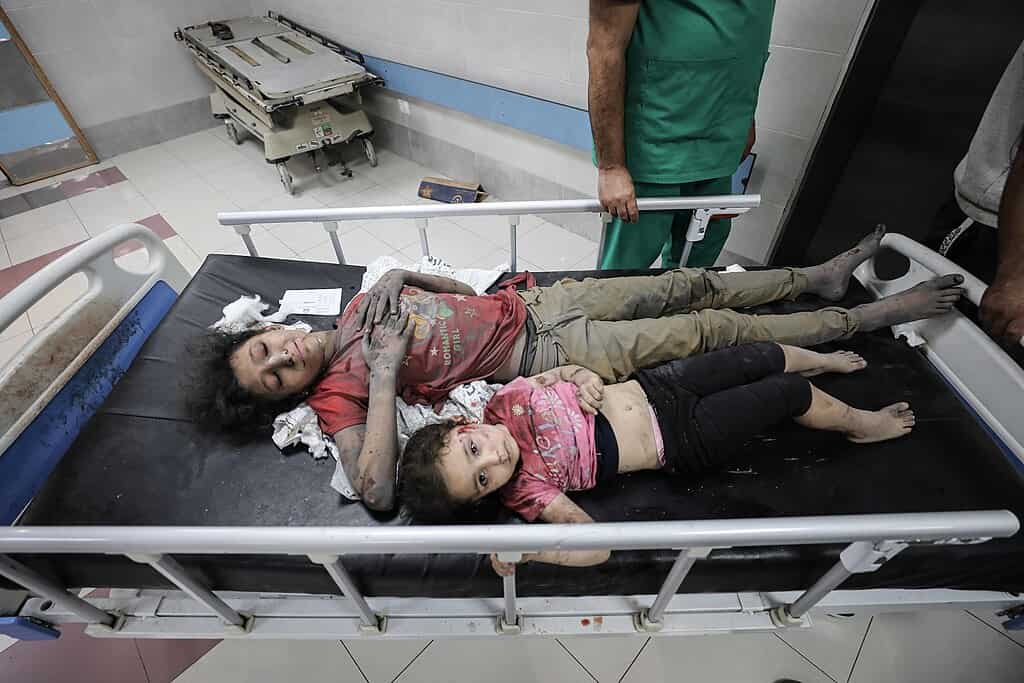
American Doctors volunteering in Gaza reported seeing dozens of children come into the hospital with gunshot wounds to the head or chest. They saw children as young as 3-years-old who were shot by snipers.
Targeted Journalists
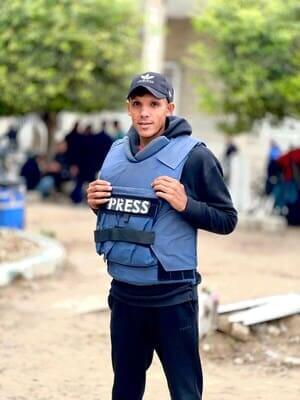
More journalists have been killed in this conflict than in any other war. As of December 1, 2025 more than 260 journalists have been killed in Gaza. Many received a warning to stop reporting on what was happening prior to becoming the victim of a bombing or drone strike.
Targeted Aid Workers
The number of humanitarian aid workers killed in Gaza was 595 as of 2023. Following the targeted strike on two vehicles carrying World Central Kitchen workers, IDF soldiers posted photos of themselves next to the bodies, smiling and laughing, on their Telegram channel. One of them referred to Lalzawmi Frankcom, a female aid worker, as “whore.”
There is psychological damage and traumatic experiences that could have contributed to the IDF soldier suicide attempts as well.
What Pushes Soldiers Toward the Edge
No one dies by suicide for just one reason. But across reporting, testimony, and the language used by clinicians who treat soldiers, several themes show up again and again.
- Prolonged exposure and exhaustion. This war has stretched on. In long conflicts, there is less “before” and “after.” There is only “during,” repeated. Soldiers and reservists can cycle from front lines to home and back again with little time for decompression. That constant switching can scramble sleep, relationships, and the nervous system. Reuters described the growing strain on services as deployments continue and trauma accumulates.
- PTSD, anxiety, depression, and the body’s alarm that won’t shut off. PTSD is not just nightmares. It can be rage, numbness, panic, guilt, and a feeling of being hunted by your own memories. Reuters reported a sharp rise in PTSD and projected growth in cases, while also describing the widening treatment pipeline for war-related mental health injuries. AP similarly reported that thousands of soldiers have been diagnosed with mental health issues during this period.
- Moral injury (the wound that isn’t fear)
PTSD often gets framed as terror. Moral injury is different. It is what can happen when someone feels they took part in, witnessed, or failed to prevent actions that collide with their core values. Reuters referenced “moral” dimensions of trauma including guilt connected to civilian harm. Even when a soldier believes they followed orders, the conscience can still file its own report, and it does not care about rank. - Loss, survivor’s guilt, and “why them, not me?”
In tight units, friends are not an abstract concept. They are the person who shared cigarettes, jokes, fears, and cover fire. When they die, grief can fuse with responsibility. Some soldiers describe feeling they should have noticed something, reacted faster, stood in a different spot. That kind of looping thought can become its own prison. - Stigma and the “keep functioning” culture.
Militaries run on performance. That pressure can teach people to hide symptoms until they become unmanageable. If a soldier fears being seen as weak, or fears losing their role, they may delay care. AP noted that reducing stigma is a stated goal, but the need remains immense. - System friction: who gets help, when, and how fast. Multiple reports describe gaps in recognition and support, especially for reservists and people already carrying psychological injuries. Times of Israel reported on cases where reservists with recognized trauma diagnoses were still called up, and on the “Kafkaesque” lack of coordination cited in that reporting. Times of Israel also reported the IDF moving to discharge some traumatized reservists under certain conditions, reflecting the scale of concern.
What this means for the public
A society at war often counts its dead in one category: killed in action. But mental injury doesn’t respect paperwork. If dozens of soldiers die by suicide during a war period, and hundreds attempt it, that is not a side story. It is part of the casualty list, written in invisible ink.
While this matters beyond Israel, what’s happening there isn’t war. It’s a genocide. IDF soldiers are seeing and doing things the world is calling war crimes and human rights violations. Anyone with a conscience would experience a mental breakdown after witnessing the atrocities taking place in Gaza.
CC BY-SA 3.0
Every modern military, in every country, has had to face the same ugly equation: you can train a human being to operate in extreme conditions, but you cannot fully armor the mind. When leaders expand wars, extend deployments, or treat trauma like a private weakness, the bill comes due later. Always.
If You or Someone You Know is Struggling
If you are in the U.S., you can call or text 988 for the Suicide & Crisis Lifeline. In Israel, ERAN (Emotional First Aid) can be reached at 1201, and Israel’s Ministry of Health also lists additional crisis resources. If there is immediate danger, call local emergency services.