
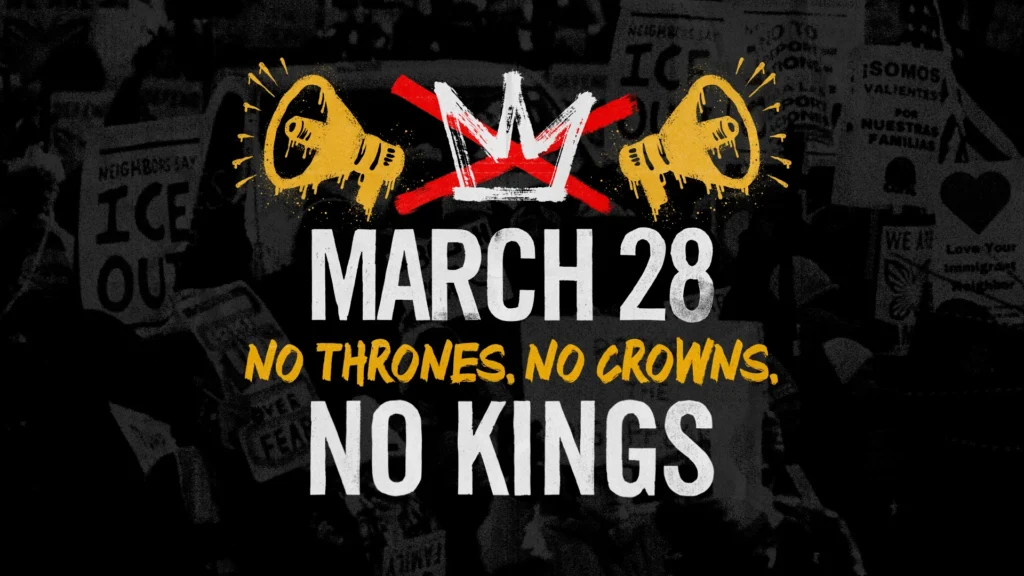
Americans showed up in force on Saturday, March 28, filling streets in every state and multiple countries for the third round of “No Kings” protests — a movement that has become the most sustained mass mobilization against a sitting president in modern American history.
Organizers predicted the day would be the largest single day of nonviolent protest the country has ever seen, with more than 3,300 events registered across all 50 states and demonstrations planned internationally in Mexico, Canada, Australia, Japan, Costa Rica, and across Western Europe.
Happening Now in D.C. Live Feed

The flagship rally landed in St. Paul, Minnesota — a deliberate choice. The Twin Cities have been a flashpoint since January, when federal immigration agents killed two American citizens, Renée Good and Alex Pretti, in separate incidents during a sweeping ICE crackdown called Operation Metro Surge.
Those shootings triggered massive local protests and a general strike, and the wounds are still raw.
Bruce Springsteen headlined the St. Paul rally at the state Capitol, performing his protest single “Streets of Minneapolis.”

Joan Baez, Maggie Rogers, and Jane Fonda also appeared. Sen. Bernie Sanders and Minnesota Gov. Tim Walz addressed the crowd, which organizers called “the one the whole country is watching.”
A Movement Fueled by Cascading Crises
What started last June as a pushback against Trump’s aggressive use of executive power has ballooned into something broader.
The first No Kings protest drew an estimated 5 million people. The second round in October brought out as many as 7 million.
This time, organizers say, the grievances have only multiplied.
The war with Iran — launched under the banner of Operation Epic Fury — has driven gas prices skyward and stoked fears of a ground invasion.
ICE enforcement operations have escalated in cities and at airports, made worse by a Department of Homeland Security shutdown that began in mid-February and has left TSA understaffed and airport security lines stretching for hours.
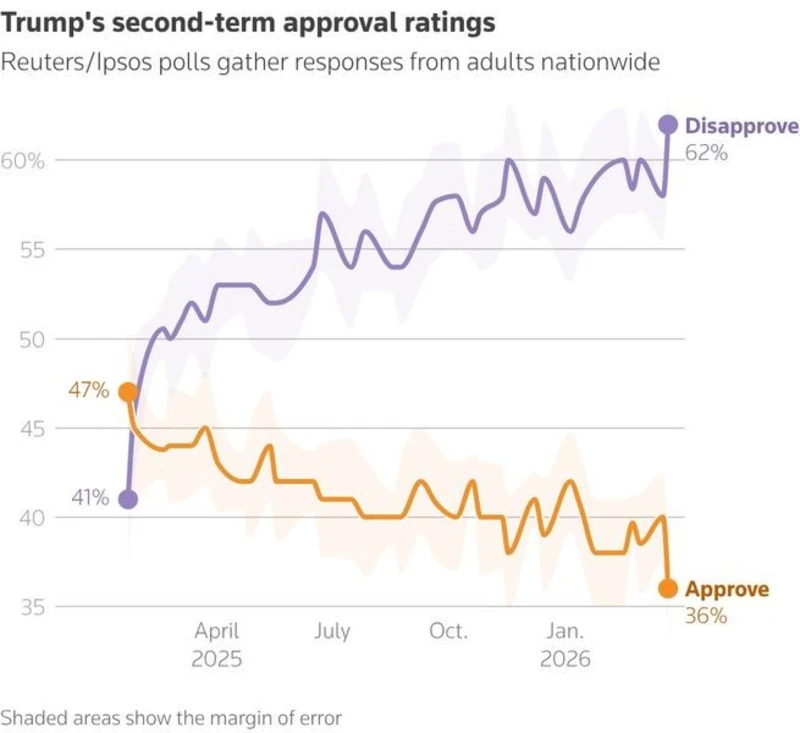
Trump’s approval ratings have cratered to their lowest point since he returned to office.
From coast to coast, demonstrators made it clear they weren’t showing up about just one issue. In Kansas City, a military mother named Carina Kagan drove hours from the Lake of the Ozarks to protest the Iran war, calling it “a useless, vain war by a demented old man.”
In New York, actor Robert De Niro and Attorney General Letitia James rallied alongside protesters in Manhattan.
In Chicago, Maria Isabel Trejo attended her third No Kings action, holding a sign that read “impeach the felon” and asking why a government that can fund a war can’t support its own citizens.
Red States, Blue States, and Everything in Between
One of the most striking elements of the movement’s growth is its geographic reach. Organizers told reporters that more than half of the registered events for Saturday were in Republican-leaning or battleground areas.
Lisa Gilbert, co-president of Public Citizen, pushed back on any framing of the protests as partisan. Defending democratic norms, she said, shouldn’t be controversial — it’s patriotic.
In Southern Pines, North Carolina, more than 3,000 people marched along a stretch of road in a deep-red district.
In Palm Beach Gardens, Florida, demonstrators lined PGA Boulevard just four miles from Mar-a-Lago, where Trump was spending the weekend.
An 81-year-old protester in Manhattan named Ginny, who first marched during the Vietnam War era, said she’s never seen the country in worse shape.
People dressed as characters from “The Handmaid’s Tale” appeared at rallies in Fort Myers, San Francisco, and Fayetteville.
A woman in Columbus, Georgia, who grew up under a dictatorship abroad told a reporter she recognized the warning signs. Take our quiz to find out how much democracy has been eroded in your country.
The White House Shrugs. The People Keep Coming.
The White House dismissed the day’s events as “Trump Derangement Therapy Sessions.”
Spokesperson Abigail Jackson claimed the only people who cared about the protests were journalists paid to cover them.
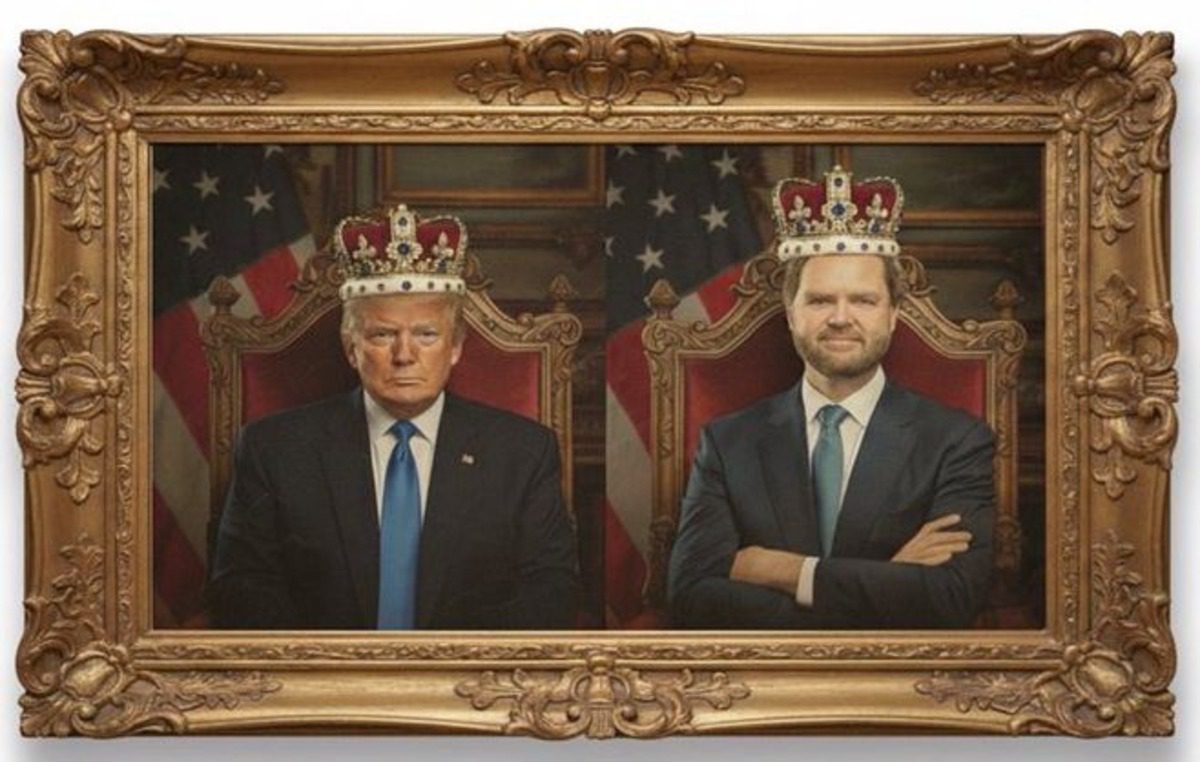
Trump has previously called the No Kings movement “a joke” and said the demonstrators are “not representative of this country.” He has also leaned into the royal comparison his critics mock — at one point posting an AI-generated video of himself wearing a crown.
But the people showing up tell a different story. This is not a flash in the pan. It’s a movement with infrastructure — backed by organizations including Indivisible, MoveOn, the ACLU, Public Citizen, and the National Action Network — and it keeps getting bigger.
Third Act, a group for activists over 60, has made intergenerational solidarity a key theme. Visibility Brigade, a suburban protest network, has organized around the idea that fascism thrives when people are isolated. Their answer: show up, connect, and refuse to look away.
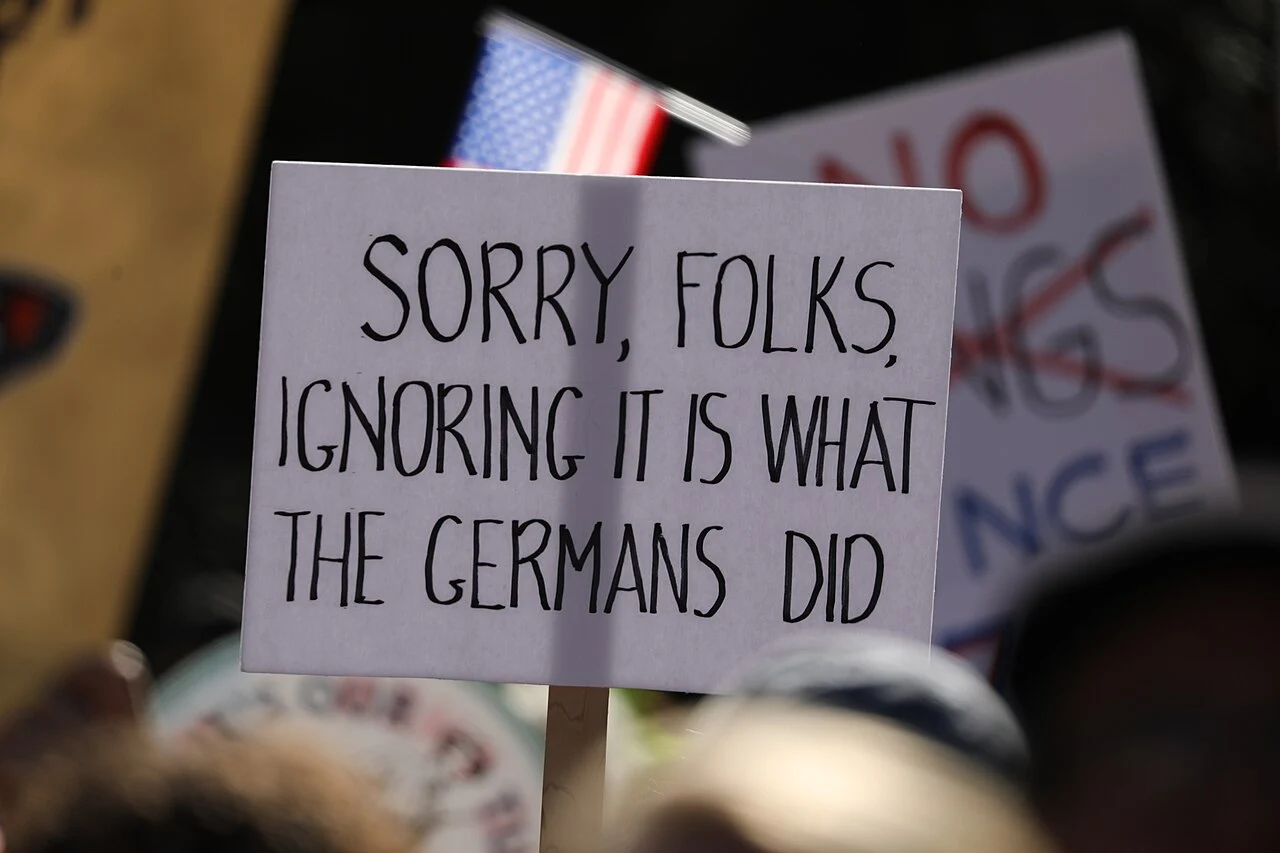
As one protester’s sign in North Carolina put it: “Fight truth decay. No more lies or democracy dies.”
Whether the final attendance numbers match or surpass October’s estimated 7 million, one thing is already clear — this movement isn’t going anywhere.
And neither are the people fueling it. 🪧✊🏼 💙