


The latest climate monitoring from the World Meteorological Organization (WMO) confirms that our planet is warming at an extraordinary pace, with the hottest years on record being the last ten years, and 2025 continuing this trend.
These findings — underscored by record global heat, rising greenhouse gas concentrations, and unprecedented climatic extremes — reinforce that climate change is no longer a distant risk but a present reality shaping economies, ecosystems, and communities worldwide.
Hottest Years on Record
According to the WMO’s most recent State of the Global Climate update, global near-surface temperatures for January through August 2025 were about 1.42°C above pre-industrial levels (based on the 1850–1900 baseline). That places 2025 on track to be among the three hottest years on record.
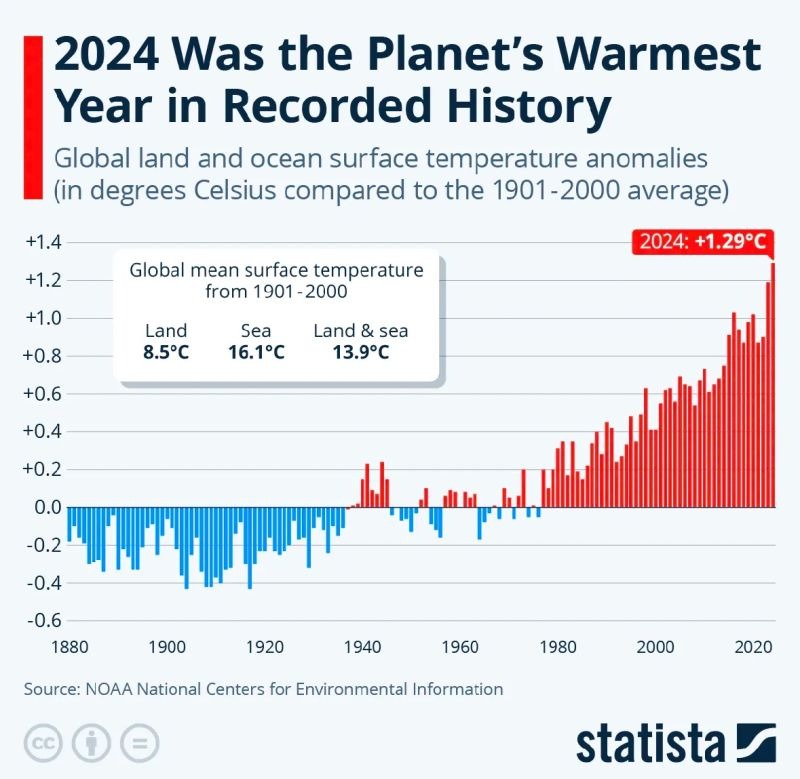
What’s truly dramatic is not just the individual years of heat, but the pattern: the eleven years from 2015 through 2025 are now the warmest in the entire 176-year observational record, illustrating that extreme warming isn’t a short-term anomaly — it’s a long-term global transformation.
Scientists interpret these sustained temperature highs as a direct consequence of steadily rising greenhouse gas emissions, primarily carbon dioxide (CO₂), methane (CH₄), and nitrous oxide (N₂O), all of which trap heat in the atmosphere and drive global warming.
The Heat Behind the Headlines
The warming trend carries real world impacts that stretch far beyond global averages:
- Polar Ice and Sea Levels: Arctic sea ice reached record low extents after winter freeze in 2025, and Antarctic sea ice has stayed well below normal. Sea levels continue their long-term rise, endangering coastal communities and ecosystems.
- Greenhouse Gases: Atmospheric CO₂ concentrations hit record highs, further reducing the planet’s capacity to absorb emissions and exacerbating warming.
- Extreme Weather: Across 2024 and 2025, heatwaves, droughts, floods, cyclones, and wildfires intensified in frequency and severity. These events strain infrastructure, disrupt food systems, and increase displacement and economic loss.
All these trends underscore a core scientific reality: even if a temporary shift in ocean cycles (like La Niña) dials down immediate heat slightly, the long-term warming trend driven by human influence persists.
Predictions and Probabilities
Climate projections are sobering but clarifying:
- There’s roughly an 80% chance that at least one year through 2029 will exceed 2024’s record warmth, and an 86% chance that one of those years will be more than 1.5°C above pre-industrial levels.
- A 70% chance exists that the five-year average warming for 2025–2029 will exceed 1.5°C, a level closely tied to severe climate impacts.
These forecasts signal that without deeper emissions cuts and robust adaptation strategies, heat extremes and climate disruptions will not only continue but amplify.
Why This Matters for Us Now
The implications of this warming streak are global:
- Economies and Livelihoods: Extreme weather costs economies billions in damage, disrupts supply chains, and impacts labor productivity — especially in heat-vulnerable sectors.
- Health and Safety: Heatwaves and air pollution increase risks for vulnerable populations, particularly the elderly and outdoor workers.
- Ecosystems: Coral reefs, forests, and polar ecosystems face rapid decline as temperatures continue to climb.
Yet there are reasons for optimism. The clarity of data from the WMO and UN highlights where action works — from renewable energy expansions to urban heat-reduction planning — and fuels innovation in climate science, technology, and policy.
Turning the Tide: Solutions and Momentum
While global warming poses a major challenge, it also galvanizes innovation. From accelerating transitions to clean energy to smarter infrastructure design and community-based adaptation, solutions are emerging that pay dividends for health, equity, and economic resilience.
In 2025: The year the U.S. gave up on climate, and the world gave up on us, the author discusses how China has now surpassed the U.S. in renewable energy projects.
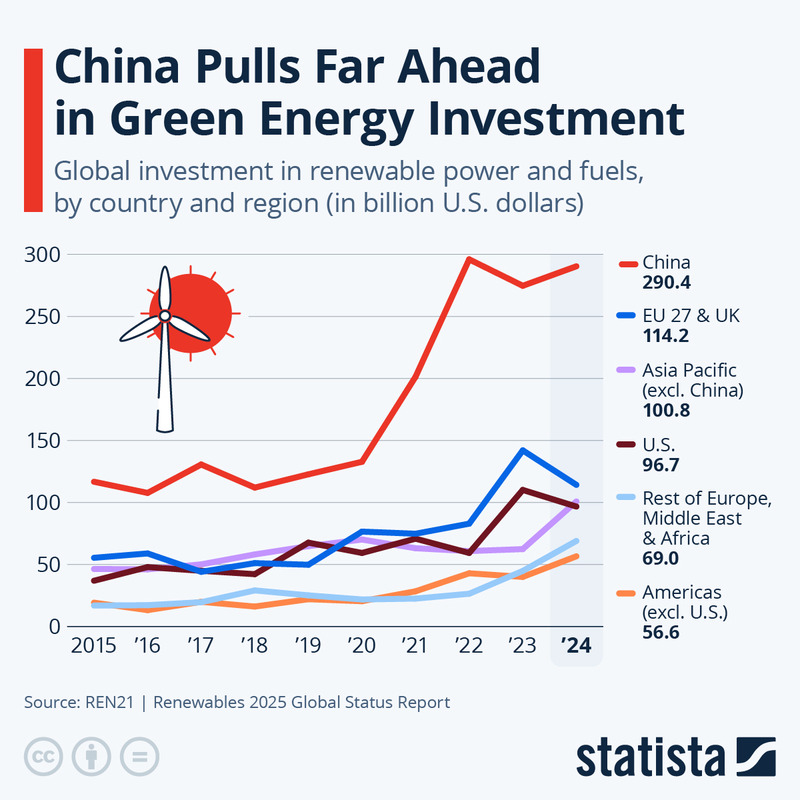
The WMO report’s urgency is a call to action — not a eulogy for a stable climate. It lays out the stakes and frames the pathways forward. By investing in early warning systems, sustainable energy futures, and international cooperation, we can bend the curve of warming and protect future generations.