


If you spend any time online, you’ve seen it: climate change called a “hoax,” rising temperatures dismissed as normal, scientists accused of exaggerating.
Misinformation about climate change spreads faster than the facts, amplified by social media algorithms and echoed in political speeches.
But climate change isn’t a partisan slogan or a culture war talking point. It is one of the most studied scientific issues in modern history.
Thousands of researchers across the globe have reached the same conclusion: the planet is warming, and human activity is the primary cause.
So why do the myths persist?
Because confusion delays action. And delay benefits those who profit from the status quo.
In this article, we’ll break down five of the most common myths about climate change, examine what the scientific evidence actually says, and explain why getting this right matters to every one of us.
Climate change affects the air we breathe, the water we drink, our food supply, our health, and the stability of ecosystems worldwide.
Understanding the facts isn’t just about winning an argument online. It’s about making informed decisions about our future.
The Scientific Consensus Is Clear
Climate change is not a fringe theory or a debated hypothesis. It is one of the most thoroughly studied scientific issues in modern history.
Multiple independent studies analyzing thousands of peer-reviewed papers have reached the same conclusion: the vast majority of climate scientists agree that Earth is warming and that human activities are the primary cause.
The Intergovernmental Panel on Climate Change reports that roughly 97 percent of climate scientists attribute global warming to human actions such as burning fossil fuels, deforestation, and industrial emissions.
That consensus matters. In science, agreement at that level does not happen casually. It reflects decades of data collection, atmospheric measurements, satellite observations, ice core analysis, and climate modeling.
And the latest data shows the situation is accelerating.
Recent United Nations climate reports confirm that global temperatures continue to rise, with 2024 recorded as the hottest year on record.
Current national climate pledges are not enough to keep warming below the 1.5°C target established in the Paris Agreement. In plain terms: the world is not cutting greenhouse gas emissions fast enough.
The consequences are no longer theoretical. Rising temperatures are linked to more intense heatwaves, stronger storms, prolonged droughts, and heavier rainfall events. These changes affect food systems, public health, infrastructure, and ecosystems around the globe.
The scientific message is consistent and urgent: reducing greenhouse gas emissions quickly and across every sector of society is essential to limit the most dangerous impacts.
Rising Global Temperatures

Global temperature records tella constant story. Earth’s average surface temperature has risen significantly over the past century, with the most rapid warming occurring in recent decades.
In fact, the past ten years have been the hottest ever recorded in modern measurements.
This warming trend isn’t random. It closely tracks the rise in greenhouse gases, especially carbon dioxide, released by burning fossil fuels, deforestation, and industrial activity. These gases trap heat in the atmosphere, strengthening what is known as the greenhouse effect.
The Trump administration just announced plans to reverse the Obama-era decision to regulate emissions based on scientific findings that greenhouse gases are dangerous to humans.
They say carbon dioxide is harmless because humans exhale it and plants use it for photosynthesis. That framing leaves out important context.
Carbon dioxide is a natural part of Earth’s atmosphere. The problem is not the fact that it exists. The problem is concentration.
Since the Industrial Revolution, atmospheric carbon dioxide levels have increased by 50 percent. That additional buildup intensifies heat retention, throwing the planet’s climate system off balance.
Even substances that are harmless in small amounts can become dangerous at high concentrations.
Water sustains life, but too much can drown. Oxygen is essential, but in extreme concentrations it becomes toxic. The same principle applies to carbon dioxide in the atmosphere.
Scientific measurements from weather stations, satellites, and ocean monitoring systems all confirm the same trend: temperatures are rising, and increased greenhouse gas emissions are the primary driver.
Extreme Weather Events Caused by Climate Change
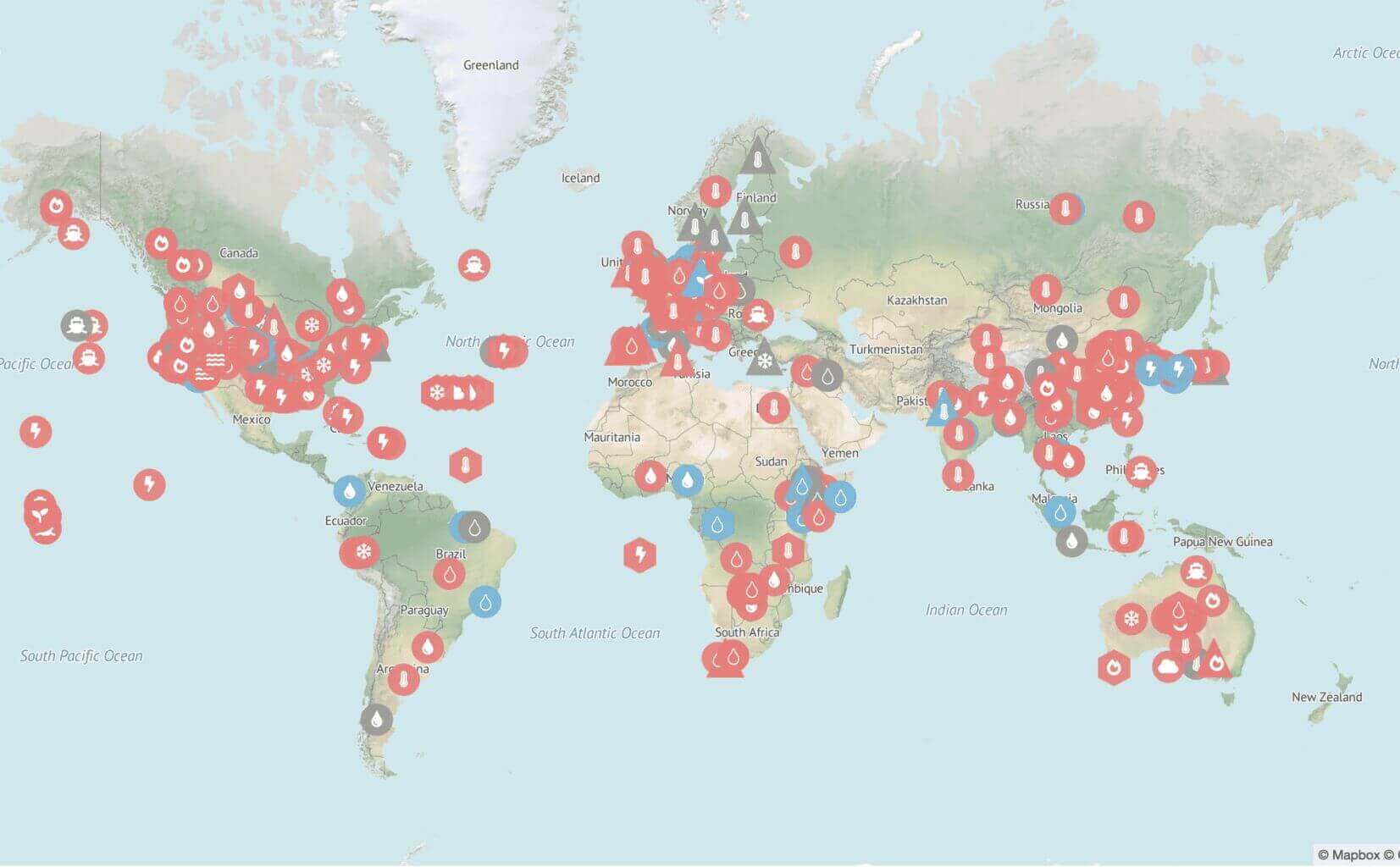
Source: carbonbrief.org
Climate change is not just about rising temperatures on a chart. It is reshaping weather patterns around the world.
Scientific research shows that heatwaves are lasting longer and reaching higher temperatures. Hurricanes are carrying more rainfall. Droughts are becoming more severe in some regions, while others are seeing heavier downpours and flooding.
A warmer atmosphere holds more moisture and more energy, which can intensify storms and disrupt long-standing climate patterns.
To understand why this is happening, we need to understand the greenhouse effect.
The Greenhouse Effect
The greenhouse effect is a natural process that makes life on Earth possible. Certain gases in the atmosphere trap heat from the sun, keeping the planet warm enough to sustain ecosystems and human life.
The problem is not the existence of the greenhouse effect. The problem is that human activities have strengthened it.
Since the Industrial Revolution, burning coal, oil, and natural gas has released massive amounts of carbon dioxide and other greenhouse gases into the atmosphere.
These additional gases trap more heat, creating an enhanced greenhouse effect.
That added heat does not simply disappear. It alters ocean temperatures, shifts jet streams, melts ice, and fuels more intense weather events.
In short, extreme weather is not random bad luck. It is caused by a warmer planet.
Understanding how greenhouse gases work helps us see the connection between daily human activities and global climate shifts.
Understanding Greenhouse Gases
In order to debunk some of the common myths about climate change, we need to have a clear understanding of what greenhouse gases are and how they contribute to global warming.

What Are They?
Greenhouse gases are heat-trapping gases in Earth’s atmosphere. They act like insulation, allowing sunlight in while slowing the escape of heat back into space. Without them, the planet would be too cold to support life.
The issue is not their existence. It is the rapid increase in their concentration due to human activity.
Main Greenhouse Gases
The main greenhouse gases driving modern climate change include:
Carbon Dioxide (CO2)
Carbon dioxide is the largest contributor to human-caused warming, responsible for roughly three-quarters of global greenhouse gas emissions. It is released primarily through burning coal, oil, and natural gas, as well as through deforestation.
Methane (CH4)
Methane is far more potent than carbon dioxide at trapping heat in the short term. It is released during fossil fuel extraction, livestock digestion (cow farts), agricultural practices, and the decomposition of organic waste in landfills.

Nitrous Oxide (N2O)
Nitrous oxide is produced by agricultural fertilizers, industrial processes, and combustion. Though less abundant than carbon dioxide, it is significantly more powerful at trapping heat.
Fluorinated Gases
These are synthetic gases used in refrigeration, air conditioning, and electronics manufacturing. They are present in smaller quantities but have a very high warming potential.
Greenhouse gases make life possible. But when their concentration rises rapidly, the climate system shifts. That imbalance is what drives global warming.
Now, let’s separate fact from fiction by debunking 5 common myths about climate change.
Myth #1: Climate Change is a Natural Cycle
The Claim
“Earth’s climate has always changed. There have been ice ages and warming periods long before humans burned fossil fuels. So today’s warming must be part of a natural cycle.”
The Reality
Yes, Earth’s climate has changed naturally in the past. But the speed and cause of today’s warming are different.
Over hundreds of thousands of years, natural shifts in Earth’s orbit, volcanic activity, and changes in solar energy have influenced global temperatures.
Scientists know this because they study ice cores, tree rings, ocean sediments, and other climate records that act like time capsules of Earth’s past.
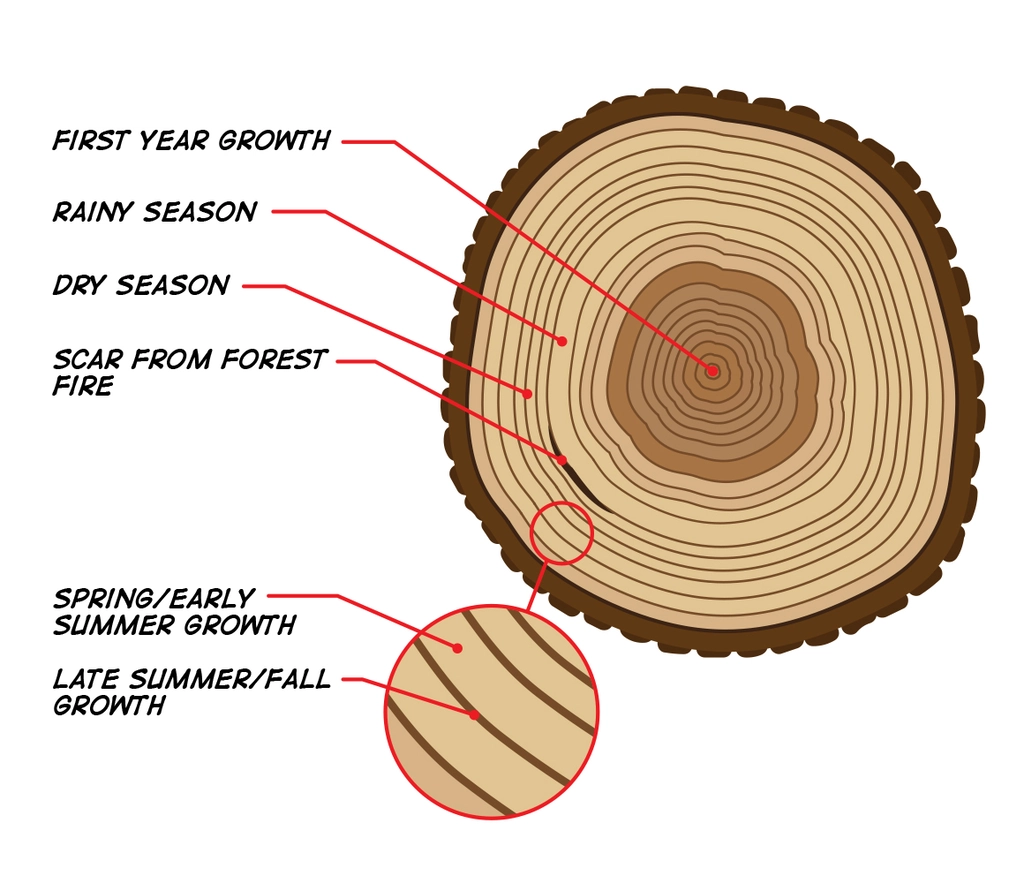
Those records show something important: past climate shifts happened slowly, often over thousands of years.
Today’s warming is happening in decades.
Since the late 19th century, global temperatures have risen rapidly, closely tracking the dramatic rise in greenhouse gases from industrial activity.
Carbon dioxide levels are now higher than at any point in at least 800,000 years, based on ice core data.
Natural factors alone cannot explain this spike. Solar activity has not increased in a way that matches current warming. Volcanic eruptions actually tend to cool the planet temporarily. Climate models that exclude human greenhouse gas emissions fail to reproduce the warming observed over the past century.

When human emissions are included, the models match reality.
That is why major scientific organizations worldwide conclude that human activity is the primary driver of modern climate change.
Why This Myth Persists
The “natural cycle” argument sounds reasonable because it contains a grain of truth. Climate has changed before.
But acknowledging natural variation does not mean ignoring new evidence. The current warming trend stands out because of its speed, scale, and direct connection to industrial emissions.
Key Takeaway
Climate change has natural influences, but the rapid warming happening today is overwhelmingly driven by human activity.
Myth #2: Scientists Are Divided About Climate Change
The Claim
“There is still major disagreement among scientists about whether climate change is real or caused by humans.”
The Reality
There is overwhelming agreement within the scientific community.
Multiple independent studies have examined thousands of peer-reviewed scientific papers and found that the vast majority of climate scientists agree that the planet is warming and that human activity is the primary cause.
Major scientific institutions around the world, including NASA, the National Oceanic and Atmospheric Administration, and the Intergovernmental Panel on Climate Change, affirm this conclusion.
In science, consensus does not mean everyone agrees on every detail. Researchers continue to study the pace of warming, regional impacts, and feedback loops.
But on the central question, the agreement is clear: human-produced greenhouse gases are driving modern climate change.
Why This Myth Persists
Public perception often lags behind scientific reality. Media coverage sometimes presents fringe voices as equal to mainstream research in the name of “balance,” creating the false impression of a divided field.
“Climate change is an urgent issue that requires immediate action.”
Political messaging and fossil fuel interests have also contributed to doubt.
But in the scientific literature, the debate about whether humans are causing climate change is effectively settled.
Key Takeaway
The scientific community is not split on whether climate change is real or human-caused. The evidence has been reviewed, tested, and confirmed repeatedly.
Myth #3: Climate Change is a Hoax Created by the Mainstream Media
The Claim
Climate change is exaggerated or fabricated by the mainstream media for political or financial gain.
The Reality
Climate science does not originate in television studios or newsrooms. It originates in research institutions, universities, satellite systems, ocean buoys, atmospheric monitoring stations, and decades of peer-reviewed study.
Media outlets report on climate findings, but they do not create the underlying data.
Global temperature measurements are collected independently by multiple scientific agencies around the world.
Atmospheric carbon dioxide levels are measured continuously at monitoring sites such as Mauna Loa Observatory. Ocean heat content, ice sheet mass, and sea level rise are tracked using satellite technology and direct observation.
These data sets are publicly available and analyzed by scientists across countries and political systems. The consistency of the findings across independent institutions strengthens their credibility.
How Scientific Review Works
Scientific research does not become accepted because it is popular. It becomes accepted because it withstands scrutiny.

(Reconrabbit CC BY 4.0)
Before publication, climate studies undergo peer review, meaning other experts in the field examine the methods, data, and conclusions. If flaws are found, the research must be revised or rejected. This process does not guarantee perfection, but it is designed to filter out weak or unsupported claims.
The idea that a global network of researchers across competing nations, institutions, and political systems are coordinating a fabricated narrative would require a level of secrecy and cooperation that defies reality.
Resist Hate (similar to the 2020 election rigging conspiracy)
Why This Myth Persists
Claims of a “hoax” often gain traction because they appeal to distrust in institutions. In polarized political environments, scientific findings can become framed as partisan attacks rather than evidence-based conclusions.
But evidence is not partisan. Atmospheric chemistry does not vote. Satellite measurements do not belong to a political party.
Key Takeaway
Climate change is supported by decades of independent research, global data collection, and rigorous scientific review. Media coverage may vary, but the underlying science is not manufactured by news organizations.
Myth #4: Extreme Weather Events are Just Part of Life and Have Always Occurred
The Claim
“Storms, floods, heatwaves, and droughts have always happened. Today’s disasters are no different.”
The Reality
Weather has always varied. Climate change does not create hurricanes or heatwaves out of nothing. What it does is intensify them.

Climate refers to long-term patterns. Weather refers to short-term events.
A single storm cannot “prove” climate change. But long-term data can show trends in frequency, intensity, and conditions that make certain events more destructive.
As global temperatures rise, the atmosphere holds more moisture and more energy.
Warmer ocean waters can strengthen hurricanes. Higher temperatures make heatwaves more severe and longer-lasting. Drier conditions in some regions increase wildfire risk. Heavier rainfall events become more likely in others.
Recent hurricane seasons, record-breaking heatwaves, and catastrophic flooding events fit patterns that climate models have projected for decades.
Scientists use a method called “attribution science” to analyze how much more likely or intense a specific event became because of human-driven warming.

In many cases, studies show that climate change significantly increased the probability or severity of recent disasters.
For example, a study published in the journal Nature found that it made the 2018 heatwave in northern Europe, which caused numerous fatalities, up to five times more likely to happen.
Natural climate cycles like El Niño can influence weather in the short term. But they operate within the broader warming trend.
They do not explain the steady rise in global temperatures or the measurable increase in extreme heat events worldwide.
The difference is not that storms suddenly exist. It is that the baseline has shifted.
Why This Matters
When extreme weather intensifies, communities face higher costs, greater infrastructure damage, agricultural losses, and increased risks to human life.
Understanding that climate change raises the odds of severe events helps policymakers and communities plan, adapt, and reduce risk.
Key Takeaway
Extreme weather is not new. But scientific evidence shows that human-caused warming is increasing the intensity and likelihood of many types of extreme events.
Myth #5: Urban Heat Island Effect is Responsible for Rising Temperatures
The Claim
“Global warming is exaggerated because temperature readings are taken in cities, which are naturally hotter because of the buildings, pavement, and infrastructure. The rise in temperatures is just the “urban heat island” effect.”
The Reality
The Urban Heat Island (UHI) effect is real. Cities tend to be warmer than nearby rural areas because asphalt, concrete, and buildings absorb and retain heat.
Less vegetation and high energy use can also contribute to higher local temperatures.
But UHI does not explain global warming.
Climate scientists account for urban heat effects when analyzing temperature records.
Global temperature data comes from thousands of monitoring stations across rural and urban areas, as well as from ocean buoys, weather balloons, and satellites.
When researchers compare rural-only data to urban data, the warming trend remains the same.
In other words, even when you remove cities from the equation, the planet is still warming.
The strongest evidence also comes from places untouched by urban development. Arctic regions, remote islands, and open oceans have all recorded significant warming.
Glaciers are melting. Sea ice is declining. Oceans are absorbing more heat. These changes cannot be explained by city pavement.

Why This Myth Persists
The urban heat island argument appeals to common sense. People know cities feel hotter. But global climate change is measured across continents, oceans, and polar regions, not just city blocks.
Key Takeaway
Urban heat islands affect local temperatures. They do not account for the global rise in temperature observed across rural areas, oceans, and remote regions worldwide.
Conclusion: Facts Matter More Than Noise
Climate change is not a rumor. It is not a partisan slogan. It is not a media invention, a temperature glitch, or a misunderstanding of natural cycles.
It is a measurable, observable shift in the planet’s climate system, documented across continents, oceans, and decades of independent research.
The myths about climate change often contain fragments of truth.
The climate has changed before. Cities are warmer than rural areas. Weather has always varied.
But those fragments are used to blur the bigger picture. When looked at in full context, the scientific evidence is clear: the planet is warming rapidly, and human activity is the primary driver.
Misinformation delays action. Confusion creates paralysis. And paralysis benefits those who profit from maintaining the status quo.
Understanding the facts does not require blind trust in headlines or politicians. It requires looking at the data, the methods, and the global body of research that has been tested and retested over time.
Satellite measurements, ocean heat content, atmospheric chemistry, glacier melt, and long-term temperature records all point in the same direction.
The conversation about climate change is no longer about whether it is happening. The real debate is about how we respond.
Every major scientific body in the world agrees that reducing greenhouse gas emissions can slow future warming.
The scale and speed of action will determine how severe the impacts become for future generations.
Separating myth from reality is not about winning arguments online. It is about making informed decisions in a world that is already changing.
Facts are not political.
Physics is not partisan.
And the atmosphere does not respond to opinion polls.
The future will be shaped by what we choose to accept and what we choose to ignore.