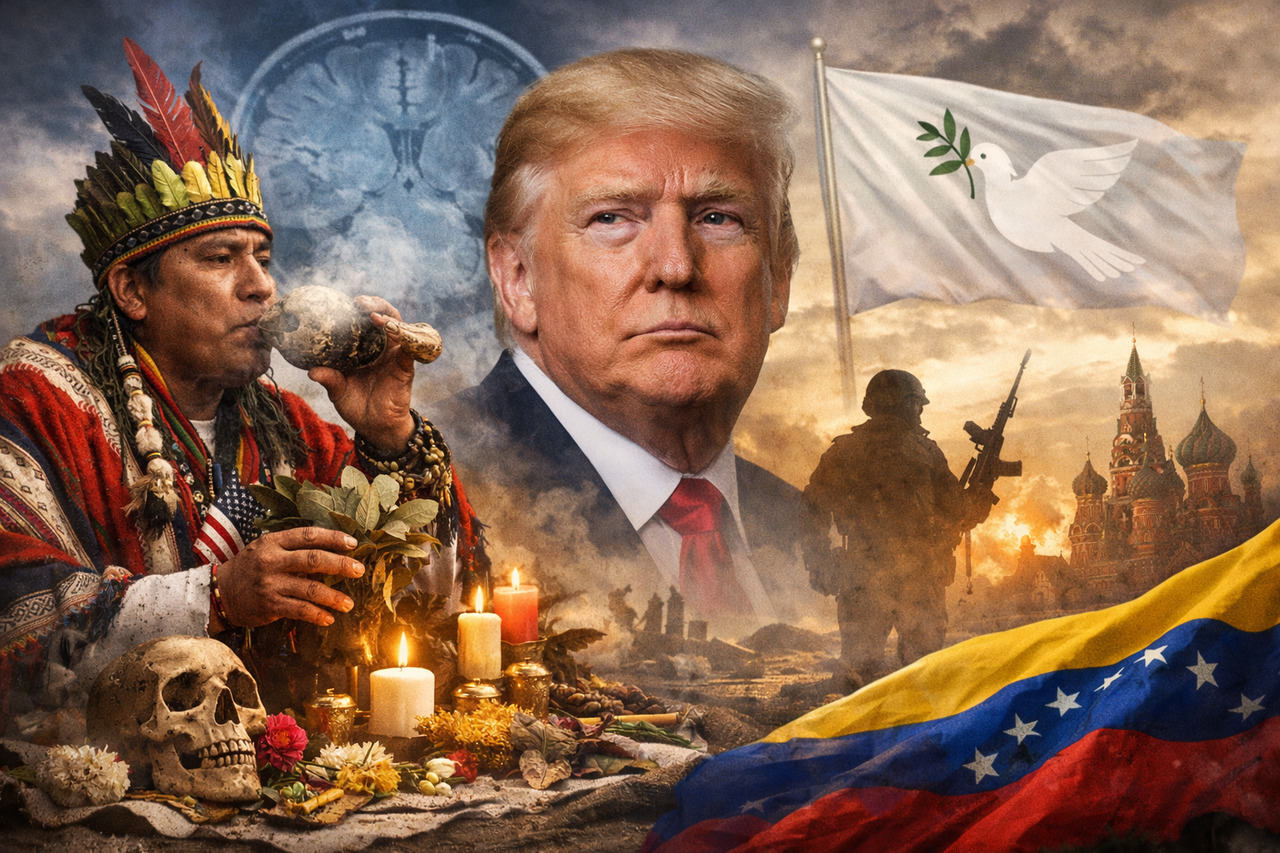

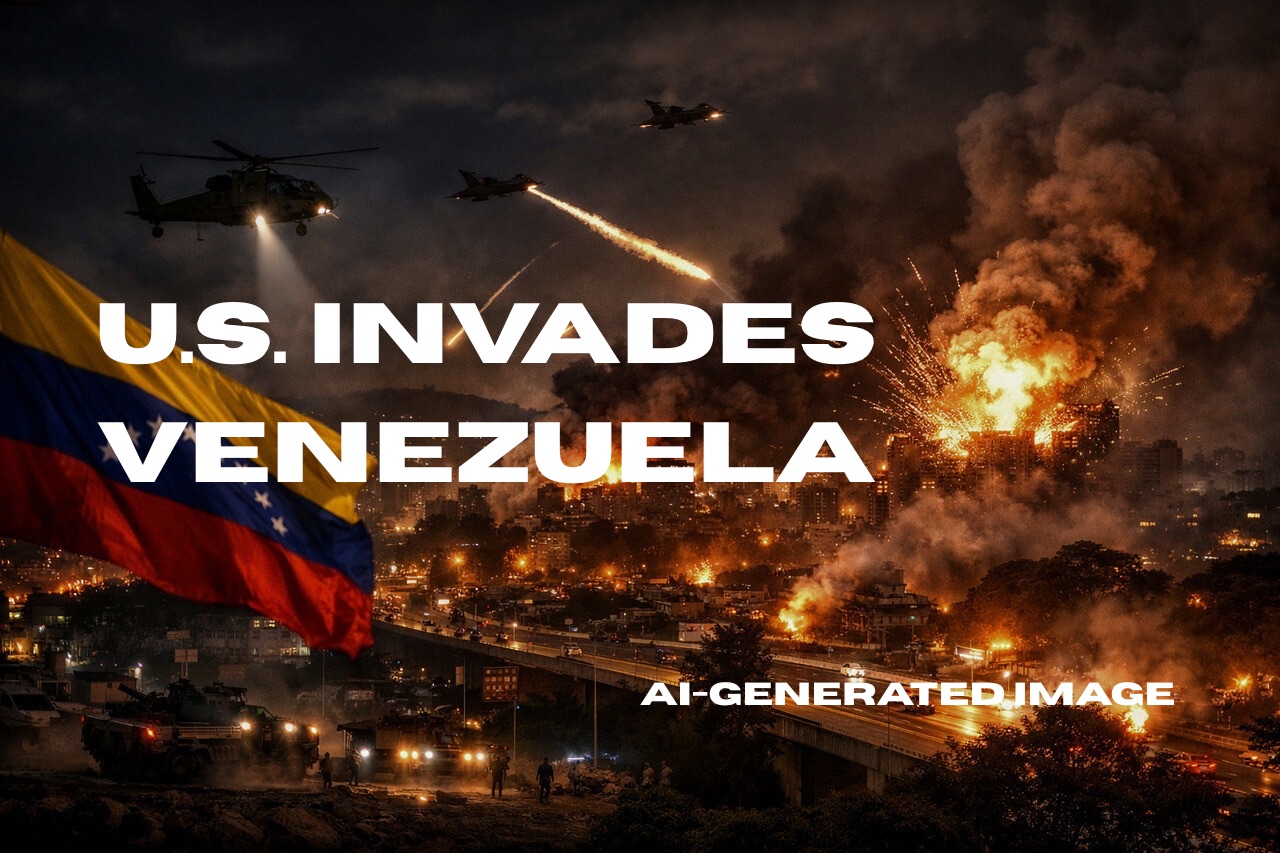
Caracas, Venezuela – In a dramatic and unprecedented escalation of regional tension early Saturday morning, the U.S. invaded Venezuela with coordinated military strikes that sent shockwaves across the capital and beyond.
Loud explosions and aircraft activity were reported in Caracas and surrounding regions before President Nicolás Maduro was allegedly taken into custody and flown out of the country, according to the Trump administration.
At approximately 2:00 a.m. local time, residents in the southern districts of Caracas described hearing multiple powerful blasts and seeing columns of black smoke rising over key military installations, including the Generalissimo Francisco de Miranda Air Base and Fort Tiuna. A wide swath of the city experienced a blackout as electric power was disrupted amid the early assault.
In Washington, President Donald Trump declared the operation a success, stating that U.S. forces had “successfully carried out a large-scale strike against Venezuela,” and that Maduro, along with his wife, was captured and removed from power. Trump and senior U.S. officials framed the action as part of a campaign against alleged criminal activity by the Venezuelan government.
The White House has asserted this move was done “in conjunction with U.S. law enforcement,” and Attorney General Pam Bondi said Maduro is expected to face trial in the United States on charges related to narco-terrorism dating back to 2020.
Republican senators suggested the mission comes under executive authority, though legal and constitutional debates are already erupting in Washington.
Venezuelan authorities immediately denounced the invasion, labeling it a blatant violation of sovereignty. Defense Minister Vladimir Padrino López and Interior Minister Diosdado Cabello issued furious calls for resistance and urged citizens not to cooperate with what they termed a “terrorist enemy.”
Vice President Delcy Rodríguez demanded proof of life for Maduro and his wife, whose exact whereabouts remain officially unverified.
The Venezuelan government declared a national state of emergency as explosions rattled Caracas and other areas, prompting widespread fear and chaos. Streets were largely empty Saturday morning, with heavy security checkpoints and much of the city in darkness. Venezuelans shared videos on social media showing blasts, low-flying aircraft, and urgent calls for shelter.
International reactions have been swift and sharp. Long-standing allies of Venezuela, including Russia, Cuba, and Iran, condemned the U.S. action as unlawful aggression.


Latin American neighbors are scrambling diplomatic channels, with some calling for emergency sessions at the United Nations and the Organization of American States. World leaders are debating the legality and broader consequences of the invasion.
Domestically in the U.S., critics argue that Congress was not consulted before the military operation and question whether any vital national interest justified such a large-scale action in Latin America.
Supporters claim it marks a decisive stance against corruption and criminal networks, while skeptics warn of a potentially destabilizing conflict.
What’s next: Venezuela’s political future is uncertain. With Maduro removed and key government figures scrambling, questions loom about who will govern, how Venezuelan society will respond, and whether this marked moment will spiral into wider conflict across the region.
Global markets, particularly oil prices, could react sharply as investors digest the implications of the U.S. invasion.