

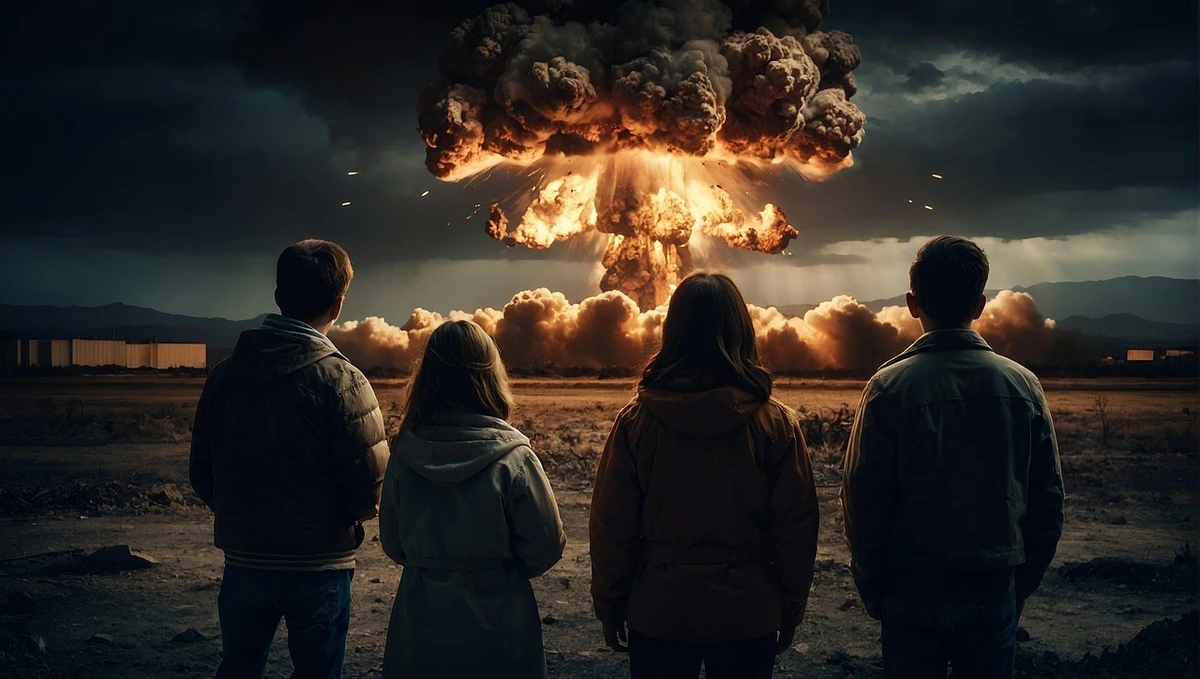
The World Health Organization doesn’t issue warnings like this for show. The WHO is preparing for nuclear catastrophe.
When the agency’s regional director for the eastern Mediterranean tells reporters that her staff are actively preparing for a nuclear incident — including the possible use of a nuclear weapon — it means that the people whose job it is to track global health emergencies believe this war could produce one of the worst disasters in modern history.
Hanan Balkhy, the WHO’s regional director, didn’t mince words in an interview with Politico this week.
“The worst-case scenario is a nuclear incident, and that’s something that worries us the most,” she said.
“As much as we prepare, there’s nothing that can prevent the harm that will come… the region’s way — and globally if this eventually happens — and the consequences are going to last for decades.”
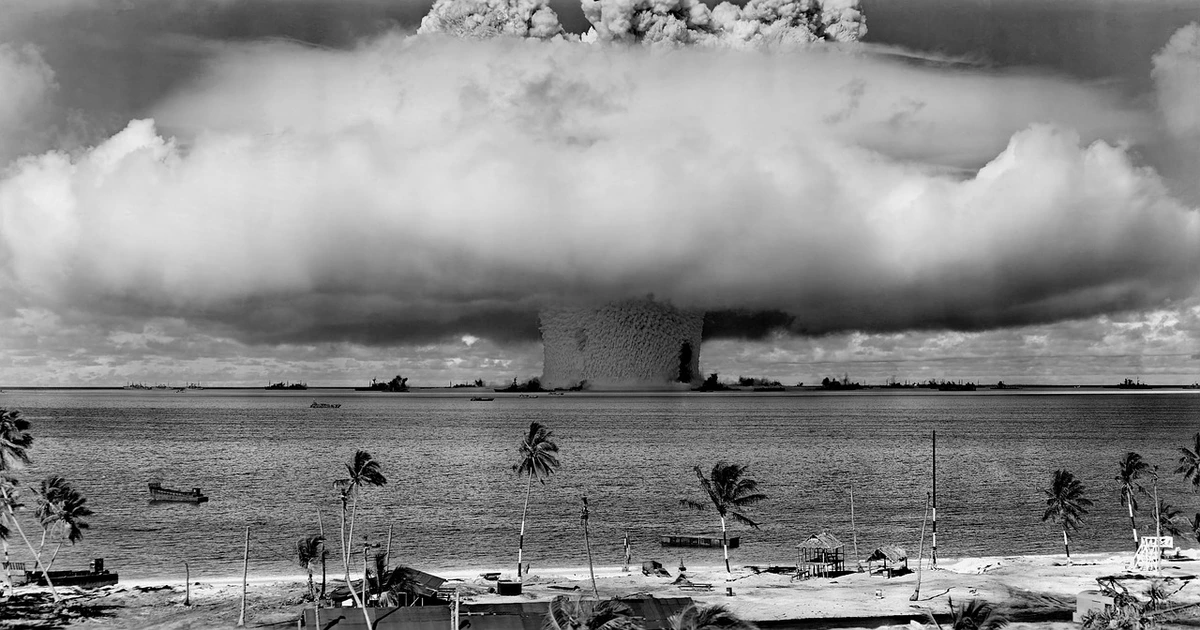
Think about that. The United Nations’ top health agency is refreshing its staff on nuclear emergency protocols — how to advise governments on radiation exposure, how to guide civilians on protective measures, how to respond to long-term health consequences that could span generations.
This is not an academic exercise.
It is preparation for a scenario that grows more plausible with each passing day of Operation Epic Fury.
Every Major Nuclear Site Has Been Hit
Since the U.S. and Israel launched their joint military campaign against Iran on February 28, virtually every significant nuclear facility in the country has come under attack.
Iran’s Atomic Energy Organization has confirmed strikes on its sites at Natanz, Fordow, and Isfahan — the backbone of the country’s uranium enrichment program.

On March 17, the situation took a more dangerous turn. A projectile struck the grounds of the Bushehr Nuclear Power Plant, Iran’s only operational nuclear reactor.
The IAEA confirmed the impact hit a structure just 350 meters from the reactor itself, destroying it. Satellite imagery analyzed by the Institute for Science and International Security confirmed the crater location.
This matters because Bushehr isn’t an enrichment facility. It’s a functioning nuclear power plant, connected to Iran’s electrical grid since 2011, operated with Russian-made fuel and Russian technicians on-site.
A direct hit on the reactor core could release radioactive material into the atmosphere — the kind of event that transforms a regional war into a continental health crisis.
IAEA Director General Rafael Grossi called the Bushehr strike a crossing of the “reddest line” of nuclear safety.
“An accident on an operating nuclear power plant would be something very, very serious,” Grossi said. “The possibility of dispersion in the atmosphere of radioactivity is very high if you get to the core of the reactor.”
Related
Russia’s state nuclear corporation Rosatom, which built and helps operate the plant, condemned the strike and announced it had already evacuated about 250 employees and their families.
Construction on two new reactor units at the site has been suspended.
Neither the U.S. nor Israel has claimed responsibility for the Bushehr strike. U.S. Central Command did not respond to requests for comment.
But the question of who fired the projectile is less important than the fact that a war zone now includes an active nuclear power plant — and the bombs keep falling.
The People Sounding the Alarm Aren’t Fringe Voices
The WHO’s preparations are alarming enough.
But they come against a backdrop of warnings from figures within the Trump administration itself — warnings that have been met with dismissal rather than reflection.
Trump’s own AI and cryptocurrency adviser, David Sacks, raised a different kind of alarm on the All-In Podcast, warning that if Israel’s air defenses become exhausted, the country could escalate by “contemplating using a nuclear weapon.”
Trump waved it off: “Israel would never do that.”
Editor’s Commentary (in response to “Israel would never do that.”
If Israel begins to lose its defense capabilities, a country largely shielded from sustained attacks by the Iron Dome and U.S. Military support, could panic. And in moments of fear and desperation, even actions people insist would “never happen”—like the use of a nuclear weapon—can no longer be ruled out with certainty.
But here’s the thing — the WHO doesn’t care about political reassurances. It cares about probabilities.
And right now, multiple nuclear facilities have been struck, both sides are targeting each other’s nuclear infrastructure, and the only international body capable of preventing a radiological disaster is reduced to issuing warnings that no one with the power to stop this war seems to be listening to.
The Intelligence Doesn’t Support the War’s Premise
The administration’s stated justification for Operation Epic Fury is to “eliminate the imminent nuclear threat posed by the Iranian regime.” But the administration’s own intelligence officials have undercut that rationale.
Director of National Intelligence Tulsi Gabbard told the Senate Intelligence Committee this week that U.S. and Israeli strikes during last summer’s 12-day war had already “obliterated” Iran’s nuclear enrichment program.
“There has been no effort since then to try to rebuild their enrichment capability,” she said.
If Iran’s enrichment capacity was destroyed last June, what exactly is Operation Epic Fury preventing?
And why are U.S. and Israeli forces still striking nuclear sites — including an active power plant — in a campaign that the intelligence community’s own assessment suggests is solving a problem that no longer exists?
What a Nuclear Incident Actually Means
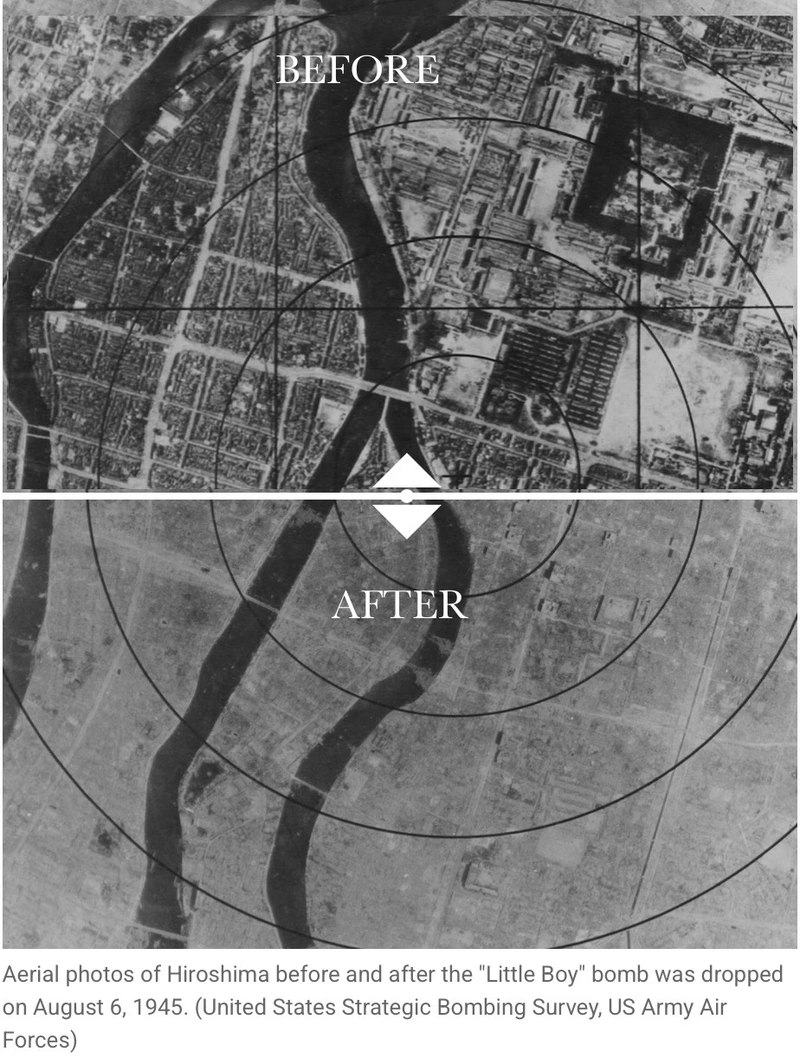
The WHO isn’t being dramatic when it invokes the specter of Chernobyl and Hiroshima. Those are the reference points because there are no better ones.
The 1986 Chernobyl disaster contaminated vast stretches of Ukraine, Belarus, and Russia, causing a documented spike in thyroid cancer and other radiation-related diseases that persisted for decades.
The fallout spread across Europe. An estimated 350,000 people were permanently evacuated from surrounding areas.
The atomic bombings of Hiroshima and Nagasaki killed an estimated 240,000 people, many of them in the months and years after the initial blast from radiation sickness, cancer, and other long-term effects.
Balkhy’s warning — that consequences could “last for decades” — isn’t rhetoric.
It’s medical science. Radiation exposure doesn’t observe ceasefires. It doesn’t respect borders.
And in a region where nuclear facilities are being hit from multiple directions, with air defense systems failing and neither side showing restraint, the margin between a near-miss and a catastrophe shrinks with every strike.
The World Is Watching. Nobody Is Stopping This.
Saturday’s events made the WHO’s warnings feel less like contingency planning and more like prophecy.
Iranian missiles struck the Israeli cities of Dimona and Arad — near Israel’s own nuclear research center — wounding more than 100 people.
Hours earlier, the Natanz enrichment complex was hit again. Both sides are now openly targeting the other’s nuclear infrastructure, and both sides’ missile defenses are failing to intercept incoming strikes.
Trump responded to Saturday’s escalation by threatening to “obliterate” Iran’s power plants if the Strait of Hormuz isn’t reopened within 48 hours.
Israeli Defense Minister Israel Katz promised that strikes on Iran would “increase significantly” in the coming week.
The WHO can prepare its protocols. The IAEA can call for restraint.
But unless someone with actual authority over this war decides to stop it, the nuclear incident that health officials are preparing for may not remain hypothetical for much longer.
Three weeks into a war that the administration’s own intelligence says is based on a threat that no longer exists, the WHO is preparing for nuclear catastrophe.
That is not a drill.
That is a verdict on where this conflict is heading — and a damning indictment of every leader who has the power to change course and chooses not to.