

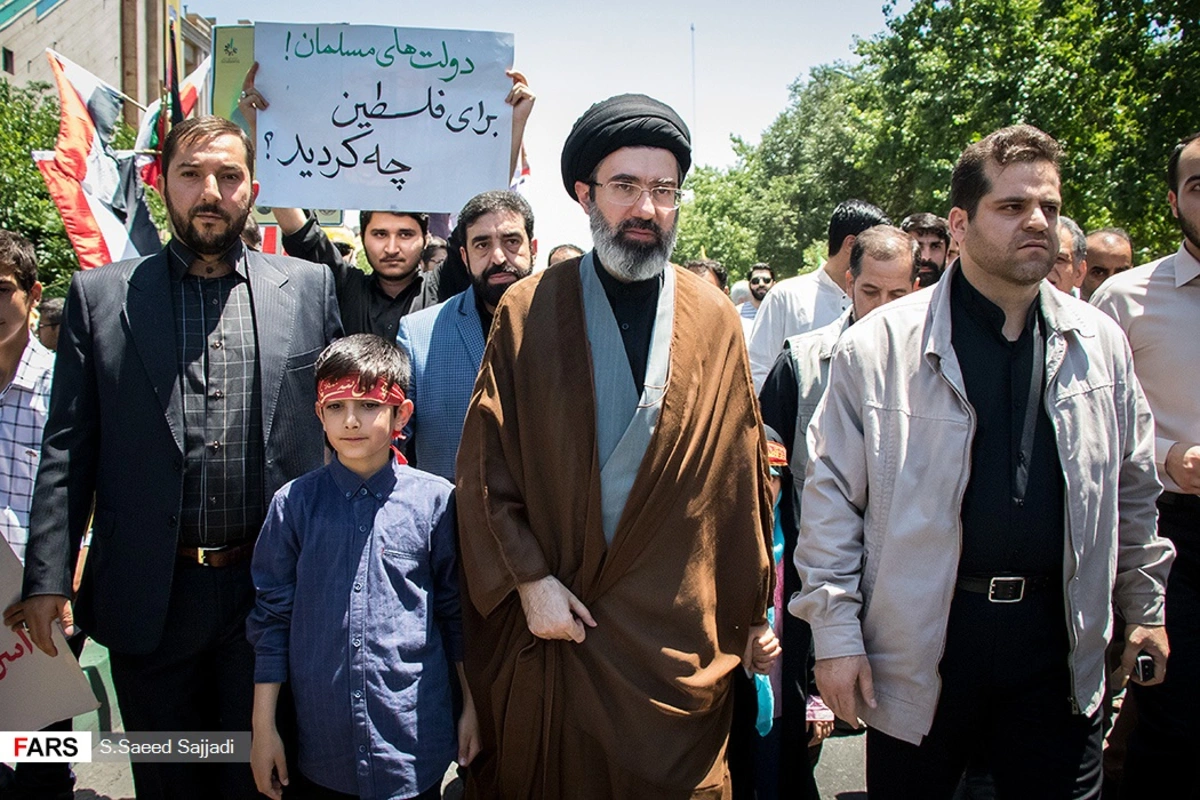
Iran is now led by a man most of its citizens have never heard speak publicly — a shadow figure who built his power behind closed doors, crushed pro-democracy protesters, amassed a secret fortune, and inherited the most powerful position in the Islamic Republic from his assassinated father.
On March 8, Iran’s Assembly of Experts announced that Mojtaba Khamenei, the 56-year-old son of slain Ayatollah Ali Khamenei, would become the country’s third supreme leader.
The appointment came just eight days after his father was killed in the initial bombing of the U.S.-Israeli war on Iran, and it immediately drew threats from both Washington and Tel Aviv.
Here’s what you need to know about the man now leading a nation at war.
He Has Never Held Public Office
Mojtaba Khamenei has never been elected to anything. He has never been formally appointed to a government role outside his father’s office. He has never given a public political address. Most Iranians have never even heard his voice.
And yet, for decades, he was widely considered one of the most powerful people in the country.
U.S. diplomatic cables published by WikiLeaks referred to him as “the power behind the robes.”
The U.S. Treasury Department sanctioned him in 2019 — during Trump’s first term — for representing the supreme leader despite having no official position, and for working with the IRGC and the Basij paramilitary force to carry out his father’s domestic and regional agenda.
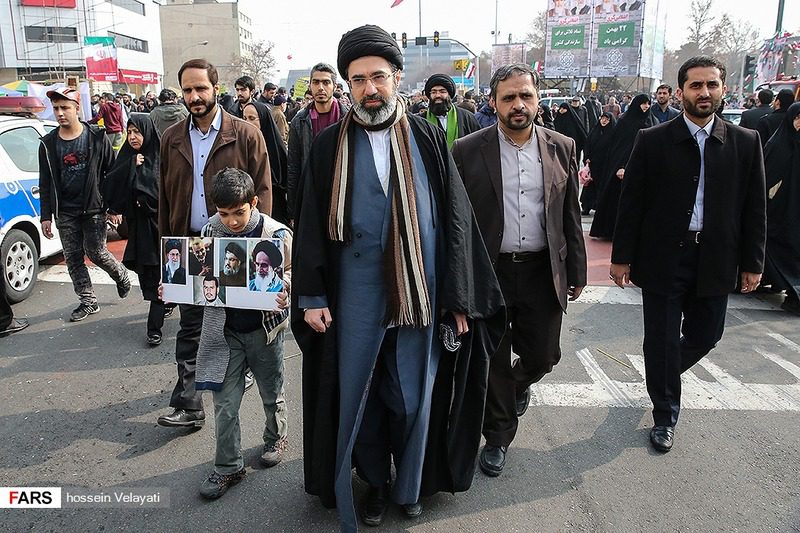
He operated as his father’s gatekeeper, controlling who had access to the supreme leader’s office and shaping political and security decisions from behind the scenes.
He Built His Power Through the IRGC
Mojtaba Khamenei joined the Islamic Revolutionary Guard Corps at 17 and served during the final years of the Iran-Iraq War in the 1980s.
That military service wasn’t just a rite of passage — it was the beginning of a lifelong alliance with the paramilitary apparatus that would ultimately install him as supreme leader.
Over the years, he cultivated deep relationships across the IRGC and the Basij, the volunteer paramilitary wing focused on domestic security and suppressing political dissent.
He developed close ties with IRGC chief Ahmad Vahidi, former intelligence head Hossein Taeb, and parliamentary speaker Mohammad Bagher Ghalibaf.
When the Assembly of Experts met to choose a new supreme leader after his father’s death, it was the IRGC that pushed hardest for Mojtaba. According to Iran International, IRGC commanders used “repeated contacts and psychological and political pressure” on Assembly members, including in-person meetings and phone calls, to secure the vote.
Members who argued against the appointment were given limited time to speak before discussion was cut off and a vote was forced.
He Crushed the Green Movement
The moment that first brought Mojtaba Khamenei into public consciousness — at least for observers outside Iran — was the 2009 Green Movement.
After the disputed re-election of hardline president Mahmoud Ahmadinejad, millions of Iranians took to the streets in the largest anti-government demonstrations since the 1979 revolution. The regime’s response was brutal: protesters were beaten, arrested, tortured, and killed. Universities were raided. Journalists were detained. Reformist leaders were placed under house arrest that lasted years.
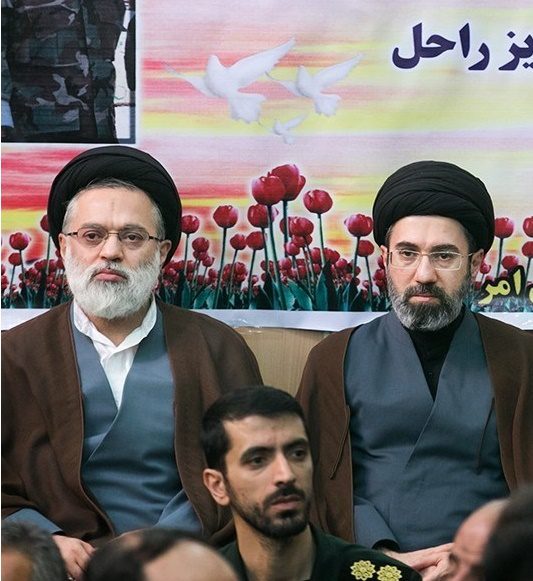
Mojtaba is widely believed to have orchestrated both the election result and the crackdown. According to the Atlantic Council, he took “complete control” of coordinating the IRGC’s Basij response, relocating national security meetings to the Office of the Supreme Leader so he could personally supervise operations.
Protesters knew who was behind the violence — one of their chants was a direct message: “Mojtaba, may you die before you see leadership.”
A leaked IRGC intelligence report later revealed that Mojtaba had personally thanked security forces for “neutralizing” the nationwide protests, while criticizing the Basij for not being better equipped to suppress demonstrators.
He was also connected to subsequent crackdowns, including the mass killings reported in January 2026, when the United Nations and human rights organizations say state forces killed thousands of people over just two nights of protests.
His Religious Credentials Are Thin
Iran’s supreme leader is supposed to be a senior Islamic scholar. Mojtaba is a hojatoleslam — a mid-level cleric — not an ayatollah. He studied Islamic theology in Qom under his father and under Ayatollah Mohammad Taqi Mesbah-Yazdi, a hardline cleric who once issued a fatwa calling for the killing of Iranian youth who promoted “Western immorality.”
Mesbah-Yazdi was the ideological architect of Iran’s ultraconservative Paydari Party, and Mojtaba has been a devoted patron of the movement.
His father wasn’t an ayatollah when he took power in 1989, either — the law was changed to accommodate him.
The same kind of workaround is expected for Mojtaba, though the precedent of adjusting the rules to fit the Khamenei family has fueled criticism that the Islamic Republic is becoming the very thing it was created to replace: a dynasty.
He Controls a Secret Financial Empire
While ordinary Iranians have suffered through years of economic crisis and inflation, Mojtaba Khamenei has quietly amassed enormous wealth.
A year-long Bloomberg investigation published in January 2026 linked him to an offshore financial network used to move assets outside Iran, including luxury real estate in London and Dubai, shipping interests, and hospitality investments across Europe.
None of these holdings are in his name. They’re structured through intermediaries and layered corporate entities across multiple countries. The U.S. Treasury and Israeli intelligence have also connected him to cryptocurrency transfers — Channel 14 in Israel reported that $1.5 billion in crypto was sent to an account in Dubai involving members of the Khamenei inner circle, with Mojtaba personally linked to roughly $328 million of that sum.
His financial networks also touch Iran’s domestic economy. He has been tied to Ali Ansari and Bank Ayandeh, which collapsed after handing out loans to insiders, forcing the government to use public funds to cover the losses and pushing Iran’s already punishing inflation even higher.
His Father Didn’t Want This
Perhaps the most telling detail about Mojtaba’s rise is that his own father reportedly opposed it.
According to Iran International, citing sources within the Assembly of Experts, Ali Khamenei was “not pleased with the idea of his son’s leadership and never allowed this issue to be raised during his lifetime.”
Before his death, the elder Khamenei had floated three other potential successors — none of them Mojtaba. The Council on Foreign Relations noted that his father’s preferred candidates had stronger theological credentials and administrative experience.
The concern was straightforward: a father-to-son transfer of supreme power would echo the Pahlavi monarchy that the 1979 revolution overthrew. It’s the very thing Iran’s founding ideology was built to prevent.
But with the elder Khamenei dead and the country under bombardment, the IRGC made its move. Eight Assembly members reportedly threatened to boycott the vote. The atmosphere was described as “unnatural.” And by March 8, it was done.
Trump and Israel Have Already Threatened to Kill Him
Both the United States and Israel immediately responded to the appointment with hostility. Trump told ABC News that the new leader would need American approval and that without it, “he’s not going to last long.” Senator Lindsey Graham predicted Mojtaba would meet “the same fate” as his father.
The Israeli military said it would “pursue every successor” to Ali Khamenei.
Russia’s Vladimir Putin pledged “unwavering support” for the new leader, while China said it opposed any targeting of him.
What This Means Going Forward
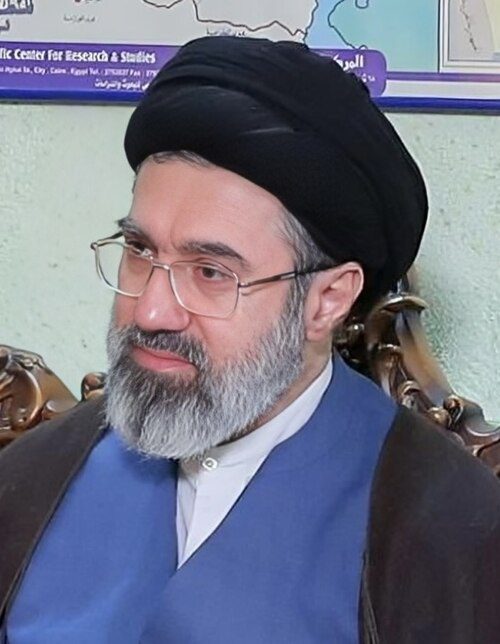
Analysts across the board agree that Mojtaba Khamenei will be more hardline than his father. The Daily Telegraph predicted he would view the United States as an “implacable enemy” and would be unlikely to pursue any diplomatic compromise.
The Carnegie Endowment for International Peace noted that his power base rests on the IRGC and the Basij, not on popular legitimacy or religious authority.
Experts at the Atlantic Council described him as closely aligned with fundamentalist and Mahdist clerics who believe in accelerating end-times prophecy through confrontation.
Iran’s foreign minister has already rejected ceasefire calls, and the IRGC has shown no signs of scaling back its retaliatory operations.
For the Iranian people — the ones who have been protesting, getting killed, and demanding a different future for years — this appointment is a slap in the face. The republic that was supposed to end dynastic rule just installed a dynasty.
The regime that crushed their calls for freedom just handed power to the man who organized the crackdowns.
And the country is now being led through an existential war by someone most of its citizens have never heard speak a single word.