

While global attention remains fixed on the U.S.-Israeli bombardment of Iran, Israeli forces killed a father and his daughter in a drone strike in southern Gaza on Saturday — a reminder that the violence continues in Gaza despite a ceasefire.
Israel never actually stopped killing Palestinians.
The drone struck central Khan Younis early Saturday morning. Later in the day, a separate Israeli attack in the same city killed another person and wounded a young girl.
These deaths join a grinding toll that has continued for months under what is nominally a ceasefire — one that Israel has violated with near-daily regularity since it took effect in mid-October 2025.
A Ceasefire That isn’t
The October ceasefire was supposed to halt the fighting, facilitate the exchange of captives, allow humanitarian aid to flow into Gaza, and reopen the Rafah border crossing.
On paper, it was the framework for ending what the International Court of Justice is currently examining as a case of genocide.
In practice, it has been something closer to a slower version of the same war.
Since the ceasefire began, at least 640 Palestinians have been killed and more than 1,700 wounded, according to the Palestinian Ministry of Health.
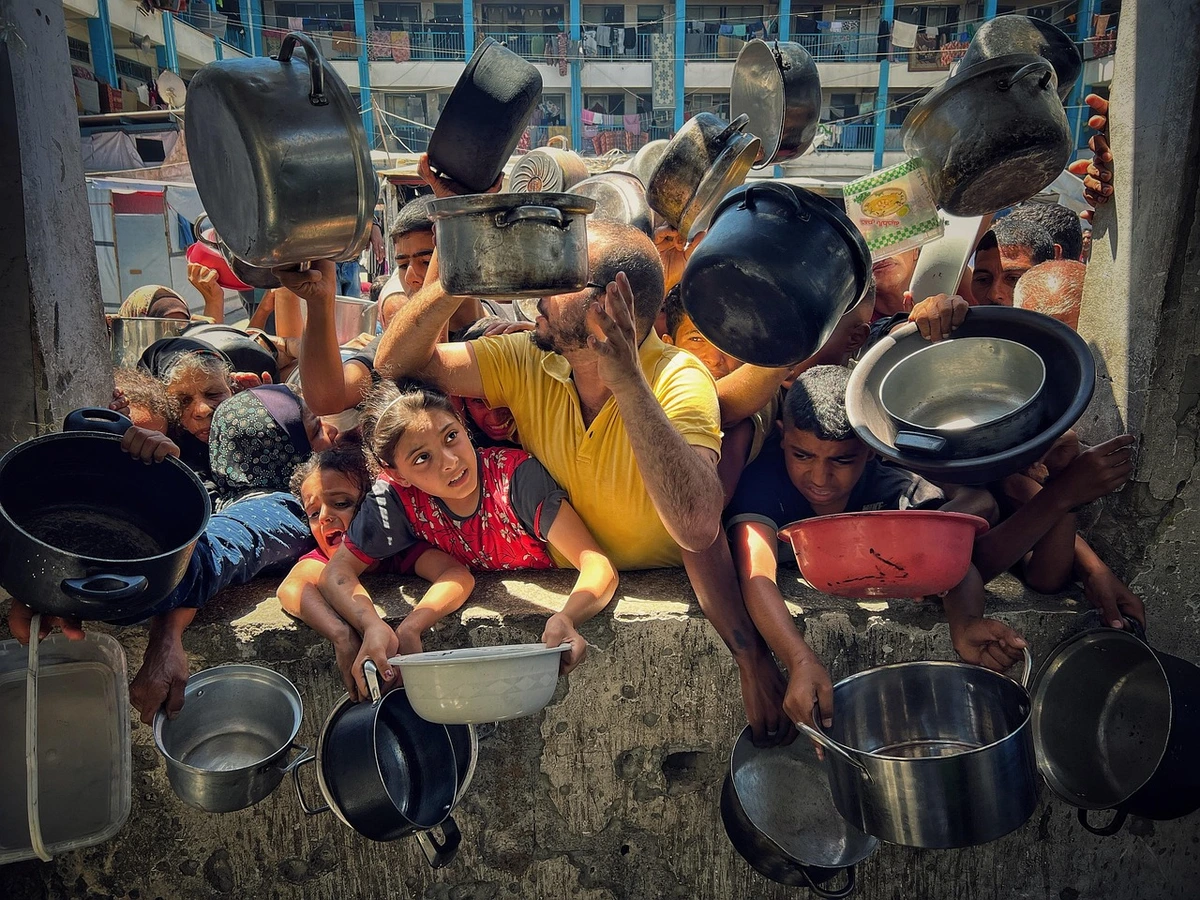
The Gaza Government Media Office has documented more than 1,190 Israeli violations of the agreement in just its first three months, including air strikes, artillery shelling, and direct shootings.
An Al Jazeera analysis found that Israel attacked Gaza on 82 out of the first 97 days of the ceasefire — meaning there were only 15 days without reported violence.
On Saturday, in addition to the drone strikes in Khan Younis, Israeli warplanes struck locations east of the Tuffah neighborhood near Gaza City, and the Israeli navy fired heavy machine guns and shells toward the coastline.
Israeli army-affiliated militias advanced east of Gaza City amid heavy gunfire, and initial reports indicated a member of the Palestinian police was abducted.
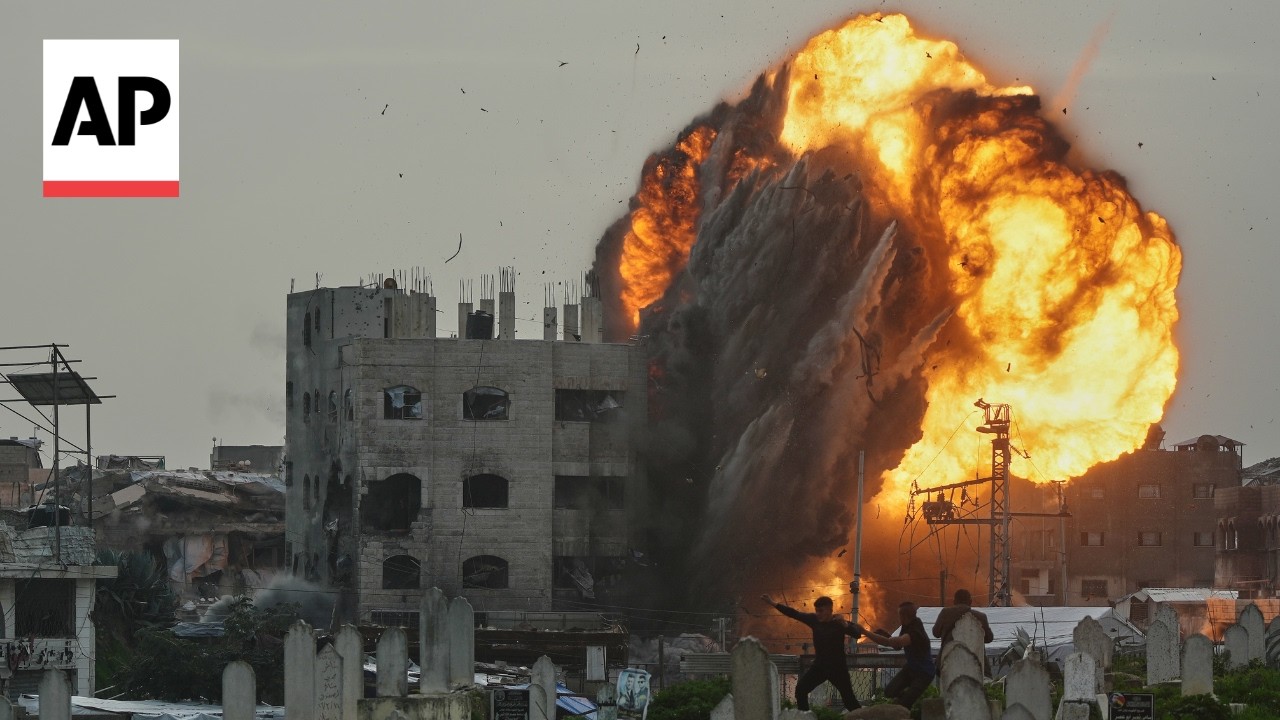
This is what a “ceasefire” looks like in Gaza.
The Rafah Crossing: Closed Again
The Rafah border crossing — Gaza’s only connection to the outside world that doesn’t run through Israeli-controlled territory — was shut down again on March 1 when Israel closed it amid the launch of its war on Iran.
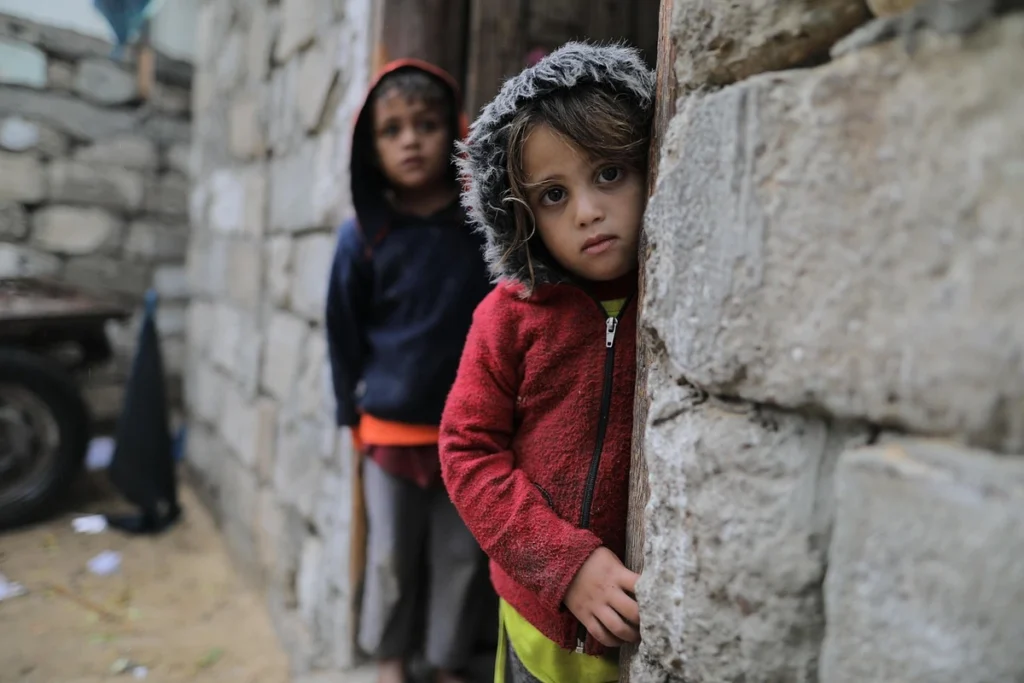
The crossing had only reopened in early February after months of closure, allowing a limited trickle of Palestinians to leave for the first time.
Even then, the numbers were far below what was promised. Instead of the 50 people per day Israel initially committed to, actual crossings fell well short.
The UN tallied just 260 patients leaving Gaza in the first two and a half weeks after reopening — out of roughly 18,500 people who desperately need medical evacuation.
Now even that insufficient lifeline has been cut off. Thousands of Palestinians with urgent medical needs — people with kidney disease, children with traumatic injuries from bombings, cancer patients who haven’t been able to receive treatment — are once again trapped inside a territory where the health system has been systematically destroyed.
Israel’s military coordination body, COGAT, claimed the closure would have “no impact on the humanitarian situation.”
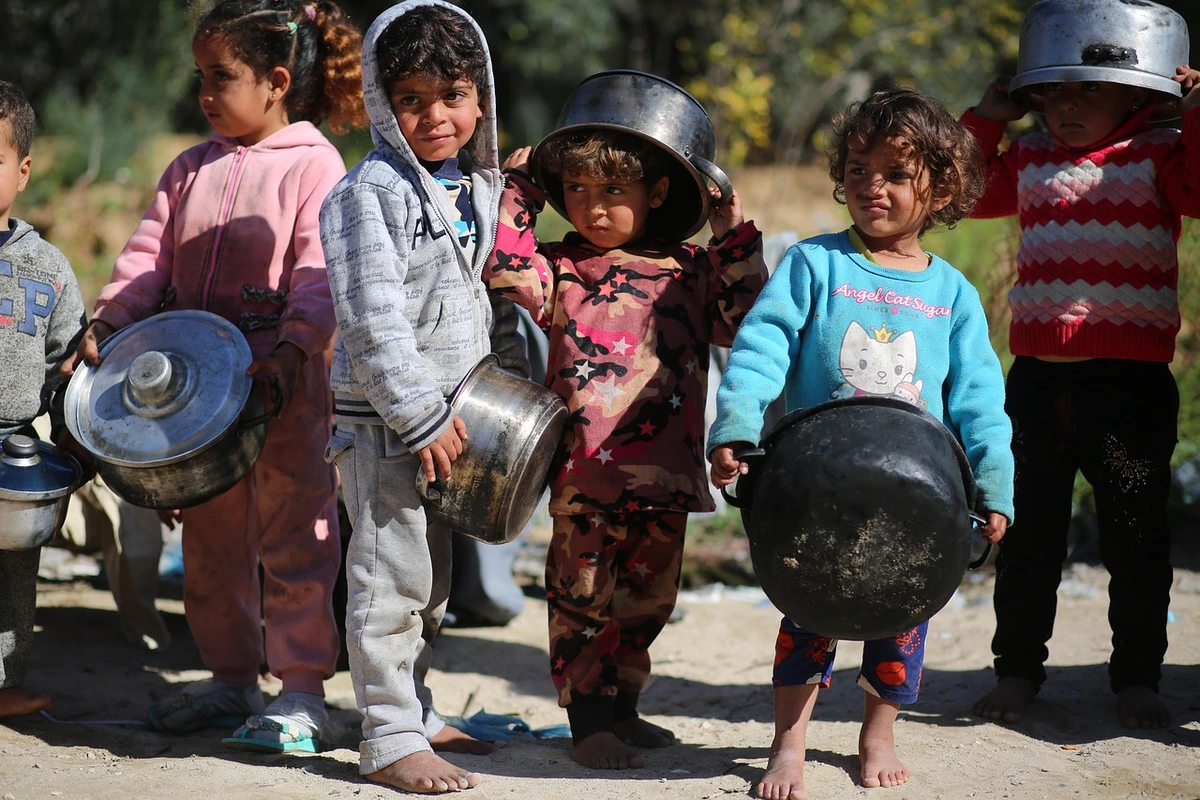
The statement strains credulity in a territory where Human Rights Watch has documented ongoing shortages of medicine, food, water, and reconstruction materials, and where Israel has banned more than three dozen international aid organizations — including Doctors Without Borders, Oxfam, and the International Rescue Committee — from operating.
The Numbers Behind the Suffering
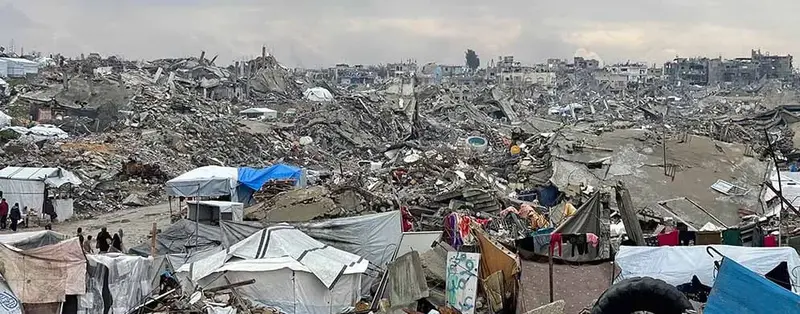
The scale of what has happened in Gaza since October 2023 is difficult to hold in the mind all at once. At least 72,123 Palestinians have been killed. More than 171,800 have been injured.
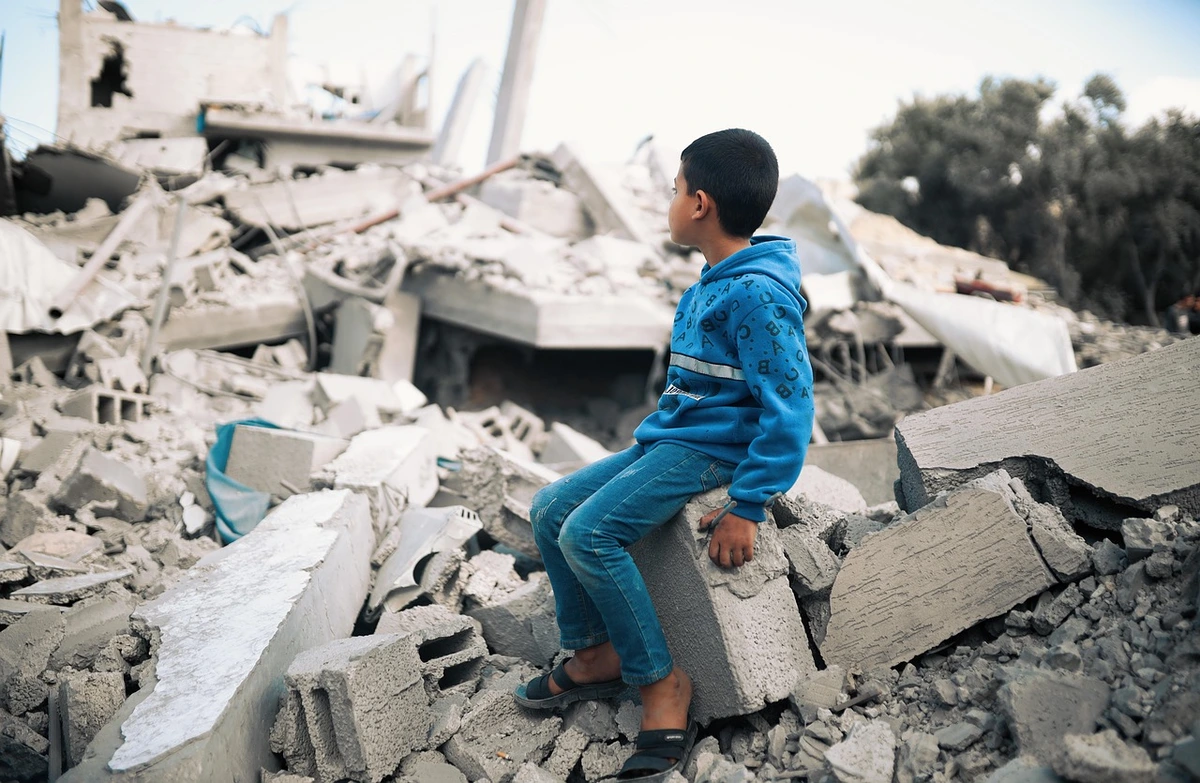
Nearly the entire population of more than two million people has been displaced.
The infrastructure of daily life — hospitals, schools, water treatment plants, homes — has been reduced to rubble across vast stretches of the territory.
And in the occupied West Bank, the violence has intensified in parallel.
On Saturday alone, the Palestinian Red Crescent reported treating a man shot with live ammunition near the illegal Karmei Tzur settlement north of Hebron.
Three more Palestinians were injured after being physically assaulted by Israeli settlers in the Ras al-Ahmar area south of Tubas.
Israeli forces conducted raids in towns north of Tulkarem, and another man was beaten by soldiers near the village of Azmut outside Nablus.
Since October 2023, at least 1,094 Palestinians have been killed by Israeli troops and settlers in the West Bank, according to the United Nations.
Invisible While the Bombs Fall Elsewhere
There is a painful irony in the current moment.
The U.S.-Israeli war on Iran has consumed the world’s attention — and understandably so, given the scale of the bombardment and the risk of wider regional conflagration.
But that focus has created a kind of cover for the fact that violence continues in Gaza and the West Bank.
The father and daughter killed by a drone in Khan Younis on Saturday didn’t make front pages.
The young girl wounded in the second attack likely won’t either.
The fishermen and displaced families living under daily bombardment during a supposed ceasefire have largely disappeared from the global conversation, replaced by satellite images of strikes on Tehran and debates about the geopolitics of escalation.
But for Palestinians, the war never ended.
The ceasefire never held.
The crossings are closed, the aid is blocked, the hospitals are overwhelmed, and the killing continues — quietly, relentlessly, while the world looks the other way.
The total death toll in Gaza now stands at more than 72,000 people.
Each one of them had a name.
Saturday’s father had a daughter.
Now neither of them is alive to tell anyone what it was like to live in a place the world agreed to stop watching.