


The United States has positioned a massive military force in the Middle East — and according to a former senior Pentagon official, those forces are ready for a sustained, large-scale war with Iran if President Trump gives the order.
Dana Stroul, who previously held a senior role at the Pentagon and now serves as research director at The Washington Institute for Near East Policy, told Fox News Digital on Sunday that the current U.S. force posture in the region is designed for what she called a “highly kinetic campaign.”
In plain terms, that means an intense, prolonged military operation involving airstrikes, missiles, and naval warfare on a scale that hasn’t been seen in the region in years.
Stroul emphasized that the U.S. military can move assets from around the globe and bring overwhelming firepower to bear in a short period of time. She described the current buildup as something no other country — ally or adversary — could match.
What’s Been Deployed For War With Iran
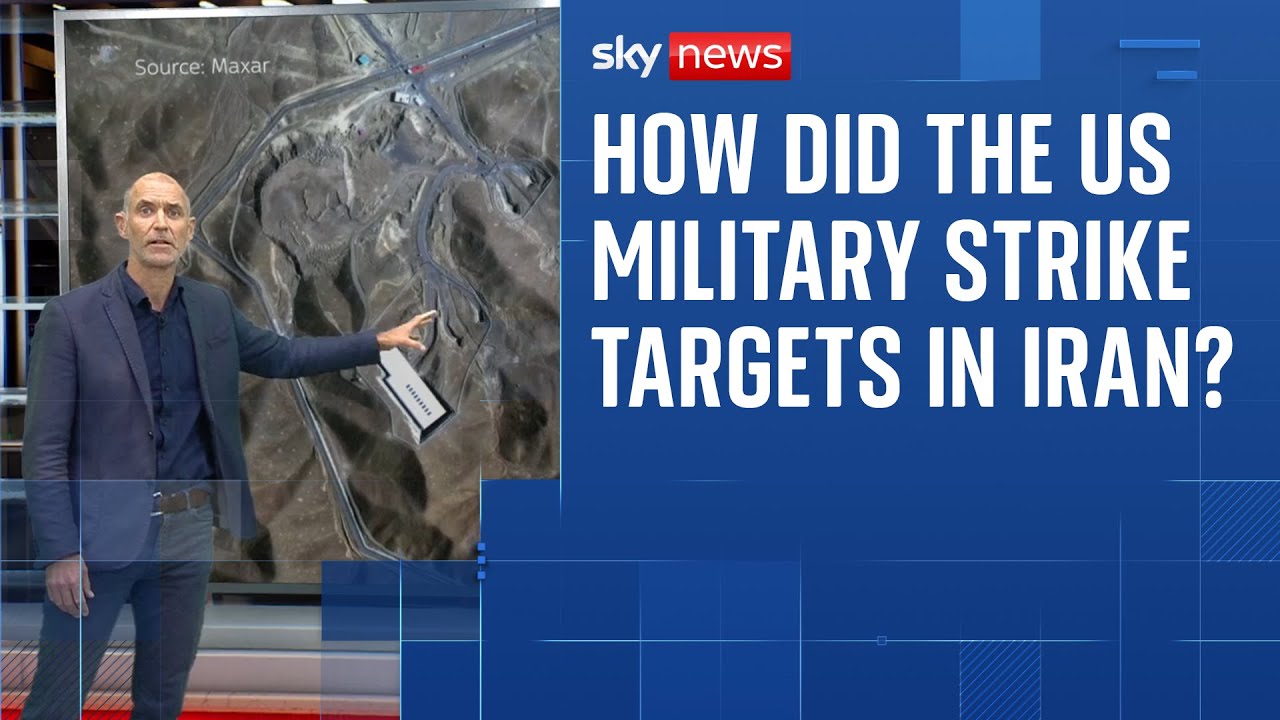
The buildup represents a significant escalation from previous U.S. operations in the region. During the June 2025 strikes — known as Operation Midnight Hammer — the U.S. carried out targeted attacks on Iranian nuclear infrastructure using two aircraft carriers and their accompanying warships and aircraft.
Those strikes were limited and designed to damage Iran’s nuclear capabilities without sparking a broader regional conflict.
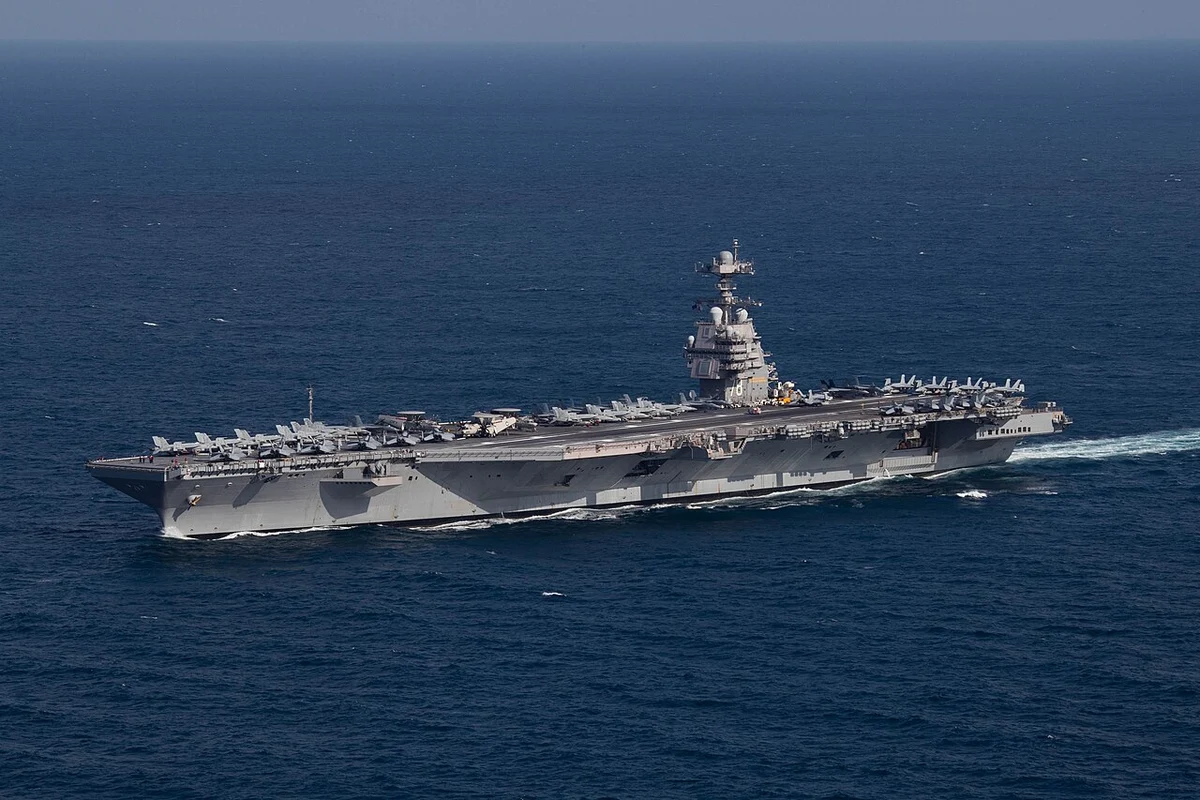
Now, the Pentagon has gone much further. The USS Gerald R. Ford, the world’s largest warship, was recently tracked moving through the Strait of Gibraltar heading east toward the Middle East.
It had been heading home when it was ordered to turn around. The USS Abraham Lincoln is already operating in the Arabian Sea.
Both carriers, along with their full air wings of fighter jets, are expected to be in the region simultaneously — one potentially in the eastern Mediterranean and the other in the Arabian Gulf.
Beyond the carriers, the U.S. has increased the number of guided-missile destroyers, fighter jets, aerial refueling aircraft, and air defense systems deployed to the area.
Military analysts have compared the scale of this buildup to the preparations that preceded the 2003 invasion of Iraq — a comparison that should give anyone pause.
Diplomacy Hangs by a Thread
This massive military escalation is happening alongside a fragile diplomatic process. Washington and Tehran are set to hold a second round of indirect nuclear talks in Oman on February 26, with Oman acting as an intermediary between the two sides.
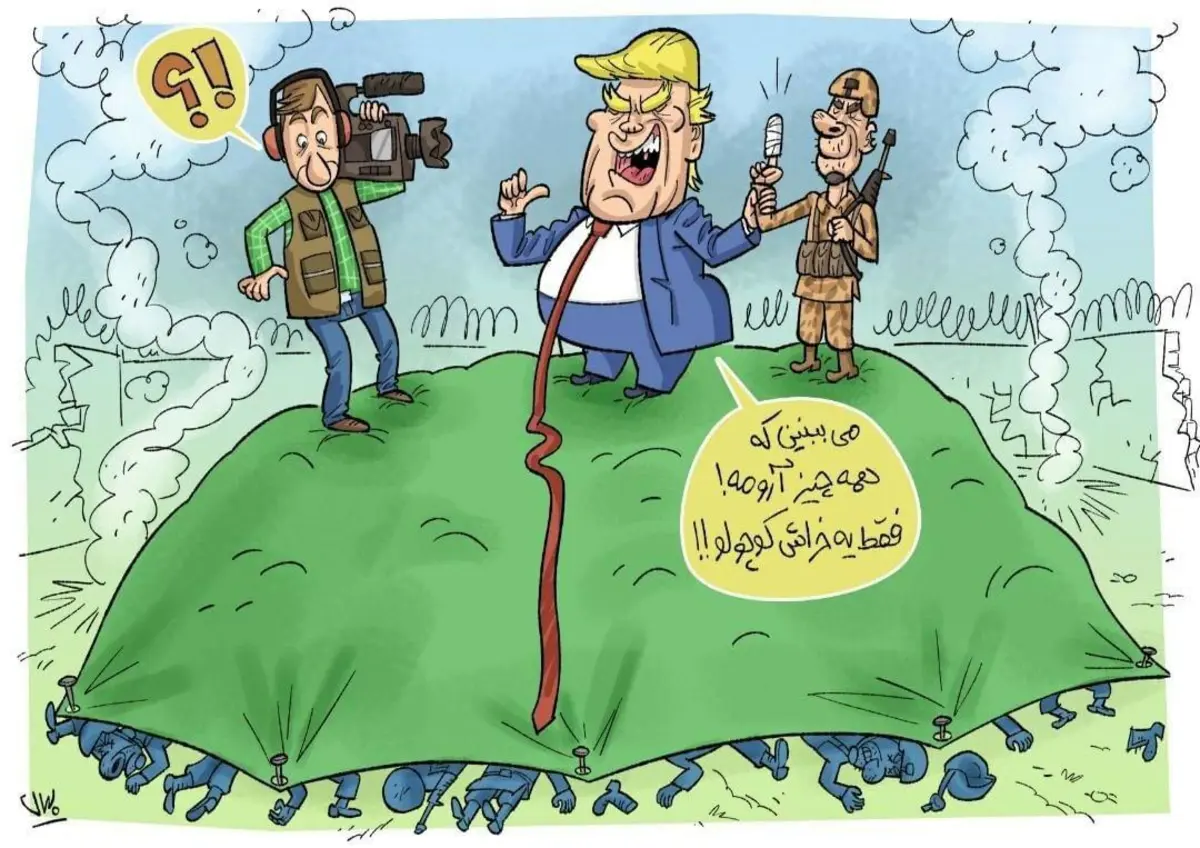
President Trump recently gave Iran a 15-day ultimatum to reach a deal or face what he called an “unfortunate” outcome.
Trump’s special envoy Steve Witkoff has publicly warned that Iran is just one week away from having enough material to build a nuclear weapon. However, he left out that they have no machines to enrich it and no weapons program to use it for any operational purpose.
Stroul argued that Iran’s leadership is trying to buy time through negotiations while projecting military strength through exercises and public saber-rattling.


But she was blunt in her assessment of the power imbalance, stating that Iran is completely outmatched in conventional military terms by the United States.
She pointed to last year’s conflict as evidence. During a 12-day war, Israel dominated Iranian airspace in a single day, eliminated multiple Iranian security leaders, and destroyed roughly half of Iran’s missile arsenal.
At the same time, U.S. strikes set back Iran’s nuclear program significantly. Iran’s network of proxy forces across the region — including Hezbollah, Shiite militias in Iraq, and groups operating in Syria — has been badly weakened after more than two years of sustained Israeli military pressure.
Those proxies chose not to enter the conflict in support of Iran during last summer’s fighting.
What’s Really at Stake
While officials and analysts focus on military readiness and geopolitical strategy, it’s worth stepping back and considering what a full-scale war with Iran would actually mean for the millions of ordinary people living across the Middle East.
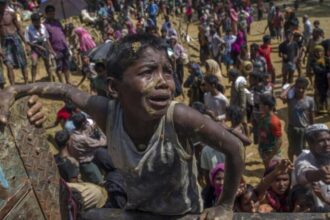
The region has already endured decades of conflict, displacement, and instability. A sustained U.S. military campaign against Iran — even one designed to be precise and targeted — would inevitably affect civilian populations.
History has shown repeatedly that the human cost of war extends far beyond the battlefield, from disrupted food and medical supply chains to mass displacement and long-term psychological trauma.
Iran is home to more than 88 million people, many of whom are already suffering under crippling economic sanctions and an authoritarian government. Iranian university students have recently taken to the streets in anti-government protests, sometimes met with gunfire and tear gas.

These are people who want change — and they deserve to have a voice in their own future, not to become collateral damage in a military campaign.
Stroul herself acknowledged that the decision to go to war is ultimately a political one, not a military one. The forces are in place. The weapons are ready. The question now is whether the people making these decisions will exhaust every possible diplomatic avenue before choosing a path that could reshape the Middle East — and countless lives — for a generation.