

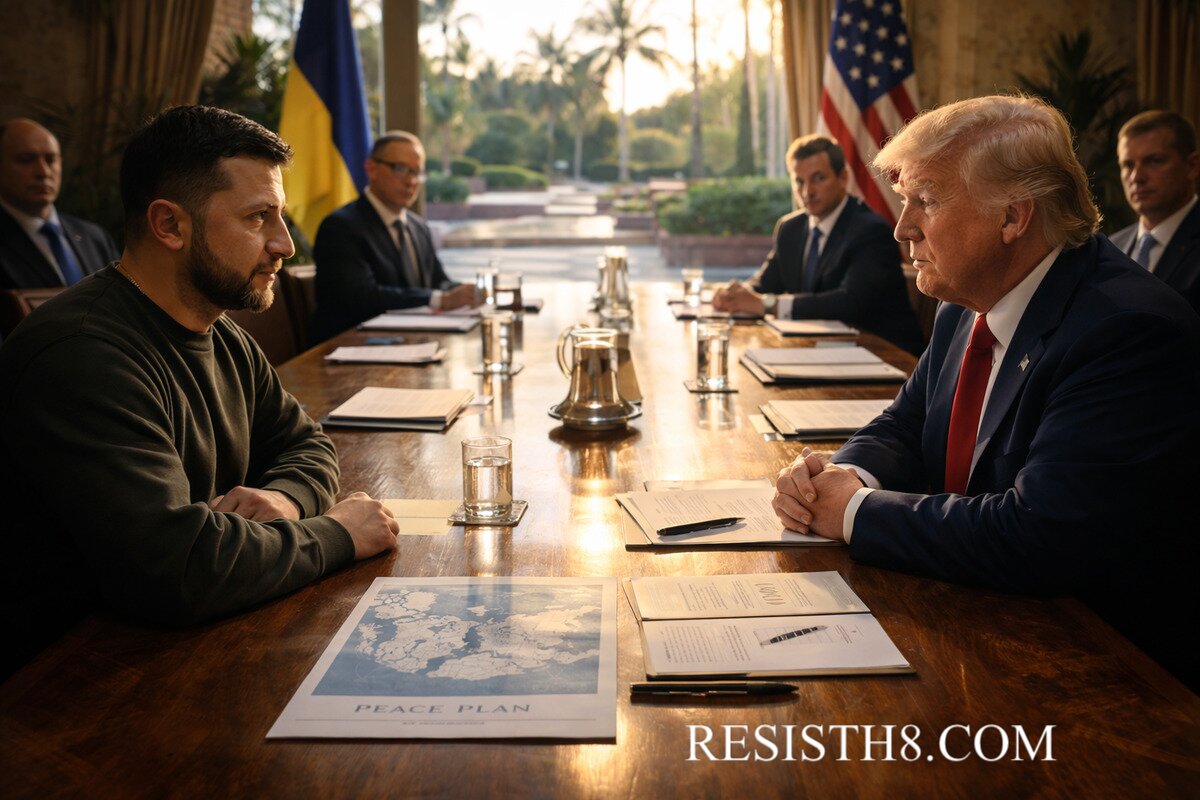
Ukrainian President Volodymyr Zelenskyy said Friday that he will travel to the United States this weekend for high-level Ukraine peace talks with President Trump, as diplomatic efforts to end Russia’s nearly four-year invasion of Ukraine gain momentum.
The meeting, expected Sunday at Trump’s Florida estate, reflects cautious optimism over a 20-point peace proposal and intensified U.S.-led Ukraine peace talks.
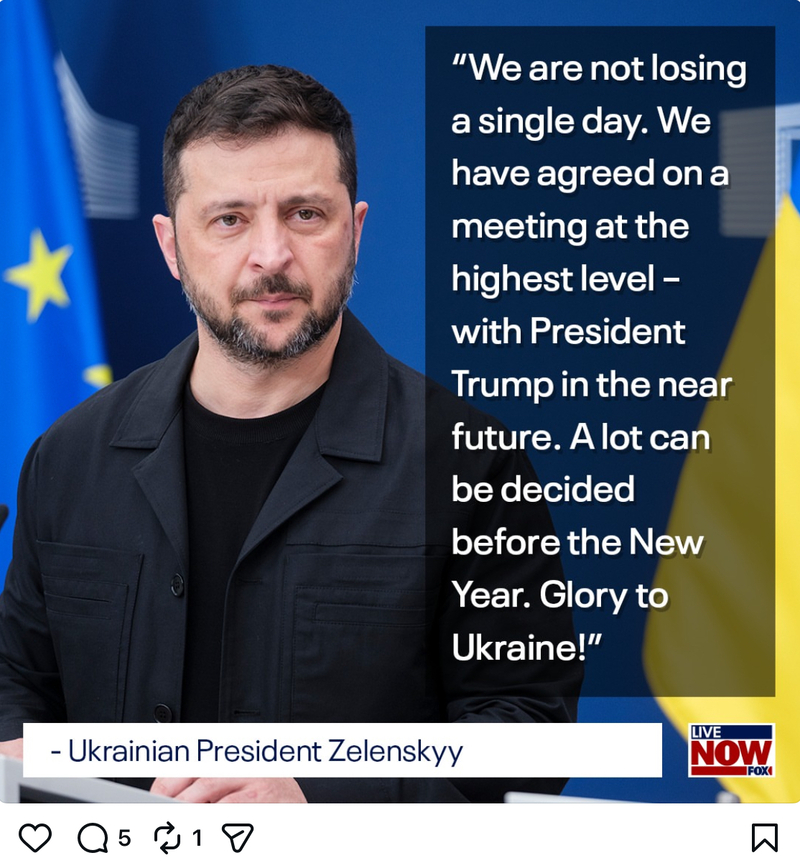
Zelenskyy told reporters and followers on social media that the plan under discussion is now about 90 percent complete, and that discussions in Florida will focus squarely on security guarantees for Ukraine, territorial issues and economic cooperation going forward.
“This is about security, stability and a future for Ukraine,” Zelenskyy said, acknowledging that while the plan is nearly finalized, no agreement is guaranteed until all key parties — including Europe and Russia — are on the same page.
A Nearly Finished Peace Framework
The peace blueprint being negotiated is the product of months of talks between Ukrainian officials and U.S. envoys, whose goal has been to build a structure capable of ending the war that began with Russia’s full-scale invasion in February 2022.
Zelenskyy and Trump’s teams streamlined earlier proposals into a 20-point draft that has been described by Ukrainian leaders as more attainable than previous plans.
Key components of the framework include security guarantees backed by the U.S. and allies, provisions for post-war reconstruction, and mechanisms for future economic cooperation.
While the precise details are still under negotiation, the plan aims to strike a balance between deterrence of future aggression and a durable cease-fire.
Despite this progress, territorial disputes remain a central stumbling block. Ukraine has resolutely refused to cede sovereign land — particularly in the Donbas region — as part of any peace arrangement, a position that continues to clash with demands from Russia and diplomatic proposals that call for potential compromises.
The Florida Meeting: Final Stretch or Fragile Hope?
The expected meeting at Trump’s Mar-a-Lago resort is significant not just for its timing but for its symbolism. Both leaders have been under intense domestic and international pressure: Zelenskyy to secure concrete security guarantees and territorial integrity, and Trump to demonstrate progress after months of intensive Ukraine peace talks.
Zelenskyy’s comments this week underline his belief that this weekend’s meeting could be decisive. He has emphasized that Europe should be involved in any final agreement — a nod to the broad alliance that has supported Kyiv throughout the war — even as he acknowledged logistical challenges in bringing European leaders into a rapid-fire diplomatic window.
Trump himself has not publicly confirmed the meeting’s agenda, but U.S. officials have described the talks as part of a “U.S.-led diplomatic push” to end the conflict.
A senior Ukrainian official quoted by AP News said the discussions will also include economic collaboration and reconstruction plans, underlining how peace efforts are being framed as part of a comprehensive post-war strategy.
Russia’s Reaction and Remaining Obstacles
Even as Kyiv and Washington coordinate closely, Moscow’s stance remains mixed. Russian President Vladimir Putin has indicated some theoretical openness to territorial exchanges under certain conditions, but insists that Russia should retain control of all of the Donbas region — a demand Ukraine rejects.

The Kremlin has also continued military operations in Ukraine even as diplomatic channels remain active, making clear that fighting persists even as leaders pursue negotiated solutions.
The unresolved questions surrounding the peace plan — from security guarantees and territorial integrity to involvement of European partners — mean that the Florida talks could bring clarity or expose cracks in the diplomatic process.
Either way, the stakes are high: a meaningful breakthrough could reshape the course of one of Europe’s deadliest conflicts in decades, while failure might entrench divisions further.
Looking Ahead
In the final days of 2025, Zelenskyy’s trip to Florida may be remembered as a critical moment in efforts to conclude a protracted war that has reshaped global geopolitics.
As the clock ticks toward Sunday’s meeting, analysts and international leaders alike will be watching closely — feelings of hope and skepticism in equal measure.
For Ukraine’s people and the broader international community, the outcome could mark either a new chapter of peace or a sobering reminder of the challenges that still lie ahead.