
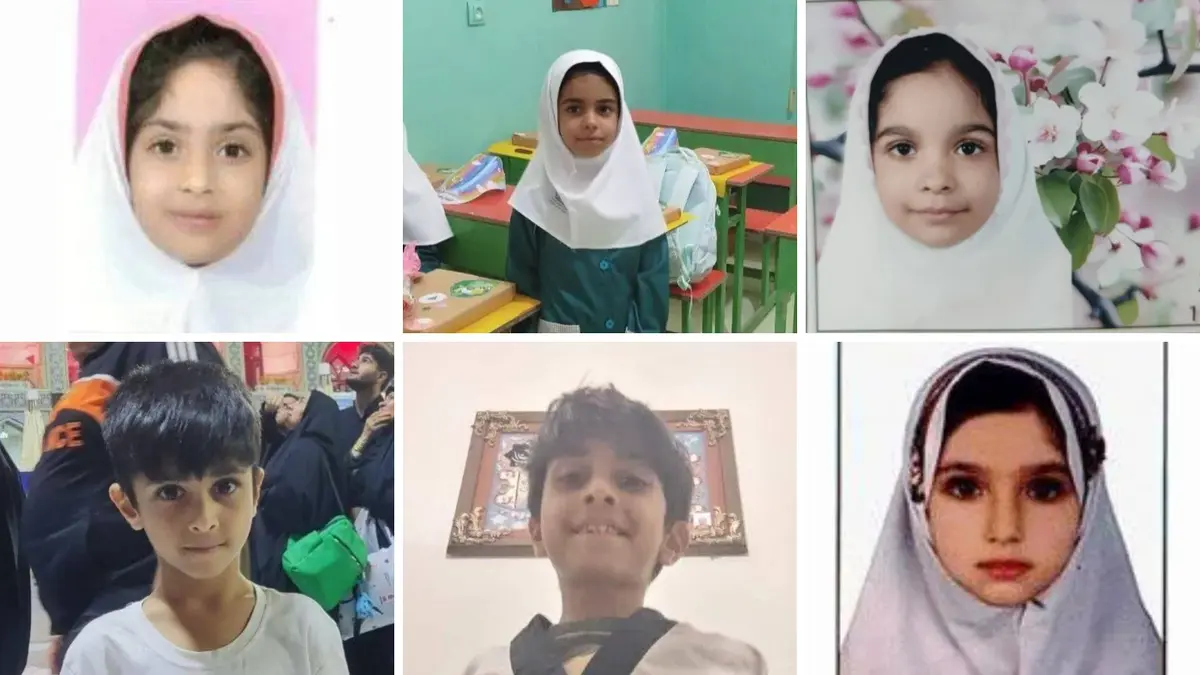
Around 175 people — most of them children — were killed Saturday when the Shajareh Tayyebeh elementary school in Iran was hit by what Iranian officials say was a U.S.-Israeli airstrike.
But the death toll wasn’t just the result of one bomb.
According to paramedics and survivors, it was a double-tap strike — a second bomb dropped deliberately on the same site to kill the people trying to survive the first one.
Where have we seen this happen before? In Gaza. And in the Caribbean.
A teacher and the school’s principal had moved a group of students into the prayer hall after the first explosion.
The principal called parents and told them to come pick up their children.
Then the second bomb hit the prayer hall.
“Only a small number of those who had taken shelter survived,” one Iranian Red Crescent Society paramedic told Middle East Eye. “Some parents recognized their children only because of the gold bracelets they were wearing.”
From reporting by Al Jazeera:
Footage circulating on social media showed a man clutching the remains of a child, which he said were those of a six- or seven-year-old, as he accused the US and Israel of war crimes.
The last time the US and Israel waged attacks on Iran in the 12-day war last June, the civilian toll in Iran was also heavy.
According to Iran’s Ministry of Health and Medical Education, thousands of civilians were killed or injured, and public infrastructure was damaged, during that conflict.
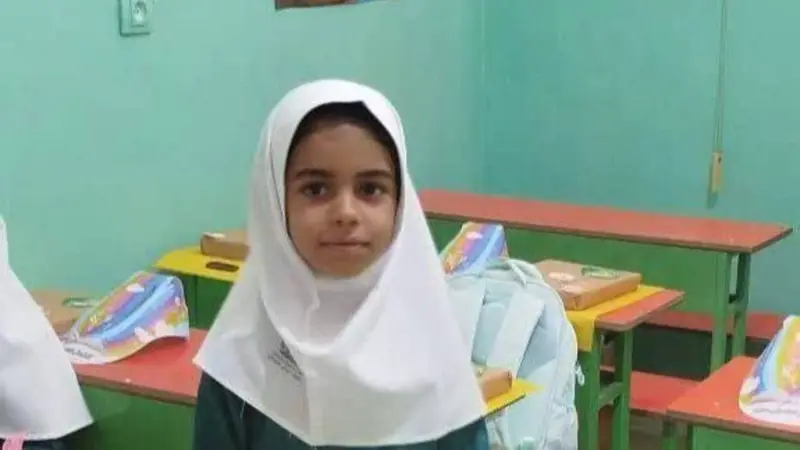
Names and Ages of Some of the Children Killed
Middle East Eye collected the names and ages of some of the children killed in the strikes using the following sources: Iran’s Gymnastics Federation, a handwritten list, and the Tasnim news agency.
Click this link to skip the table.
| NAME | AGE (years) |
|---|---|
| Hana Dehqani | 8 |
| Reza Habashian | 7 |
| Arya Bahadori | 9 |
| Ali Asghar Zaer | 8 |
| Zahra Bahrami | 7 |
| Ahmad Soltani | 8 |
| Hamed Par-ashegh-nezhad | 7 |
| Fatemeh Yazdan-panah | young girl (age unknown) |
| Mahdis Nazari | 7 |
| Athena Chamani-nezhad | 6 |
| Amirghasem Zaeri | 7 |
| Fatemeh Dorazehi | 10 |
| Arad Ahmadizadeh | 8 |
| Saman Karimzadeh | 7 |
| Nadia Shahmiri | 9 |
| Parham Ranjbari | 9 |
| Fatemeh Rahdar | 10 |
| Amir-Hassan Rasouli | 8 |
| Zahra Behrouzi | 8 |
| Mohammadhatam Raisi | 10 |
| Asna Raisi | 12 |
| Benyamin Jangjou | 8 |
| Mohammad-Sadra Zarei | 8 |
| Maryam Pazark | 10 |
| Liana Mohammadi | 7 |
| Sara Shayesteh | 5 |
| Zoha Pasand | 8 |
| Esra Zakeri | 9 |
| Salma Zakeri | 6 |
| Zahra Ansari | 7 |
| Fatemeh Fadav | 10 |
| Mahna Zarei | 2 months |
| Athareh Zarei | 10 |
| Alireza Zarei | 9 |
| Mohammadreza Shahsavari | 8 |
| Ehsan Saleminia | 6 |
| Fatemeh Zahra Karimi | 7 |
| Zeynab Bahrami | 10 |
| Mohammad Shah-dousti | 8 |
| Reza Barani | 7 |
| Athena Ahmadzadeh | 10 |
| Khadijeh Darvishi | 9 |
| Reza Ranjbar | 6 |
| Mohammad-Mehdi Chegini | 10 |
| Mohammadian Bahrami | 17 |
| Ali-Akbar Karyani Pak | 8 |
| Hananeh Mehdikhah | 7 |
| Mohammad-Ali Karyani Pak | 7 |
| Parsa Mokhtari-nasab | 12 |
| Arina Arab-Kish | 8 |
| Makan Nasir | 12 |
| Esra Farahi-Zadeh | young girl (age unknown) |
“There Was Nothing Left of Her”
The accounts from families who arrived at the school are almost unbearable to read — but they need to be read, because these are the human consequences of a war President Trump launched without congressional authorization and without a declaration of war.
The father of one girl killed in the second strike said the school had called and asked him to come immediately to take his daughter home.
By the time he arrived, she was gone.
“My little girl was completely burned,” he told Middle East Eye. “We could only identify her from her school bag, which she was still holding.”
“When I saw her smile after coming home from work, all my pain disappeared,” he said. “Now I don’t know what to do with this pain. I don’t know how to live with this.”
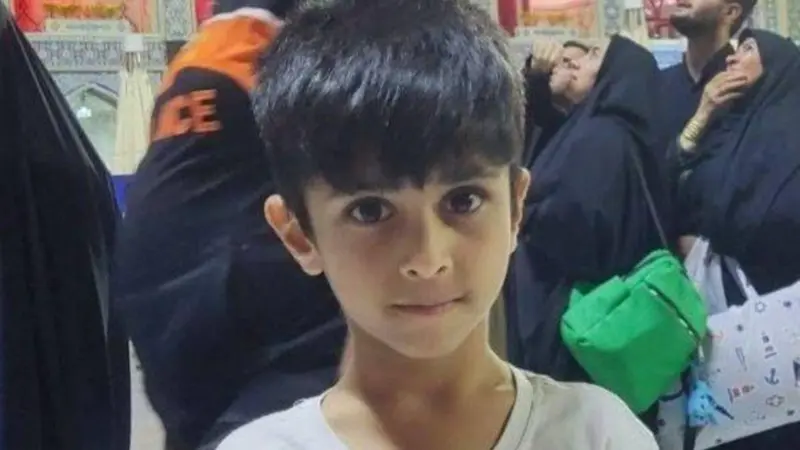
The mother of a boy killed at the school told NBC News that by the time she arrived, “the entire school had collapsed on top of the children.”
She described a scene of parents pulling children’s limbs and severed heads from the rubble.
51 children — 26 boys and 25 girls — one infant, and eight women make up the partial list of those killed. Partial, because the full accounting of the dead is still ongoing.
What a Double-Tap Strike Actually Means
A double-tap strike is exactly what it sounds like: you bomb a target, wait for survivors, rescuers, and first responders to arrive, then bomb the same site again.
The second strike is designed to maximize casualties among the people trying to help.
It is a tactic used by the U.S., Israel, and Russia.
It has been documented repeatedly in Gaza, where Israel has used it against hospitals, refugee camps, and designated “safe zones.” It is now being used in Iran.
The Iranian Red Crescent Society confirmed that the school bombing was not an isolated case.
Other double-tap strikes have been reported across the country since the bombing campaign began on February 28, including a Sunday evening attack on Niloofar Square in Tehran, where people had gathered to break their Ramadan fast.
A survivor at the square described the aftermath to Drop Site News.
After the first explosion, people tried to flee. Some turned back for their belongings.
Then the second strike hit.
“One of my friends… he was severed in half,” the survivor said. “Half of him was thrown to the side.”

The Red Crescent has issued a public warning urging Iranians not to rush to bombing sites.
“The first moments after an explosion are the most dangerous — some munitions are programmed to detonate again, turning rescuers and survivors into additional victims,” spokesperson Mojtaba Khaledi said.
Think about what that means: the Iranian Red Crescent is telling its own people not to help each other, because helping is what gets you killed.
“We Never Target Civilians”
Defense Secretary Pete Hegseth responded to the school bombing by saying the U.S. is investigating. “Of course, we never target civilians,” he said.
Secretary of State Marco Rubio offered a similar deflection: “The Pentagon would be investigating that, if that was our strike. Clearly, the United States would not deliberately target a school.”
The school is located near an Islamic Revolutionary Guard Corps compound, and it remains unknown whether it was deliberately targeted or struck through the kind of inadequate target vetting that has defined American airstrikes for decades.
But “we never target civilians” is not a statement that survives contact with the historical record. The United States has bombed schools — either deliberately or through reckless negligence — in Vietnam, Laos, Iraq, Afghanistan, and Pakistan.
The deadliest American school bombing was a secret CIA strike on a school in Laos during the Vietnam War that killed 182 students, staff, and civilians.
Israel has bombed schools in Gaza at every level of education in what critics have called a systematic policy of scholasticide.
Israeli Prime Minister Benjamin Netanyahu and former Defense Minister Yoav Gallant are currently wanted by the International Criminal Court for alleged war crimes and crimes against humanity.
Brown University’s Costs of War Project estimates that America’s 21st century wars have killed more than 400,000 noncombatants.
“We never target civilians” isn’t a defense. It’s a script.
The Pattern is the Point
The double-tap is not a mistake.
It is a deliberate tactical choice.
You don’t accidentally drop two bombs on the same location minutes apart.
The first strike creates victims.
The second strike is designed to create more.
The U.S. has carried out double-tap strikes before — on a bridge in Yugoslavia in 1999 while a passenger train was crossing, in Deir Ezzor, Syria in 2019 killing scores of civilians, at Ras Isa port in Yemen in 2025 killing 84 civilians, and on a boat in the Caribbean last September.
Israel has done it in Gaza at Nasser Hospital, killing more than 20 people including five journalists, and in al-Mawasi, a supposed safe zone, where more than 90 people were killed.

Now the same tactic is being deployed in Iran — against a girls’ school, against a public square during Ramadan, against a civilian population that has no role in the decisions of its government and no power to stop what is happening to it.
Over 1,000 Dead in Four Days
The Iranian Red Crescent says more than 1,000 Iranians have been killed in four days of U.S. and Israeli bombing. Iran’s retaliatory strikes have killed six American service members, 11 Israelis, and an unknown number of people across Gulf states that have come under Iranian fire.
Thousands of mourners filled the streets of Minab on Tuesday for mass funerals. Parents carried photos of their dead children. The grief was visible from space on social media — but functionally invisible on American cable news, where the deaths of Iranian children do not generate the same coverage as the deaths of American soldiers.
The children of Minab did not choose this war. They did not vote for it. They did not authorize it.
They were sitting in a classroom on a Saturday morning when the first bomb hit, and they were sheltering in a prayer hall when the second one landed on top of them.
Their names are being published, one by one, by journalists who believe those names matter.
They should matter to every American whose tax dollars paid for the bombs.