


The satellite companies, Planet Labs and Vantor, have imposed blackouts on satellite imagery from the Middle East — cutting off the very tool journalists used to prove a U.S. Tomahawk missile killed 175 people at an Iranian girls’ school.
On February 28, the first day of Operation Epic Fury, a missile slammed into the Shajareh Tayyebeh girls’ elementary school in Minab, Iran. At least 175 people were killed — more than 100 of them children, sitting in class at 10:45 in the morning.
Parents who’d rushed to pick up their kids after hearing about the airstrikes didn’t make it in time.
Within days, open-source investigation teams at the New York Times, the Washington Post, Bellingcat, BBC Verify, NPR, and others used satellite imagery and video analysis to determine that the school was almost certainly hit by an American Tomahawk cruise missile.
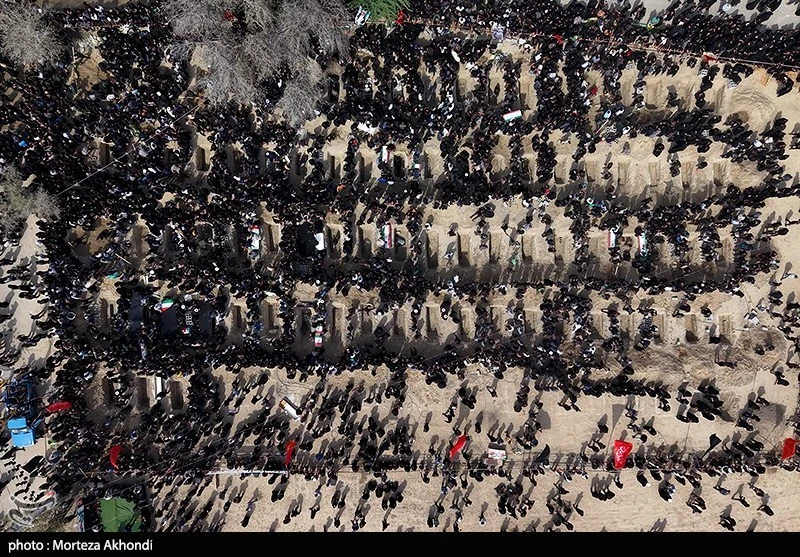
The evidence was overwhelming: verified footage showing a missile with the Tomahawk’s distinctive cruciform wings diving into the compound, missile fragment photographs consistent with Tomahawk components, and the simple fact that the U.S. is the only party in this conflict that uses them.
President Trump claimed Iran hit its own school. Military experts dismissed that as baseless. A Pentagon investigation’s preliminary findings have since confirmed what the satellite imagery already showed: a U.S. targeting error killed those children.
And now, the companies that provided the imagery making that accountability possible have shut the door.
The Blackout
Planet Labs, which operates the world’s largest fleet of Earth-imaging satellites, initially imposed a 96-hour delay on releasing imagery from the Middle East when the war began on February 28.
By March 10, the company extended that to a full two-week blackout — covering the entire war theater, including all of Iran, Gulf states, and areas near U.S.-allied military bases.
Vantor (formerly Maxar), the other major provider, implemented its own restrictions, limiting who can request new images or purchase historical imagery from areas where U.S., NATO, and allied forces are operating.
Both companies insist no government told them to do this. Planet Labs said it made the decision after consulting with military and intelligence experts and wanted to prevent its imagery from being “tactically leveraged by adversarial actors.”
The Pentagon declined to comment.
But here’s the financial reality that makes those claims of independence hard to swallow: Planet Labs, Vantor, BlackSky Technology, and Spire Global — the “big four” commercial satellite operators — collectively pull in $6 to $7 billion annually from Pentagon contracts. You don’t bite the hand writing checks that large.
Then Came the Leaked Guidance
On March 24, independent journalist Ken Klippenstein published a leaked U.S. Space Force document that confirmed what many suspected: the Pentagon had been actively dictating to satellite companies how to describe damage from the war.
Visit Ken Klippenstein’s Substack (after you finish reading this story, of course).
Visit Ken Klippenstein’s Substack and bookmark it. Or better yet, sign up for his newsletter. Ken’s sources inside the Intelligence community mean he has the breaking news stories and the inside scoop about what’s really going on inside the federal government.
Ken recently broke the story about a secret list of names that ICE was using and it explained why they were snapping photos of protester’s faces, license plates, and IDs. He’s good people. 100% Resist Hate approved. ✅
The guidance instructed operators to avoid language that implies “battle damage assessment or operational conclusions.”
Companies were told not to say things like “target destroyed” or “structure rendered inoperable.” Instead, they should use sanitized phrasing like “imagery shows the structure largely collapsed with debris covering the building footprint.”
Klippenstein published documents providing guidelines for the satellite companies on his Substack:
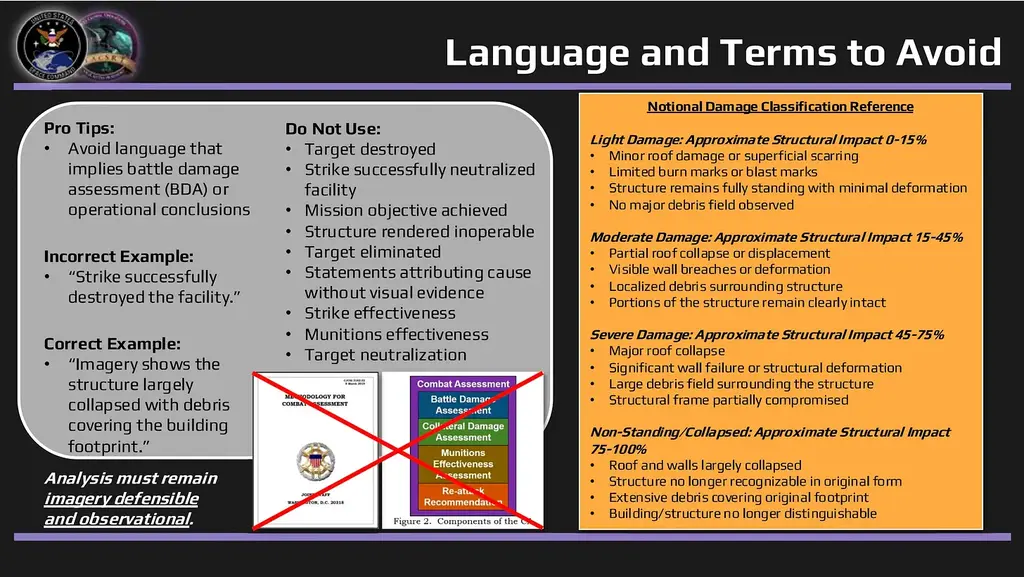
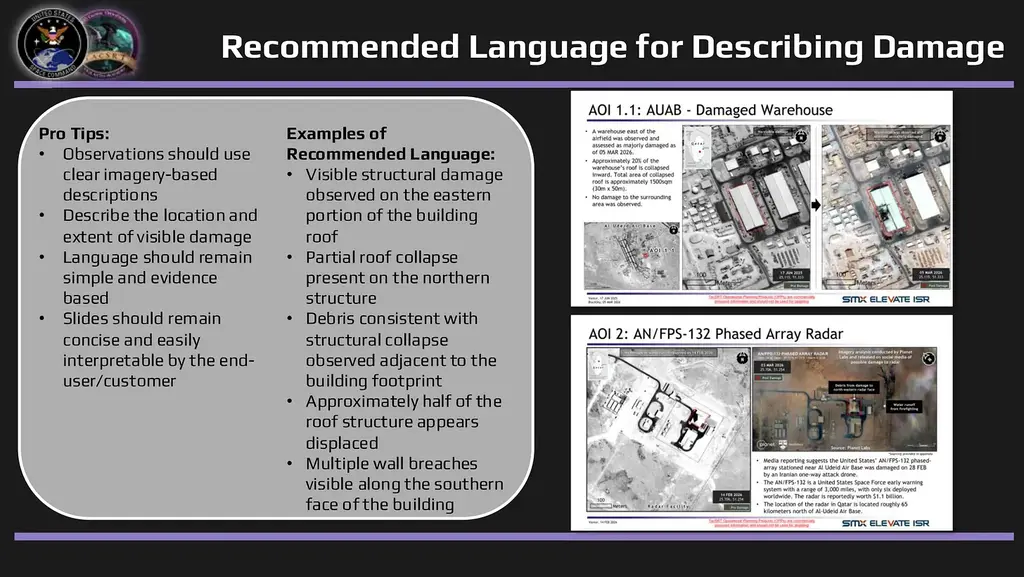
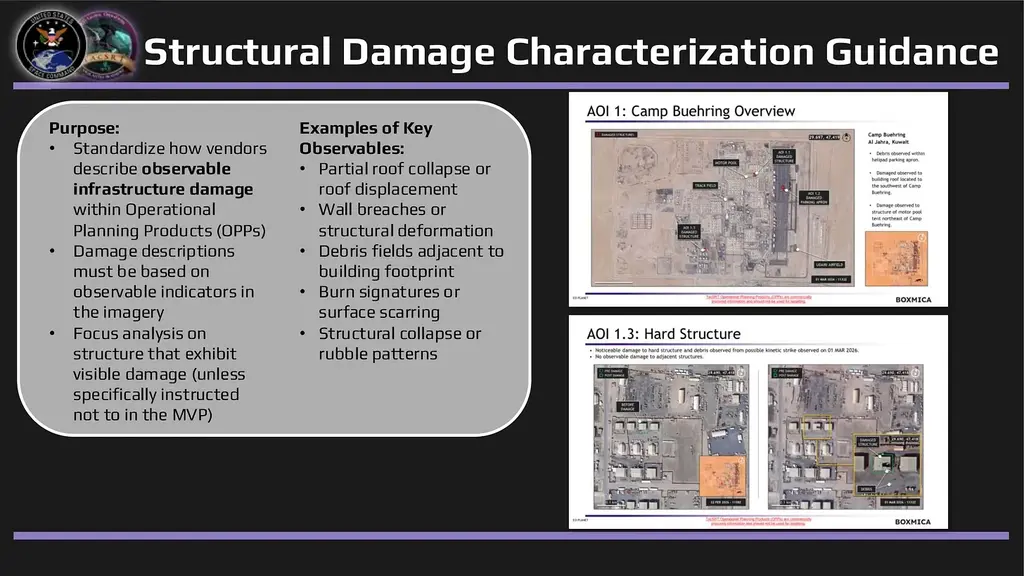
In other words: describe what you see, but don’t tell anyone what it means.
This isn’t just about vocabulary.
It’s about controlling the flow of information during a war that Congress never authorized, that has already killed more than 1,300 Iranian civilians according to the Iranian Red Crescent, and that the Trump administration is prosecuting with what Defense Secretary Pete Hegseth proudly called “no stupid rules of engagement.”
Why This Matters
Satellite imagery has become one of the most important accountability tools in modern journalism. It’s how investigators documented war crimes in Ukraine.
And it’s how multiple independent teams proved that a U.S. Tomahawk — not an Iranian missile — destroyed a girls’ school full of children.
Without timely access to commercial satellite data, journalists and independent analysts are left relying on exactly two sources of information: official government statements and whatever leaks through the cracks.
The Pentagon knows this. That’s the point.
Carlos Gonzalez, Bellingcat’s head of research, acknowledged the challenge but said his team will adapt by combining older satellite data with other open-source evidence for geolocation and infrastructure analysis. That’s admirable, and Bellingcat’s track record speaks for itself. But the delay still matters. In the critical hours and days after a strike, when evidence is fresh and official narratives are being constructed, a two-week blackout gives governments an enormous head start on controlling the story.
“In cases like the Minab missile attack, timely satellite imagery is essential for verifying damage, locating impacts, and cross-checking eyewitness content and other open-source evidence.”
Carlos Gonzalez, Bellingcat head of research
And the vacuum isn’t staying empty. Researchers and AFP have already documented AI-fabricated satellite images circulating on social media within days of the restrictions taking effect — including Iranian state-aligned media publishing manipulated images purporting to show destroyed U.S. radar equipment that were actually pulled from unrelated Google Earth imagery.

When real information disappears, fake information fills the void. Every time.
The Pattern
Pentagon beat reporters have described the level of secrecy surrounding the Iran war as unprecedented. Multiple reporters told CNN that operational questions are routinely referred to the White House rather than answered by the military.
Information arrives via tweets and video clips with no opportunity for follow-up questions. Hegseth has accused the press of covering service member casualties to “make the president look bad.”
The satellite blackout is just one piece of a broader information control strategy. The administration is prosecuting a major military operation — nearly 2,000 targets struck with more than 2,000 munitions, according to the head of U.S. Central Command — while simultaneously ensuring the American public has as little independent visibility into that operation as possible.
When a government wages war and then works to prevent its own citizens from seeing the results, that’s not national security. That’s censorship with a defense budget.