

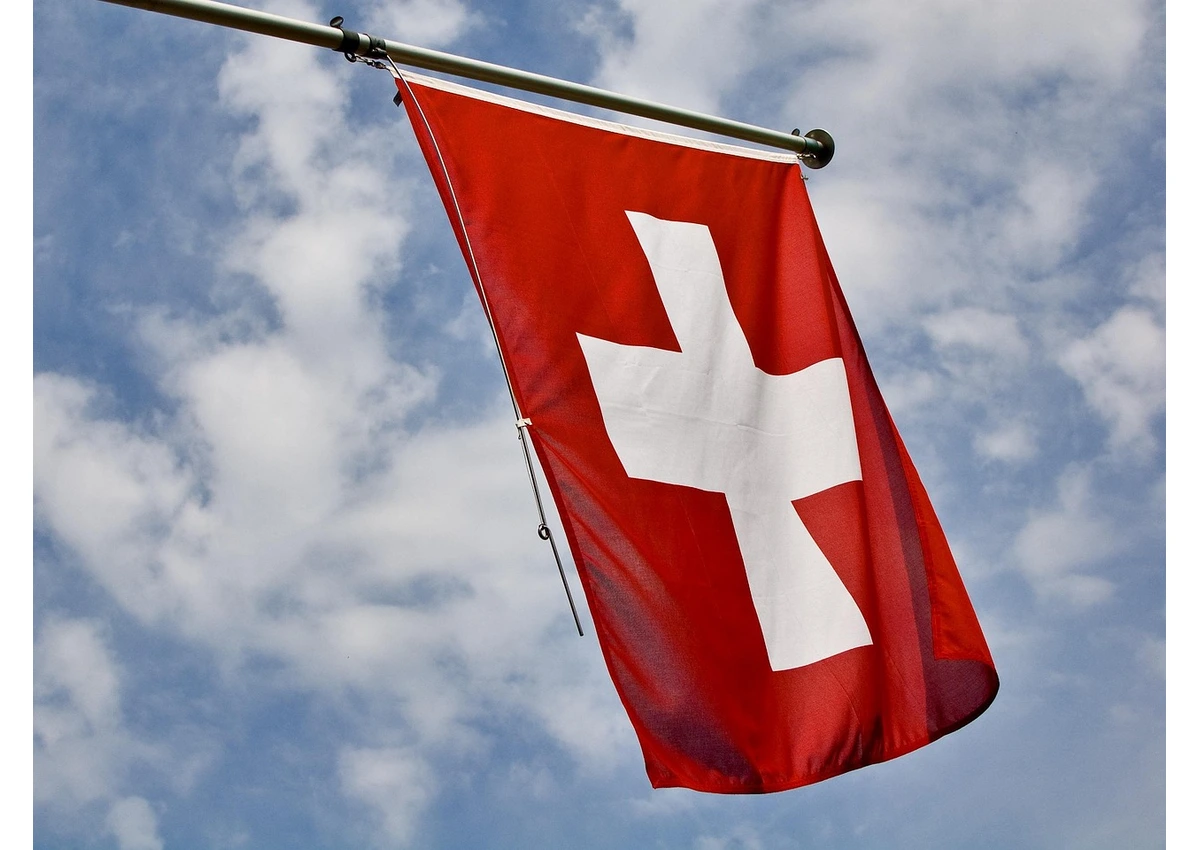
Switzerland announced Friday that it will not approve any new weapons export licenses to the United States for the duration of the war on Iran — a decision rooted in Swiss neutrality law that carries real diplomatic weight even if the dollar amounts are modest.
The move is the latest sign that America’s closest allies are distancing themselves from the conflict rather than lining up behind it, and it arrives the same week that Trump publicly called NATO allies “COWARDS” for refusing to help reopen the Strait of Hormuz.
What Switzerland Actually Did
The Swiss government said in a formal statement that arms exports to any country involved in the international armed conflict with Iran are now prohibited under the country’s War Materiel Act, a 1996 federal law that ties export licensing to the principles of human rights and neutrality.
“Exports of war materiel to the USA cannot currently be authorised,” the government said.
The ban applies to all new export licenses. Existing licenses — which the government reviewed and determined have no direct relevance to the Iran war — will remain valid for now, but an interministerial expert group will conduct regular reviews and can suspend or revoke them if circumstances change.
Dual-use goods, military-specific items like training aircraft and simulators, and products affected by Iran sanctions will also face ongoing scrutiny.
The decision formalizes what was already happening in practice. No new arms export licenses have been issued to the United States since Operation Epic Fury began on February 28.
Switzerland has also partially closed its airspace to the U.S. military. Last weekend, the government rejected two American flyover requests tied to Iran war operations while approving three others that were determined to be unrelated to the conflict.

Going forward, any American military overflights that exceed normal levels will be denied unless their purpose is clearly disconnected from the war.
The Money and the Message
In strictly financial terms, the immediate impact is limited. The United States was the second-largest importer of Swiss arms in 2025, purchasing roughly $94.2 million worth of materiel. That’s a rounding error in the Pentagon’s budget.
Switzerland is not a major arms supplier to the American military in the way that, say, South Korea or the UK is.
But the significance isn’t in the dollar figure. It’s in what the move represents. Switzerland — a country that has maintained formal neutrality since 1815, that hosts the Geneva Conventions, that serves as a diplomatic back channel for countries that don’t talk to each other — is publicly and legally declaring that the U.S.-led war on Iran is an armed conflict that triggers its neutrality obligations.
That’s a formal legal finding, not a political opinion. It carries weight.
Swiss Defence Minister Martin Pfister said the government doesn’t expect backlash from Washington. The application of neutrality law, he argued, shouldn’t come as a surprise to anyone. “The US knows the maxims of Swiss foreign policy,” Pfister told reporters.
That may be optimistic. This is a president who has publicly berated allies for failing to contribute to the war effort and has threatened economic consequences for countries that don’t fall in line.
A Pattern Across Europe
Switzerland’s decision is part of a broader European pattern of resistance to the Iran war that has been building since the conflict’s first days.
When Trump demanded earlier this week that NATO allies help secure the Strait of Hormuz — the critical Gulf chokepoint through which roughly 20% of the world’s oil normally flows — the response from Europe was almost uniformly cool.
Germany’s foreign minister said Berlin had no plans to join military operations during the conflict.
The UK’s Prime Minister Keir Starmer said flatly that Britain would “not be drawn into the wider war.” Greece, Italy, and other EU members said much the same.
Spain went further, denying the U.S. the use of joint military bases at Rota and Morón for strikes on Iran. France has called the strikes a violation of international law. Poland’s foreign minister said he saw no direct threat to Europe from Iran prior to the U.S.-Israeli strikes.
The European Council met in Brussels this week and called for “de-escalation and maximum restraint,” alongside a moratorium on strikes against energy and water infrastructure.
A separate joint statement from France, the UK, Germany, Italy, the Netherlands, Japan, and Canada condemned Iran’s attacks on commercial shipping — but pointedly did not endorse the military campaign that provoked them.
Switzerland’s arms ban echoes its own precedent. Following the 2003 U.S.-led invasion of Iraq, the Swiss government imposed similar bans on weapons exports and military overflights for countries involved in that war.
It also previously blocked allied nations from transferring Swiss-made military equipment to Ukraine — a position that frustrated NATO partners and prompted some Swiss defense companies to shift production abroad to avoid the restrictions.
In December, Swiss lawmakers passed reforms that would have relaxed export rules for a group of 25 countries, including the United States, even during conflicts. But those reforms haven’t taken effect, and the government exercised its veto on neutrality grounds anyway.
What It Means for the Bigger Picture
The broader dynamic here is worth paying attention to. The United States launched the largest military operation in the Middle East since the 2003 Iraq invasion — and three weeks in, not a single European NATO ally has joined the fight.
Europe’s posture has been consistent: calls for de-escalation, refusals to participate in offensive operations, and a growing willingness to publicly challenge the legal and strategic basis of the war itself.
This matters because the Iran war was sold, in part, as a defense of shared Western interests — preventing Iranian nuclear weapons, protecting global energy flows, projecting strength. But the countries that are supposed to share those interests are instead watching their own energy prices spike, their own economies take hits, and their own Gulf partners absorb Iranian missile strikes, and concluding that the war is making all of those problems worse, not better.
Switzerland’s arms ban is a small but symbolically potent expression of that conclusion.
A country with two centuries of unbroken neutrality has looked at the U.S. war on Iran and determined, formally and legally, that it cannot be a party to it — even indirectly, even at the margins.
When your most diplomatically careful allies start drawing lines, it says something about where the lines are.