


Editor of Resist Hate: If anyone is interested in creating or joining a movement to start investing in Gaza 🇵🇸, let me know in the comments. I’ll create a public User Group in our Pro-Democracy Community (membership is free), and anyone who wants to help can join. We’ll use it as a meeting place to plan events and brainstorm ideas of activities we can engage in (like fundraising efforts).
I’m also willing to design a T-shirt once we have an organization, group name, or logo. It could also just be a graphic design or a quote related to supporting Palestinians. All proceeds from shirt sales could be used to fund our activities or we could donate the proceeds to another organization that’s already doing amazing work “in Gaza.”
One final thought: In order to counter the lack of accurate information and details about the war crimes/genocide in Gaza from legacy media, and the propaganda coming from Israel on social media, a website could be very helpful.
I thought of creating a website to share information about our group, accurate information, frequent updates, and a page of names of the children (or journalists. Separate pages for each?) killed by Israel. The names will slowly scroll up the page, giving visitors a visual representation of the insanely high number of children killed.
It’ll be helpful to have a scrolling list that “never ends” (unless someone sits there for an hour and actually reaches the end of the list. Photos could also be included if we can get them.
As the sole Owner/Designer/Reporter/Writer/Editor of the ResistH8.com website, I wouldn’t have time to maintain a second one. I’d be happy to build the basic site (anyone with minimal web design skills could do it) then it would be handed over to a volunteer interested in working on the memorial pages—or conducting research and outreach to get names (possibly photos).
Whatta ya say? Let’s do this! 🤩
I have the feeling I wasted too much time thinking about all of this when it’s possible no one else wants to do it. 😳
Over the past two years, activists across the world ramped up calls for divestment from Israel. On university campuses and at meetings of pension boards, the same call has become increasingly prominent: pull money away from anything tied to Israel.
But now that a fragile ceasefire may be taking hold, I want to offer a simple, slightly provocative suggestion: If you care about Palestinian lives, don’t just divest from Israel. Invest in Gaza.
And I mean that quite literally.
According to a joint damage and needs assessment conducted by the United Nations, World Bank and European Union a few months ago, about $53.2 billion will be required over the next decade to help Gaza recover from the destruction wrought by the war. (Some sources cite an updated figure of more than $80 billion.)
Of this, at least $30 billion is to repair physical infrastructure — homes, water systems, roads and more. Another $19 billion is needed to address the collapse of Gaza’s economy and public services: shuttered businesses, lost wages, halted schooling, broken clinics.
But even before anything is rebuilt comes the problem of the debris. According to that same assessment, somewhere between 41 and 47 million tons of rubble now litter Gaza — maybe more. Not a single new road can be laid, or foundation poured, until that is cleared. That work alone could cost hundreds of millions of dollars and take months of careful, often dangerous work.
And if Gaza is to be more than a symbol of tragedy — if it is to become a place where young people can live, work, and build a future — it will need productive investment.
Physical infrastructure alone won’t deliver prosperity. The creation of markets and sustained economic growth requires investment in businesses, job creation, job training and entrepreneurship. That, too, must be part of the agenda.
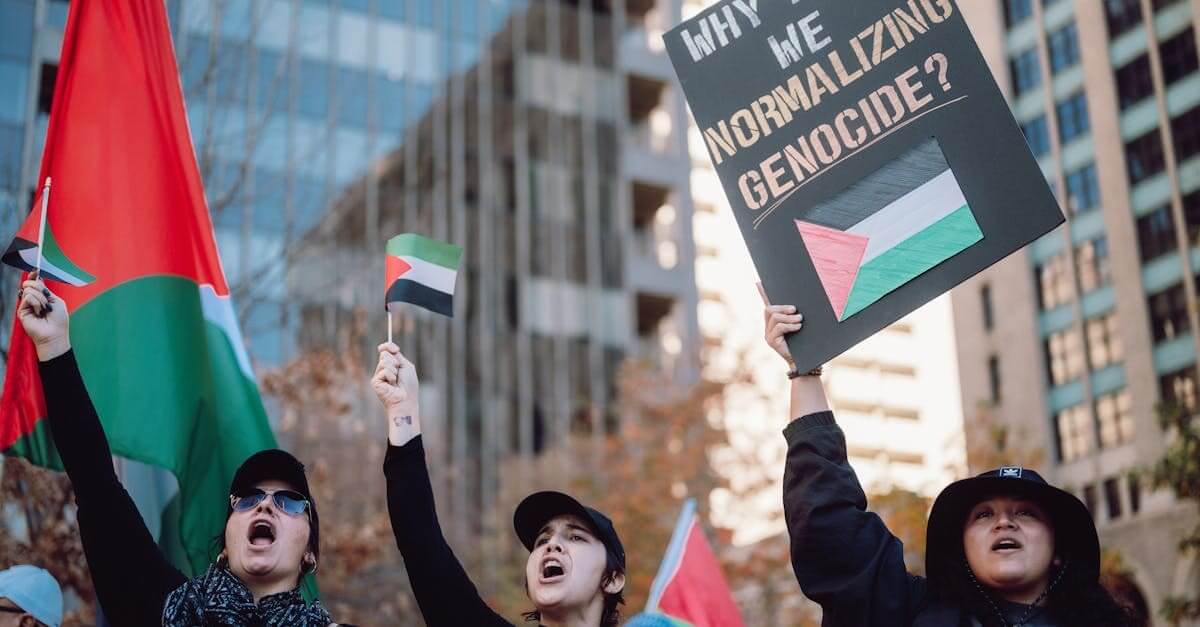
Which means it’s time for the pro-Palestinian activists who have protested in cities and on college campuses all over the world since October, 2023, to change their tune. If you were marching for a ceasefire in Gaza; if you were pushing institutions to divest from Israeli-linked firms; if you’ve held a sign that says “Free Palestine” — it’s time to reconsider your tactics.
Imagine if even a fraction of the energy spent on divestment campaigns was channeled into reconstruction and development funds. Universities could create fellowships, specifically for Gaza residents, to give them the training necessary to bring their territory into a better future.
Student groups could partner with international NGOs to fund the development and continued operations of schools or clinics. Municipalities that have severed ties with Israeli investments could reinvest that capital in Gaza’s public health or housing.
It’s easy to say, “We won’t fund oppression.” It’s harder — and far more meaningful — to say, “We will fund rebuilding.”
That pledge is desperately needed. There are encouraging headlines about funding for Gaza, but, as of yet, little cold, hard cash.
In theory, international donors will step in. The United States-backed “20-point plan” includes reconstruction of Gaza as a pillar, but does not attach a promise of concrete funding. The U.N. recently confirmed that multiple countries, including the U.S., have shown “willingness” to help fund the monumental effort, but offered no specifics.
The Gulf states and other regional actors have expressed interest in supporting postwar rebuilding, but have not yet made any clear commitments. An exception is the European Union, which has pledged €1.6 billion to support Gaza’s reconstruction. That’s a very generous amount — but a tiny fraction of what’s required.
The political will may exist in principle. But in practice, many of these promises remain vague, contingent or politically fragile. And they come at a moment when investment in global foreign aid is trending in the opposite direction. President Donald Trump’s administration has shuttered USAID offices; bilateral development budgets are shrinking; and public tolerance — especially in Western democracies — for large-scale foreign aid packages is wearing thin.
Relying solely on states and slow-moving aid agencies isn’t going to be enough. Not at the scale or pace that’s necessary. Gaza’s future won’t just depend on donor generosity — it will require new sources of capital and creative partnerships that can go beyond patching the ruins and instead build a foundation for long-term prosperity.
Of course, there are legitimate concerns, including the unsettled future of Gaza’s governance, the potential for further conflict with Israel down the road, the risk of Hamas interference, and the specter of corruption. But those are not reasons to do nothing. They’re reasons to build mechanisms for transparency and oversight.
If activists demand accountability from Gaza’s reconstruction, while proactively investing in it, they’ll be making a future for the strip not just possible, but better.
And here’s the uncomfortable truth: While divestment campaigns are great at signaling values, they rarely create concrete results that bring positive change to the lives of everyday Palestinians. They have yet to rebuild a single school. They don’t help provide health care.
Gaza needs more than slogans. It needs billions of dollars. Now.
So, to those in the pro-Palestinian movement: you’ve spent months organizing, marching and lobbying. You’ve asked the world to listen. Now’s your chance to lead. If you truly believe in justice for Palestinians, this is the time to show it. Put your money where your mouth is.
Don’t divest from Israel. 🇵🇸Invest in Gaza🇵🇸.