
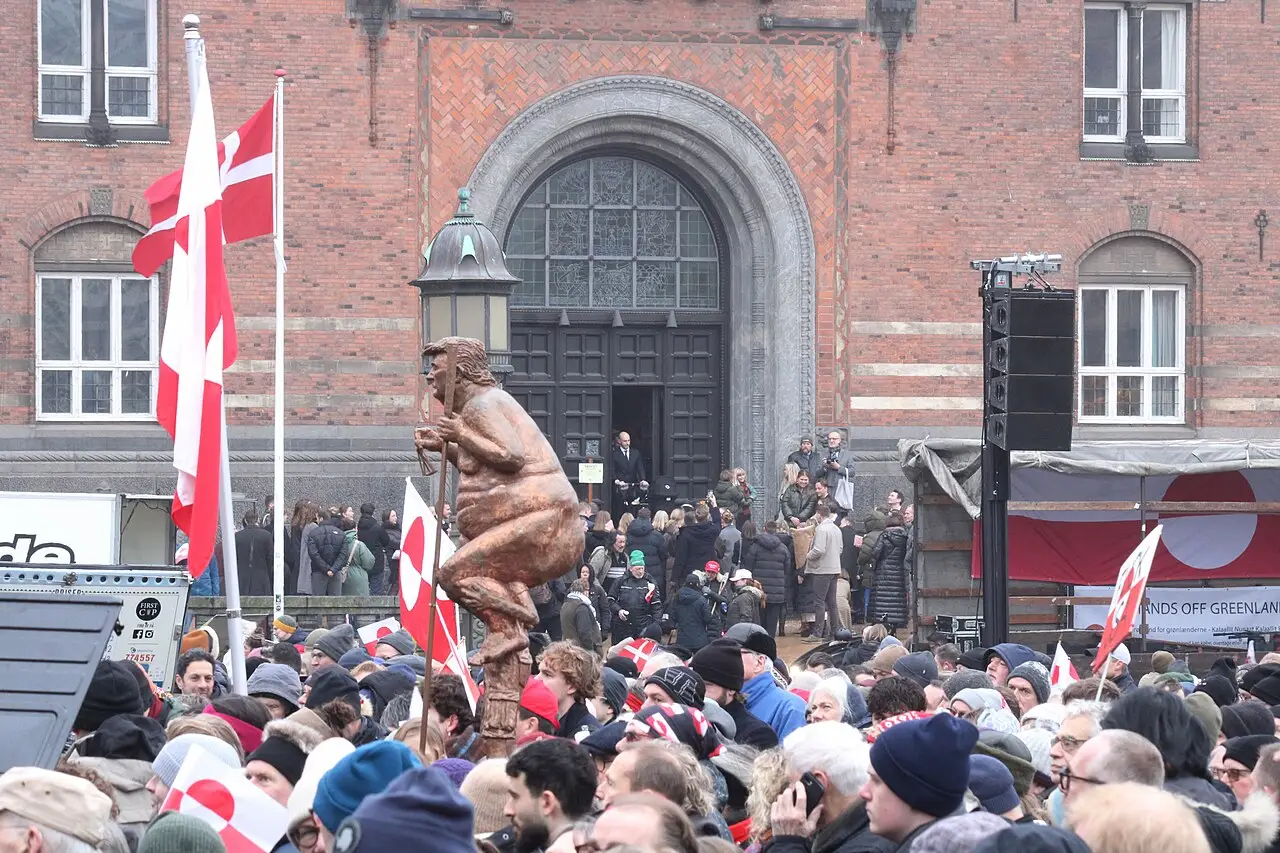

Denmark’s Prime Minister Mette Frederiksen and Greenland’s Premier Jens-Frederik Nielsen sat down with U.S. Secretary of State Marco Rubio on Friday at the Munich Security Conference, marking another chapter in an ongoing saga that has strained relationships between Washington and its European allies.
The meeting lasted just 15 minutes, but the message from all sides was clear: more talks are coming. Frederiksen described the conversation as “constructive” and confirmed that a high-level working group will continue diplomatic discussions. Nielsen echoed those sentiments, emphasizing that Greenland’s own interests were front and center during the exchange.
What’s This All About?
For months, President Donald Trump has made no secret of his desire to bring Greenland — a vast, mineral-rich Arctic territory that has governed itself semi-autonomously under Danish sovereignty — under U.S. control.
His administration has framed the push as a matter of national security, pointing to growing Russian and Chinese activity in the Arctic as justification for why America needs a stronger foothold there.
The rhetoric has been aggressive at times. Trump has previously threatened to take over Greenland, criticized European nations as “decaying” and “weak,” and questioned whether Denmark and its allies can adequately defend the strategically vital region.
Speaking to reporters on Friday, Trump said he believes Greenland will ultimately want to join the United States, while insisting relations with Europe remain positive.
A Brief Cooldown — Then Back to the Table
After months of heated language, Trump dialed things back in January, saying he had reached an understanding with NATO Secretary-General Mark Rutte that would give the U.S. greater influence in the Arctic territory.
That step back opened the door for formal diplomatic talks between the U.S., Denmark, and Greenland, which launched late last month.
Friday’s meeting at the Munich Security Conference appears to be a continuation of that diplomatic track, though the underlying tension is far from resolved.
The talks are happening against a backdrop of broader friction between the United States and Europe over trade threats, defense spending, and Trump’s confrontational approach to longstanding alliances.

Americans Aren’t On Board
Here’s the part the Trump administration may not want to talk about: the American public isn’t buying it.
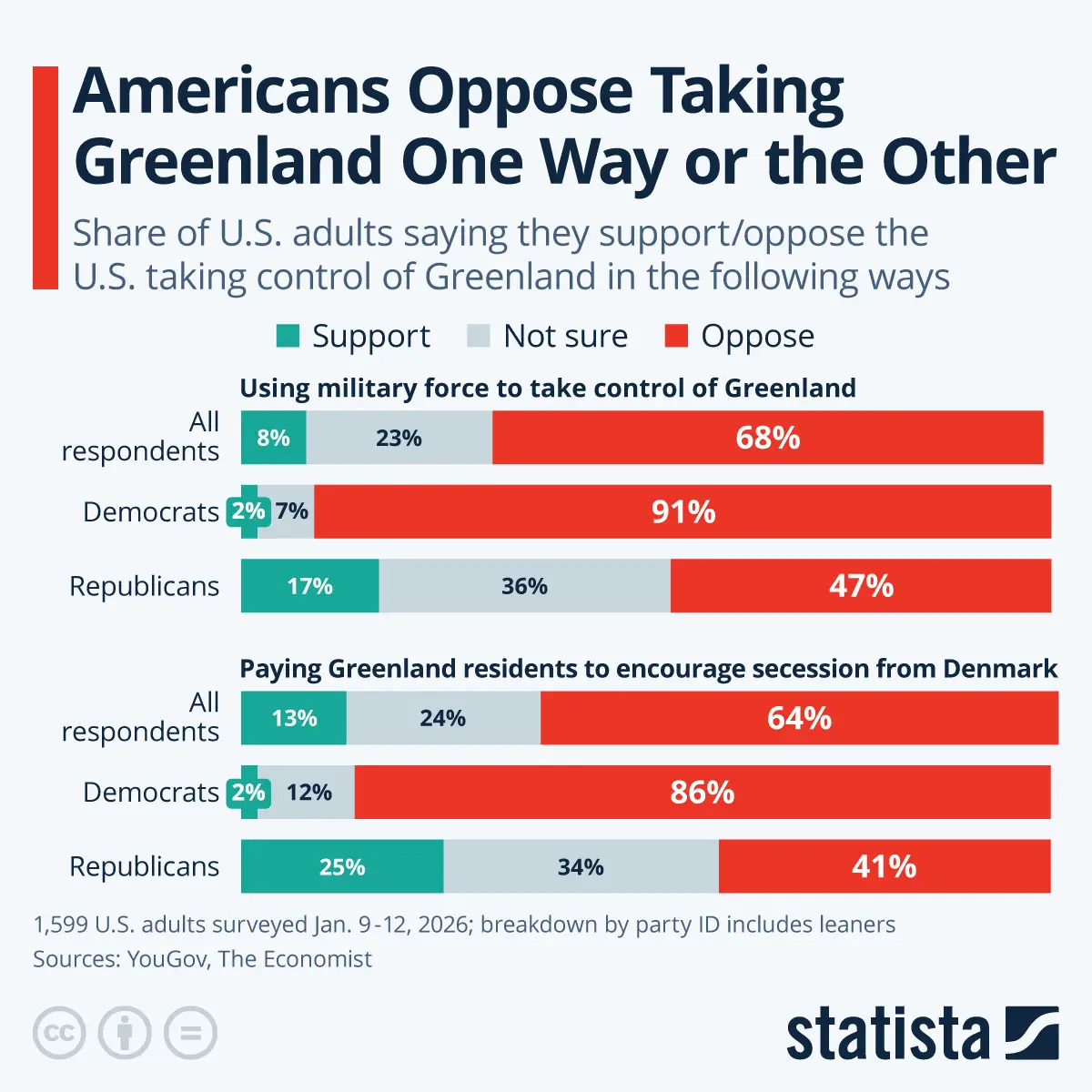
A new poll from the Associated Press and NORC Center for Public Affairs Research found that roughly seven out of ten U.S. adults disapprove of how Trump is handling the Greenland situation. That’s a worse rating than his already-low marks on foreign policy in general.
Perhaps more striking, about half of Republican voters also disapprove of his effort to turn Greenland into American territory. That kind of bipartisan pushback is notable for a president who typically enjoys strong support within his own party.
NATO Steps Up Arctic Presence
Meanwhile, the broader geopolitical picture is shifting. Sweden announced on Thursday that it would deploy fighter jets to patrol Greenland’s airspace as part of a new NATO mission called Arctic Sentry.
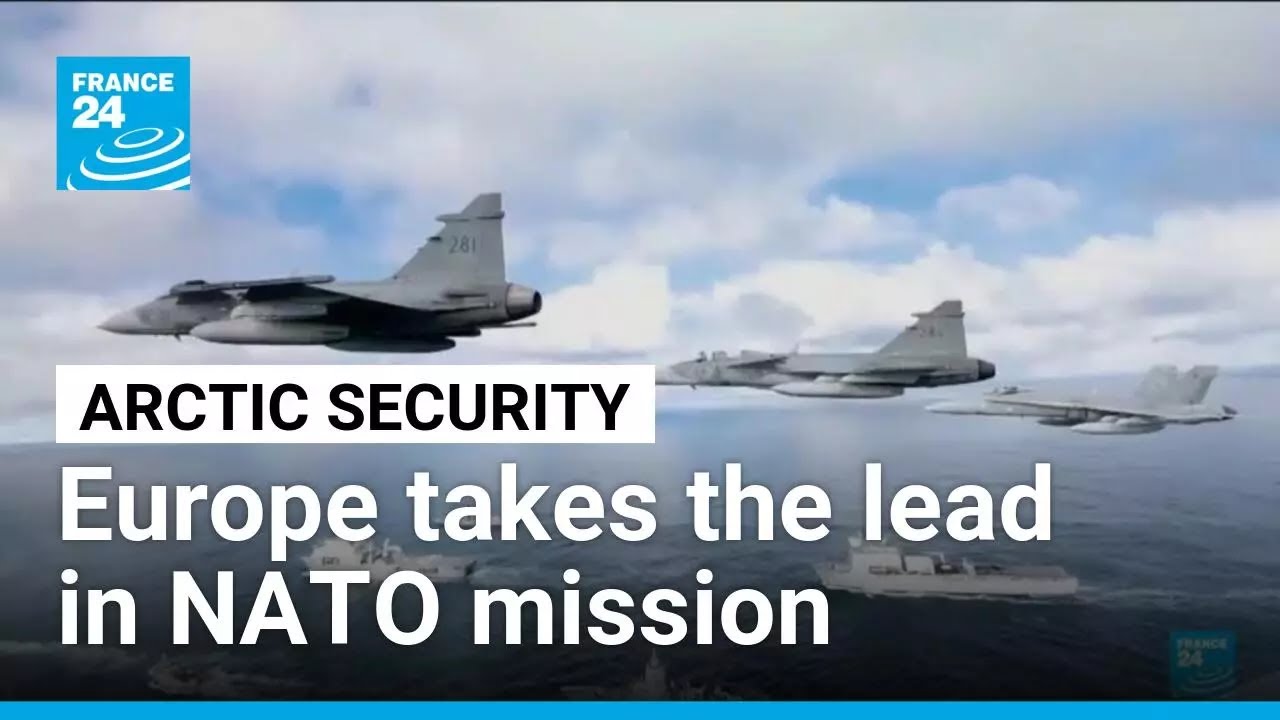
Swedish-made Gripen jets, already stationed in Iceland as part of a rotating NATO air policing force, will carry out the patrols. Swedish special forces will also participate in training exercises on Greenland soil.
Swedish Prime Minister Ulf Kristersson framed the deployment as part of NATO’s collective responsibility, noting that the Arctic is becoming increasingly important from a strategic standpoint.
The move is widely seen as an effort to address Trump’s security concerns about the region while reinforcing that European allies are capable of defending it.
What Comes Next
The diplomatic path forward remains uncertain. Denmark and Greenland have made clear that any decisions about Greenland’s future must respect the wishes of the Greenlandic people. Trump, for his part, shows no signs of abandoning his goal.
What’s clear is that this is no longer just a bilateral issue between the U.S. and Denmark. It has become a test of NATO solidarity, Arctic security, and the boundaries of American ambition under the Trump administration.
The high-level working group will continue its work, but the gap between what Washington wants and what Copenhagen and Nuuk are willing to accept remains wide.
For the people of Greenland — a population of roughly 56,000 who have spent decades building their own democratic institutions and moving toward greater self-determination — the stakes couldn’t be more personal. Their homeland has become a bargaining chip in a geopolitical chess match they didn’t ask to join.