

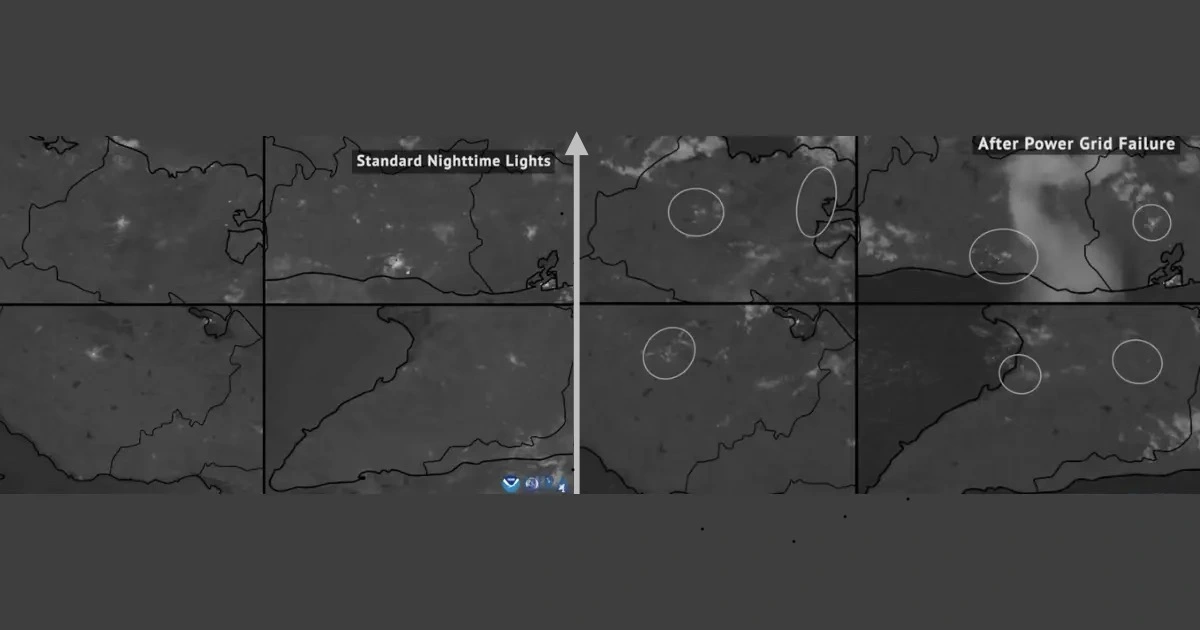
Cuba’s power grid collapsed on Saturday, plunging it into darkness for the third time in March — the second time in just five days — leaving the entire island without electricity as an American oil blockade continues to choke the country’s fuel supply.
The Cuban Electric Union, which operates under the Ministry of Energy and Mines, confirmed a complete blackout across the island.
The agency initially gave no cause for the outage but later attributed it to an unexpected failure at a generating unit at the Nuevitas thermoelectric plant in Camagüey province.
That single failure set off a chain reaction across other units still online, crashing the entire system.

The government activated what it calls “micro-islands” — small clusters of generating units designed to keep hospitals, water systems, and other critical infrastructure alive during a total grid failure.
But for millions of ordinary Cubans, the blackout meant another night navigating pitch-black streets with phone flashlights while food spoiled in powerless refrigerators.
A Country Running on Fumes
The collapse was not a surprise. Cuba’s power grid has been deteriorating for years, propped up by aging thermoelectric plants well past their useful life and corroded by the heavy, high-sulfur oil they burn.
Daily blackouts of 12 to 15 hours in Havana — and even worse in provinces outside the capital — have become the norm rather than the exception.
But the crisis accelerated dramatically in January, when the Trump administration signed Executive Order 14380, imposing tariffs on any country that directly or indirectly sells oil to Cuba.
The order effectively launched an oil blockade on the island.
Mexico, Cuba’s second-largest oil supplier, suspended shipments. Venezuela, historically Cuba’s most important energy partner, was already out of the picture after the U.S. military operation that removed Nicolás Maduro from power in January and cut off all Venezuelan oil to Havana.
Cuban President Miguel Díaz-Canel said the island has not received oil from foreign suppliers in three months. Cuba produces barely 40 percent of the fuel it needs to keep its economy functioning.
Without imports, the math “ain’t mathin’”.
The Human Cost
Behind the geopolitical tug-of-war, the toll on ordinary Cubans is terrible and getting worse by the day.
Hospitals have been forced to cancel surgeries. Ambulances cannot find fuel.
Medical equipment that requires continuous power — dialysis machines, ventilators, refrigerated medicines — fails during blackouts that can last 20 hours or more in some areas.
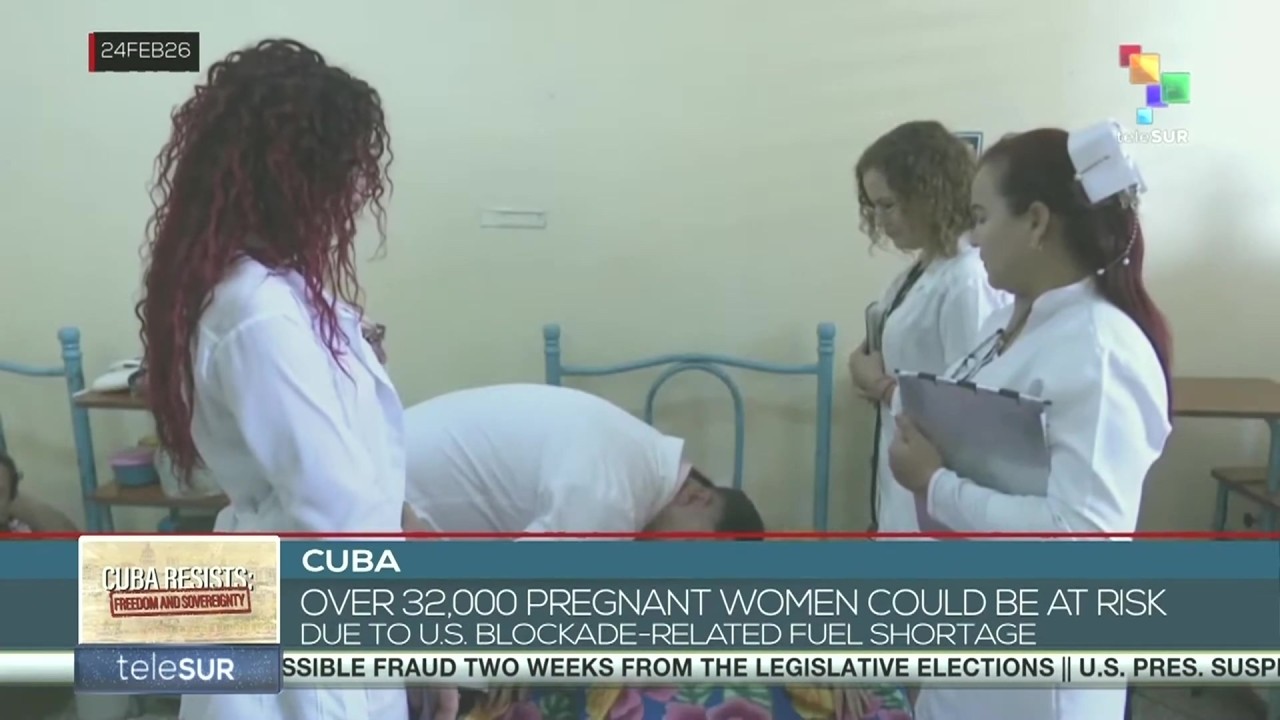
The United Nations has flagged the situation as a particular danger for more than 32,000 pregnant women who require continuous medical care.
Food is rotting. Without refrigeration, groceries spoil within hours.
Without fuel, farmers cannot harvest crops and trucks cannot deliver produce to markets.
Vendors at Havana’s farmers’ markets say fewer stalls open every day.
Prices are soaring as the Cuban peso continues to lose value.
Water pumps powered by diesel sit idle when fuel runs dry, leaving neighborhoods without running water.
Trash piles up in the streets because waste collection trucks have no gas.
Schools have shortened hours.
Businesses are closing.
“I wonder if we are going to be like this our whole lives,” Nilo Lopez, a 36-year-old taxi driver in Havana, told AFP. “You can’t live like this.”
Since 2021, more than one million Cubans — roughly 10 to 15 percent of the country’s population — have left the island. Most are working-age adults, draining the country of the labor force it desperately needs.
Trump Eyes a “Takeover”
The Trump administration has made no secret of its goals. U.S. officials have openly stated that regime change in Cuba is the objective, demanding that Díaz-Canel’s government release political prisoners, move toward political and economic liberalization, and ultimately step aside.
Trump himself has been remarkably blunt. After a previous grid collapse, he told reporters from the Oval Office that he believed he would soon have “the honor of taking Cuba,” adding that he could “do anything I want with it.”
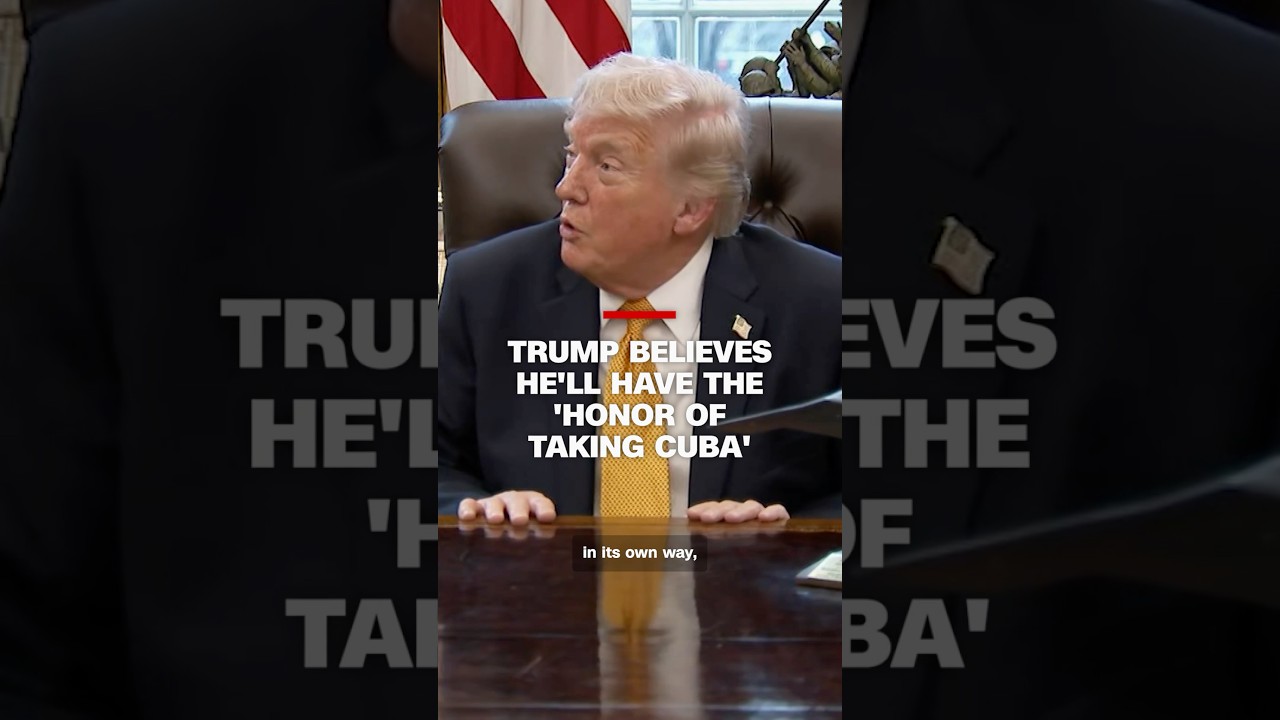
When pressed on whether a U.S. operation in Cuba would resemble the military capture of Maduro in Venezuela or the ongoing war with Iran, Trump said only: “I can’t tell you that.”
Díaz-Canel confirmed on March 13 that Cuban and American officials have been holding talks aimed at addressing the crisis, though details remain scarce.
Cuba has agreed to release 51 political prisoners, and the government has opened the door to investment from Cuban Americans living abroad — a significant shift for the communist state.
But critics of the administration’s approach argue that starving an entire population to force political change is not diplomacy. It is collective punishment.
The International Response
The international community has largely condemned the blockade. For 33 consecutive years, the United Nations General Assembly has voted by overwhelming majorities to condemn the U.S. embargo on Cuba.
UN Secretary-General António Guterres recently said he is “extremely concerned” about the humanitarian situation and warned it could worsen into outright collapse if Cuba’s oil needs are not met.
UN experts have described the fuel blockade as a serious violation of international law.
Humanitarian aid convoys have begun arriving on the island.
The Nuestra América Convoy, organized by activists from more than a dozen countries, delivered over 20 tonnes of food, medicine, surgical equipment, and solar panels to Cuba on March 21.
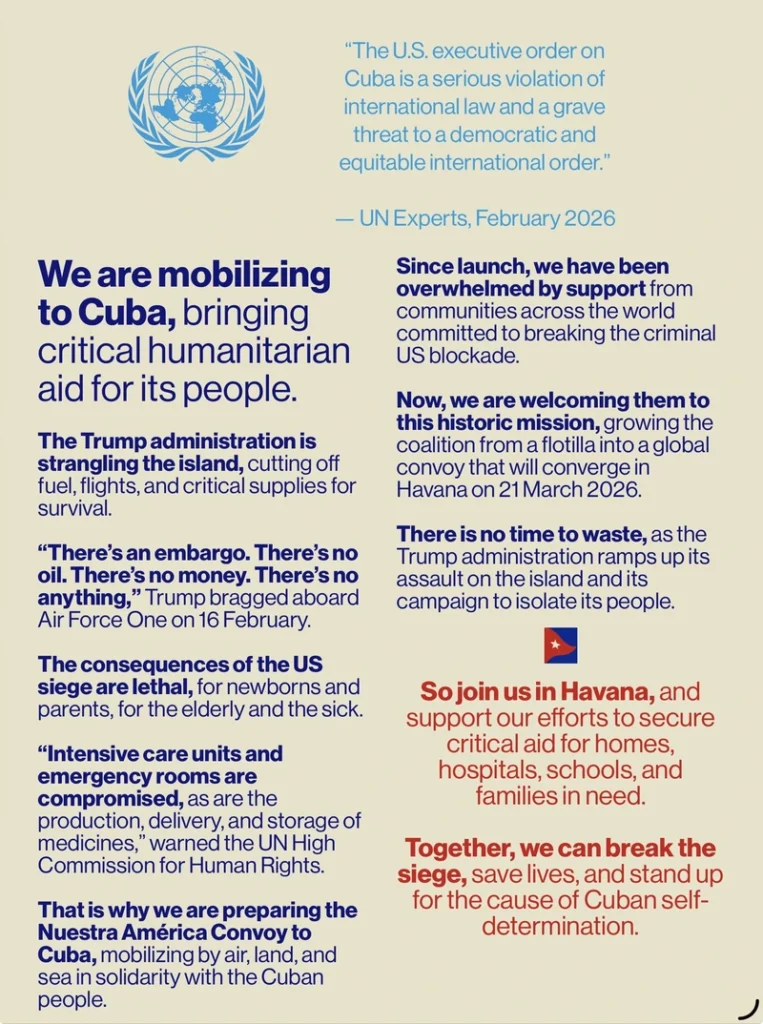
The effort drew parallels to the Gaza aid flotilla and included participants ranging from international journalists to elected officials.
In late February, the U.S. Treasury Department made a small concession, allowing the resale of Venezuelan oil to private companies in Cuba for “commercial and humanitarian use.” But analysts say this falls far short of the roughly 100,000 barrels per day the island needs to keep functioning.
Crumbling by Design
What is happening in Cuba is not simply the result of aging infrastructure or government mismanagement, though both are real factors.
It is the predictable, documented consequence of a policy designed to make life on the island unbearable in order to force political change.
The United States is not accidentally starving Cuba of fuel. It is doing so deliberately, with stated goals and measurable results.
The results are 10 million people sitting in the dark, wondering when the lights will come back on — and whether they will stay on long enough to cook a meal, charge a phone, or keep a hospital running.
Cuba’s grid will be patched together again, as it has been before.
The technicians keeping that decrepit system running have been called magicians for a reason.
But magic has its limits, and the people paying the price are not the ones sitting at any negotiating table.