

When the sun rose over Tehran on Sunday morning, no one could see it.
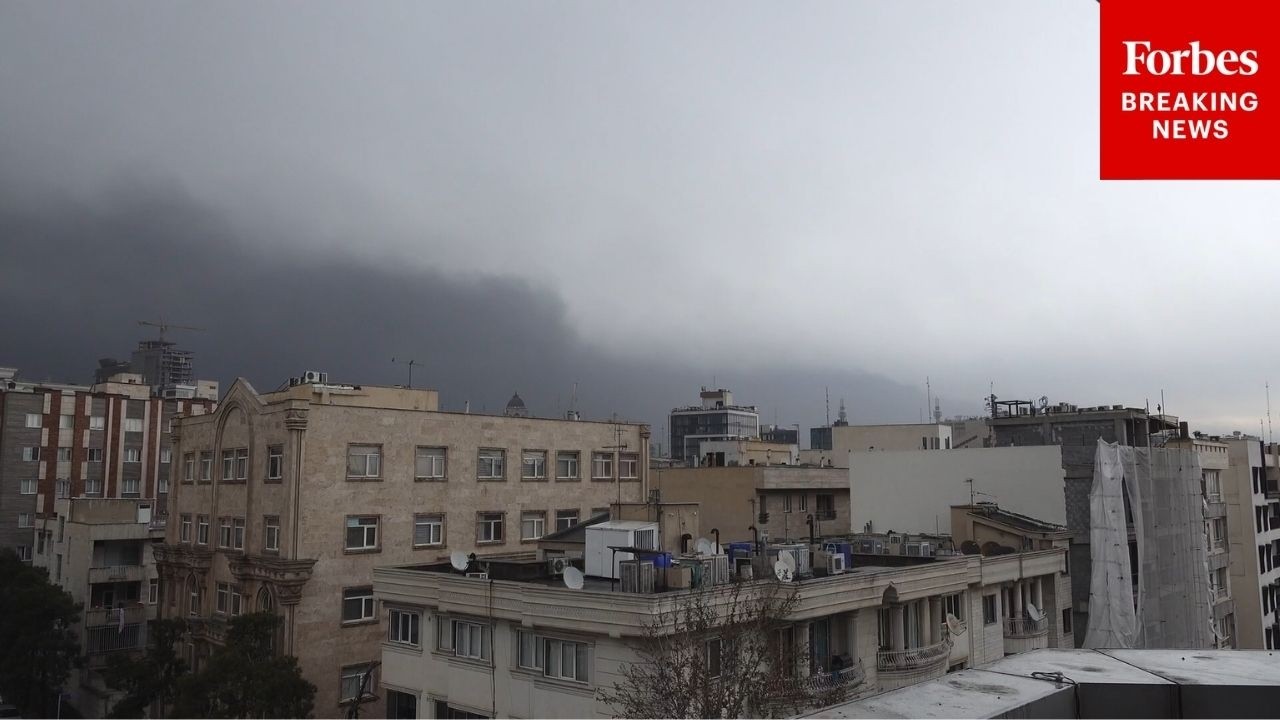
Thick black smoke had swallowed the sky over Iran’s capital — a city of nearly 10 million people — turning midday into something closer to midnight.
Residents who ventured outside found their cars coated in soot, the air heavy with the stench of burning petroleum, and something far worse falling from the clouds above them: black rain, saturated with oil and loaded with toxic chemicals that health officials warned could burn skin and destroy lungs.
This is what it looks like when you bomb a city’s fuel supply. Not a battlefield. A city where people live.
The Strikes
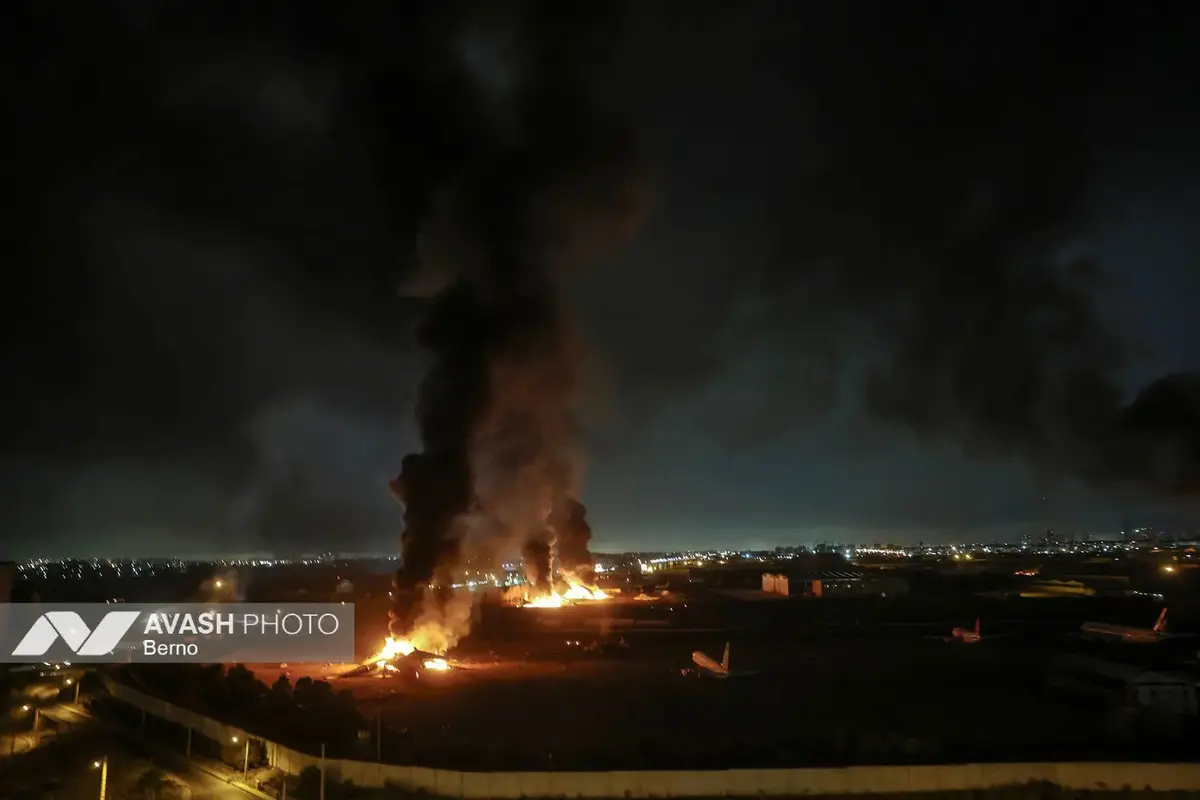
On Saturday night, Israeli warplanes hit four oil storage facilities and a petroleum distribution center in and around Tehran.
The targets included the Aghdasieh oil depot in the city’s northeast, the Shahran oil depot in the northwest, the Tehran refinery in the south, and an oil depot in the nearby city of Karaj. Four oil workers, including two tanker drivers, were killed.
Israel’s military claimed the facilities were being used to support Iranian military operations. Israel’s Energy Minister confirmed the attacks and warned that refineries and ports could be next.
The United States reportedly distanced itself from the scale of the strikes.
But the people breathing the air in Tehran on Sunday morning weren’t thinking about military strategy.
They were thinking about whether it was safe to open a window.

A City Under a Toxic Shroud
The fires that erupted after the strikes burned through the night and well into the following day. At the Shahran depot, witnesses reported unrefined oil leaking directly into the streets. Flames lined a central boulevard. Destroyed tanker trucks sat outside the depot gates.
By morning, the smoke had spread across the entire capital. Residents described needing to turn on their lights just to see inside their own homes.
Drivers had to use headlights at 10:30 a.m. on Valiasr Street, one of Tehran’s main thoroughfares. Security forces directing traffic wore special protective coats and masks.
Then the rain came.
Residents across Tehran — and in cities as far as 70 miles away — watched in horror as black, oil-saturated raindrops fell from the sky, coating everything they touched.
CNN’s Frederik Pleitgen, reporting from central Tehran, wiped the ground with his shoe to show the dark residue accumulating on every surface.
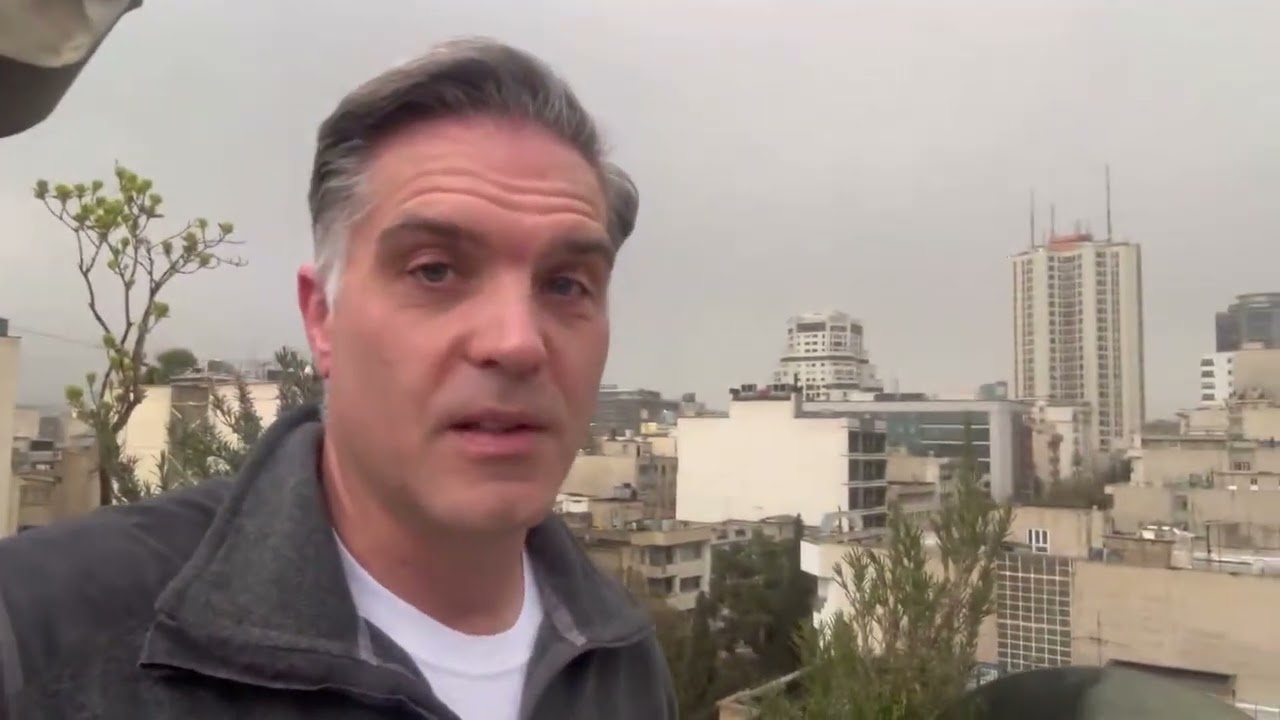
One resident, a 44-year-old engineer named Kianoosh, told TIME he couldn’t believe what he was seeing.
The black rain had reached Tajrish, miles away from the nearest oil tanks.
A university professor roughly 70 miles north of Tehran said he couldn’t find his white car in the morning — it had turned almost completely black.
What’s in the Air — And Why it’s Dangerous
Iran’s Environmental Protection Organization issued an urgent warning to residents to stay indoors.
The Iranian Red Crescent Society explained why: the explosions had released massive quantities of toxic hydrocarbon compounds, sulfur dioxide, and nitrogen oxides into the atmosphere. When rain passes through those plumes, it becomes acidic — and dangerous.
The Red Crescent warned that the resulting rainfall could cause chemical burns to the skin and severe lung damage. Even after the rain stopped, they cautioned, the evaporation of contaminated water would continue releasing toxins into the air.
Environmental researchers have since offered a more detailed picture of the hazard. The smoke from oil fires of this kind contains soot, carbon monoxide, volatile organic compounds, and polycyclic aromatic hydrocarbons — known carcinogens.
The tiny black carbon particles that make up soot can penetrate deep into the lungs and carry additional toxic pollutants on their surfaces. People with asthma, the elderly, and children are especially vulnerable.
The World Health Organization’s director, Tedros Adhanom Ghebreyesus, warned Monday that the damage to petroleum facilities puts food, water, and air quality at risk, with children, older people, and those with pre-existing conditions facing the greatest danger.
One Tehran resident, a 42-year-old woman named Armita, told NBC News she was sitting at home with a headache and a bitter taste in her mouth. Mina, 70, said the smell of smoke lingered even after the rain had passed.
The Proportionality Question
Amnesty International’s secretary general, Agnes Callamard, raised pointed questions about whether the refineries were legitimate military targets and whether Israel took the required precautions to protect civilians.
The harm caused by the release of toxic substances, she said, appeared to indicate that too few precautions were taken and that the damage to civilians was disproportionate.
International humanitarian law does not outright prohibit attacks on energy infrastructure.
But it does require that the attacking force weigh the anticipated military advantage against the civilian consequences — and those consequences include not just immediate casualties, but downstream effects on air quality, water safety, public health, fuel supply, and basic services for a metropolitan area of roughly 15 million people.
Legal scholars have noted that there is no convincing public evidence that the targeted facilities — particularly the Tondgouyan and Shahran refineries — were significant sources of fuel for Iran’s military, as opposed to its civilian economy.
Tehran’s fuel distribution was temporarily halted after the strikes. Vehicles were limited to 20 liters of gasoline. Lines at petrol stations stretched 40 cars deep.
Iran’s Department of Environment called the environment the “silent victim” of the war, noting that the burning of vast fuel reserves had trapped the capital under a suffocating blanket of pollutants.
Beyond Iran’s Borders
The environmental damage doesn’t stop at the Iranian border. Researchers at the Conflict and Environment Observatory noted that black carbon particles injected into the upper atmosphere can persist longer and travel farther, potentially affecting neighboring countries.
The parallels to the 1991 Kuwait oil fires — which caused regional environmental damage lasting years — are impossible to ignore.
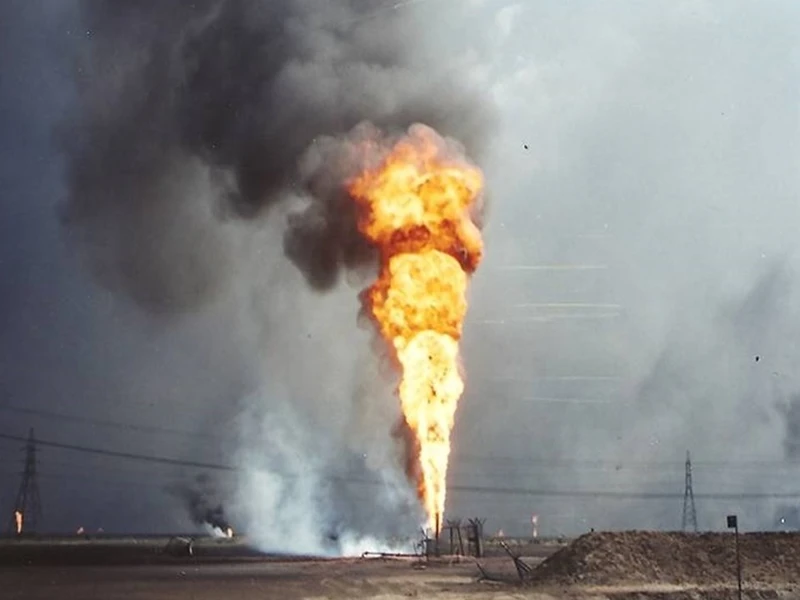
Iran’s parliament speaker warned that oil prices would continue to climb as long as the war continues, inflicting economic pain far beyond the Middle East.
Iran holds the world’s third-largest proven oil reserves, and the conflict has already disrupted global energy markets.
Iran has retaliated by striking oil infrastructure across the Gulf, including fuel tanks at Kuwait’s international airport and a desalination plant in Bahrain.
Since the U.S.-Israeli military campaign against Iran began on February 28, more than 1,200 civilians — including nearly 200 children — have been killed, according to the Washington-based Human Rights Activist News Agency.
The oil strikes represent a new phase: the deliberate targeting of civilian industrial infrastructure in a densely populated urban center, with consequences that will outlast the fires themselves.
The people of Tehran are not combatants. They are parents trying to keep their children indoors, elderly residents struggling to breathe, workers lining up for rationed gasoline, and families watching black rain streak across their windows.
Whatever the military calculus behind these strikes, the human cost is being paid by them.