

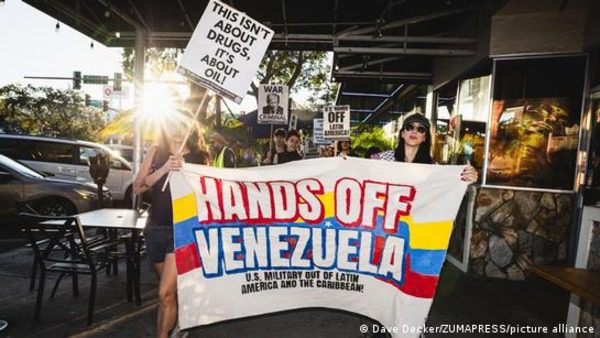
The U.S. military operation in Venezuela and capture of President Nicolás Maduro on Jan. 3, 2026, topped off months of military buildup and targeted strikes in the Caribbean Sea. It fulfills President Donald Trump’s claim to assert authoritative control over the Western Hemisphere, articulated in his administration’s 2025 National Security Strategy.
Some national security experts say U.S. military action in Venezuela – taken without U.S. congressional approval or U.N. Security Council authorization – is unlawful. It may violate domestic and international law.
The Venezuela attack represents the clearest example during Trump’s second presidency of the shift from traditional American values of democratic freedom and the rules-based international order to an America exerting unilateral power based purely on perceived economic interests and military might. Autocratic leaders are unconstrained by law and balance of power, using force to impose their will on others.
So, what does this transition from a liberal America in the world to an autocratic U.S. look like? After decades of working internationally on democracy and peace-building, I see three interrelated areas of long-standing U.S. foreign policy engagement being unraveled.
1. Peace and conflict prevention
The Trump administration’s actions in Venezuela reflect its “peace through strength” approach to international relations, which emphasizes military power. The actions also follow the emphasis the administration places on economic pressure and wins as a deterrent to war and a cudgel for peace.
This approach contrasts with decades of diplomatic efforts to build peace processes that last.
Foreign policy experts point out that the Trump administration’s emphasis on business deal-making in its conduct of foreign relations, focused on bargaining between positions, misses the point of peacemaking, which is to address underlying interests shared by parties and build the trust required to tackle the drivers of conflict.
Trump’s focus on deal-making also counters the world’s traditional reliance on the U.S. as an honest broker and a reliable economic partner that supports free trade. Trump made it clear that U.S. interest in oil is a key rationale for the Venezuela attack.
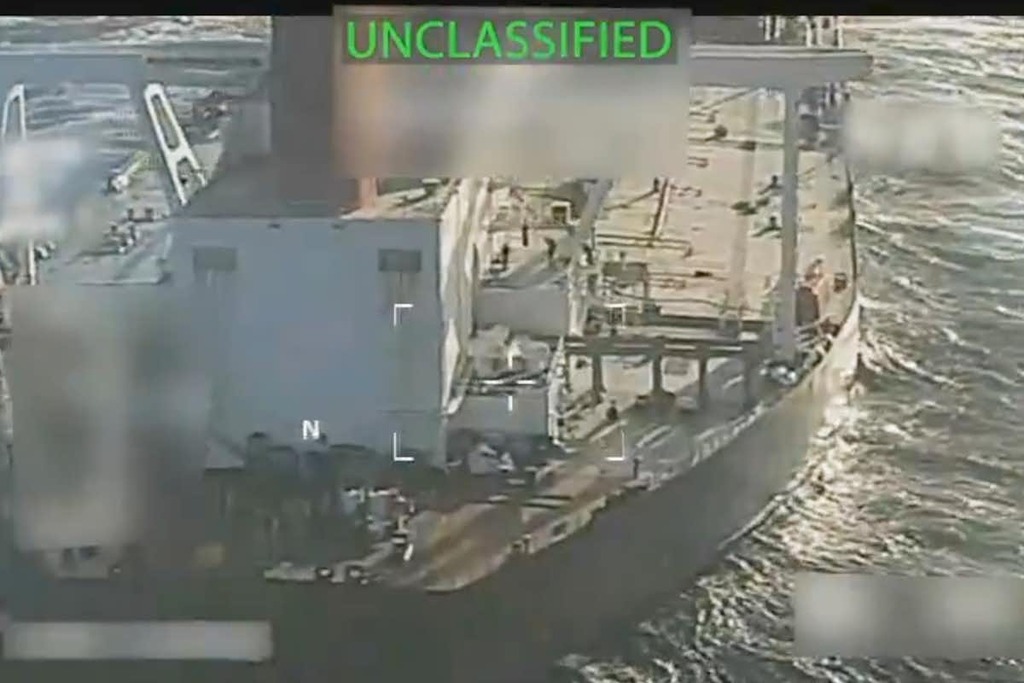
Before Venezuela, the limits of the Trump administration’s approach were already showing in the global conflicts Trump claims to have halted. That’s evident in ongoing violencebetween Thailand and Cambodia and in ceasefire violations in the Democratic Republic of Congo.
Moreover, U.S. expertise and resources for sustainable peacemaking and preventing conflict are gone.
The entire Bureau of Conflict Stabilization Operations in the U.S. Department of State was dismantled in May 2025, while funding for conflict prevention and key peace programs like Women, Peace and Security was cut.
Trump’s unilateral military action against Venezuela belie an authentic commitment to sustainable peace.
While it’s too soon to predict Venezuela’s future under U.S. control, the Trump administration’s approach is likely to drive more global conflict and violence in 2026, as major powers begin to understand the different rules and learn to play the new game.
2. Democracy and human rights
Since the 1980s, U.S. national security strategies have incorporated aspects of democracy promotion and human rights as U.S. values.
Trump has not highlighted human rights and democracy as rationales for capturing Maduro. And, so far, the administration has rejected claims to the Venezuelan leadership by opposition leader María Corina Machado and Edmundo González, widely considered the legitimate winner of the 2024 presidential election.
Much of the U.S. foreign policy to build democracy globally and promote human rights was delivered through foreign assistance, worth over US$3 billion in 2024. The Trump administration cut that by nearly 75% in 2025.
These funds sought to promote fair elections, supporting civil societies and free media globally. They were also meant to help enable independent and corruption-free judiciaries in many countries, including Venezuela.
Since 1998, for example, the U.S. has funded 85% of the annual $10 million budget of the U.N Voluntary Fund for Victims of Torture. The fund, now imperiled, helps survivors recover from torture in the U.S. and around the world.
The congressionally mandated annual Human Rights Report issued by the State Department in August signaled the Trump administration’s intent to undermine key human rights obligations of foreign governments.
However, the White House has used tariffs, sanctions and military strikes to punish countries on purported human rights-related grounds, such as in Brazil, Nigeria and South Africa. Equally concerning to democracy defenders is its rhetoric chastising European democracies and apparent willingness to elevate political parties in Europe that reject human rights.
3. International cooperation
A major aim of U.S. foreign policy has traditionally been to counter threats to America’s security that require cooperation with other governments.
But the Trump administration is ignoring or denying many transnational threats. They include terrorism, nuclear proliferation, pandemics, new technologies and climate change.
Moreover, the tools that America helped build to tackle shared global threats, like international law and multilateral organizations such as the United Nations, have been disparaged and undermined.
Even before the U.S. attack on Venezuela, scholars were warning of the collapse of the international norm, embedded in the U.N. Charter, that prohibits the use of force by one sovereign country against another, except in specific cases of self-defense.
Early in 2025, Trump signaled an end to much of U.S. multilateral engagement, pulling the country out of many international bodies, agendas and treaties.
The administration proposed eliminating its contributions to U.N. agencies like the fund for children. It is also allocating only $300 million this year to the U.N., which is about one-fifth of the membership dues it owes the organization by law. A looming budgetary crisis has now consumed this sole worldwide deliberation body.
Meanwhile, the Trump administration says migration and drug trafficking, including from Venezuela, pose the greatest security threats. Its solutions – continuing U.S. economic and military might in the Americas – ignore shared challenges like corruption and human trafficking that drive these threats and also undermine U.S. economic security.
There is also evidence that the Trump administration is not only disregarding international law and retreating from America’s long-standing respect for international cooperation, but it’s also seeking to reshape policy in its own image and punish those it disagrees with.
For example, its call to reframe global refugee protections – to undermine the principle that prohibits a return of people to a country where they could be persecuted – would alter decades-old international and U.S. domestic law. The Trump administration has already dismantled much of the U.S. refugee program, lowering the cap for 2025 to historic levels.
Even for those who work in international institutions, there could also be a price to pay for an illiberal America. For instance, the Trump administration has economically sanctioned many judges and prosecutors of the International Criminal Court for their work.
And the administration has threatened more sanctions unless the court promises not to prosecute Trump – a more salient challenge now with the apparent U.S. aggression against Venezuela, which is a party to the International Criminal Court.
Some democracy experts worry that the U.S. military action in Venezuela not only undermines international law, but it may also serve to reinforce Trump’s project to undo the rule of law and democracy at home.


Shelley Inglis, Senior Visiting Scholar with the Center for the Study of Genocide and Human Rights, Rutgers University
This article is republished from The Conversation under a Creative Commons license. Read the original article.