


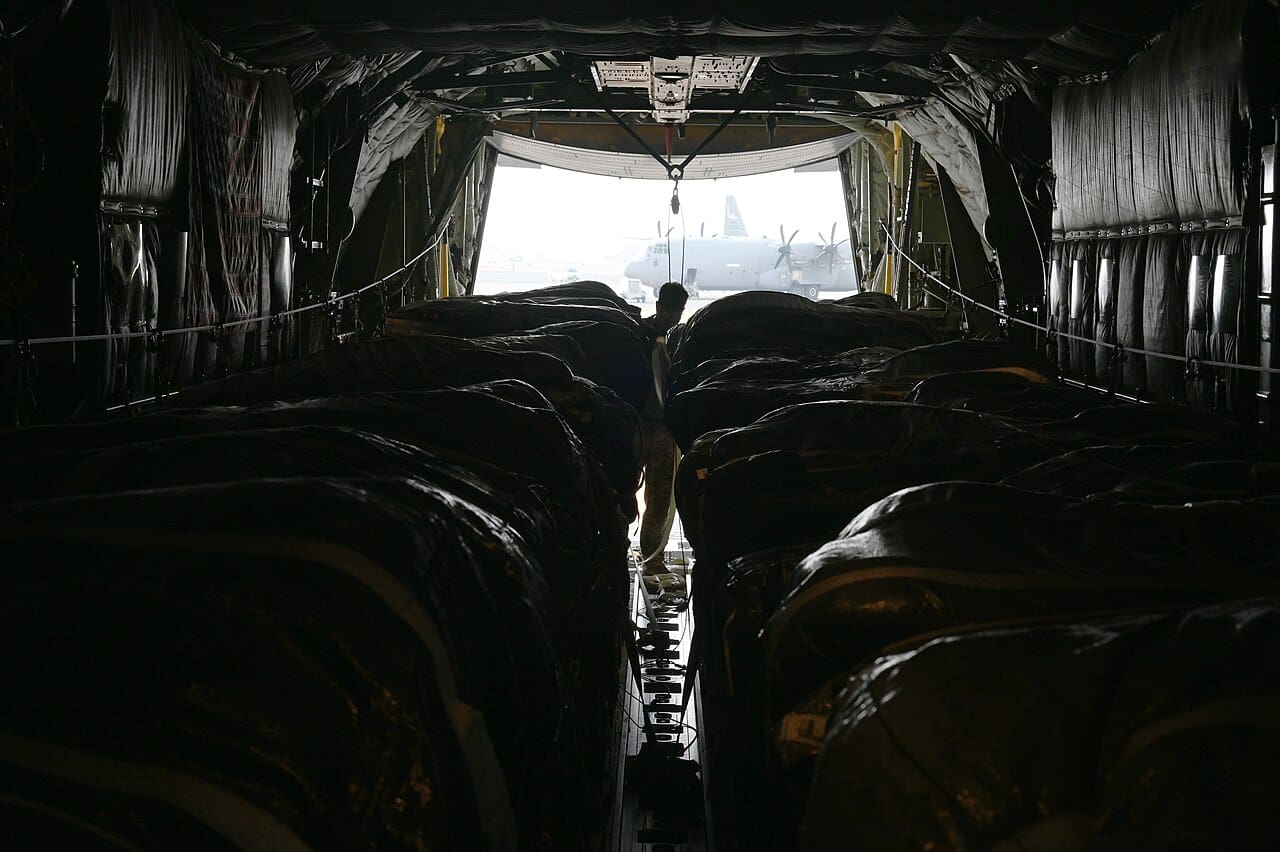
Help for Gaza is now supposed to fall from the sky. Planes from Israel, Jordan, and the United Arab Emirates drop parachuted bundles of food and supplies meant to save lives when all other options are lost. They then crash into streets, rooftops, and tents, turning hope into panic.
Every airdrop shows the cost of survival here, where daily life is threatened not by just hunger or lack of medicine, but also the very help meant to reach starving people.
This is the new reality of aid delivery in Gaza. As Israel’s siege approaches the two-year mark, on-the-ground access to food and other crucial supplies is mostly controlled by the Israel-backed and U.S.-run Gaza Humanitarian Foundation, whose aid sites have become shooting grounds where the Israeli army kills hungry civilians. On July 27, Israel announced the start of airdrops for humanitarian aid, promising “safe corridors” and relief from the crushing blockade.
The aid has itself become a weapon in the literal sense: At least 124 people have been struck by falling aid packages since October 2023, according to Gaza’s Government Media Office, and 23 of them killed. The Intercept spoke to more than 10 people who were injured by or witnessed injuries from falling aid packages for this story.
“When those packages fall, they sound like bombs,” said Mariam, a 21-year-old witness to one of the first drops, recalling her father’s trembling voice. “We don’t know if they will save us or crush us.”
Sometimes the crates land on fragile rooftops, shattering tin and wood, sending splinters flying into narrow alleyways. Other times, they slam into flimsy tents: those last fragile sanctuaries for families uprooted by relentless bombardment. The cries that follow are not always relief; often they are pain — sharp and sudden.
In the Zawayda area, a prominent Gaza nurse Adi Nahid Qaran condemned the aerial drops, calling them “humiliation disguised as aid.”
“This is not humanitarian help,” he said in a video posted shortly before his death. “If they can fly planes to drop aid, they could open the land crossings and let trucks bring real help.”
Just days later, on August 4, Qaran was killed after being hit by a falling aid crate during an airdrop operation in Zawayda.