
That time the president solved the problem he created by letting Vladimir Putin get rich selling Russian oil. (Satire)
If you’ve ever set your kitchen on fire while trying to deep-fry a turkey indoors, then called your landlord to demand a rent reduction because of the smoke damage, congratulations — you now understand American foreign policy in March 2026.
Here’s the timeline, because it reads like a recipe for diplomatic disaster written by someone who skipped every ingredient except audacity:
Step 1: Launch a massive military campaign against Iran alongside Israel. Call it “Operation Epic Fury,” because apparently the Pentagon’s name generator is powered by a thirteen-year-old’s Xbox gamertag.
Step 2: Watch in genuine surprise as bombing a country that sits on one side of the world’s most critical oil shipping lane causes oil prices to skyrocket past $100 a barrel. Who could have predicted that attacking a nation straddling the Strait of Hormuz — through which one-fifth of the global oil supply passes daily — would disrupt the global oil supply? Literally everyone, it turns out—literally every single person.
Step 3: Scramble to contain the economic fallout from the war you started by… lifting sanctions on
Russian Oil.
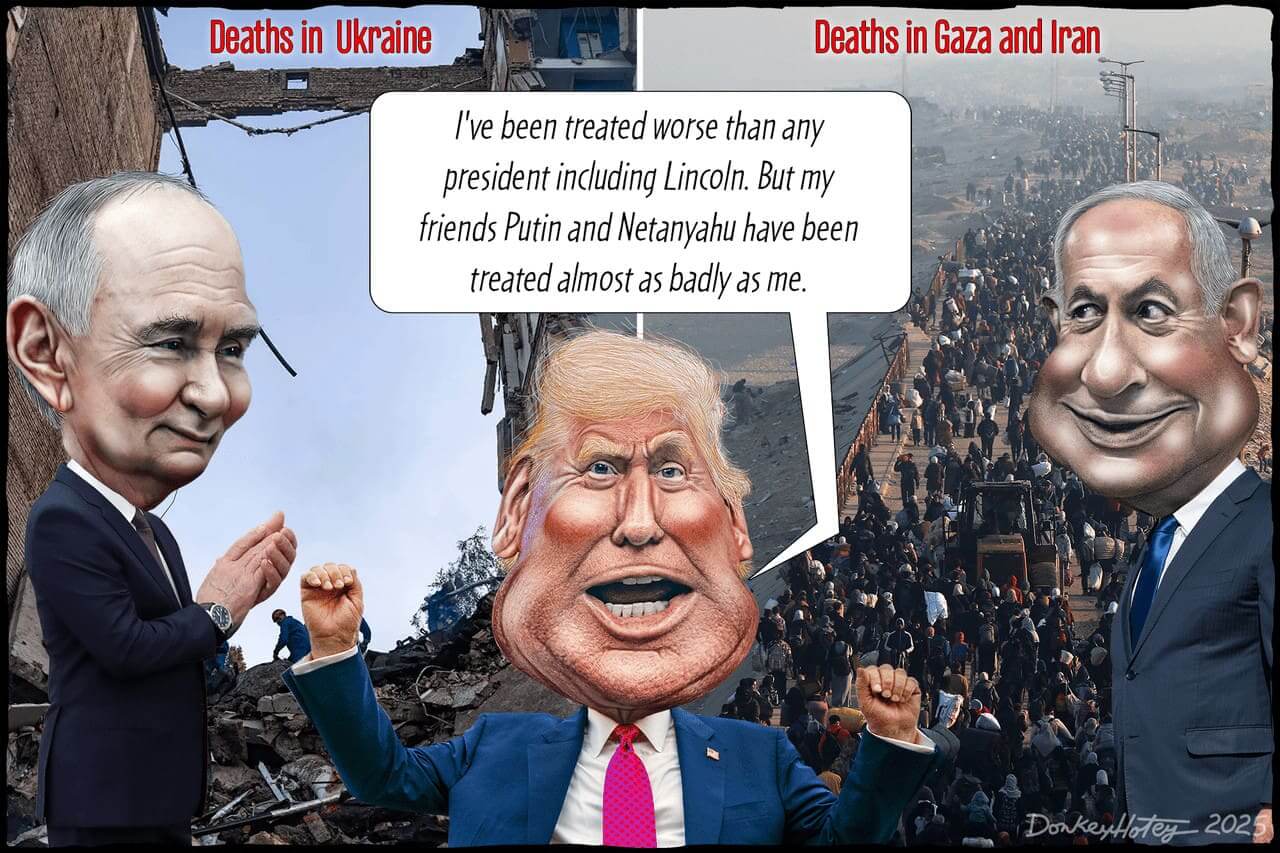
That’s right. The sanctions that were imposed because Russia invaded Ukraine — you know, the whole “unprovoked war of aggression” thing that the entire Western alliance spent three years trying to punish — those sanctions just got tossed in the microwave like last night’s leftovers because we need cheap crude to offset the cheap crude we just blew up.
Treasury Secretary Scott Bessent described the move as “narrowly tailored” and a “short-term measure” that would “not provide significant financial benefit to the Russian government.”
He then told Sky News it was “an inevitability” and “unfortunate” that Moscow would benefit. That’s some real “the building is not on fire, but if it were on fire, it would be a small fire” energy.
There are currently about 124 million barrels of Russian oil floating around the world’s oceans on tankers that were sanctioned into a kind of nautical purgatory.
Now those tankers are free to deliver their cargo to eager buyers worldwide. Putin’s team reportedly welcomed the development and immediately pushed for more concessions, because of course they did. If someone hands you free money and apologizes for the inconvenience, you ask for a tip.
Meanwhile, Europe — America’s ostensible ally in the whole “holding Russia accountable” project — is furious. The European Council president wrote that the decision “impacts European security.”
The British government announced it would maintain its own sanctions on Russian oil, in a display of stiff-upper-lip defiance that will matter right up until it doesn’t.
Ukrainian President Zelenskyy, whose country is the reason these sanctions existed in the first place, said the move “does not help peace,” which might be the most diplomatically restrained way of saying “what the actual hell” in recorded history.
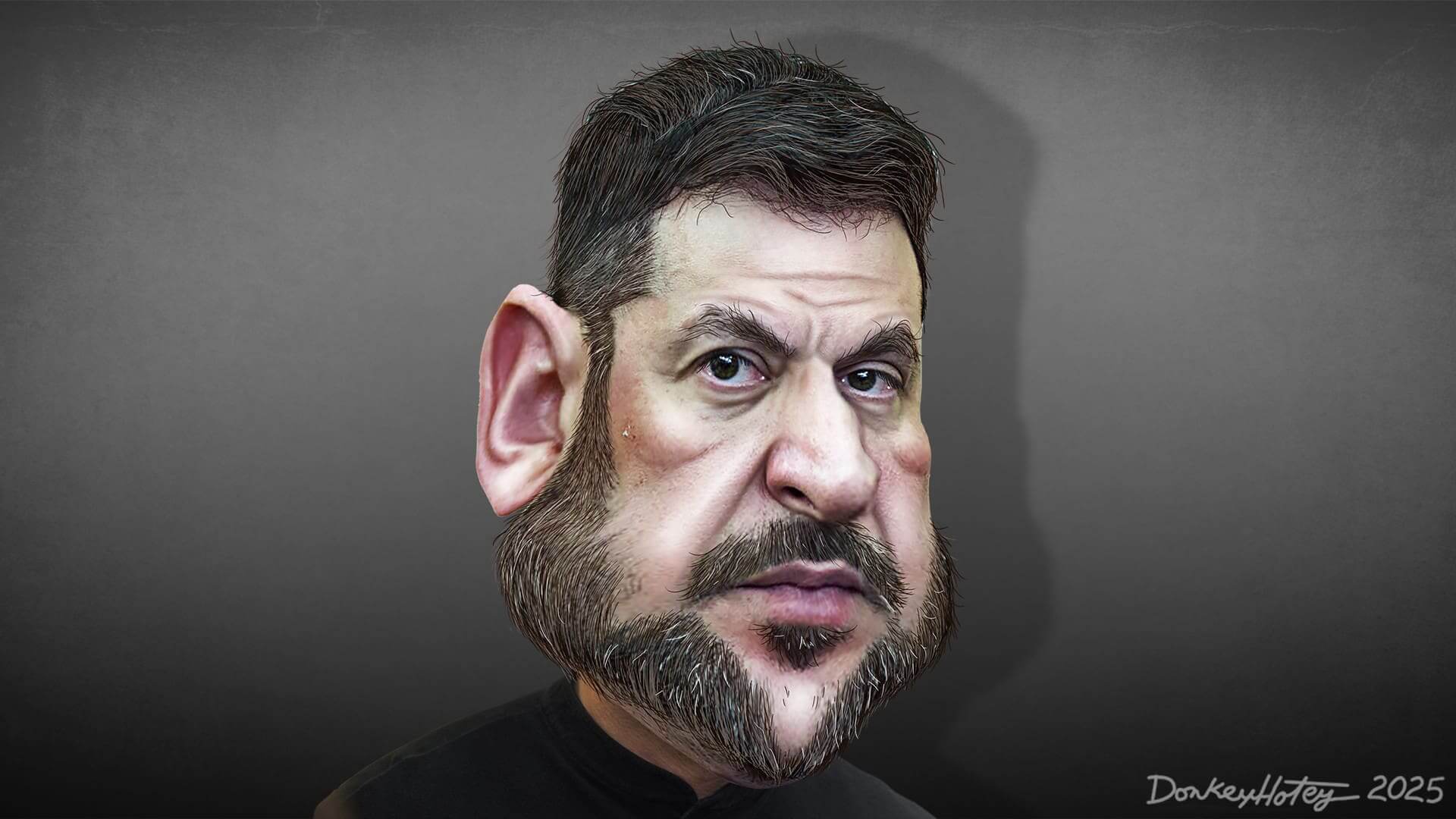
But let’s not lose the thread here. The real comedy isn’t just that sanctions got lifted. It’s the sequence of events that makes this a masterwork of circular self-sabotage:
The president promised cheap energy. Then he started a war that made energy expensive. Then he rewarded a geopolitical adversary to make energy slightly less expensive. Then he claimed credit for “taking decisive steps to promote stability in global energy markets.”
That’s like getting in the boxing ring, punching yourself in the face, buying an ice pack from the guy who sold you the boxing gloves, and then holding a press conference about your bold new approach to pain management.
And the messaging! Oh, the messaging.
Over the past two weeks, the administration has told us the war is “won,” “almost over,” “very complete, pretty much,” and “way ahead of schedule.” Also that we need to “finish the job,” go “further,” and achieve “ultimate victory.”
The press secretary called reports of mixed messaging a “fake narrative,” which is itself a form of mixed messaging about mixed messaging. It’s like an Escher painting, if Escher had been raised on energy drinks and cable news.

The president told reporters the war would be over “very soon” in the same breath that he said attacks would continue “until the enemy is totally and decisively defeated.”
He said the operation was “ahead of schedule,” which — as one journalist recently cataloged — is something he has said more than 150 times about everything from soybean prices to the demolition of the White House East Wing.
At this point, “ahead of schedule” doesn’t mean anything. It’s a verbal tic, like saying “um” but with the confidence of a man who has never once been told he was wrong.
The Strait of Hormuz remains effectively closed. Iran’s new supreme leader says it stays shut until the war ends. Oil prices are still hovering near triple digits.
The economy shed 92,000 jobs in February. Gas prices are climbing. The Dow has dropped five percent in a month. But don’t worry — the president assures us this is all just a “small price to pay” for safety and peace, and that “ONLY FOOLS WOULD THINK DIFFERENTLY!” (His caps, not mine. Always his caps.)
So where does that leave us? Paying more at the pump to fund a war that made us lift sanctions on the country we were punishing for a different war, while being told that everything is ahead of schedule on a schedule that doesn’t exist.
The Art of the Deal, ladies and gentlemen. The Art of the Deal.