

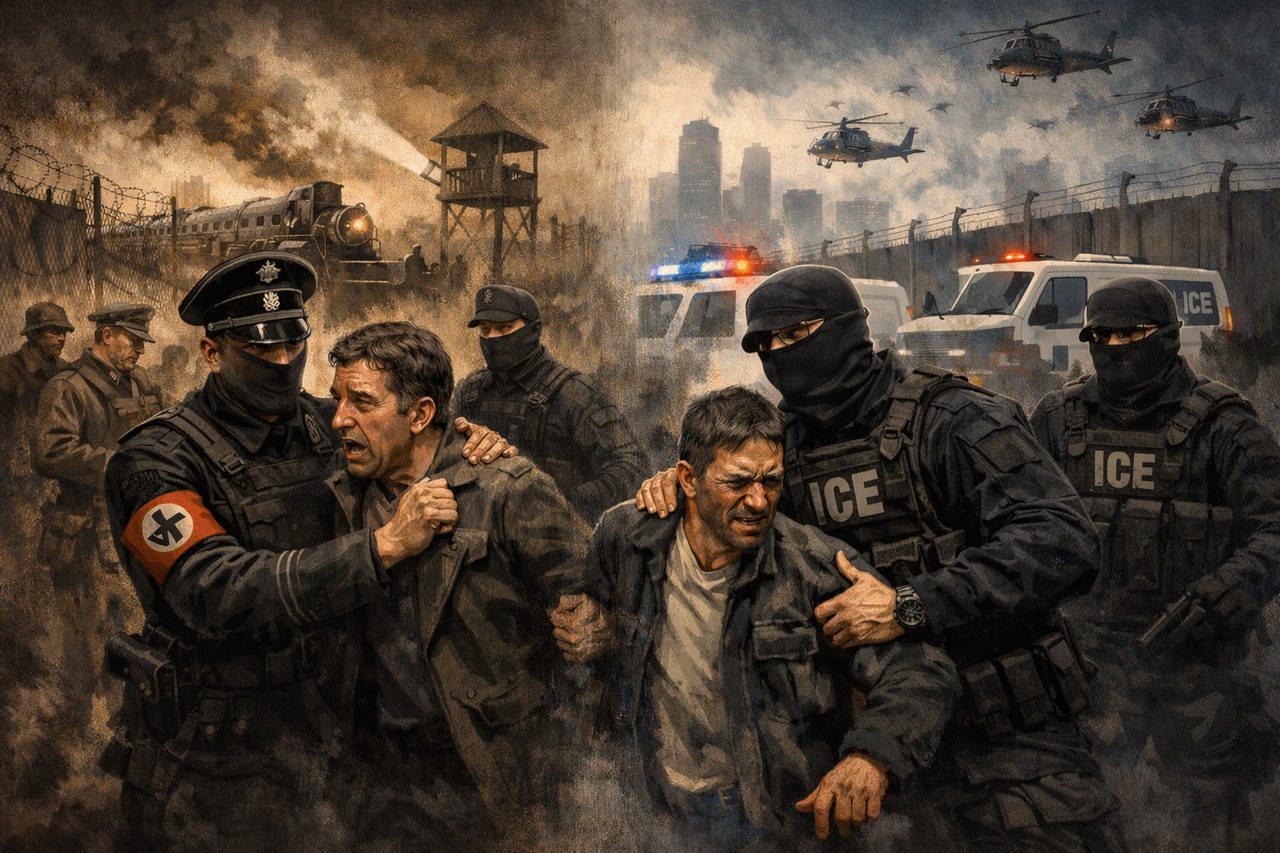
Here’s the thing about history: it doesn’t usually come back wearing the same outfit. It changes the jacket, updates the vocabulary, and insists it’s “totally different this time.”
That’s why comparisons make people uncomfortable. Nobody wants to hear that something familiar today shares DNA with something horrific from the past. But discomfort isn’t the same as being wrong.
So let’s talk about the Gestapo in Nazi Germany and ICE in the United States. Not because they are identical. They’re not. Different countries, different eras, different legal frameworks.
But history isn’t a photocopier. It’s more like a remix artist with a dark sense of humor. The parallels are about structure, tactics, and mindset, not gas chambers or concentration camps. Those came later in Germany, after years of normalization.
How it Began
The Gestapo didn’t begin as a cartoon villain. It wasn’t jackbooted thugs twirling mustaches on day one. It was sold to the public as law enforcement. As necessary. As protection. Germans were told it existed to keep order, root out threats, and defend the nation from internal enemies. Sound familiar?
ICE was created under the banner of security too. Immigration enforcement, border control, public safety. On paper, it’s bureaucratic. Administrative. Clinical. But power doesn’t live on paper. It lives in how rules are enforced and who is being targeted.
Secrecy
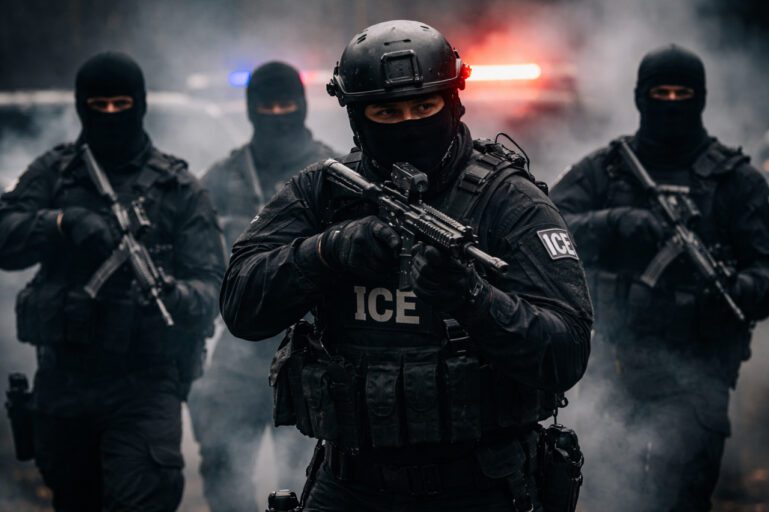
One major parallel is secrecy. The Gestapo operated with wide discretion and very little oversight. You didn’t need to be convicted of a crime to disappear. You just needed to be labeled suspicious, disloyal, or undesirable. Detention could happen quietly, often at night, often without explanation.
ICE raids have followed a similar playbook. Pre-dawn arrests. People taken from homes, workplaces, and schools. Families left scrambling for information. Detainees moved between facilities so fast that lawyers and loved ones lose track.
“When accountability becomes optional, abuse becomes inevitable.”
Fear as a Weapon
Another parallel is the reliance on fear as a tool. The Gestapo didn’t just arrest people. It wanted to be seen arresting people. Fear was the point. If your neighbor vanished, you learned a lesson without being taught directly.
Fear kept the population compliant.
ICE doesn’t need to deport everyone to succeed. It just needs enough highly visible arrests of protesters to send a message: Don’t speak up. Don’t protest. Don’t report abuse.
Don’t exist too loudly if you’re undocumented, or even if you look like someone who might be. Fear does the rest of the work.
Neighbors Reporting Neighbors
Then there’s the use of informants. The Gestapo thrived on tips from ordinary citizens. Neighbors reported neighbors. Co-workers reported co-workers.
The state encouraged it, normalized it, and rewarded it. Society was turned into a surveillance network.
Modern immigration enforcement leans heavily on local law enforcement cooperation, tip lines, data sharing, and databases that track people’s movements, jobs, and family connections.
You don’t need a knock on the door when an algorithm already knows where you live. Surveillance has simply gotten better branding.
Similar Branding Through Words
Language is another giveaway. The Nazis were masters of euphemism. “Protective custody.” “Resettlement.” “Special treatment.”
Brutality hidden behind tidy words. It made the unthinkable sound “administrative.”
Today, we hear “detention centers” instead of prisons, “removals” instead of deportations, “collateral arrests” instead of families torn apart.
Language isn’t accidental. It’s a buffer that lets cruelty pass through polite society without resulting in too much attention.
Dehumanizing the Target
There’s also the matter of dehumanization. The Gestapo operated in a system that defined certain groups as less worthy of rights, dignity, and legal protection.
Once a group is framed as a threat rather than as people, almost anything becomes justifiable.
Immigrants today are routinely described as “invaders,” “criminals,” “illegal criminal aliens,” or “infestations.”
When that language comes from the top, enforcement agencies don’t need to be told how to act.
They understand the assignment.
Legality
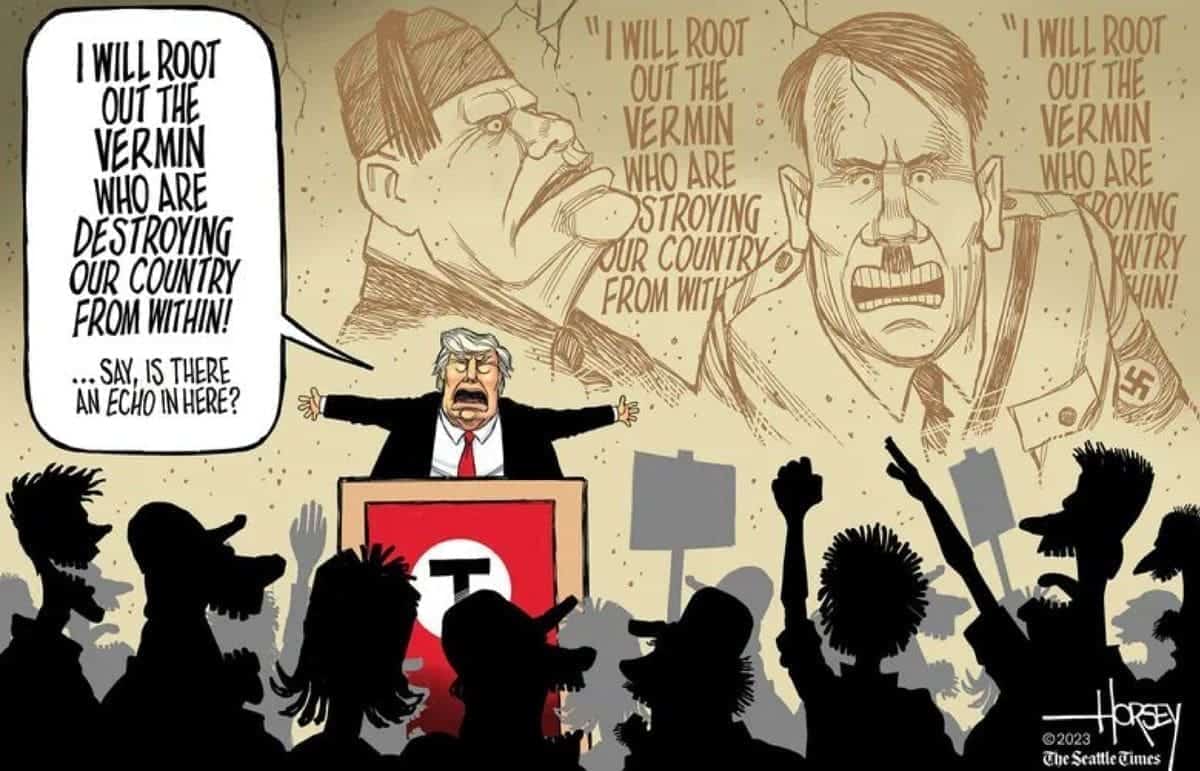
And let’s address the most common objection: “But ICE is legal.” So was the Gestapo. Legality is not a moral shield. Governments write laws to suit their goals.
In the case of the government in today’s United States, presidents issue executive orders or commands on Truth Social.
History is full of atrocities that were perfectly legal at the time they were committed. The question isn’t whether something is lawful. It’s whether it’s moral or just.
Gestapo vs. ICE Comparison
This isn’t about accusing every ICE agent of being a Nazi. That’s lazy and unhelpful. Many people inside systems are just doing jobs they were told are necessary.
The same was true in 1930s Germany. Systems don’t rely on monsters. They rely on ordinary people following orders, trusting authority, and assuming someone else will draw the line.
The most dangerous moment in history is not when oppression is obvious. It’s when it’s bureaucratic. When it wears a badge and carries forms in triplicate. When cruelty is processed like paperwork.
The lesson of the Gestapo isn’t “this happened once and never again.” It’s “this is how it starts.” Centralized power. Dehumanizing language. Fear-based enforcement. Weak oversight. Public apathy dressed up as realism.
You don’t wait for the worst chapter to begin before speaking up. By then, it’s already too late. History doesn’t ask for permission to repeat itself. It just waits to see who’s paying attention.