

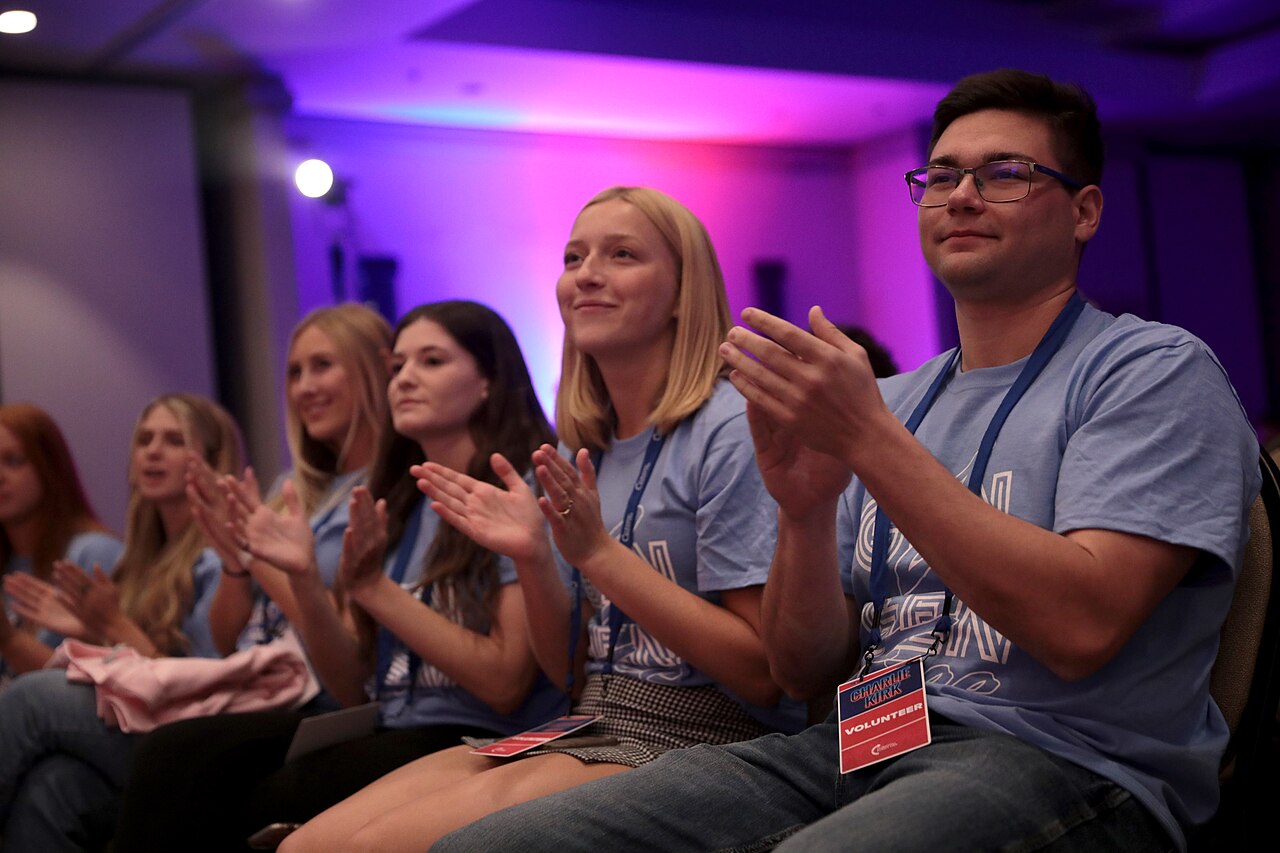
In late 2025, Turning Point USA in schools became more than a slogan — it became a statewide initiative in Texas that has captured national attention, sparked legal and ethical questions, and ignited fierce debate among educators, parents, and policymakers.
Spearheaded by Governor Greg Abbott and backed by Lieutenant Governor Dan Patrick, the plan to expand chapters of the conservative youth organization Turning Point USA into every Texas high school represents a bold moment in how political advocacy and youth engagement intersect with public education.
Progressives are against the right-wing push to allow Christianity in our public schools. There is already an active battle to remove PragerU videos—cartoons telling inaccurate stories about historical events—from the classroom.
This is another push to inject Christianity into the public school system, which would alienate some of the children in a nation as diverse as the U.S. (There’s also the fact that the Constitution gives us the right to practice the religion of our choosing.)
Editor’s opinion: I’ve always suggested the quickest way to get Conservatives to reverse course on religion in schools is for Satanists (or Muslims) to add some aspect of their religion to a classroom.
What Is Turning Point USA and Its Presence in Schools?
Turning Point USA (TPUSA) is a conservative nonprofit founded in 2012 that has become one of the most visible — and polarizing — political youth organizations in the United States. Initially focusing on college campuses, TPUSA aims to promote principles like limited government, free markets, and constitutional rights among students.
Its activities have ranged from voter registration drives to more controversial efforts such as the professor watchlist, which critics say promotes the harassment of educators seen as liberal or progressive.
In the last few years, TPUSA has also developed a program specifically targeting younger students. Known as “Club America,” this affiliate works to establish chapters in high schools that promote conservative values, host speakers, and encourage civic participation. In Texas alone, officials say more than 500 high schools already have TPUSA or Club America chapters.
The Texas Initiative: Government Support and Enforcement
On December 8, 2025, Governor Abbott, Lieutenant Governor Patrick, and TPUSA leadership announced a formal partnership to expand Turning Point USA in schools across every public high school in Texas.
At a press conference at the Governor’s Mansion, Abbott made clear that schools should not block the formation of these chapters and that any obstruction could be reported to the Texas Education Agency (TEA), with “meaningful disciplinary action” expected for noncompliance.
The initiative doesn’t yet prescribe specific mandates requiring schools to start chapters — but the messaging and enforcement threat mark a significant shift. Lt. Gov. Patrick also pledged $1 million in campaign funds toward establishing the organization’s presence statewide.
Texas Education Commissioner Mike Morath had privately met with TPUSA leaders ahead of the announcement to discuss expansion plans, demonstrating considerable coordination between state government and the organization.
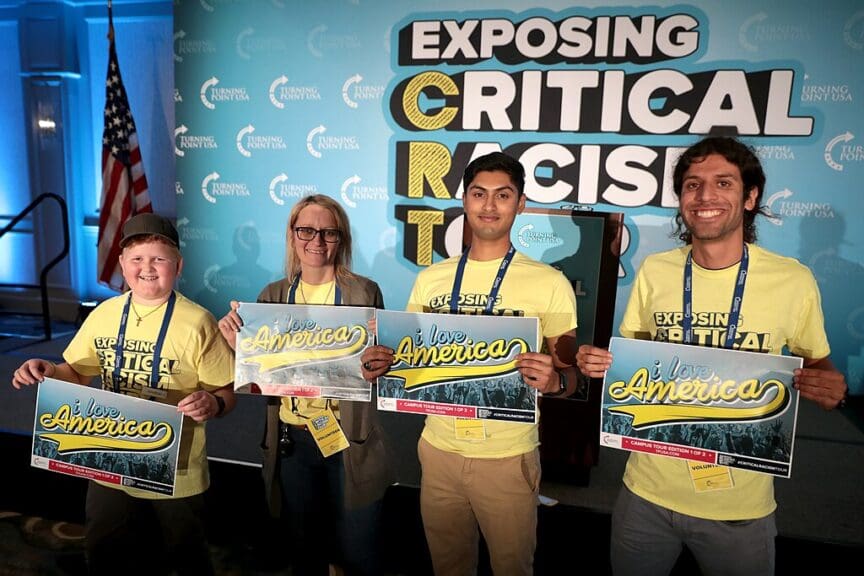
Supporters’ Views: Engagement and Values
Advocates of the program frame Turning Point USA in schools as a tool for increasing civic engagement among young people. They argue that structured discussion of constitutional principles, voting rights, and civic philosophy can invigorate student participation in democracy.
Supporters see TPUSA chapters as a way to balance what they perceive as a liberal tilt in traditional educational spaces, and to give conservative students a platform to express their views openly.
In states like Texas, where debates over curriculum and educational priorities are common, proponents of Turning Point activity view it as both an educational benefit and a reinforcement of community values. This viewpoint emphasizes empowering students to engage thoughtfully with policy issues and to build leadership skills through structured dialogue and debate.
Critics’ Concerns: Partisanship, Pressure, and Educational Integrity
Opposition to Turning Point USA in schools stems from a range of concerns tied to partisanship, student vulnerability, and the role of public education. Civil liberties advocates, educators, and some parents argue that embedding a highly partisan organization into public high schools risks blurring the line between education and political advocacy.
Critics also raise important questions about how these chapters might operate in schools that have simultaneously passed laws limiting or banning other types of clubs, such as those focused on LGBTQ+ identity — a move that some say creates inconsistency in what student groups are welcome on campus.
“We had that last year, GSA (Gay Straight Alliance). They were banned and shut down this year. My daughter and her friends tried to start their own group and were denied. But TPUSA is pushed and supported. Thats the problem.”
Experts argue that high school students are particularly impressionable and that introducing an organization with strong political leanings could exert undue influence on their developing views.
Some legal scholars have noted that federal law, such as the Equal Access Act, may come into play if schools open their doors to one ideological group, potentially requiring equal access for others.
The push for Turning Point USA in schools in Texas is not isolated. Similar efforts in states like Oklahoma and Florida suggest a broader movement among red state governments to strengthen conservative youth organizations’ footprint in secondary education. Whether these efforts will encounter legal challenges, pushback from school boards, or deeper community debate remains to be seen.
For now, Turning Point USA in schools is a flashpoint in the larger national conversation about student engagement, political expression, and the purpose of public education. As the initiative unfolds, communities across Texas and beyond will grapple with how to balance inclusive educational environments, robust civic discussion, and respect for diverse political perspectives.