

A Devastating Chain of Violence Connects the War in Lebanon to a Detroit-Area Synagogue Where 140 Children Were in School
New details have emerged about the man who rammed a truck filled with explosives into Temple Israel in West Bloomfield, Michigan, on Thursday — and they paint a grim picture of how the U.S.-Israeli war against Iran is fueling violence that has now reached American soil.
Ayman Mohamad Ghazali, the 41-year-old naturalized U.S. citizen identified by the Department of Homeland Security as the attacker, had lost four family members — including two brothers, a niece, and a nephew — in an Israeli airstrike on his family’s hometown of Mashghara in Lebanon’s Beqaa Valley roughly ten days before the attack.
According to a Lebanese official who spoke to NBC News, the two brothers were known members of Hezbollah, though their specific roles in the organization and whether they were the intended targets of the strike remain unclear.
The personal devastation appears to have been total. Sources in the Lebanese American community in Dearborn, Michigan, told CBS News that Ghazali had been gutted by the loss.
He had stopped working at a local restaurant. He was spending his days alone in his home.
He was divorced, living by himself, with his children residing with their mother elsewhere in the U.S.
And then he loaded a truck with mortar-type explosives and drove it into one of the largest Reform synagogues in the country — while 140 children, some under a year old, were inside for early childhood classes.
The Attack and the Security Response That Prevented a Massacre
The FBI is leading the investigation and has classified the attack as a targeted act of violence against the Jewish community. Michigan Attorney General Dana Nessel went further, saying there is a clear “nexus” between the Iran war and the attack, noting it was no coincidence the suspect chose a synagogue named Temple Israel.
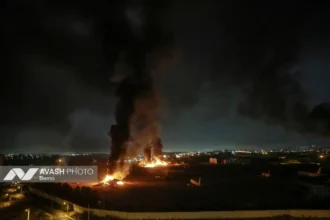
Ghazali rammed the truck through the synagogue’s doors and drove down a hallway before the vehicle erupted in flames. He was armed with a rifle.
He was found dead in the vehicle, though authorities have not yet confirmed whether he was killed by the synagogue’s security team or died by other means.
His body was so badly burned that forensic confirmation of his identity is still pending.
One security guard was struck by the truck and knocked unconscious but is expected to recover.
Thirty law enforcement officers were hospitalized for smoke inhalation. No children, teachers, or other congregants were physically injured — a fact that multiple officials credited entirely to the synagogue’s private security team, which had been on heightened alert for weeks.

Senator Elissa Slotkin, who grew up attending Temple Israel, was blunt about how close this came to catastrophe: if the security team hadn’t performed the way they did, she said, the outcome could have resembled Sandy Hook — with Jewish children as the victims.
The War Comes Home
The human toll of the Iran war — now entering its third week — has been staggering both abroad and increasingly at home. In Lebanon alone, officials say at least 687 people have been killed in Israeli airstrikes since the conflict expanded.
Hezbollah launched rockets and drones at Israel after the killing of Iran’s supreme leader, drawing Lebanon further into the conflict.
What the Michigan attack makes painfully clear is that the consequences of this war are not contained within the borders of the Middle East.
Grief and rage are traveling across oceans. And in the absence of any meaningful debate about war powers, congressional authorization, or the scope of military operations, the violence is metastasizing — hitting synagogues, universities, bars, and streets in American cities.
The Jewish community, in particular, finds itself caught in an impossible position — targeted by extremists who conflate the actions of the Israeli government with Jewish people broadly, while also mourning their own history of persecution.
Steven Ingber, CEO of the Jewish Federation of Detroit, captured the exhaustion and fear in a single devastating statement on Thursday night: he said he wished he could say he was shocked or surprised, but he wasn’t.
Governor Gretchen Whitmer was more direct in her anger. People like the attacker, she said, become radicalized by rhetoric they encounter online, on television, and on the radio. This is not a political debate, she stressed — this is about targeting Jewish babies.
As Ramadan continues and Jewish communities remain on high alert, the question is no longer whether the war in the Middle East will produce blowback on American soil. It already has. The question is what — if anything — will be done to stop it.