
As of mid-December 2025, health officials in South Carolina are reporting a climbing number of measles cases tied to an outbreak centered in the Upstate region, particularly Spartanburg County. The trend reflects both localized vulnerabilities and a broader resurgence of measles across the United States, raising concerns about vaccination coverage, transmission dynamics, and the implications for public health policy.
Current Situation in South Carolina
According to the South Carolina Department of Public Health, the state has recorded 129 confirmed measles cases in its ongoing outbreak, following 15 newly confirmed infections reported in the latest update. Of these, 119 of the cases with known status are unvaccinated individuals, and only one case occurred in an individual who was fully vaccinated against measles. 
A significant number of exposures have occurred in community settings including schools, with at least 11 schools reporting quarantines of students and staff because of exposure to infected individuals. As of the latest reports, 303 people are under quarantine and 13 are in isolation as part of containment efforts. 
Age distribution data from the state health department indicate a broad spread across age groups, with 24 children under age 5 and a majority of cases (68% of those with available data) occurring among school-aged children (ages 5-17). 
Vaccination Coverage and Implications
Measles is one of the most contagious viral diseases known, requiring very high vaccination coverage (exceeding 95%) to maintain community (herd) immunity and prevent sustained transmission. However, South Carolina’s MMR (measles-mumps-rubella) vaccination coverage has fallen short of that threshold.
For the 2023-24 school year, approximately 92.1% of kindergarteners in the state had received two doses of MMR vaccine, down from nearly 95% in the 2019-20 school year.
Lower vaccine uptake creates pockets of susceptibility. In the measles outbreak in South Carolina, the vast majority of cases are among those who were unvaccinated or under-vaccinated, underscoring how gaps in immunization can fuel rapid spread once the virus enters a community.

Broader U.S. Context
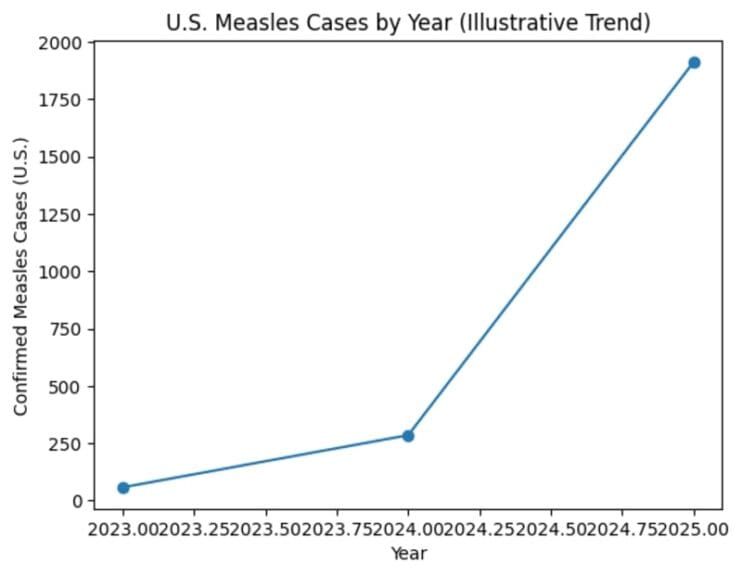
The measles outbreak in South Carolina is part of a significant resurgence in measles across the United States in 2025. According to the Centers for Disease Control and Prevention (CDC), a total of 1,912 confirmed measles cases were reported in the U.S. as of December 9, 2025-the highest annual count in decades. There have been 47 outbreaks reported nationwide this year, with 88% of cases linked to these clusters.
Although most states report relatively few cases, some jurisdictions including Texas, Arizona, and Utah have seen notable localized outbreaks. Declines in overall vaccination coverage among U.S. kindergarteners-from 95.2% in 2019-20 to 92.7% in 2023-24-are viewed as a driver of converging risk. 
Health officials caution that even small declines below the herd immunity threshold can have outsized effects, particularly in communities with under-vaccination. These outbreaks collectively threaten the United States’ measles elimination status, which had been maintained since 2000. 
Public Health Response and Challenges
State and local health departments are conducting contact tracing, imposing quarantines for exposed individuals, and deploying targeted vaccination efforts to contain the outbreak. Despite these measures, the pace of new cases suggests ongoing transmission, particularly in settings with clustering of unvaccinated individuals.
Public health communications also face challenges. Analyses have suggested that national agencies such as the CDC have been less visible on social media and other public platforms during this outbreak, potentially creating a gap filled by less authoritative sources. 
There is also a complex policy backdrop: vaccination decisions in many states emphasize personal choice, which, while respecting individual autonomy, can complicate efforts to achieve necessary community immunity thresholds during outbreaks.
The South Carolina measles outbreak exemplifies how under-vaccinated populations can become focal points for disease spread, even in a country that had long maintained measles elimination. As public health agencies continue containment and vaccination campaigns, the outbreak highlights the intersection of epidemiology, health communication, and policy. Sustained efforts to improve vaccination coverage and rapid response to emerging cases will be essential to curbing the outbreak locally and preserving the nation’s hard-won gains against measles.