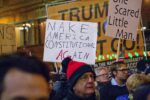
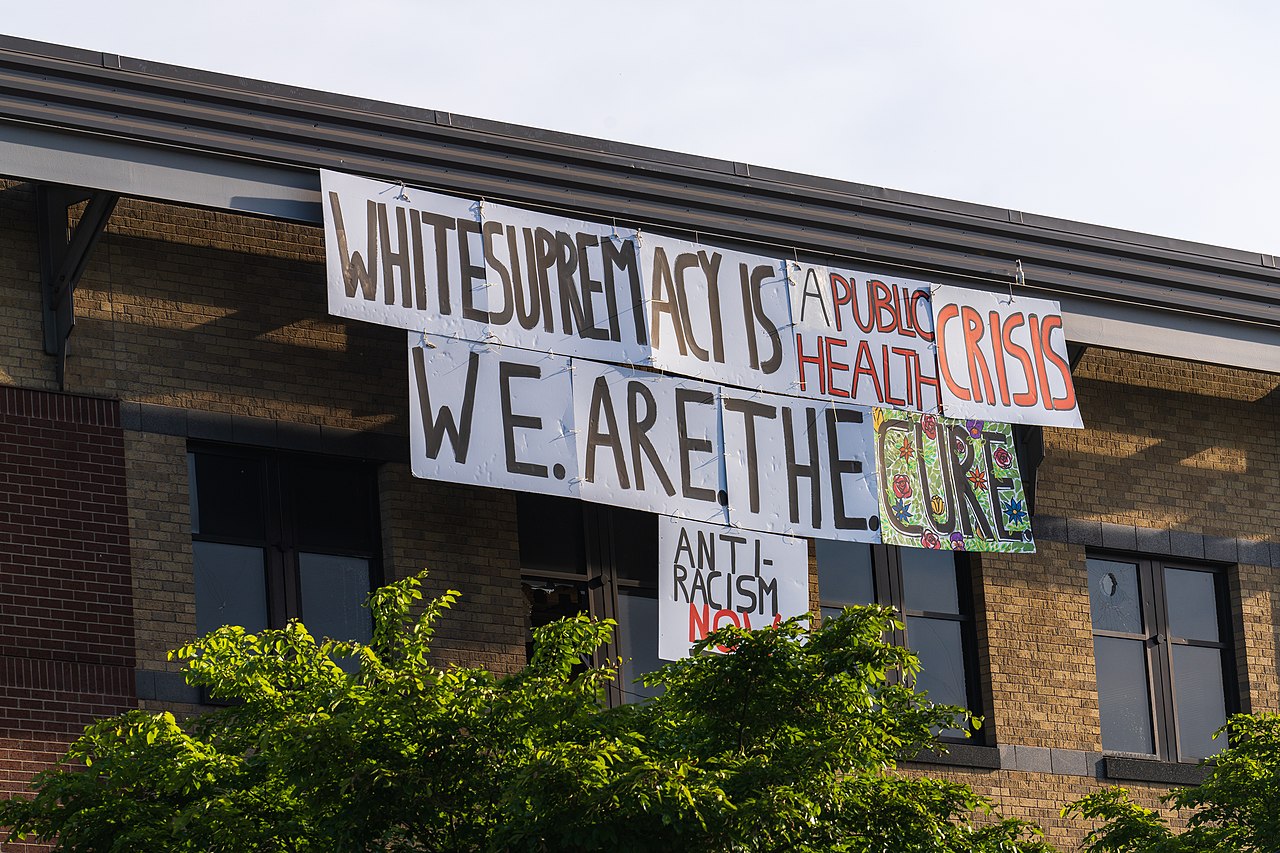

The Trump administration’s case against birthright citizenship arrives at the Supreme Court on Wednesday — and its legal arguments come straight from the playbook of White Supremacists: Confederate officers, segregationists, and anti-Chinese racists from the 1800s.
That’s not hyperbole. That’s what’s actually in the government’s legal briefs.
The Lawyer Who Defended “Separate But Equal”
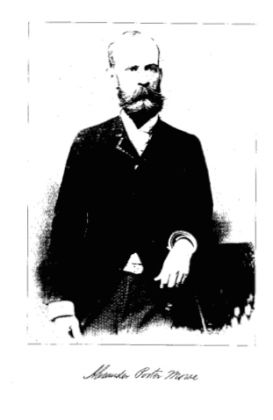
At the center of the administration’s argument is a man named Alexander Porter Morse. Morse was a Confederate cavalry officer during the Civil War.
After the war, he became the defense attorney for Louisiana’s segregation law in Plessy v. Ferguson — the infamous 1896 Supreme Court case that established the “separate but equal” doctrine and gave legal cover to Jim Crow for the next six decades.
Morse spent much of his legal career trying to gut the Fourteenth Amendment. He opposed giving Black Americans the right to vote. He opposed the Reconstruction amendments that abolished slavery. And he pushed the argument that the Constitution doesn’t guarantee citizenship to children born in the United States to immigrant parents.
The Trump administration’s Solicitor General, D. John Sauer, cites Morse’s work directly in the government’s Supreme Court brief — using Morse as an authority to argue that 19th-century thinkers widely agreed that the Constitution excludes children of foreign-born parents from birthright citizenship.
There’s a problem with that claim: the Supreme Court already rejected it. In 1898.
The Racist Trio Behind the Original Attack on Birthright Citizenship
Morse wasn’t alone. He was part of a trio of lawyers and legal scholars who mounted a coordinated campaign against birthright citizenship in the late 1800s — a campaign driven by explicitly anti-Black and anti-Chinese racism.
Francis Wharton, a prominent legal scholar and State Department official, tried to create a legal framework that would extend birthright citizenship to children of European immigrants while denying it to children of Chinese immigrants.
He described Chinese immigration as introducing “foreign barbarism” into America and argued that Chinese people were insufficiently “civilized” to deserve citizenship.
George D. Collins, a San Francisco attorney, took it even further. He lobbied the Justice Department to bring a test case against birthright citizenship, writing that Chinese immigrants were “antagonistic to our civilization” and “utterly unfit, wholly incompetent” to be American citizens.
Collins’s own career later collapsed when he was accused of bigamy and perjury.
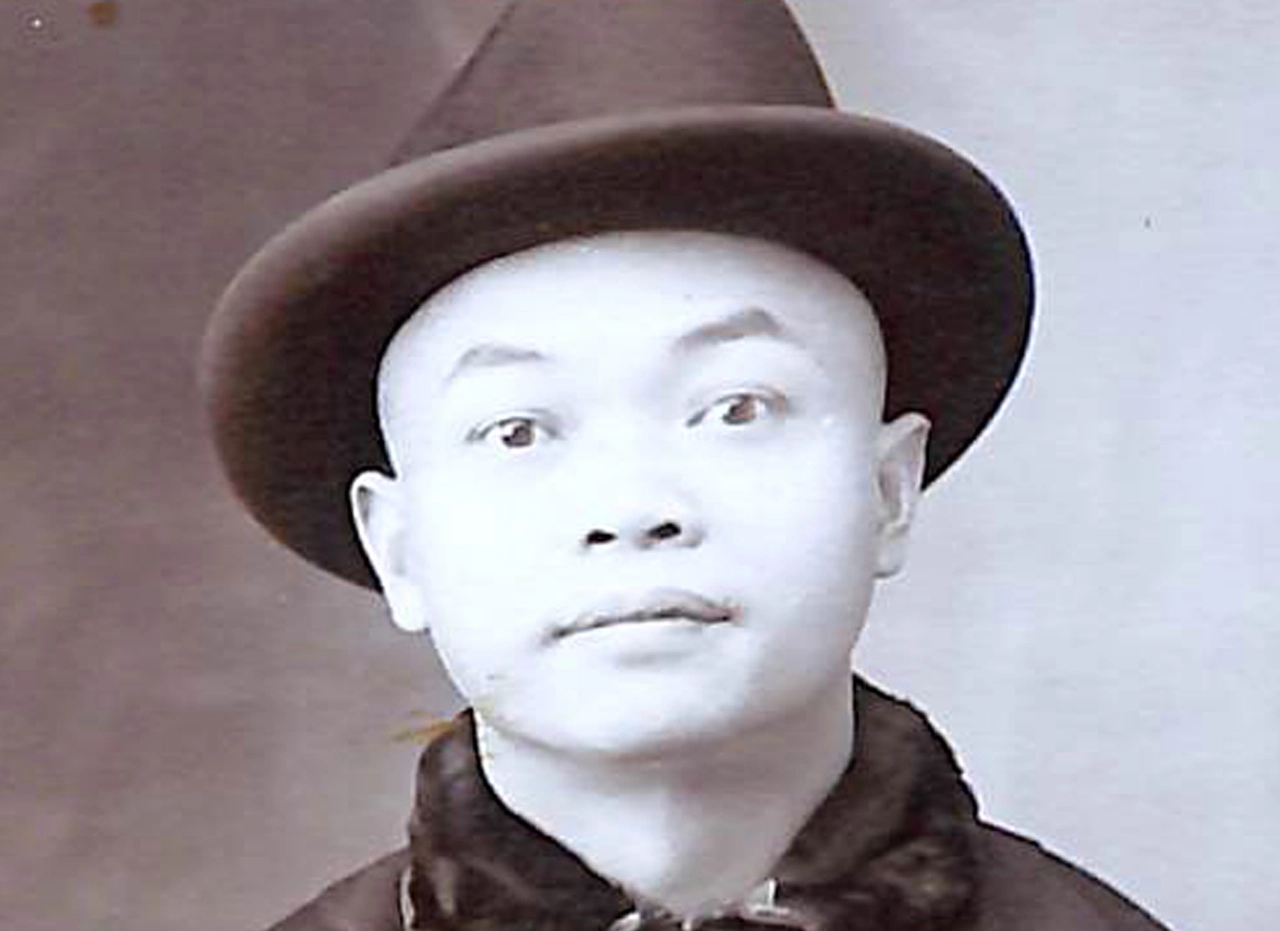
Together, these three men drove the legal challenge that led to United States v. Wong Kim Ark — the 1898 Supreme Court case that definitively established birthright citizenship as the law of the land. The Court ruled 6-2 that Wong Kim Ark, born in San Francisco to Chinese immigrant parents, was a United States citizen by birth under the Fourteenth Amendment.
They lost. Decisively. And now Trump’s lawyers are recycling their arguments.
How cute is this guy? 👇🏼
19 Overlapping Citations — and Counting
The Chinese American Legal Defense Alliance (CALDA) filed a friend-of-the-court brief that identified 19 instances where the Trump administration’s legal filings cite the same sources, cases, and legislative history that Morse, Wharton, and Collins used in the original Wong Kim Ark case.
CALDA attorney Justin Sadowsky didn’t mince words. He wrote that the trio’s arguments were “built on a racist foundation, attempting to use anti-Chinese sentiment to relitigate, rather than interpret, the Citizenship Clause.”
Sadowsky urged the Court not to allow “the writings of anti-Chinese racists of the late 19th century to harm the rights of Chinese and other people here in the United States today.”
University of Michigan law professor Sam Erman, who has studied the history of these anti-citizenship arguments, said the parallels between the 1890s campaign and the Trump administration’s current brief are striking.
He noted that if you remove the citations to Morse, Wharton, and their intellectual allies, the government’s case looks significantly weaker.
University of New Hampshire history professor Lucy Salyer said the administration’s decision to elevate these figures and their ideas should raise “alarm bells” for anyone familiar with the racist history behind the arguments.
What’s Actually at Stake
Trump signed an executive order on his first day back in office directing federal agencies to stop recognizing U.S. citizenship for children born in the United States if neither parent is a citizen or permanent resident.
The order has never taken effect — federal courts blocked it almost immediately, and it has been on hold through multiple rounds of litigation ever since.
Now the Supreme Court will take up the case directly. The administration argues that the Fourteenth Amendment’s Citizenship Clause was only intended to cover formerly enslaved people and their children — not children of undocumented immigrants or parents on temporary visas.
The American Bar Association has warned the Court that birthright citizenship has provided a clear, simple, easily administered standard for over a century, and that abandoning it would create chaos across criminal justice, elections, public benefits, education, and identity documentation.
Some estimates suggest the policy could affect as many as 250,000 babies born in the U.S. each year.
The Court Already Answered This Question
Here’s what makes this case so extraordinary: the Supreme Court already decided it. In Wong Kim Ark, the majority held that the Fourteenth Amendment’s language — “All persons born or naturalized in the United States, and subject to the jurisdiction thereof, are citizens” — means exactly what it says.
The Court found that the phrase “subject to the jurisdiction” only excludes a narrow set of people: children of foreign diplomats, children born to enemy forces occupying U.S. territory, and (at the time) certain Native Americans who owed allegiance to tribal governments.
For 128 years, that ruling has been the law of the land. No subsequent Supreme Court decision has questioned it. Lower courts have accepted it as settled.
Now the Trump administration wants to overturn that precedent — using the very same arguments that lost in 1898, advanced by the very same racist figures who lost then, too.
The question before the Court isn’t really about constitutional interpretation. It’s about whether six justices are willing to side with the legal legacy of a Confederate officer and Jim Crow architect over more than a century of settled law — and whether they’ll strip citizenship from hundreds of thousands of American-born children to do it.
Wong Kim Ark’s great-grandson, 76-year-old Norman Wong, is watching. So should the rest of us.