

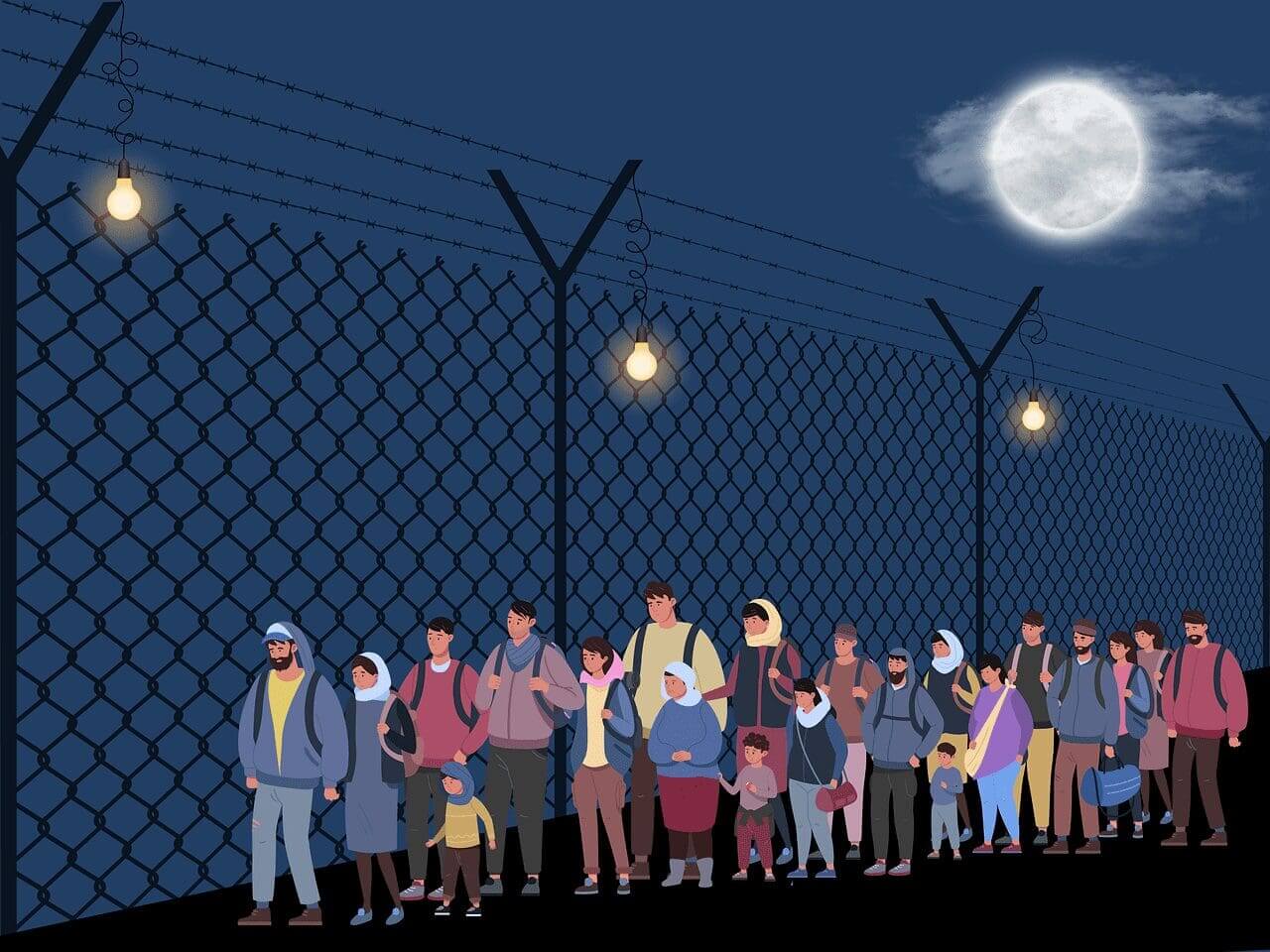
The Supreme Court heard oral arguments Tuesday in Noem v. Al Otro Lado, a case that could determine whether the federal government can legally turn away asylum seekers who show up at official border crossings before they ever step foot on U.S. soil.
⚠️ Editor’s note: This story contains a photo that some readers may find disturbing. Another warning appears before photo
For more than an hour, the justices wrestled with a deceptively simple question: What does it mean to “arrive in” the United States?
The answer matters enormously. Under the Immigration and Nationality Act, anyone who is “physically present in the United States or who arrives in the United States” has the right to apply for asylum and must be inspected by immigration officers.
The Trump administration’s position is blunt — if you’re still standing on the Mexican side of the border when a federal agent stops you, you haven’t arrived, and the government owes you nothing.
What the Justices Asked
The hearing turned into a philosophical exercise about geography and legal thresholds, with justices on both ideological sides pushing attorneys on where exactly the line falls.
Justice Amy Coney Barrett pressed the challengers’ attorney, Kelsi Corkran, on what “arrives in” actually looks like at the physical border.
What about someone far back in a queue?
Someone approaching between official ports of entry?
How close is close enough?
Corkran offered a clean answer: a person arrives at a port of entry when they’re at the threshold, about to step over. Chief Justice John Roberts wasn’t satisfied, pointing out that position in a line could change everything.
Justice Neil Gorsuch pushed even further with a series of hypotheticals — someone wading halfway across the Rio Grande, someone sitting atop a border wall. At what exact moment does the law kick in?
Several conservative justices appeared at least open to siding with the administration, potentially in a limited way. But Justice Ketanji Brown Jackson questioned whether the court should even be deciding the case, noting that the administration doesn’t have concrete plans to reinstate the policy and suggesting there’s no live controversy to resolve.
The Policy and Its Human Cost
The so-called “metering” policy started under President Obama in 2016 as a response to a surge of Haitian asylum seekers at the San Ysidro port of entry in Southern California.
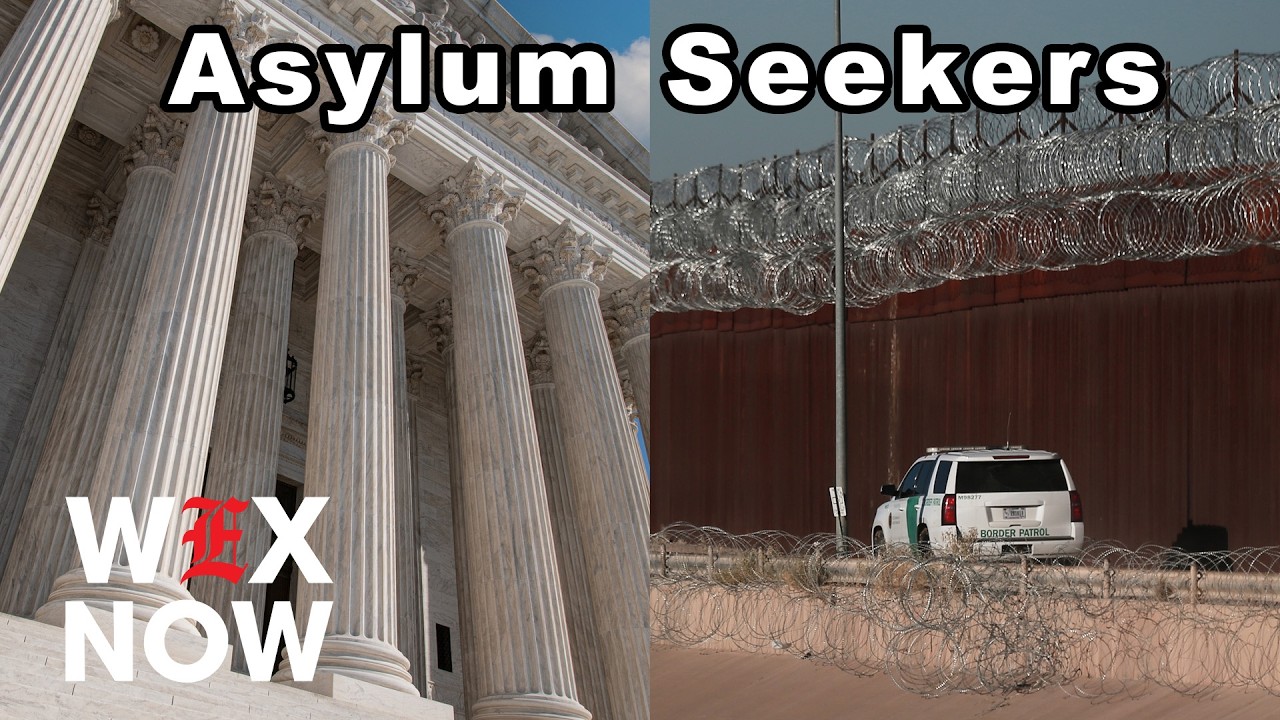
It was formalized and expanded under Trump’s first term in 2018 to cover all southern border ports of entry.
2020-metering-policyBiden rescinded it in 2021, though his Justice Department continued defending its legality in court.
Trump’s current administration wants the Supreme Court to declare it lawful so it can be revived if border conditions change.
The mechanics were straightforward and cruel: Customs and Border Protection agents would physically position themselves at the border line and stop asylum seekers before they could set foot on U.S. soil.
If you never technically entered the country, the government argued, it had no legal obligation to hear your claim.
The consequences were devastating. At the policy’s height in 2019, some 26,000 asylum seekers were stuck on waitlists at border crossings.
As of early 2026, 300,000 asylum seekers — families with children, individuals fleeing political violence, people who had traveled thousands of miles to reach what they believed was a legal pathway to safety — were stranded in some of the most dangerous cities in Mexico.
They waited in makeshift camps without reliable food, shelter, or security. They were targeted by cartels and corrupt officials. Some were kidnapped. Some were assaulted. Some died.
The case of Óscar Alberto Martínez Ramírez and his 2-year-old daughter, Angie Valeria, became a searing symbol of what metering produced. After spending two months waiting in a migrant camp to apply for asylum, the Salvadoran father attempted to swim across the Rio Grande with his toddler.
⚠️ Warning: graphic image ahead.
Both drowned. The photograph of their bodies on the riverbank forced a national reckoning — briefly — with what happens when people fleeing violence are told to wait indefinitely in places just as dangerous as the ones they fled.
It forced a reckoning that faded. We’re sharing the photo in the hopes it will reinvigorate Americans’ pushback against the cruelty shown to asylum seekers and immigrants living in the U.S. for decades.

Jamillah Nabunjo, a 33-year-old Ugandan woman, died of a suspected illness in a Ciudad Juárez hospital after waiting five months under metering for her name to reach the top of a CBP processing list.
Her fellow travelers, including a doctor, believed her death could have been prevented had she not been forced to wait in conditions where language barriers blocked her access to adequate medical care.
These aren’t abstractions. These are the real outcomes of a policy that treated the right to seek asylum as an inconvenience to be managed away.
The St. Louis Parallel
HIAS, formerly known as the Hebrew Immigrant Aid Society, filed a friend-of-the-court brief drawing a direct line between metering and one of the darkest chapters in American refugee history.
In 1939, the MS St. Louis carried nearly 1,000 Jewish refugees fleeing Nazi persecution. The ship was turned away from the United States. Many of its passengers were eventually sent back to Europe, where a significant number were killed in the Holocaust.
Justice Sonia Sotomayor drove this comparison home during oral arguments, confronting the government’s attorney about the parallels. The U.S. didn’t let those refugees dock. Didn’t interview them. Didn’t consider whether they were fleeing persecution. Many were shipped back and killed.
“That’s what we’re doing here, isn’t it?” she asked.
The government’s lawyer, Assistant Solicitor General Vivek Suri, didn’t dispute the moral weight of the comparison. He simply argued that it wasn’t relevant to the legal question before the court — which is whether Congress’s use of the phrase “arrives in the United States” covers people standing on the Mexican side of a border crossing.
The Legal Stakes
Lower courts have consistently ruled against metering. A federal judge in California found the policy unlawful, and in 2024, the Ninth Circuit Court of Appeals affirmed that decision, holding that someone who presents themselves at a port of entry has “arrived in” the United States regardless of which side of the line they’re standing on.
The appeals court emphasized that the ruling still left the government broad latitude to manage border operations — it simply couldn’t refuse to process asylum claims entirely.
The challengers — Al Otro Lado, a nonprofit legal services organization, and thirteen individual asylum seekers — have argued that the government’s reading would gut the asylum statute.
If the government can prevent people from stepping onto U.S. soil and then claim those people haven’t “arrived,” the right to seek asylum becomes meaningless.
It also creates a perverse incentive: people who cross between ports of entry, including by wading across rivers or hiking through desert, would have stronger legal protections than people who show up at the front door and try to follow the rules.
Former government officials filed briefs warning of exactly this. When metering was in effect, they noted, desperate people ran down highways, drowned at water crossings, and turned to smugglers — all because the legal pathway had been physically blocked.
What Comes Next
This case is part of a larger pattern. The Supreme Court’s current term is stacked with Trump administration immigration cases. Next month, the justices will hear arguments on Trump’s executive order attempting to end birthright citizenship and his efforts to strip temporary deportation protections from Haitians and Syrians.
The administration’s attorney told the court Tuesday that the government wants to keep metering available as a backup tool in case border conditions justify it, without committing to when or how it would be reimposed. That vagueness is part of the strategy — maintaining maximum executive flexibility while asking the court to bless a policy framework that lower courts have repeatedly struck down.
A decision is expected by the end of June. Whatever the court decides will determine not just the fate of this one policy, but the broader question of whether the right to seek asylum at a U.S. border crossing is real or merely theoretical — a right that exists on paper but can be blocked by an agent standing three feet in front of you.