
Today’s big national security news lands with both seriousness and a measure of relief – federal investigators stopped a potentially deadly New Year’s Eve bombing plot before New Year’s Eve. Law enforcement arrested four people suspected of planning coordinated bomb explosions across Southern California on December 31, 2025.
At a Glance… 👀
| KEY POINTS | KEY FACTS |
|---|---|
| Who | 4 suspects (Audrey Illeen Carroll, Zachaey Aaron Page, Dante Gaffield, and Tina Lai) with a 5th arrest in Louisiana of someone they say is connected to the “broader plot” |
| Alleged affiliation | Extremist group offshoot: Turtle Island Liberation Front (TILF) |
| When | Planned for December 31, 2025 |
| Where | Southern California (LA region) |
| How (alleged) | IED devices, multiple locations |
| Charges | Conspiracy, possession of destructive devices |
What Happened?
On Monday federal authorities announced they’d busted up what prosecutors are calling a “planned series of improvised explosive device attacks” slated for New Year’s Eve in and around the Los Angeles area.
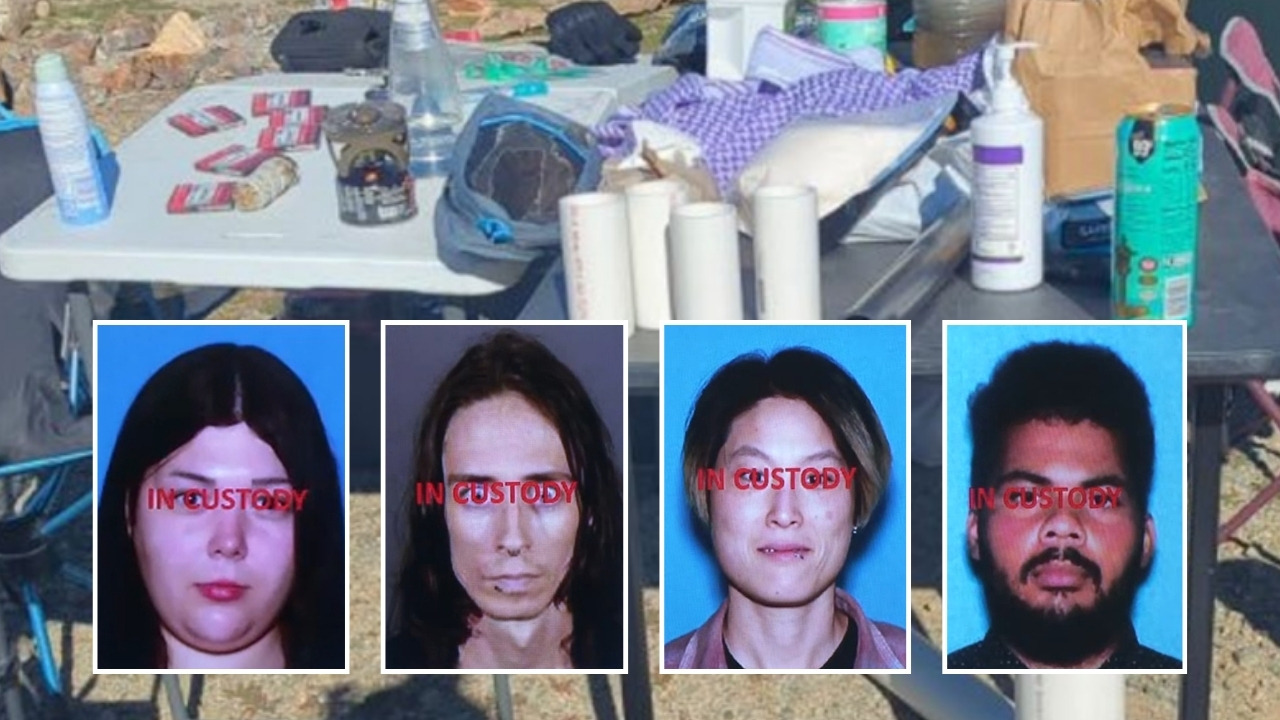
The four individuals – identified by prosecutors as Audrey Illeene Carroll, Zachary Aaron Page, Dante Gaffield, and Tina Lai – were taken into custody after investigators say they were testing explosives in the Mojave Desert near Lucerne Valley, east of LA. 
According to court filings, bomb-making materials were found at the site, including PVC pipe, suspected potassium nitrate, sulfur and charcoal powders, and fuse materials – classic components for homemade explosive devices.
Who Are They Allegedly Connected To?
Federal prosecutors say all four are members of an extremist offshoot of a group called the Turtle Island Liberation Front (TILF).
While the name carries a kind of whimsical vibe at first (seriously, Turtle Island evokes cartoons before anything else), the people involved are accused of pushing a combination of anti-government, anti-capitalist, and pro-Palestinian rhetoric as part of their extremist ideology – and allegedly plotting violence as a result.
It’s worth noting that authorities have characterized TILF as a fringe group with radical views, not tied to mainstream activist movements. That context matters because extremist labels are serious and can affect broader political discussions if they’re misunderstood. 
What Were the Targets?
That’s where things get a bit opaque. Prosecutors haven’t publicly named specific targets by corporate or business name, but officials have said the alleged plan involved multiple “Amazon-type logistics centers” – essentially big distribution hubs with lots of people and activity – and possibly Immigration and Customs Enforcement (ICE) vehicles and agents. 
Whether that reflects motive, symbolism, or tactical targeting is part of what investigators will continue to parse in court.
Charges and Legal Status
Each of the four suspects now faces federal charges including:
- Conspiracy to use a destructive device
- Possession of an unregistered explosive device
Prosecutors have also signaled more charges may follow as they sort through evidence. 
The suspects were arrested without incident, and appeared before federal judges in Los Angeles shortly after their arrests. 

A fifth person connected with these allegations was reportedly arrested separately in Louisiana in connection with the broader plot – authorities are treating that as part of an increasingly complex investigation.
How This Fits Into the Bigger Picture
Let’s be clear: thwarting these plans before they could harm people or property is, by virtually every measure, a public safety win.
But there are broader themes here worth thinking through, especially as we head into an election cycle:
- Domestic extremism in the U.S. takes many forms and can emerge from multiple ideological corners.
- Online radicalization and encrypted apps have changed how plots are discussed and coordinated.
- Civil liberties discussions and national security debates continue to evolve as law enforcement responds to threats.