
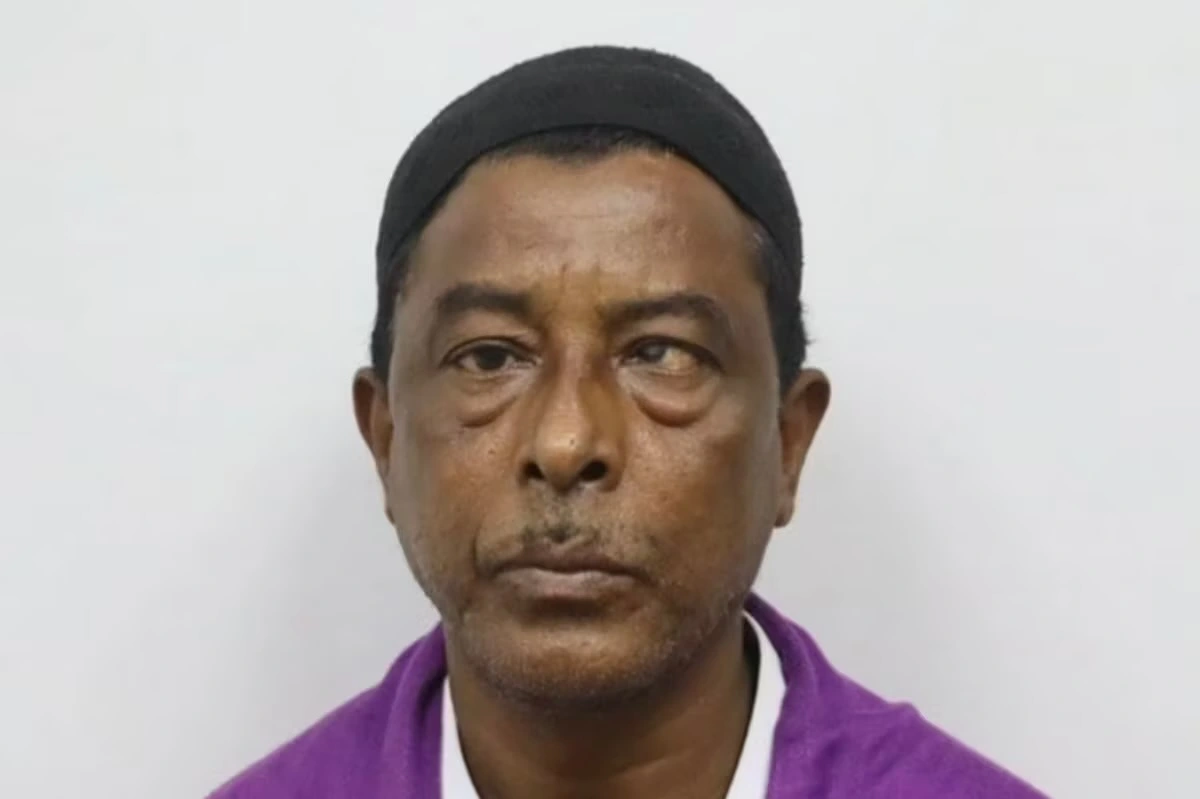
Nurul Amin Shah Alam survived persecution in Myanmar. He survived the long, uncertain journey to the United States as a Rohingya refugee. He survived a year inside an American jail over a misunderstanding involving a curtain rod.
What he did not survive was the night U.S. Border Patrol agents dropped him off at a Tim Hortons coffee shop in Buffalo, New York, and drove away.
Shah Alam, 56, was found dead on Perry Street in downtown Buffalo on Tuesday evening — five days after federal agents left him alone, nearly blind, unable to speak English, and wearing nothing on his feet but the orange booties issued by the Erie County jail.

Temperatures in Buffalo were below freezing. His family had no idea where he was.
His death has prompted a homicide investigation by Buffalo police, demands for accountability from city, state, and federal officials, and a reckoning with the increasingly cruel consequences of America’s immigration enforcement machine — a machine that, in this case, chewed up a man it had no legal right to detain in the first place.
A Father, a Refugee, a Man Who Got Lost
Nurul Amin Shah Alam arrived in Buffalo in December 2024 as a legally admitted refugee from Myanmar.
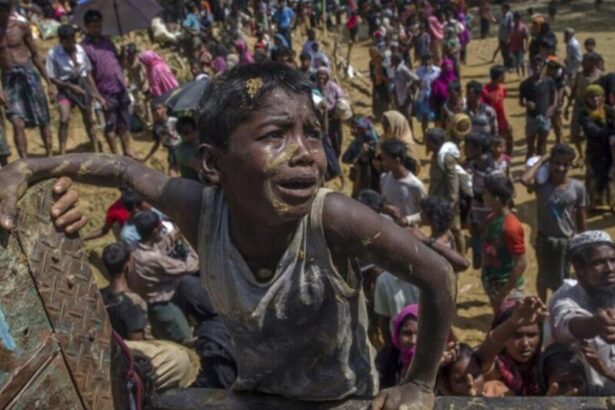
He was a Rohingya Muslim — a member of one of the most persecuted ethnic minorities on Earth — who came to the United States seeking the safety his homeland could not provide.
Shah Alam was nearly completely blind. He could not see at all out of one eye, and could only make out blurry shapes a few feet away with the other.
He did not speak, read, or write English.
He did not use electronic devices.
He relied entirely on his wife, his two sons, and his community to navigate life in his new country.
On February 15, 2025, Shah Alam went for a walk in his neighborhood on Buffalo’s East Side.
He was using a curtain rod he had purchased as a walking stick.
Nearly blind and unable to communicate, he got disoriented and ended up on the porch of a stranger’s home.
The woman called police. When Shah Alam — who could not understand what officers were saying — did not drop the curtain rod on command, police tased him and beat him, then arrested him.
He was charged with assault, trespassing, and possession of a weapon. (He was charged with assault?)
The weapon was the curtain rod.
Shah Alam spent the next year in the Erie County Holding Center.
His family chose not to post bail, fearing that in the current immigration climate, he would be swept into ICE custody and disappeared to a detention facility far from home.
It was a calculated, agonizing decision — the kind that immigrant families across this country are forced to make every day.
Related

The Plea Deal That Should Have Brought Him Home
Earlier this month, Shah Alam’s attorney at the Legal Aid Bureau of Buffalo, Benjamin Macaluso, negotiated a plea deal with the Erie County District Attorney’s office.
Shah Alam pleaded guilty to misdemeanor charges of trespassing and weapon possession — the curtain rod — which allowed him to clear the immigration detainer and be released on bail without being transferred to ICE.
On February 19, Shah Alam’s family posted bail.
He was supposed to walk out of the Erie County Holding Center and come home to his wife and sons.
That’s not what happened.
Because an immigration detainer had been placed on Shah Alam, the Erie County Sheriff’s Office followed standard protocol and notified U.S. Border Patrol before his release.
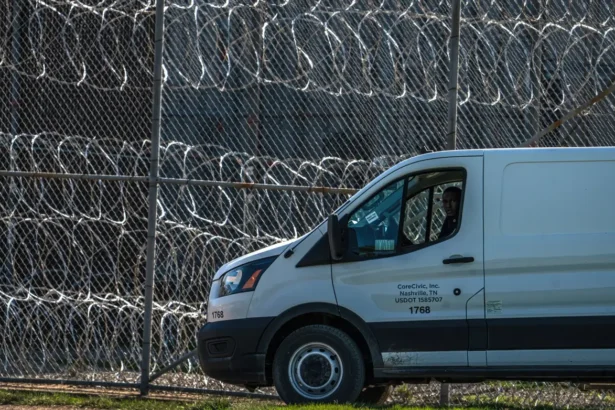
Agents arrived at the holding center before the release was even finalized. They took Shah Alam into federal custody.
Border Patrol agents then determined what Shah Alam’s attorneys already knew: he had entered the United States legally as a refugee and was not eligible for deportation. He should never have been in their custody at all.
Dropped Off and Forgotten
What happened next is the part that should haunt every person who reads this.
Rather than returning Shah Alam to the holding center, where his son’s phone number and his attorney’s contact information were on file, Border Patrol agents gave him what they described as a “courtesy ride.”
They drove him to a Tim Hortons on Niagara Street in the Black Rock neighborhood — on the opposite side of the city from his home in the Broadway-Fillmore neighborhood, roughly five miles away.
They left him there. It was after 8 p.m. on a cold February night.
They did not call his family. They did not call his attorney. They did not contact anyone.
A spokesperson for U.S. Customs and Border Protection later claimed that Shah Alam “showed no signs of distress, mobility issues, or disabilities requiring special assistance” — a statement that defies belief given that the man was nearly blind, non-English-speaking, and wearing jail-issued booties in winter.
Buffalo Mayor Sean Ryan was blunt in his assessment. Shah Alam’s family, his attorney, and his son had all been active visitors during his year in custody, Ryan noted.
Their contact information was readily available. The agents could have made a single phone call. They chose not to.
Five Days Missing
Shah Alam’s attorney, Macaluso, expected him to be taken to the ICE detention center in Batavia, about 40 miles east of Buffalo.
When Shah Alam didn’t arrive there, Macaluso and the family spent Friday, Saturday, and Sunday searching for him.
On Sunday, Macaluso filed a missing persons report with Buffalo police. On Monday, a detective closed the case for several hours under the mistaken belief that Shah Alam was in ICE custody in Batavia. He was not. The case was reopened.
On Tuesday evening, Buffalo police officers responded to a call about a body on Perry Street, near the downtown sports arena.
It was Nurul Amin Shah Alam.
The Erie County Medical Examiner determined the cause of death was “health related in nature,” ruling out exposure and homicide.
His family buried him Thursday afternoon at a local mosque, surrounded by dozens of mourners.
“A Complete Failure of the System”
Mayor Ryan called Shah Alam’s death “preventable,” “deeply disturbing,” and “a dereliction of duty” by U.S. Customs and Border Protection.
“A vulnerable man — nearly blind and unable to speak English — was left alone on a cold winter night with no known attempt to leave him in a safe, secure location,” Ryan said.
“That decision from U.S. Customs and Border Protection was unprofessional and inhumane.”
Ryan added pointedly: “That’s why we do not cooperate with ICE, Homeland Security and Border Patrol.”
U.S. Senator Kirsten Gillibrand sent a letter to federal officials demanding a full accounting of the actions taken by Border Patrol agents.
“The family of Nurul Amin Shah Alam and our community deserve answers on the events that led to his death. I am deeply disturbed by reports that after taking him into custody, Border Patrol agents left Mr. Shah Alam at a Tim Hortons, miles from his home, without notifying his family or attorney before he was found dead. If true, this is absolutely unacceptable. The Department of Homeland Security, Customs and Border Protection, and local law enforcement must provide a full accounting of what has occurred and ensure this never happens again.”
U.S. Representative Tim Kennedy called it “a horrific and heartbreaking tragedy” and demanded a full investigation at the local, state, and federal levels. Representative Grace Meng described it as “a shocking breach of responsibility and basic humanity.”
“Nurul Amin Shah Alam should be alive today. He is dead because U.S. Border Patrol agents abandoned a blind refugee miles away from home and then lied to cover it up. Video footage proves that Mr. Alam was left outside of a coffee shop that was closed, not a ‘warm, safe location’ as they claimed. The Department of Homeland Security’s cruelty, callousness, and indifference to human life is absolutely sickening. As Members of Congress, we demand answers and justice for his family. The Department of Homeland Security must be held accountable,” said Rep. Grace Meng, Chair of the Congressional Asian Pacific American Caucus.
Imran Fazel, an advocate for Rohingya refugees in Buffalo who knows Shah Alam’s family, captured the grief and the fury in simple terms: “We never thought anyone would experience anything like this since coming to the United States. It doesn’t make me feel safe in a country like this.”
Shah Alam’s son, Mohamad Faisal, said in a message that nobody told him, his family, or their attorney where his father had been dropped off.
His father, he said, could not read, write, or use electronic devices. He was completely dependent on others to find his way.
“He should not be dropped off in a location where he doesn’t know anybody,” Fazel said. “He doesn’t speak English.”
This Is What the System Produces
Nurul Amin Shah Alam was not an undocumented immigrant. He was a legally admitted refugee — someone the United States government invited into this country with a promise of protection.
He was a father. He was a survivor of one of the world’s most brutal campaigns of ethnic cleansing.
And the system killed him. Not with a single dramatic act of violence, but with a cascade of indifference — an immigration detainer placed on a man who couldn’t be deported, a year in jail over a curtain rod, a ride to the wrong side of town, a door opened onto a freezing night, and a phone call nobody bothered to make.
This is what happens when immigration enforcement operates without accountability, without compassion, and without any regard for the human beings caught in its machinery.
This is what happens when “courtesy” means dumping a blind man at a coffee shop and calling it a safe location.
Nurul Amin Shah Alam deserved so much better. His family deserved so much better.
And every refugee who comes to this country believing in the promise of safety deserves to know that the United States will not abandon them on a cold street to die.