
Immigration policy in the US has never been simple. It’s a story that stretches back to the very founding of the country — and it’s still being written today. Whether you’re trying to understand the current debate, doing research for school, or just want to know how America’s approach to immigration stacks up against the rest of the world, this guide breaks it all down in plain language.
The Early Days: Come On In (If You’re White)
Here’s something most people don’t realize: for the first hundred years of the United States, there was barely any immigration regulation at all. The borders were essentially open. The country was massive, sparsely populated, and desperately needed people to settle the land, build the railroads, and grow the economy.
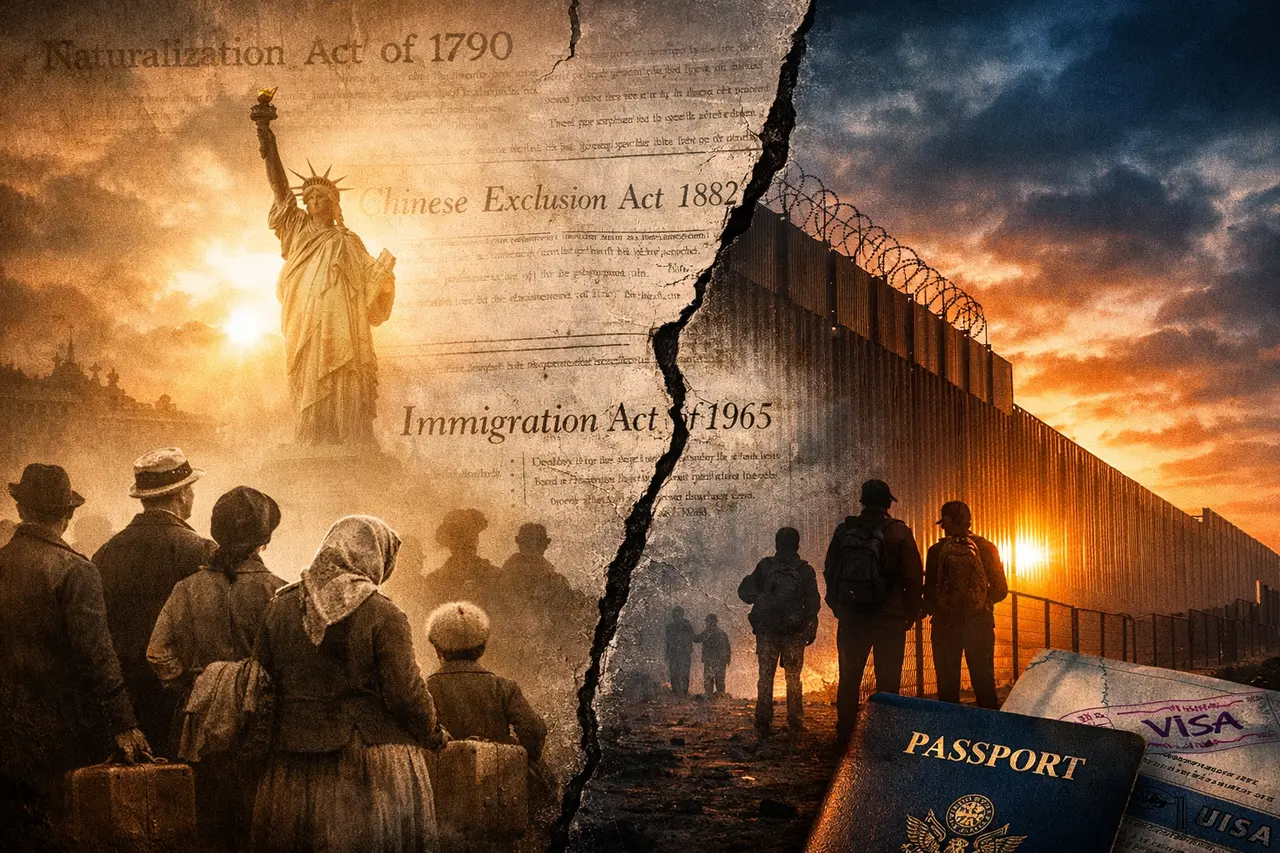
But there was a catch. The very first immigration-related law, the Naturalization Act of 1790, said that only “free white persons” of good moral character could become citizens. So while the doors were technically open, full membership in American society was restricted from the start.
Through the early 1800s, immigrants poured in — mostly from Northern Europe. Irish families fleeing famine, Germans seeking political freedom, and British workers looking for opportunity. Between the 1830s and 1850s, immigration jumped from about 151,000 people to 1.7 million.
Meanwhile, Chinese immigrants arrived on the West Coast, drawn by the Gold Rush and railroad jobs. By 1860, Chinese immigrants made up roughly a quarter of California’s population.
The Door Starts Closing: Exclusion and Quotas
The open-door era didn’t last. As economic anxiety grew and racist attitudes hardened, Congress passed the Chinese Exclusion Act of 1882 — the first federal law to restrict immigration based on nationality and ethnicity. It specifically banned Chinese laborers from entering the country, despite the fact that Chinese workers had been instrumental in building the transcontinental railroad.

This was just the beginning. Over the next few decades, more restrictions followed. Congress banned people with contagious diseases, criminals, and “anarchists” in the Immigration Act of 1917.
A literacy test was added in 1917. Then came the most sweeping change yet: the national-origins quota system, established by laws passed in 1921 and 1924. These quotas capped the total number of immigrants allowed each year and assigned each country a limit based on how many people of that nationality were already living in the US according to the 1890 census.
The effect was intentional — it heavily favored immigrants from Northern and Western Europe while virtually shutting the door on people from Asia, Southern Europe, and Eastern Europe.
Immigration slowed to a trickle. During the Great Depression, more people actually left the US than arrived. The quota system stayed in place for over 40 years.



The 1965 Revolution: Rewriting the Rules
The landmark moment in modern immigration policy in the US came in 1965, when Congress passed the Immigration and Nationality Act. This law scrapped the old national-origins quotas and replaced them with a system based on two priorities: reuniting families and attracting skilled workers.

The impact was enormous. Before 1965, the vast majority of immigrants came from Europe. After the law passed, the demographics shifted dramatically. Newcomers increasingly arrived from Asia, Latin America, the Caribbean, and Africa. It fundamentally reshaped who America is.
The 1965 law also imposed the first-ever limits on immigration from the Western Hemisphere. Before that, people from Latin American countries had been able to enter with relatively few restrictions.
Before 1965, the U.S. imposed no numerical limits on immigration from the Western Hemisphere, allowing relatively free entry from Latin America compared to restricted European/Asian regions— a fact that’s often left out of today’s debates.
The Modern Era: Reform, Enforcement, and Ongoing Debate
Since the 1960s, immigration policy in the US has swung between efforts at reform and crackdowns on enforcement. Here are some of the key moments:

The Refugee Act of 1980 created the country’s first formal system for admitting refugees, aligning US policy with United Nations standards and setting an initial target of 50,000 refugee admissions per year.
In 1986, Congress passed the Immigration Reform and Control Act (IRCA), which tried to address unauthorized immigration from two angles. On one hand, it granted legal status to roughly 3 million undocumented immigrants who had been living in the country.
On the other, it created penalties for employers who knowingly hired undocumented workers and ramped up border enforcement.
The 1990s brought harsher measures. Laws passed in 1996 dramatically expanded the categories of offenses for which immigrants — including legal permanent residents — could be deported. The September 11, 2001 attacks then shifted the entire framework of immigration policy toward national security.
The Immigration and Naturalization Service was dissolved and replaced by three new agencies under the Department of Homeland Security: Customs and Border Protection (CBP), Immigration and Customs Enforcement (ICE), and US Citizenship and Immigration Services (USCIS).
In 2012, President Obama introduced the Deferred Action for Childhood Arrivals (DACA) program, which shielded over 800,000 young people — known as DREAMers — who had been brought to the US as children from deportation and allowed them to work legally.
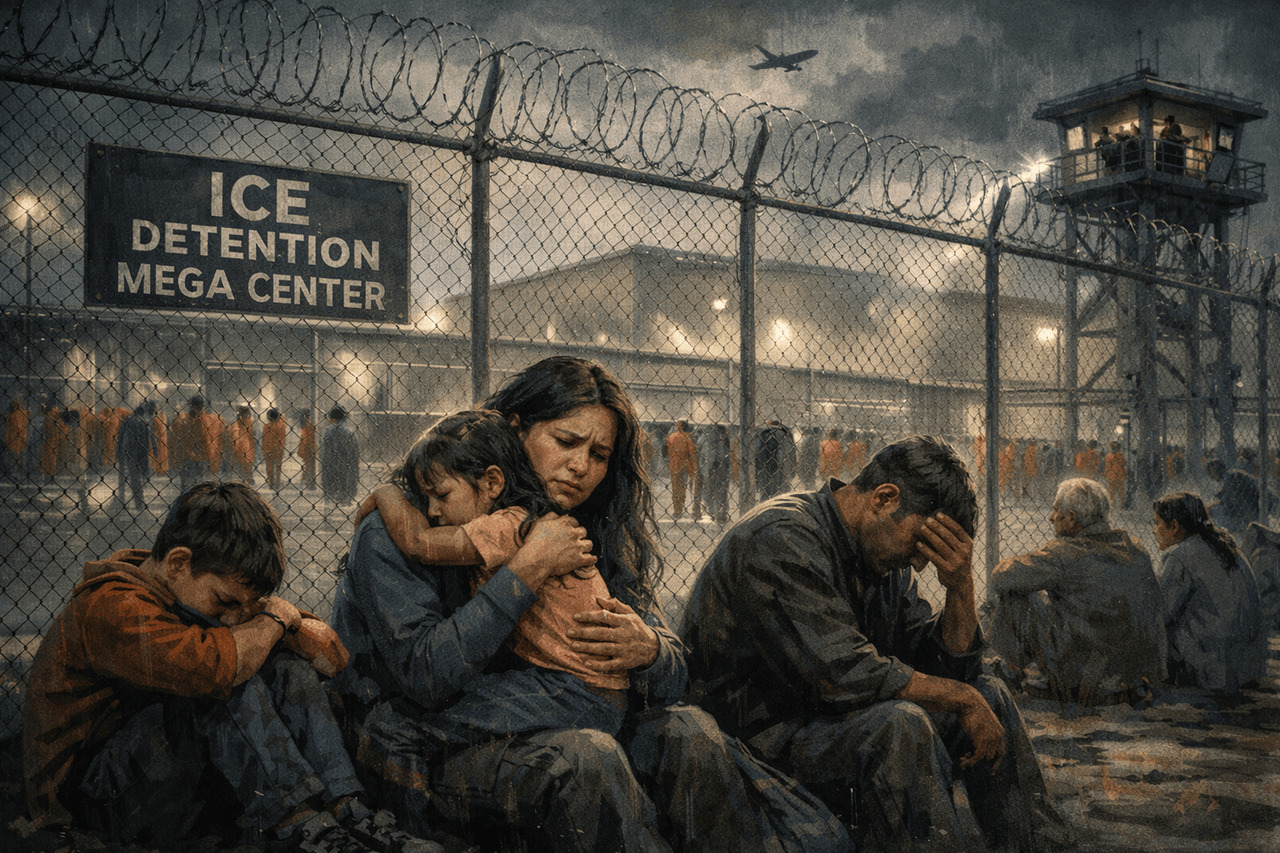
DACA has remained a topic of political debate ever since, with its future still uncertain. ICE has arrested DACA recipients in the mass deportation project.
How Does Immigration Policy in the US Compare to Other Countries?
One of the most striking differences between the US and other major immigrant-receiving nations is the approach to selecting who gets in.

Canada, Australia, and the United Kingdom all use some version of a points-based system for economic immigration. Under Canada’s Express Entry system, for example, applicants are scored on factors like age, education, language skills, and work experience.
The highest-scoring candidates are invited to apply for permanent residency. This system is designed to be flexible and responsive to the country’s economic needs, and roughly 60 percent of Canada’s immigrants come through economic pathways.
The US, by contrast, has no points-based system. Its legal immigration framework is overwhelmingly family-based, with family reunification being the primary pathway to permanent residency. Economic immigration is capped at 140,000 visas per year (including family members of the primary applicant), and the process is often employer-driven rather than skills-assessed.
This means the US system is less nimble when it comes to responding to labor market needs.
There are also major differences in scale and unauthorized immigration. Canada doesn’t experience the same level of large-scale unauthorized migration as the US, in part because of geography — it doesn’t share a long land border with a developing country — and in part because of its managed immigration system.
The US, meanwhile, has an estimated 11 million undocumented residents, and unauthorized border crossings have been a central political issue for decades.
European countries take yet another approach. Many EU nations have moved toward managed migration systems that balance economic needs, humanitarian obligations, and free movement within the EU itself.
However, the 2015 refugee crisis strained these systems and fueled a rise in anti-immigrant politics across the continent.
Where Things Stand Now (2026)
Immigration policy in the US remains one of the most divisive issues in American politics. Comprehensive reform has been discussed for decades but has repeatedly stalled in Congress. Instead, policy has largely been shaped by executive actions that shift with each administration, court decisions, and incremental legislative changes.
What gets lost in the political noise is that immigration is deeply human. Behind every policy debate are real people — families separated by borders, workers contributing to their communities, refugees fleeing violence, and children who have known no other home.
Understanding the history of immigration policy in the US isn’t just an academic exercise. It’s essential for having informed, compassionate conversations about where the country goes from here.
The question has never really been whether America is a nation of immigrants. It always has been. The real question is what kind of nation it chooses to be going forward.