

ICE posed as police officers to enter a Columbia University residential building and arrest a student without a warrant — and now, just days later, the case against her has been quietly dismissed.
On the morning of February 26, at approximately 6:30 a.m., five ICE agents entered an off-campus Columbia University residential building in Manhattan.
They told the building superintendent they were police officers searching for a missing child.
They went so far as to create a flyer with a photo of the fake missing child. They showed it to staff as they made their way through the building.
It was all a lie.
The agents were ICE officers, and they weren’t looking for a child. They were looking for Elmina “Ellie” Aghayeva, a 29-year-old senior studying neuroscience and political science.
According to Columbia’s acting president, Claire Shipman, security cameras captured the agents in the hallway showing pictures of the nonexistent missing child as they approached Aghayeva’s apartment, where they repeated the same story to gain entry.
Once inside the apartment, the deception became clear. A Columbia public safety officer arrived and asked the agents multiple times for a warrant.
They didn’t have one.
The officer asked for time to call his supervisor. That request was denied.
The agents took Aghayeva and left.
A Student’s Terrified Plea
From custody, Aghayeva sent an urgent message to a student group chat: “DHS illegally arrested me. Please help. They are trying to take me away. Can someone help me.”
She also posted to her Instagram account, where she has more than 100,000 followers: “DHS illegally arrested me. Please help.”
The message sent shockwaves through the Columbia campus and beyond.
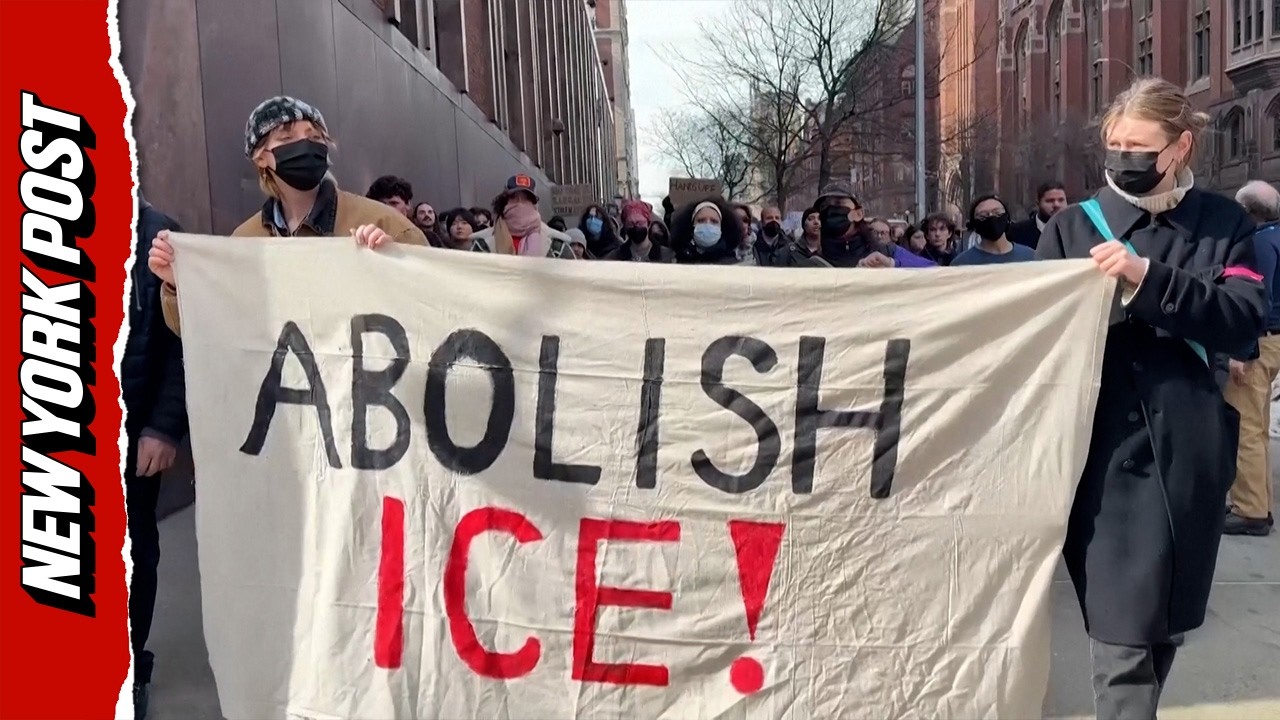
Within hours, students organized an emergency rally.
Hundreds gathered for a peaceful demonstration, demanding answers and protections for students targeted by federal enforcement.
DHS Tells a Different Story
The Department of Homeland Security pushed back on the university’s account.
A DHS spokesperson said agents wore badges around their necks and verbally identified themselves as Homeland Security Investigators. The agency insisted its agents did not pose as NYPD officers.
However, DHS notably did not address the allegation that agents fabricated a missing child story to gain access to the building.
DHS described Aghayeva as someone whose student visa was terminated back in 2016 during the Obama administration for failing to attend classes.
The agency said the building manager and Aghayeva’s roommate let officers into the apartment, and that she had no pending appeals or applications with DHS.
Related

But the framing of a current undergraduate student as someone whose visa was revoked a decade ago raises more questions than it answers.
Aghayeva was actively enrolled at Columbia, on track to graduate in May, and by all accounts a dedicated student.
Friends described her as highly motivated and academically accomplished.
The night before her arrest, she had documented a 10-hour study session in the Columbia library on social media.
An Unexpected Intervention
What happened next was remarkable.
New York City Mayor Zohran Mamdani happened to be in Washington, D.C., that day for a previously scheduled meeting with President Trump about an unrelated real estate project.
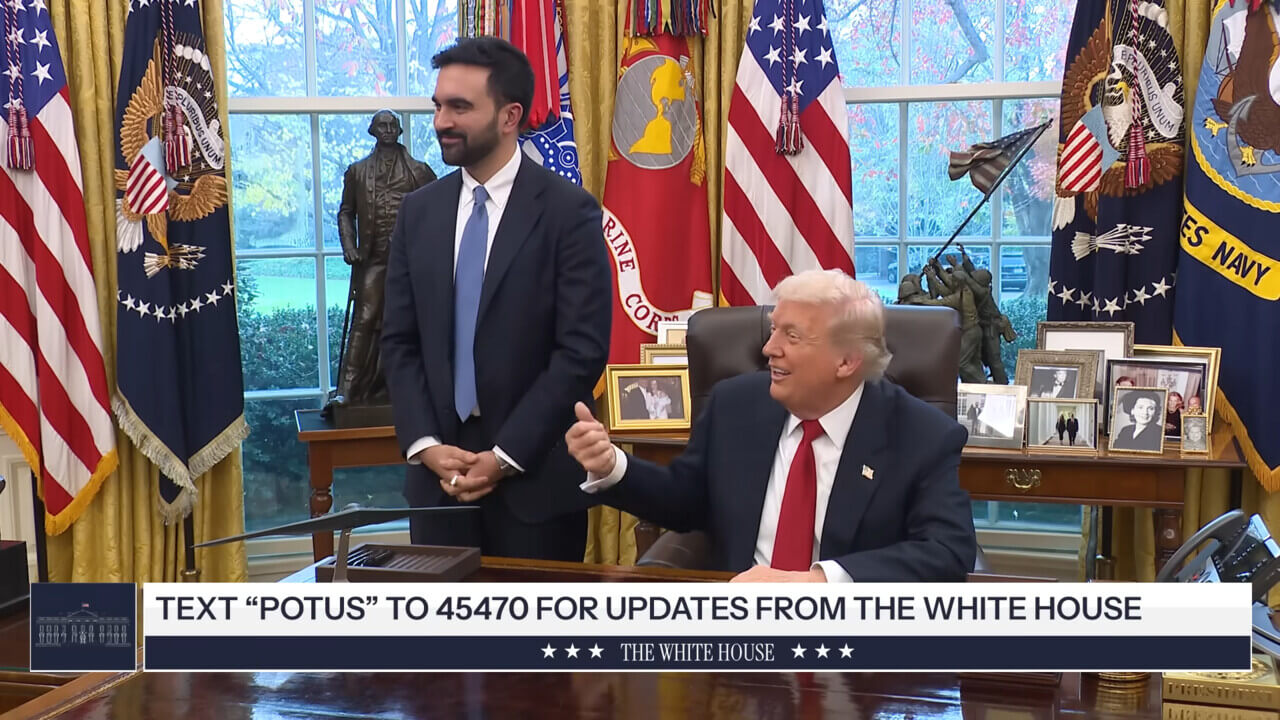
When Mamdani learned of the arrest, he raised the issue directly with the president.
Trump told Mamdani that Aghayeva would be released immediately.

Hours later, after roughly 12 hours in custody, Aghayeva posted on Instagram: “I am so grateful for every one of you. I just got out a little while ago. I am safe and okay.”
She added that she was “in complete shock” and needed time to process what had happened.
The Case is Dismissed
On March 2, court records confirmed that the case against Aghayeva has been dismissed entirely.
The student who was ripped from her apartment through deception, detained without a warrant, and held for hours will not face removal proceedings.
The dismissal raises a serious question: If the government’s own case couldn’t survive even a few days of scrutiny, what was the justification for the arrest in the first place?
A Pattern of Deception
Aghayeva’s arrest is not an isolated incident.
In recent months, immigration agents have been caught posing as utility workers and service employees to gain access to homes in Minneapolis and other cities.
The use of ruses and deception by ICE agents has become an increasingly common tactic under the Trump administration’s expanded enforcement operations — and it is eroding public trust in law enforcement at every level.
The NYPD, for its part, made clear it had no involvement in the arrest. A department spokesperson said police had “no coordination in civil immigration enforcement, no involvement whatsoever.”
Officers were dispatched to the building after a 911 call reported two suspicious men in dark clothing, only to discover federal agents conducting the operation.
Columbia’s acting president called the situation “utterly unacceptable” and announced the university has increased security patrols, instructed residential staff not to allow law enforcement into buildings without administration guidance or a proper judicial warrant, and provided students with resources about their rights during enforcement encounters.
New York Governor Kathy Hochul condemned the arrest in stark terms, calling it evidence of a deportation agenda operating with “zero transparency and even less accountability.”
She urged state lawmakers to pass legislation banning ICE from entering sensitive locations like schools and dormitories.
This incident — the deception, the warrantless arrest, the swift political intervention, and now the quiet dismissal — tells us everything about how this administration’s immigration enforcement actually works.
It’s not about public safety.
It’s not about following the law.
It’s about power, fear, and the willingness to lie to a building superintendent about a missing child to drag a college student out of her apartment at dawn.
And when the light of public scrutiny hit, the whole thing fell apart in days.