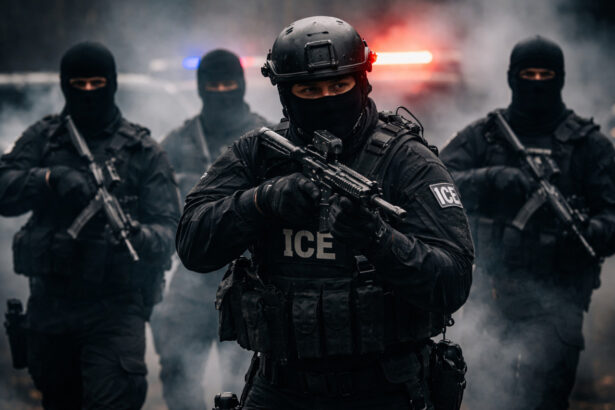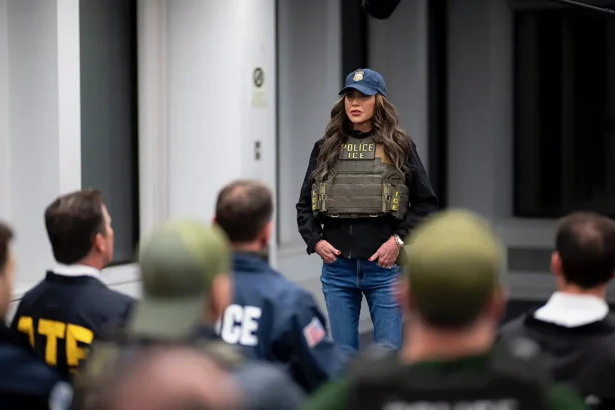

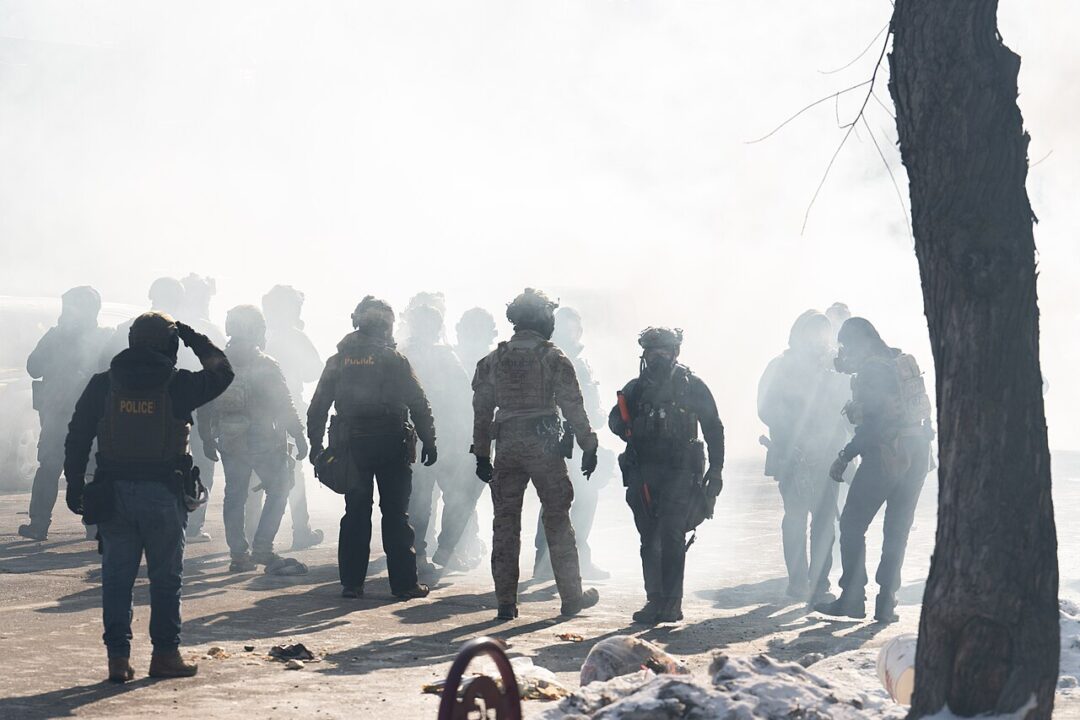

On the evening of January 14, Alfredo Alejandro Aljorna was doing something millions of Americans do every day — working a DoorDash delivery shift to make ends meet. He was driving through Minneapolis when he realized he was being followed by ICE agents. What happened next would leave his cousin shot in the leg, both men facing federal charges, and an entire government narrative exposed as a fabrication.
Just one week earlier, ICE agents in the same city had fatally shot Renee Good, a mother of three, in her vehicle. Aljorna knew this. He was afraid. He called his family and drove home.
According to his attorney Frederick J. Goetz, when Aljorna arrived, an ICE agent tackled him outside his front door. He managed to slip free and ran inside the home, where his cousin Julio Cesar Sosa-Celis was standing. As the two men shut the door and tried to lock it, a federal agent fired a shot through the doorway, striking Sosa-Celis in the leg.
What the government told the public about that night was a very different story.
The Government’s Version vs. What Actually Happened
The Department of Homeland Security issued a statement the next day painting Sosa-Celis and Aljorna as violent aggressors. DHS claimed that Sosa-Celis — not Aljorna — had been the one driving the car. The agency said all three men had attacked the federal agent, and that the agent had only fired in self-defense after being struck with a shovel or broomstick. DHS Secretary Kristi Noem went so far as to call the men’s actions “an attempted murder of federal law enforcement.”
But almost immediately, the story started falling apart.
Just one day later, on January 16, the Department of Justice filed its own account in support of criminal charges — and it contradicted DHS. The DOJ said Aljorna, not Sosa-Celis, was driving the car. That was the first crack.
Meanwhile, family members were sharing their own accounts of what happened, backed up by video calls and 911 recordings. Sosa-Celis himself, speaking from his hospital bed on a Facebook livestream, described what happened: he helped his cousin get inside, closed the door, and was shot as he tried to lock it.
No shovel. No broomstick. No assault.
Then, on Thursday, the whole case collapsed.
A “Stunning Reversal”
The Justice Department filed a motion asking a court to drop all criminal charges against both men — with prejudice, meaning the government can never bring these charges again. In the motion, federal prosecutors admitted they had provided the court with incorrect information. ICE followed with a statement acknowledging that its agents had made “false statements” under oath.
Let that sink in for a moment. Federal law enforcement officers swore under oath that these two men attacked them. They used those sworn statements to justify shooting an unarmed man and to file criminal charges against both him and his cousin. And now the government itself is saying those statements were lies.
ICE Director Todd Lyons announced the two agents involved have been placed on administrative leave while the Justice Department investigates. Lyons said the agents’ lies were uncovered through a review of video evidence and that the officers may face termination and potential criminal prosecution.
Aljorna’s attorney Goetz did not mince words, calling the shooting an unreasonable use of force and saying the officer fabricated claims to justify it.
A Troubling Pattern
This case did not happen in a vacuum. It fits into what CNN senior legal analyst Elie Honig described as a pattern in which the federal government rushes to release accounts after shootings by its agents — accounts that are later proven false, misleading, or incomplete.
Consider the other cases from just the past few months. Renee Good was fatally shot by a federal agent in Minneapolis on January 7. Video evidence later raised serious questions about the agent’s decision to use deadly force.
Alex Pretti, an ICU nurse, was shot and killed by federal agents who claimed he was brandishing a firearm. Video footage showed Pretti was holding a cell phone, and that an officer removed a gun from his back waistband before the shooting.
In Chicago, prosecutors dropped charges against Marimar Martinez after the government claimed she had rammed an agent’s vehicle. Evidence released later showed it was actually the other way around — and text messages revealed the agent who shot her bragging about how many times he had hit her. DHS had officially described those shots as “defensive fire.”
Federal judges across the country — appointed by presidents of both parties — have begun calling out these credibility problems on the record. Courts have described the government’s claims as “unreliable,” “untethered to the facts,” and “simply not credible.”
What This Means for Real People
Behind every one of these cases is a human being. Sosa-Celis is a man who walked to his front door to help his cousin get inside and was shot for it. Aljorna is a man who was working a delivery job and was so afraid of the agents following him — after watching the news about Renee Good’s killing — that he raced home to his family.
These are not abstractions. These are people with mothers who heard gunshots over the phone. People whose family members recorded frantic video calls as federal agents set off flash-bang grenades and broke into their home with a dozen officers. People who were charged with federal crimes based on lies told under oath by the very agents who hurt them.
Sosa-Celis’ attorney Robin Wolpert said her client is relieved the criminal case is over, but he is determined to hold the ICE officer accountable for what happened to him.
As Honig put it, the Justice Department typically receives a great deal of deference and implied credibility from the courts. But that trust is eroding fast. “You have credibility only until you give it away,” he said.
The question now is whether anyone in power cares enough to stop giving it away — or whether the next person shot by a federal agent will face the same lies, the same false charges, and the same fight to prove what really happened.