

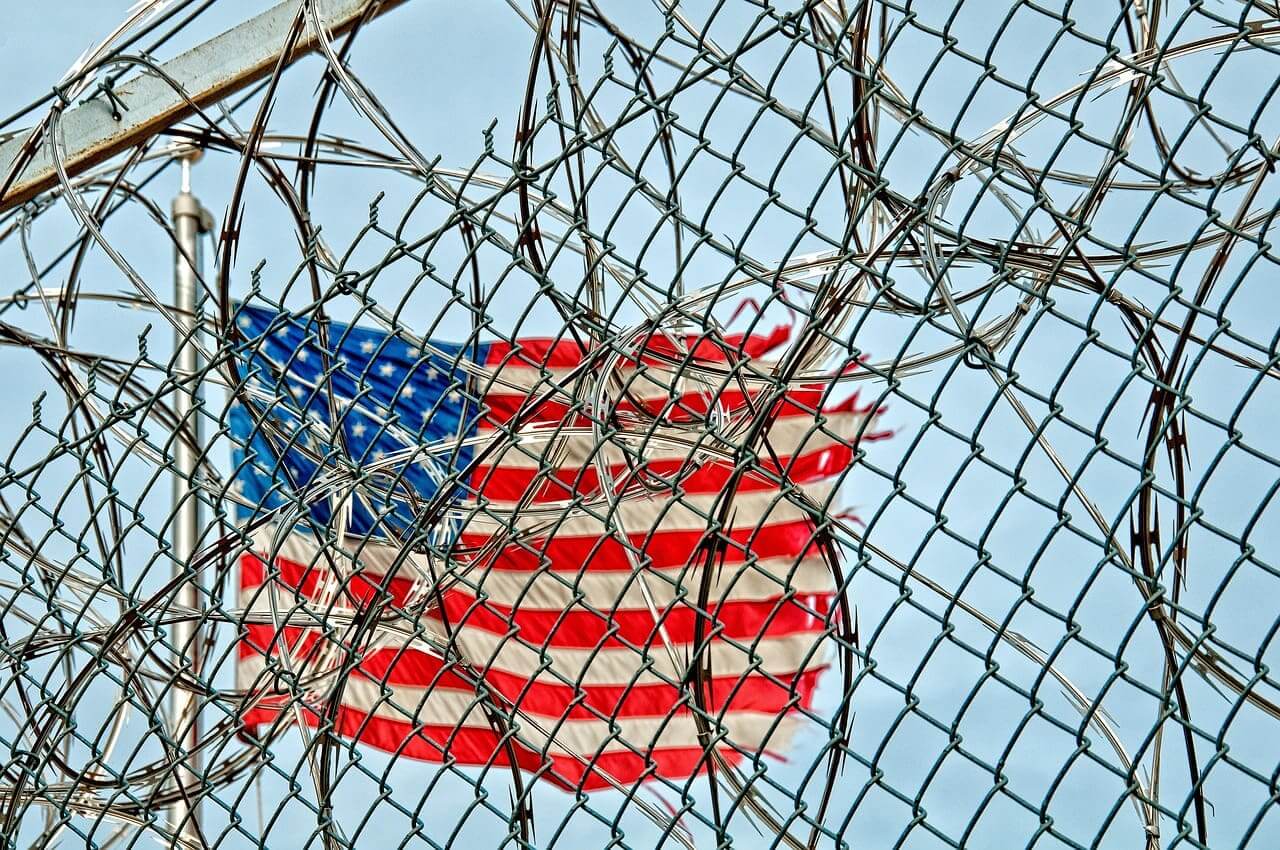
Rep. Kelly Morrison traveled to Camp East Montana in El Paso for an unannounced oversight visit — and described conditions that should disturb every American taxpayer.
U.S. Rep. Kelly Morrison (D-MN) doesn’t scare easily. She’s an OB/GYN who has spent more than two decades in medicine. But what she found inside Camp East Montana — the nation’s largest immigration detention facility — left her shaken.
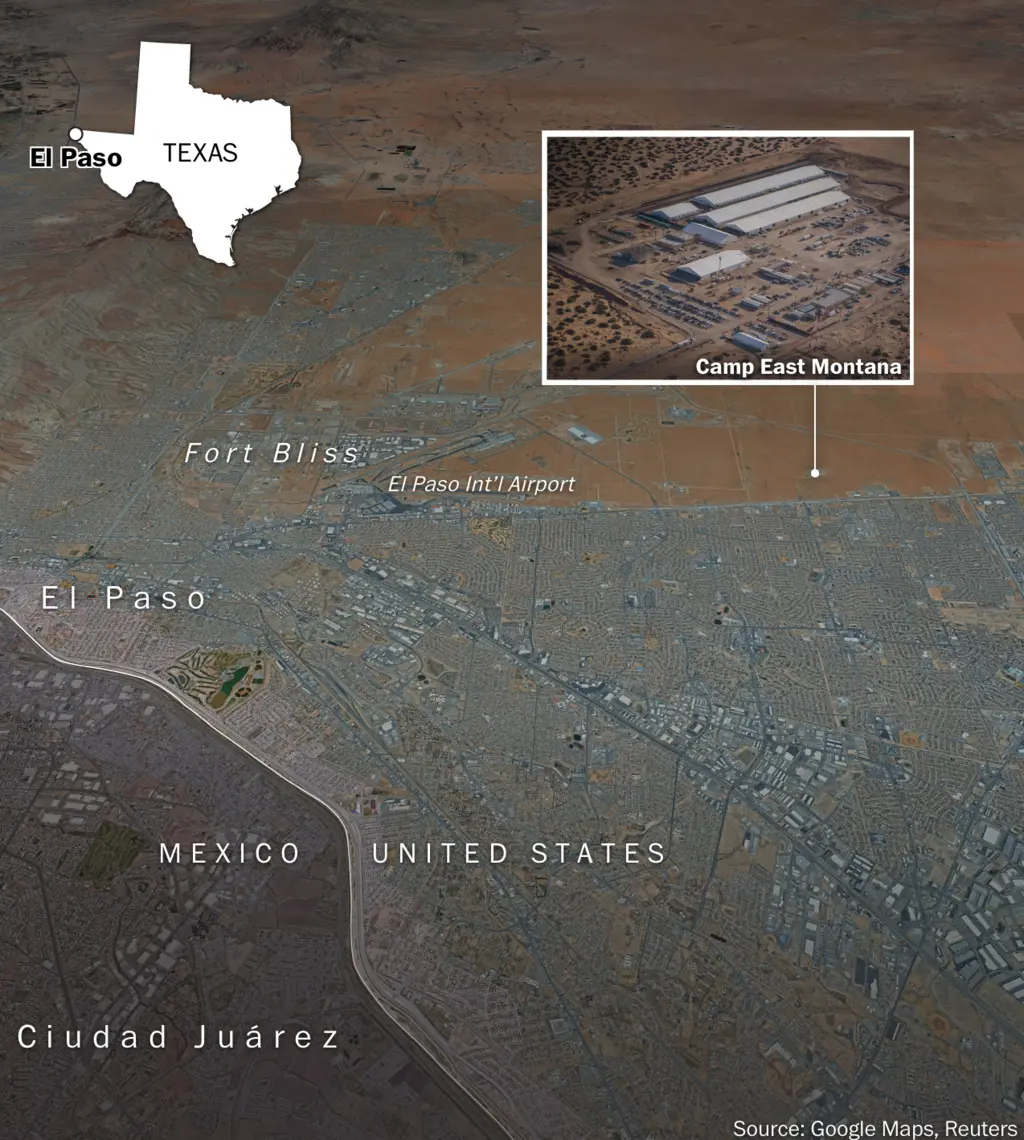
Morrison made an unannounced trip to the sprawling tent complex on the outskirts of El Paso on Monday to check on constituents transferred there after being swept up in Operation Metro Surge in the Twin Cities.
Facility officials initially tried to turn her away, citing an ongoing measles outbreak — itself a symptom of the overcrowded, unsanitary conditions that have also fueled the spread of tuberculosis and COVID-19 inside the camp.
Morrison wasn’t having it. She’s vaccinated, she told them, and a federal judge had already affirmed that members of Congress have the right to conduct unannounced oversight visits to ICE detention facilities — blocking a Trump-Vance administration policy that had tried to require seven days’ notice. After more than an hour of pushback, officials finally let her in.
They did not let her speak to a single detainee.
What She Saw
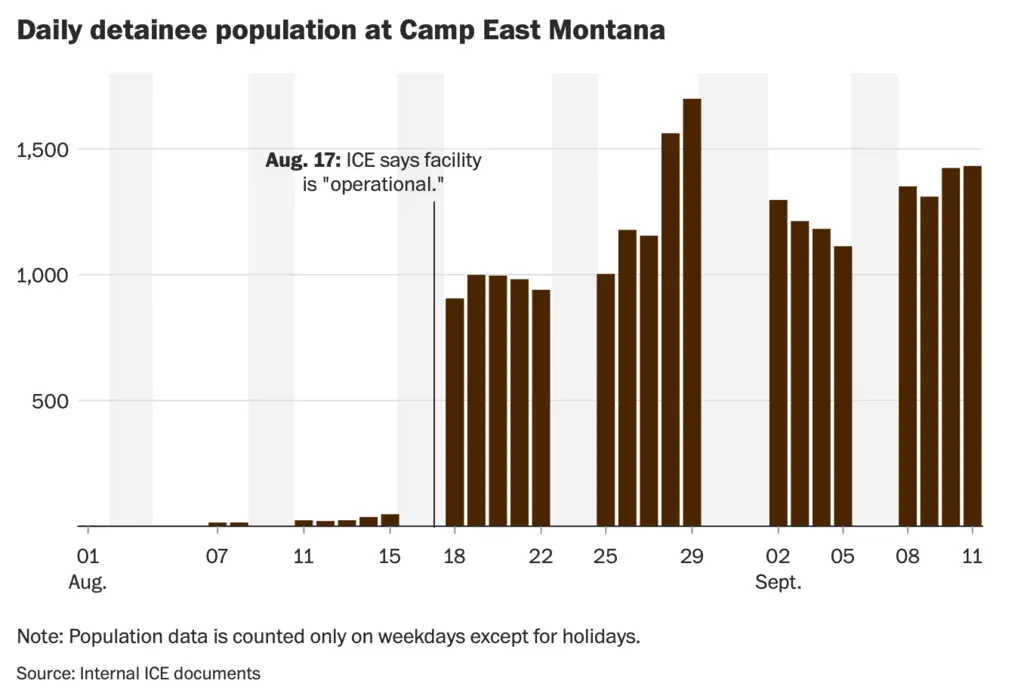
Camp East Montana sits on the grounds of Fort Bliss, on land that was once used to imprison Japanese Americans during World War II. The facility consists of five massive tent structures with a maximum capacity of 5,000 people.
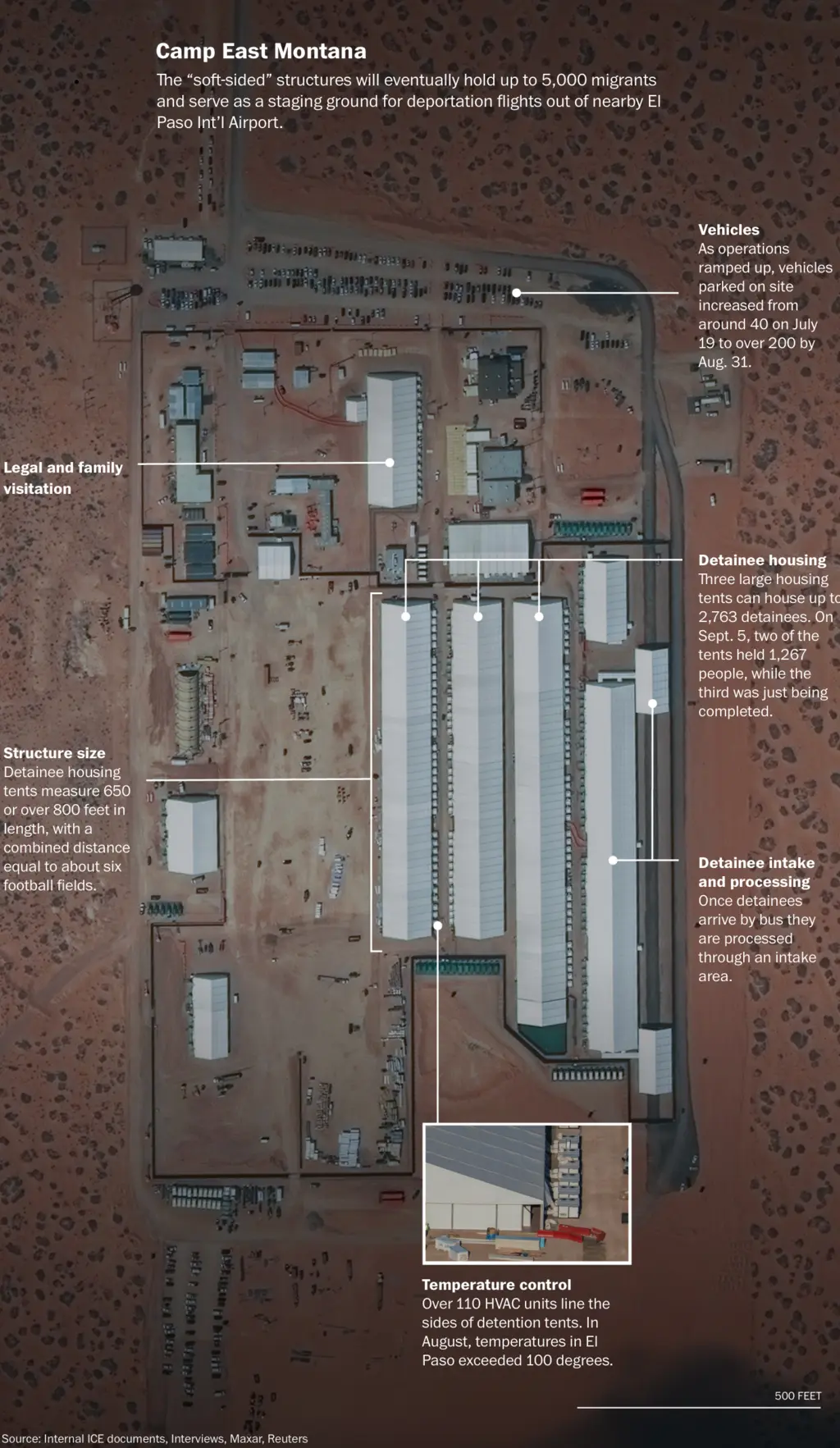
Inside, windowless rooms pack as many as 72 detainees together around the clock. They get one hour per day outside. Metal bunk beds are crammed together with metal tables in between — and that is where people spend virtually every waking moment.
Morrison described what she encountered as “unbelievably inhumane conditions.”
Detainees have reported finding worms in the food. Roofs leak when it rains. Medical care is, by multiple accounts, nearly nonexistent.

One of Morrison’s own constituents, Andrea Pedro-Francisco, was arrested in Burnsville and sent to the facility, where she has been living in severe pain for over a month from a large ovarian cyst at risk of rupture.
She had been scheduled for surgery to remove it when ICE arrested her — without a warrant.
Morrison also identified four other Minnesota constituents being held at the facility, including a pregnant woman and a man with diabetes who is not receiving his medication.
Another Minnesotan was denied his diabetes medication and chose to leave the country rather than risk dying without it.
A Facility Built for Cruelty
Camp East Montana was thrown together in roughly two months last summer after the government handed a $1.2 billion contract to Acquisition Logistics, a small Virginia company with no listed experience running detention facilities. The results have been catastrophic.
Three detainees died within a six-week span between December and January. One of those deaths — that of 55-year-old Cuban immigrant Geraldo Lunas Campos — was ruled a homicide by the El Paso County Medical Examiner, who determined the cause was asphyxia from neck and torso compression.
Fellow detainees said guards choked him after he refused to enter a segregated housing unit. ICE initially described his death as “medical distress.”
An Associated Press investigation based on more than 130 emergency calls to El Paso’s 911 system — coming in at a rate of nearly one per day during the facility’s first five months — painted a devastating picture: suicide attempts, seizures, assaults, pregnant women in pain, and detainees banging their heads against walls.
A former detainee told the AP he overheard guards placing bets on which detainee would die by suicide next.
According to ICE’s own data, 80 percent of detainees at Camp East Montana had no criminal record. They were people caught in a dragnet — not the “worst of the worst” the Trump administration promised it would target.
The Bigger Picture
Morrison’s visit comes against the backdrop of a 42-day partial shutdown of the Department of Homeland Security, driven by a standoff between Democrats demanding reforms to ICE and Republicans refusing to grant them.
The fallout from Operation Metro Surge — during which two Americans, Renee Good and Alex Pretti, were killed by federal agents and a federal judge found “compelling and troubling” evidence of racial profiling — has made the politics of immigration enforcement impossible to ignore.
In the early hours of Friday morning, the Senate finally passed a bill funding most of DHS — TSA, FEMA, the Coast Guard, cybersecurity — but pointedly excluded ICE and parts of Customs and Border Protection.
Democrats framed it as a refusal to write a blank check for what Senate Minority Leader Chuck Schumer called a “lawless and deadly” agency. Republicans countered that Democrats had “kissed goodbye” any opportunity for enforcement reforms by refusing to fund those agencies.
Meanwhile, the Department of Homeland Security, flush with nearly $40 billion from the One Big Beautiful Bill Act, is planning to expand detention capacity nationwide to nearly 100,000 people.
That’s not a reform plan. That’s a plan to scale up the exact kind of suffering Morrison witnessed at Camp East Montana.
“It’s important that the American people understand that their taxpayer dollars are being used to commit human rights abuses,” Morrison said.
She’s right. Every bunk bed crammed into a windowless tent, every medication withheld, every 911 call from a facility that can’t keep people alive — all of it is paid for with public money. Americans don’t have to support this. They just have to know about it.
And now they do.