

In Minneapolis, a group of ordinary Americans — neighbors, teachers, parents, and everyday community members — have been quietly volunteering their time to do something that should be unremarkable in a democracy: watch the government do its job.
They call themselves “commuters.” They drive through city streets, follow federal vehicles, blow whistles, honk horns, and film what they see. Under the Constitution, filming and following law enforcement in public spaces is protected activity.
But under the Trump administration’s sweeping immigration enforcement operation in Minnesota, simply bearing witness has become dangerous.
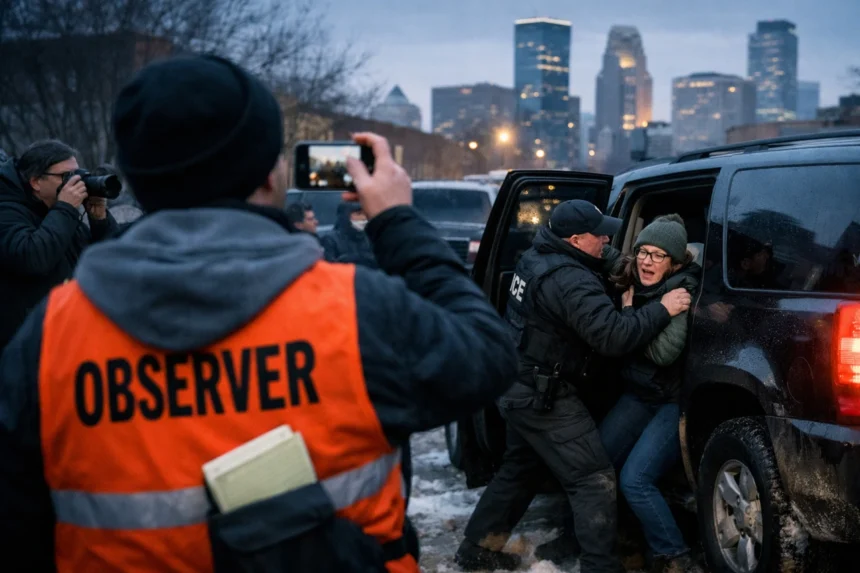
On Friday, February 7, multiple legal observers were arrested — referred to by their communities as “abductions” — in rapid succession. In one 30-minute window, at least three observers were taken into federal custody.
One of them had been on an encrypted group call when it happened, screaming “please help” into the phone as federal agents closed in around her. By the time other commuters arrived, she was gone. All that remained was her SUV, engine still running, abandoned in the snow.
What Is “Operation Metro Surge”?
Since early January 2026, the Twin Cities have been the center of what the Department of Homeland Security has called the largest immigration enforcement operation in American history.
Known as Operation Metro Surge, the campaign has deployed thousands of federal agents — ICE officers and Border Patrol agents — into Minneapolis, St. Paul, and surrounding suburbs to arrest and deport undocumented immigrants.
The human toll has been staggering. Tens of thousands of immigrant families have retreated into hiding. Schools have reverted to remote learning to protect children too afraid to leave their homes. Volunteer networks patrol school campuses in fluorescent vests.
Emergency room and clinic visits have dropped by roughly 25 percent as people avoid leaving the house even for medical care. Local businesses — many of them immigrant-owned — have reported revenue losses of 80 to 100 percent. City officials estimate the operation is costing Minneapolis area businesses more than $20 million every single week.
Two people have already been killed by federal agents during the operation: Renee Good, a mother of three, and Alex Pretti, an ICU nurse at a VA hospital — both of them U.S. citizens.
Who Are the “Commuters”?
In response to this crisis, a grassroots network of residents organized. They named themselves commuters and began patrolling neighborhoods in vehicles, tracking federal immigration operations using crowdsourced databases of known DHS vehicles.
When a federal vehicle is confirmed, commuters follow — honking their horns, blowing whistles, recording everything. The goal is twofold: document potential civil rights violations and alert immigrant families in the area before a raid reaches them. Their tactics are nonviolent. Their activity is constitutionally protected.
Community group Defrost MN, which tracks federal operations through crowdsourced data, has warned of an ongoing “uptick in abductions” — arrests not just of immigrant community members, but of the citizens trying to watch over them.
“How do you justify terrorizing an entire community?” asked Kaegan Recher, a commuter who has been in the streets since January. “It is the most un-American thing I’ve ever experienced in my entire life.”
Tom Homan’s Takeover: More “Targeted,” or Just a Different Strategy?
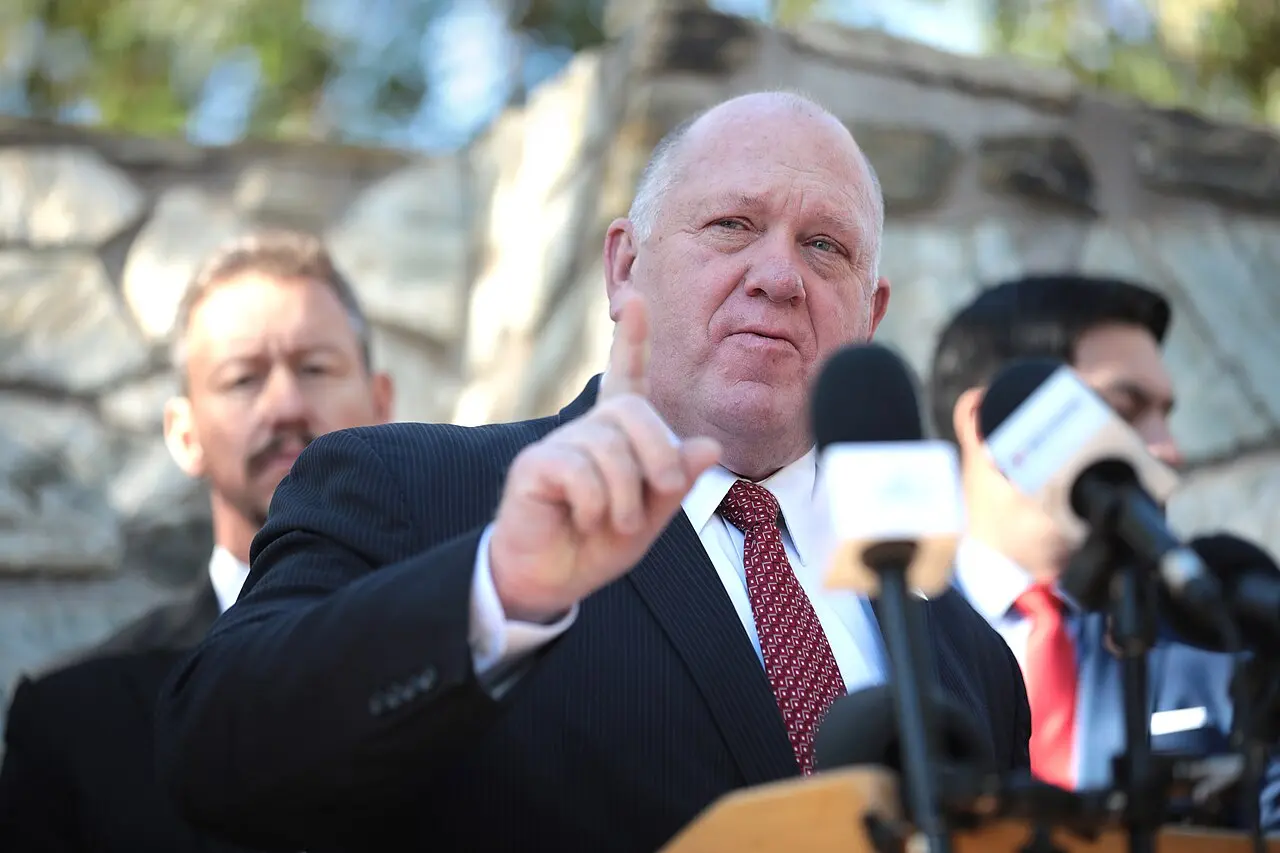
The operation’s leadership changed in late January when Trump appointed border czar Tom Homan — the former acting ICE director — to replace Border Patrol commander Gregory Bovino. Bovino’s tactics, widely condemned, resulted in three shooting incidents in three weeks, including the deaths of Good and Pretti.
Homan promised a more “targeted” approach and announced a drawdown of 700 federal officers, which drew significant media attention. But on the ground in Minneapolis, community members say things have not improved — they’ve shifted.
Despite orders to the contrary, agents continue to draw weapons and deploy chemical agents against observers. And a new directive appears to have gone out specifically regarding how to handle the commuters: give one warning, then arrest.
A video recorded by Recher on Friday showed a federal deportation officer delivering that message directly: “You just got one warning, that’s it. What we’re told, that’s all you need.”
Meanwhile, even with the “drawdown,” roughly 2,000 federal agents remain in Minnesota — 13 times the agencies’ normal presence in the state, and three times the size of the entire Minneapolis Police Department.
The Chilling Effect on Civil Liberties
Those arrested for “interfering with federal law enforcement” — a charge that can carry between one and 20 years in prison — are typically taken to the Bishop Henry Whipple Federal Building at Fort Snelling. Commuters are generally held for about eight hours before release. But during that time, the federal government collects extensive identifying information on them.
Homan has publicly stated his desire to place people who monitor ICE operations into a government database. Evidence suggests the Department of Homeland Security is building a growing catalogue of individuals it views as critics of the administration — including American citizens exercising their First and Fourth Amendment rights.
Since Homan took over, 158 people have been arrested for interfering with federal law enforcement, with 85 cases already accepted for prosecution, according to the administration’s own figures.
Legal experts have repeatedly emphasized that following and filming law enforcement in public is constitutionally protected. But the Trump administration has characterized Minnesota residents who engage in this activity as “agitators” engaged in “illegal and threatening activities.”
Homan has tied any further troop reduction to the public simply stopping its observation of federal operations — a demand that amounts to demanding people give up their constitutional rights.
A Community Under Siege
Back in the Twin Cities, the people most at risk are the thousands of immigrant families caught in the middle of all of this.
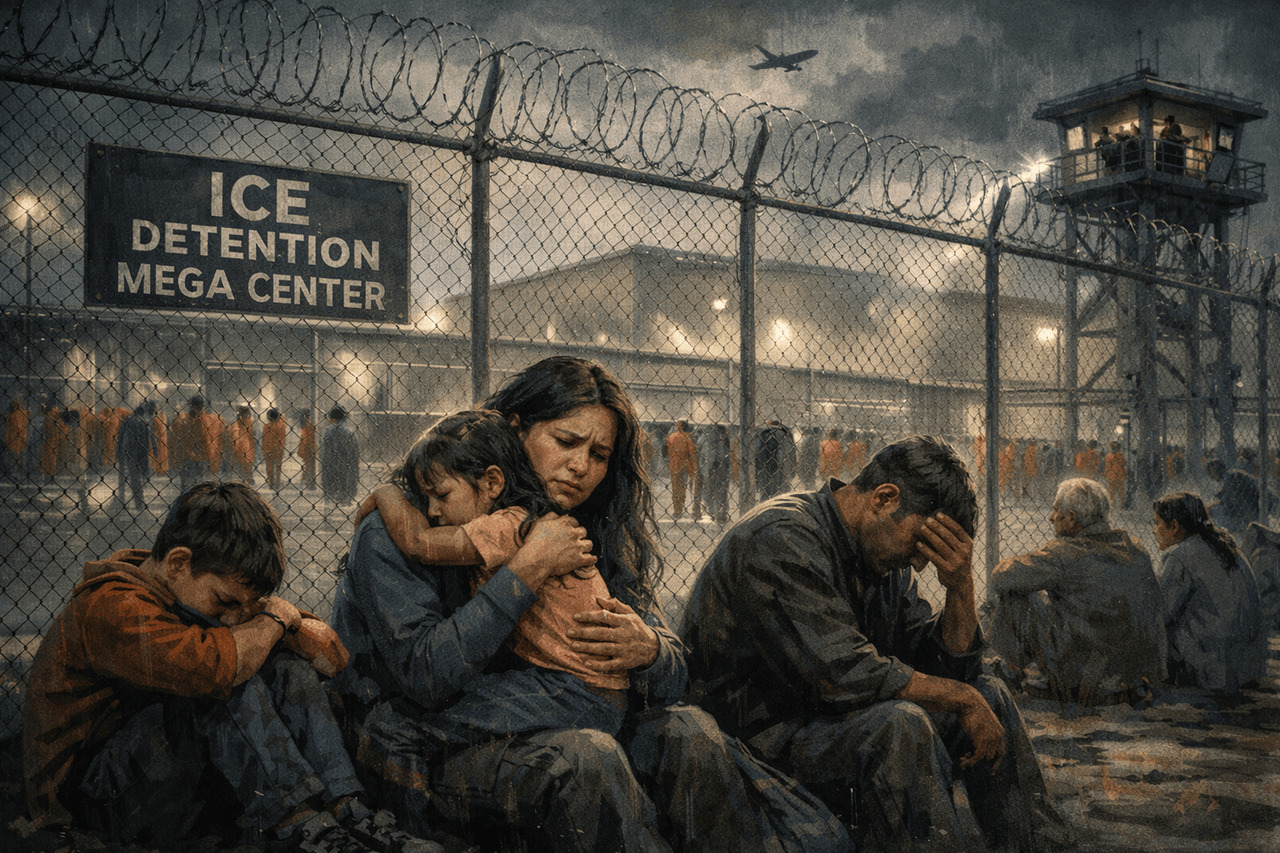
They are not abstractions. They are parents. They are children who haven’t been to school in weeks. They are small business owners who have closed their doors. They are people who sought a better life and who now live in terror, relying on churches and mutual aid networks for food because they are afraid to go outside.
The commuters who document and follow federal operations do so knowing the risks. After Friday’s disappearances, Recher reflected on what drives him and others to keep showing up.
“I hear less and less about successful abductions, which I’m glad,” he said. “But I hear more and more about abductions of observers.”
The woman whose screams faded from the group call — the one whose empty car was left running in the snow — was someone’s neighbor. Someone’s friend. She was trying to protect someone else when she was taken.
That is what is happening right now in Minneapolis. And it demands to be seen.
If you or someone you know has been impacted by ICE enforcement operations or the arrest of legal observers, organizations including the ACLU of Minnesota and the National Immigration Law Center provide legal resources and support.