

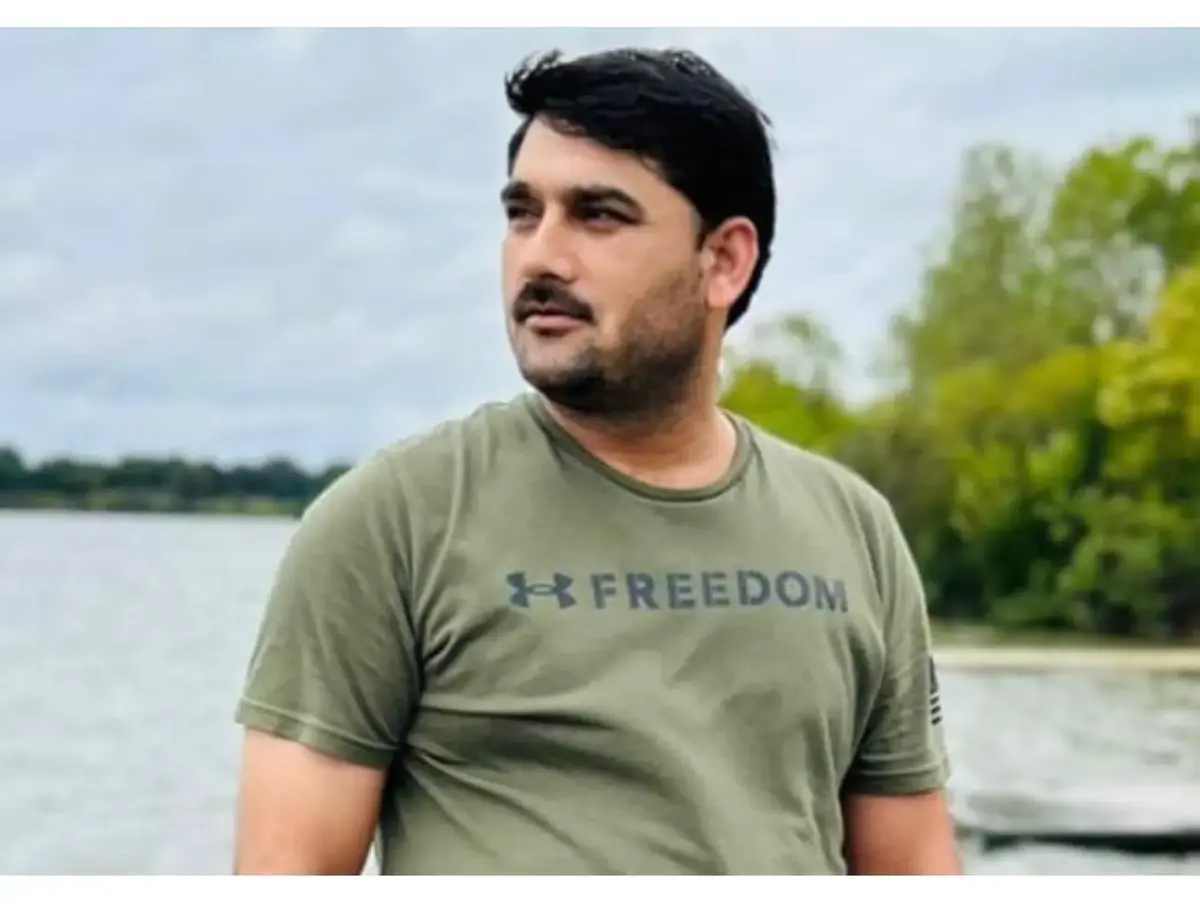
Afghan ally Mohammad Nazeer Paktiawal spent nearly two decades helping the United States. He began working with Army Special Forces in 2005 in Paktika province in southeastern Afghanistan.
When the Taliban seized control of the country in August 2021, the U.S. government evacuated Paktiawal and his family and paroled them into the country through Washington Dulles International Airport.
He settled in Richardson, Texas, just outside Dallas, and was raising six children while his asylum case remained pending with the government.
On Friday morning, eight masked ICE agents detained the 41-year-old as he was taking his kids to school. (Why do so many ICE arrests occur as parents drop their kids off at school?)
By Saturday morning, he was dead.
ICE confirmed Paktiawal’s death in a press release on Sunday but did not provide a cause. The Dallas County Medical Examiner’s preliminary report also listed no cause or manner of death. The agency said his case is under active investigation.
His death marks at least the twelfth person to die in ICE custody nationwide so far in 2026 — and at least the seventh death in Texas alone since December.

What Happened in Those 24 Hours
According to ICE’s own account, Paktiawal reported no prior medical issues when he was arrested on March 13. That evening, while being held in a processing room at the ICE Dallas Field Office, he began complaining of shortness of breath and chest pains.
Officials transported him to Parkland Hospital, where an ER doctor recommended he stay for observation.
The following morning, hospital staff noted that his tongue had become swollen while he was eating breakfast, triggering a medical response. He was pronounced dead at 9:10 a.m.
Shawn VanDiver, a U.S. Navy veteran who leads the Afghan evacuation advocacy group AfghanEvac, called for an immediate and transparent investigation. He did not mince words about the timeline.
“We don’t know what happened,” VanDiver told the Texas Tribune. “But it would be pretty weird for a healthy 41-year-old man to die less than 24 hours after being taken into government custody.”
ICE’s Press Release Tried to Frame Him as a Criminal
In its announcement of Paktiawal’s death, ICE described him as a “criminal illegal alien from Afghanistan” — language the agency has adopted under the Trump administration for all detainee death disclosures, regardless of individual circumstances.
The agency noted two prior arrests by local authorities in 2025: one for SNAP fraud in September and one for theft in November.
ICE did not say whether either arrest led to a conviction, and the agency did not respond to the Texas Tribune’s follow-up questions.
This framing is part of a pattern. Under the current administration, ICE has shifted from standard detainee death reports to narrative-style press releases with inflammatory titles designed to emphasize alleged criminal history.
Advocates and researchers have noted that the agency routinely uses these disclosures to smear the reputations of people who died in its care — deflecting attention from the conditions and medical failures that may have contributed to their deaths.
Paktiawal’s asylum claim was still pending. His parole status, granted when his family was evacuated in 2021, had expired in August 2025.
He was a legal asylum seeker who had served alongside American soldiers in a war zone.
Six Children Without a Father
Paktiawal’s family released a statement through AfghanEvac:
“Right now our family is trying to comfort six children who have lost their father. We are heartbroken and trying to process this loss.”
His mother, Najah, and the rest of his family are now left to grieve a man who survived two decades of war and upheaval in Afghanistan only to die in an American processing facility within hours of being detained.

Thousands of Afghans resettled in Texas after the U.S. withdrawal from Afghanistan. Many, like Paktiawal, worked directly with American military and intelligence operations at great personal risk.
The promise behind their evacuation was straightforward: you helped us, and we will protect you. That promise died on a hospital gurney at Parkland on Saturday morning.
A Detention System That Keeps Killing People
Paktiawal’s death adds to a crisis that has been building for over a year. In 2025, at least 32 people died in ICE custody — the highest number in more than two decades.
2026 is on pace to surpass that record. As of mid-March, at least a dozen people have died in detention, with deaths occurring at facilities across Texas, Pennsylvania, Georgia, California, and Arizona.
The causes vary — alleged suicides, cardiac events, medical emergencies — but the underlying conditions are consistent. ICE’s detention population has ballooned to approximately 73,000 people as the Trump administration’s mass deportation operation expands.
Facilities are overcrowded and understaffed.
In October 2025, ICE stopped paying many of its third-party medical providers due to bureaucratic changes, a payment freeze that lasted months and reportedly led to the denial of medical care, prescription medications, dialysis, and chemotherapy for detained individuals.

A group of 22 senators wrote to DHS Secretary Kristi Noem and ICE official Todd Lyons earlier this year, warning that the rising death toll is a direct result of the administration’s detention-first approach.
2026-02-13-Letter-to-DHS-ICE-re-Deaths-in-DetentionThe DHS Office of Civil Rights and Civil Liberties, which is supposed to investigate custody deaths, has been gutted by staff cuts.
During last fall’s 43-day government shutdown, the detention oversight office was closed entirely. Five people died during that period.
The system is not accidentally failing. It is failing because the people running it have decided that accountability costs more than they’re willing to pay — and that the people dying inside are not worth the investment in keeping alive.