
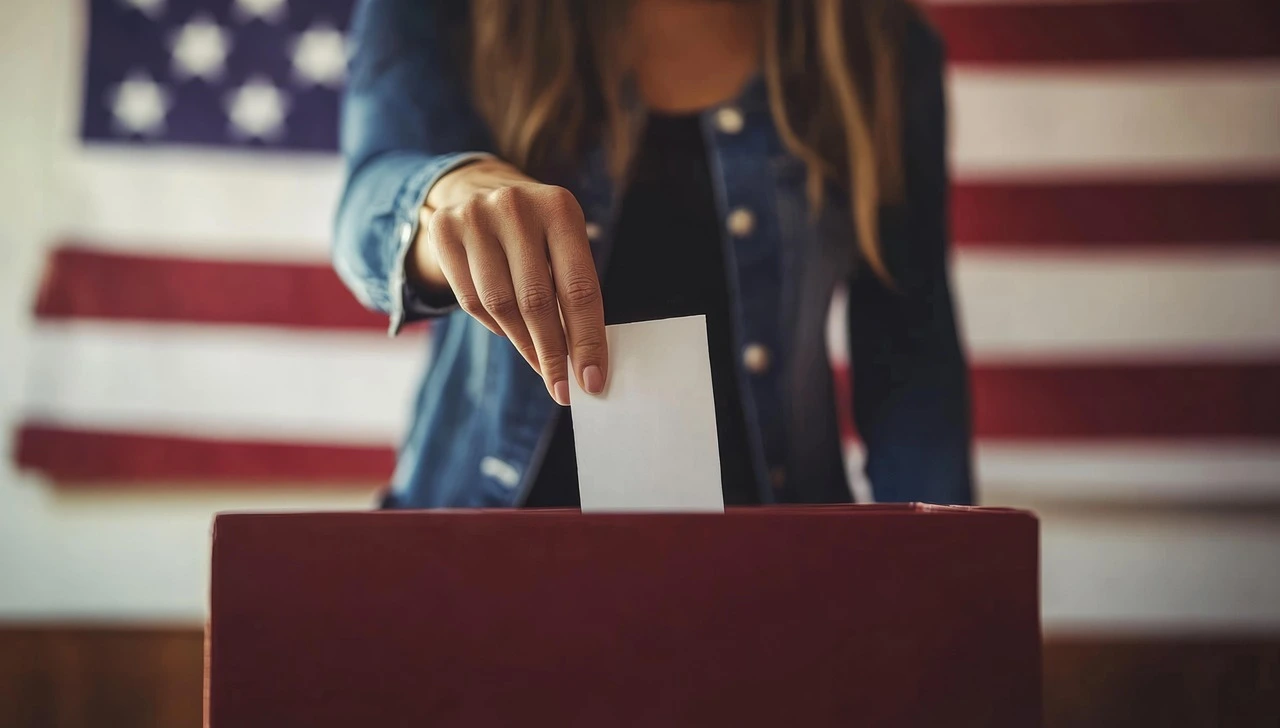
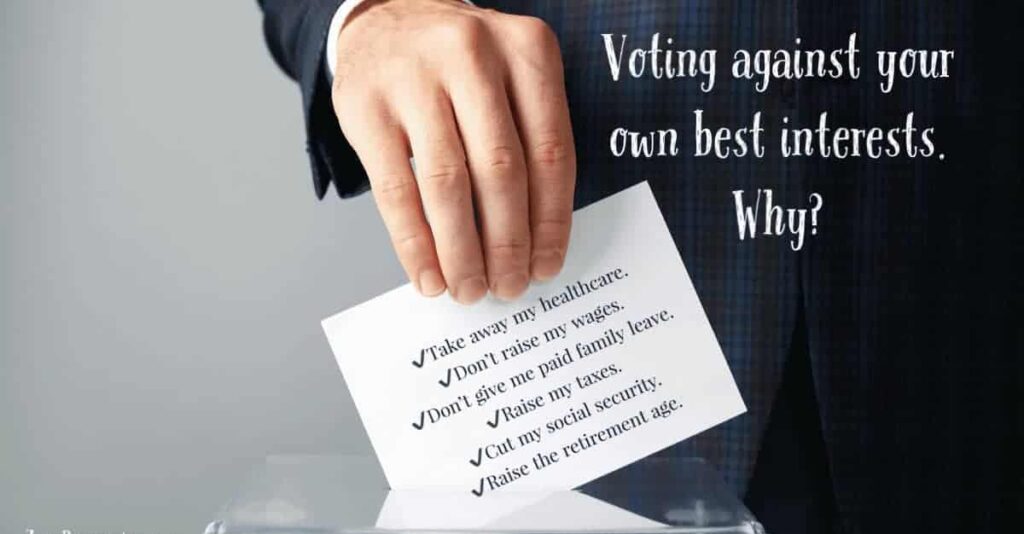
One aspect of politics that has always been baffling is the way some voters appear to vote against their own best interests—whether economic or social. In a democracy, we tend to assume that voters make choices based on what will most benefit them or their community.
But studies and observations over time tell a different story. Many voters support candidates or policies that don’t serve them well.
So why does this happen? The answers lie in a combination of psychology, social identity, misinformation, and historical context.
Social and Cultural Identity Over Economic Interests
For many voters, political choices are more about identity than material benefit. You’ve probably heard political pundits use the phrase “identity politics.” What does it actually mean?
In simple terms, it’s a way of looking at groups—or “buckets”—of voters based on race, gender, religion, education, and similar characteristics.
People often vote in alignment with their cultural, racial, or religious group because they see those affiliations as more important than their current personal economic situation.
These identity-based allegiances can easily outweigh the direct economic benefits offered by a candidate from across the aisle.
White working-class voters in some parts of the U.S., for example, might support candidates whose policies don’t help them economically—simply because those candidates appeal to their sense of patriotism, social values, or cultural identity.
If a voter identifies as a Christian Nationalist and believes that issues like gay marriage are paramount, policy proposals from the other side won’t matter at all.
Even if a candidate is offering transformative policies that would genuinely improve their lives, that voter will cast their ballot based on identity rather than self-interest.
Misinformation and Media Influence
In the age of social media and partisan news outlets, misinformation plays a powerful role in shaping voters’ perceptions and decisions.
When people are exposed to one-sided narratives, conspiracy theories, or manipulated information, they can end up making choices that don’t reflect their actual interests—because their understanding of reality has been distorted.
Fox News is a clear example. During the COVID-19 pandemic, while the CDC was releasing guidelines designed to prevent deaths, Fox News was simultaneously downplaying the virus’s severity, demonizing public health experts, and telling viewers not to wear masks or follow shutdown orders.
Fox News is part of the conservative media echo chamber, but it’s worth noting that echo chambers exist across the political spectrum.
What makes them so damaging is that they only reinforce what people already believe.
Social media algorithms often prioritize content that triggers anger or anxiety, which can push people toward irrational or counterproductive voting decisions.
If a voter is fed a steady stream of misinformation about the candidate most likely to improve their economic situation, they’ll probably vote against their own best interests without even realizing it.
For example: voters who support tax cuts for the wealthy believing it will create jobs or grow the economy, despite clear evidence that such policies disproportionately benefit the rich.
Short-Term vs. Long-Term Thinking
Many voters focus on immediate benefits when making electoral decisions, even when doing so comes at the expense of their long-term well-being.
Politicians exploit this tendency by offering quick wins—tax cuts, subsidies, promises of jobs—even when those measures are unsustainable or potentially harmful down the road.
Politicians also make promises they never intend to keep. They’re not worried about consequences because they’re banking on voters either forgetting what was promised or not bothering to hold them accountable. It’s a frustrating but common tactic.
For instance, a voter might support a candidate who promises to lower taxes or roll back environmental regulations.
That might feel like short-term economic relief, but it can lead to long-term harm to the environment and public health.
When immediate relief is dangled in front of people, it’s genuinely hard to focus on consequences that feel far away.
Distrust of Government and Elites
Some voters—particularly in marginalized communities—feel that the political system is stacked against them regardless of who’s in power.
This deep-seated distrust can lead them toward candidates who promise to “shake things up,” even when those candidates offer policies that won’t actually help them.
Voters who feel alienated by traditional political elites may gravitate toward outsider candidates or those who champion anti-establishment rhetoric.

In some cases, those same candidates work to undermine the social programs and public services those very voters depend on—yet their outsider appeal and rebellious message still resonates with people who feel ignored.
We are living through exactly this dynamic right now. Americans are exhausted by establishment politicians who campaign on change and then deliver nothing once elected.
The country was primed for a true populist—someone who would fight for working people. Unfortunately, the politician who filled that void was Donald Trump, a fake populist who never actually advanced an economic populist agenda.
Instead, Trump used hate, fear, and anger to drive people to the polls. He ran in 2016 on the promise to Drain the Swamp, then spent his time in office engaging in corruption that benefitted his friends, his family, and himself.
Rather than draining the swamp, he created a new one inside the White House. And yet his supporters kept faith, convinced he was fighting the establishment—despite mounting evidence to the contrary.
Psychological Biases and Cognitive Dissonance
Human beings are often driven by emotion rather than rational calculation, and that shows up clearly in voting behavior.
Confirmation bias—the tendency to seek out information that confirms what we already believe—is one of the most powerful forces shaping electoral decisions. Even when voters are confronted with facts that suggest a candidate or policy isn’t in their best interest, they may simply dismiss the contradicting evidence rather than reconsider their position.
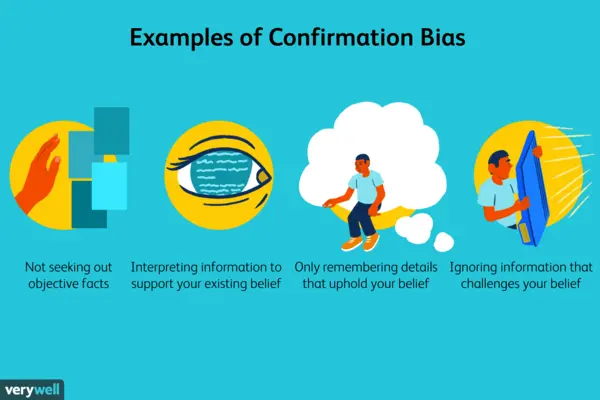
Cognitive dissonance compounds this problem. Once someone has made a political decision—especially one tied to their identity or values—they experience genuine discomfort when presented with facts that challenge that choice.
To relieve that discomfort, it’s often easier to reject the evidence than to change their mind.
This is how people can continue supporting candidates and policies that work against their own interests—not because they’re foolish, but because it feels more consistent with who they believe they are.
Economic Self-Interest Isn’t Always Material
“Economic self-interest” isn’t always about money. For some people, economic well-being includes things like job security, homeownership, or access to cultural and social privileges they fear losing.
In that context, voting to preserve the status quo—even at the expense of potential improvements—can actually feel like a rational choice.
Voters in rural or post-industrial areas, for example, may support policies that maintain their current way of life or cultural heritage, even when those policies don’t improve their financial situation.
Stephen Miller’s statement that “America is for Americans only”—used to justify the mass deportation agenda—is designed to tap into exactly this kind of cultural anxiety.
Emotional Appeals and Populism
A true populist fights for ordinary Americans. They propose popular policies—paid family leave, raising the minimum wage—the kinds of reforms a large majority of Americans actually support.

Fake populists work very differently. They win voters over through emotional appeals built on fear, anger, and resentment.
They promise to fight for the “common man” against elites or outsiders, even when their actual policy proposals offer no concrete solutions to everyday problems.
This strategy is especially effective among people who feel abandoned by the political system—and it’s exactly how Donald Trump built and sustained his following through the 2024 election.
Rather than offering solutions, Trump used problems to stoke anger and division.
A perfect illustration of this is what happened with the bipartisan border security bill. Republican Senator James Lankford spent months negotiating with independents and Democrats to craft the most conservative border security bill in U.S. history.
Democrats, prioritizing real solutions over partisan posturing, agreed to the framework.
The bill would have added immigration judges and attorneys to hear asylum cases immediately rather than releasing people while they awaited hearings, and technology to detect fentanyl in vehicles at ports of entry—the route through which 90% of fentanyl enters the country, carried by U.S. citizens.
The Border Patrol union itself endorsed the bill.
Every Republican in the House and Senate was prepared to vote for it—until Donald Trump personally called Speaker Mike Johnson and told him to kill it.
Trump’s reasoning was straightforward: passing the bill would give President Biden a political win and Trump wouldn’t be able to campaign on the border crisis in 2024 if it was “fixed.”
Johnson buried the bill.
Republicans then ran campaign ads featuring women who were murdered by undocumented immigrants—blaming Kamala Harris for letting them in—while Trump, who had sabotaged the very bill that could have prevented those situations, faced no accountability from conservative media.
Not everyone knows they can visit Congress.gov and read the actual text of any bill themselves.
Voters who said immigration was their top issue in 2024 were, in effect, voting against their own stated interests when they chose the party that preferred to exploit the crisis rather than solve it.
This is what fake populism does. It shifts the conversation away from practical governance and toward emotional satisfaction.
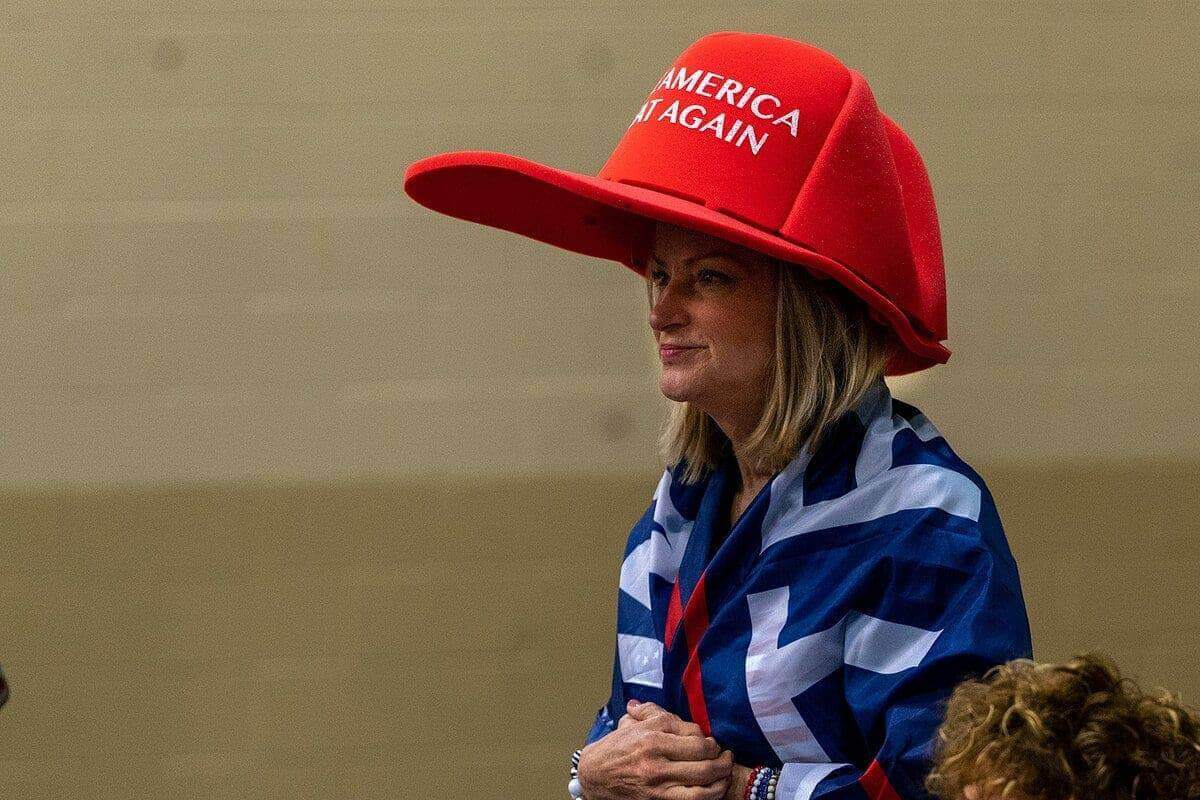
And when voters feel emotionally invested in a candidate or movement, many will choose loyalty over a careful evaluation of policy—MAGA being the most vivid modern example of this phenomenon.
So what can we do? How do we help voters choose candidates who are actually working in their interests?
At a moment when Americans are more divided than ever—when those of us raising concerns have been labeled “the enemy within”—it’s difficult to get through without being dismissed or attacked.
As long as current Republican leadership holds power, reaching those voters will remain an uphill battle.
Voting is a complex act, shaped by psychology, social identity, emotion, misinformation, and deep distrust of institutions.
The reality is that people don’t always vote in their own best interests, and that’s not because they’re stupid—it’s because the forces pulling them away from rational self-interest are powerful and often invisible.
Understanding those forces is essential, not just for explaining seemingly irrational choices, but for building better systems of communication and civic engagement that can reach people at a deeper level.
Do you have ideas about how to reach voters who seem to vote against their own best interests? Is it even possible given the echo chambers we’re all living in? Let us know in the comments below.