
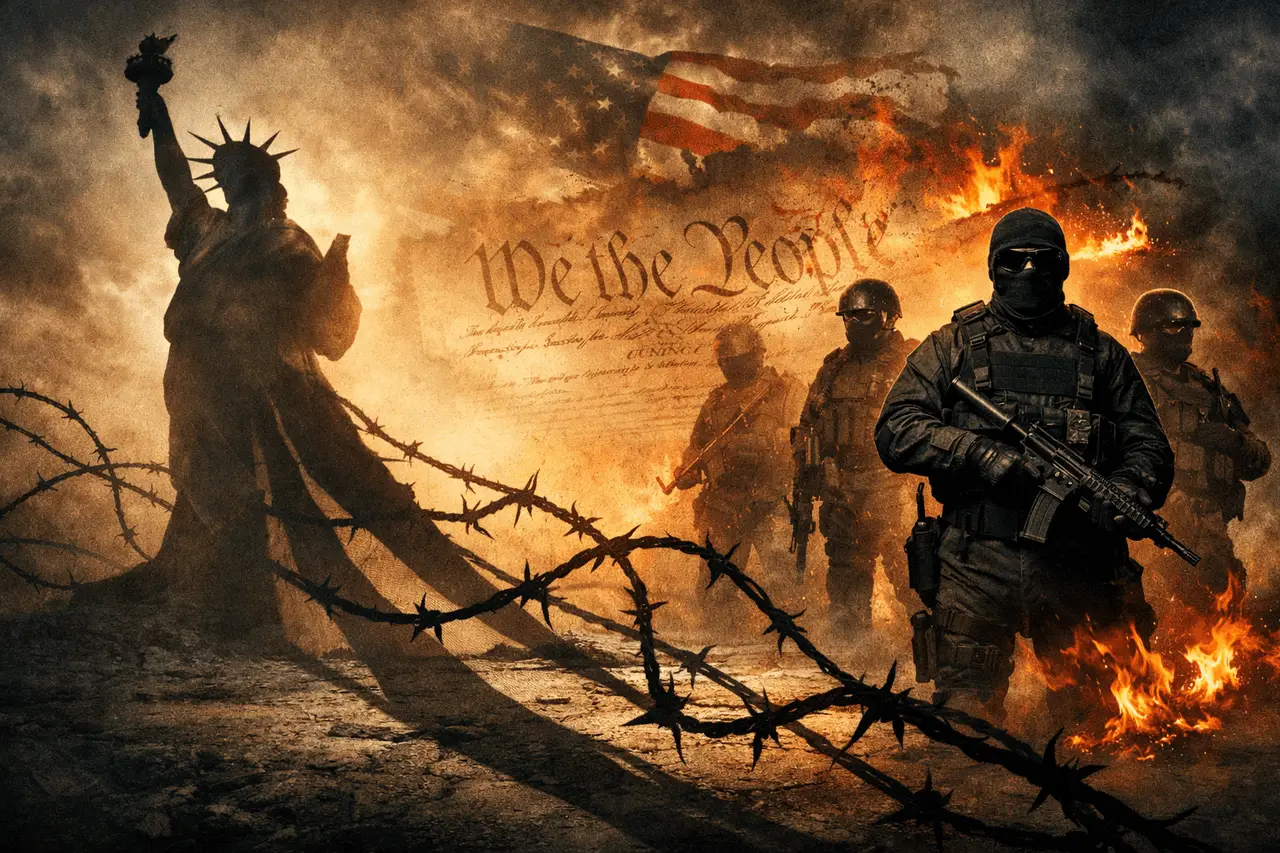
Democracies rarely collapse overnight. They erode. The militarized presence in American cities increasingly mirrors the characteristics of a police state.
The descent often begins with a leader who promises to “save” the country from a crisis — real or imagined — and who insists that only extraordinary power can accomplish that task. Fear becomes the fuel. Division becomes the strategy.
In Donald Trump’s case, the opening act was immigration.
The Manufactured “Invasion”
Trump ran on the claim that the southern border was under “invasion.” He warned that murderers, rapists, drug dealers — what his administration later branded “criminal aliens” — were flooding into the United States.
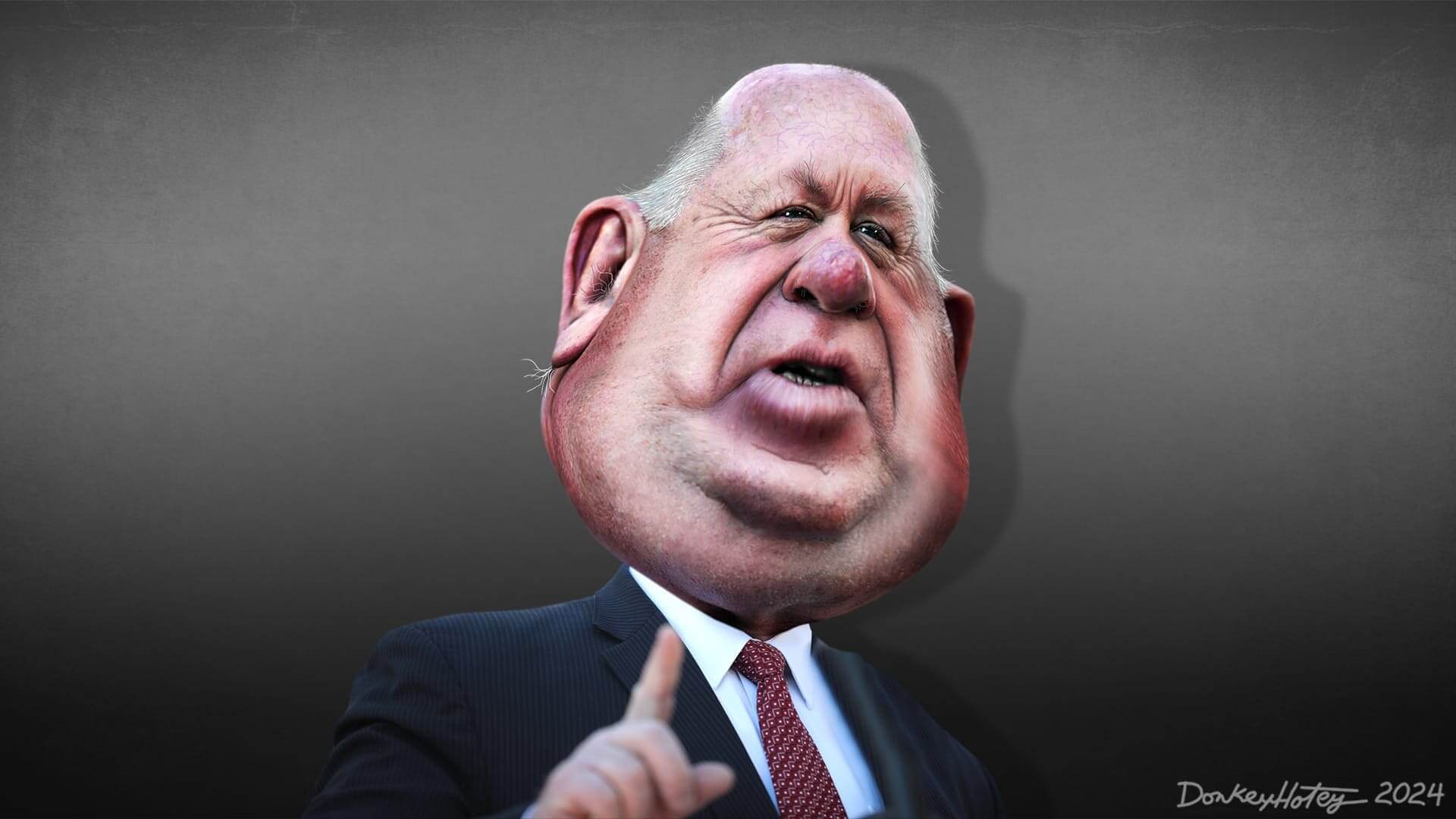
Immigrants were blamed for stagnant wages, job loss, unaffordable housing. If you couldn’t buy a home, it was their fault. If your paycheck felt small, it was their fault. If your town felt different, it was their fault.
The narrative required millions of undocumented “criminals” to justify mass deportation. There was only one problem: the numbers didn’t match the rhetoric.
When enforcement began, officials quickly discovered there were not enough violent offenders to meet the promise of removing “millions of criminals.” That’s when Stephen Miller reportedly set a quota of 3,000 arrests per day.
Arrest quotas are not a sign of a targeted law enforcement strategy. They are a sign of performance metrics.
And when numbers matter more than facts, definitions expand.
ICE began targeting non-criminal immigrants — some who had lived and worked in the United States for decades. Videos flooded social media: children crying as parents were taken away; masked agents arresting asylum seekers at scheduled court hearings; immigrants detained while attending required check-ins.
In other words, people following the rules were arrested for following the rules.
Masked officers in military gear and unmarked vehicles appeared in cities across the country. Los Angeles residents objected to what looked less like law enforcement and more like abduction footage from a dystopian drama. Protests erupted.
A handful of incidents involved vandalism. That was enough. Fox News looped a single burning vehicle for days, announcing that an entire city was “in flames.” When you repeat one image often enough, it becomes the truth — or at least the version that sticks.
Expanding the Definition of “Enemy”
The next step in the slide toward authoritarianism is widening the target.
Immigrants were not the only threat. Democrats became “enemies from within.” “Radical Left lunatics.” Trump publicly called for the arrest of political opponents. He warned that the country would be “destroyed” if Democrats regained power.
The language evolved. Dog whistles were replaced with bullhorns.
Crises — economic, social, geopolitical — were framed as emergencies requiring extraordinary authority—an “economic emergency” justified sweeping tariffs. Claims of being “at war” with Venezuela were used to invoke the Alien Enemies Act, leading to the deportation of 238 Venezuelan men to the notorious CECOT torture prison in El Salvador. According to the reporting, the majority were not convicted criminals.
Due process was described as inconvenient. Too slow. Too burdensome.
When constitutional rights are framed as administrative delays, the warning lights are not subtle.
Institutions Under Pressure
Authoritarian systems prioritize loyalty over expertise.
Agencies were reshaped. Career civil servants were dismissed. Loyalists were elevated. The head of the Bureau of Labor Statistics was removed, reportedly to be replaced by someone more aligned with the administration’s narrative. Facts, in this environment, are less valuable than messaging.
Media outlets faced lawsuits for publishing unflattering but accurate reporting. Universities were threatened with funding cuts if they refused to adjust curricula. Law firms were pressured. Federal investigations targeted political rivals.
Each action can be defended in isolation. Together, they form a pattern.
Militarization as Normalization
In a police state, enforcement becomes spectacle.
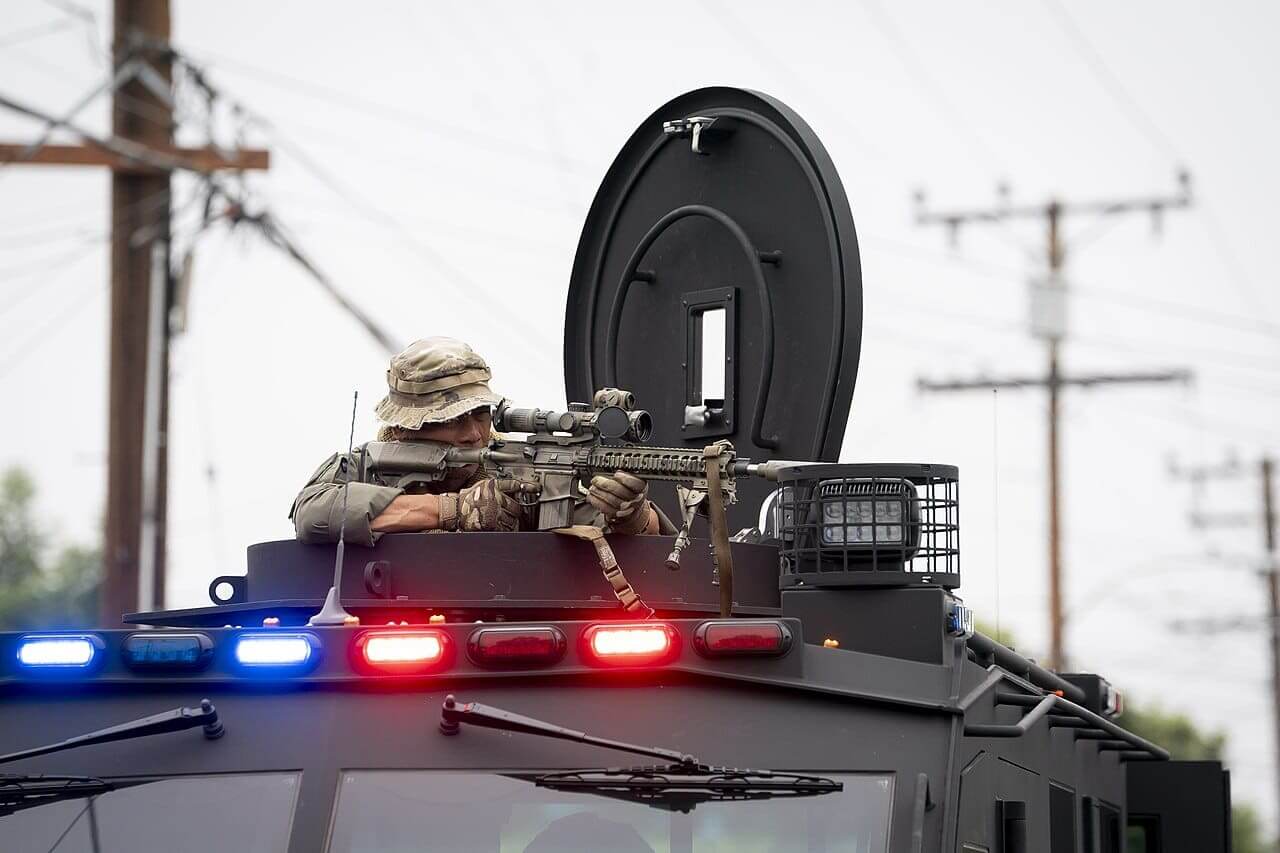
ICE and law enforcement adopted increasingly militarized appearances: tactical gear, armored vehicles, masked officers unwilling to identify their agency. Public spaces — school pickup lines, courthouse steps — became sites of arrest.
One father was detained while waiting to pick his children up from school. A bystander, in tears, said what many were thinking: no one should fear picking their kids up from school.
The administration argued these measures were necessary to combat crime. Yet statistics show that many of the highest homicide rates are in Republican-led states. Jackson, Mississippi, for example, has one of the highest per-capita homicide rates in the country — roughly 77.8 per 100,000 residents, far above the national average.
If federal crackdowns were purely about crime rates, the geography would look different.
Instead, large Democratic-led cities became the focal point. Politics and demographics cannot be ignored in that decision.
As tensions rose, protests followed. Peaceful demonstrators were sometimes met with heavily armed officers. Videos showed masked agents responding to questions with, “Do I have to answer to you?”
In a democracy, yes. Public servants answer to the public.
Escalation and Response
A leaked Defense Department memo outlined plans for rapid-response federal teams positioned to deploy within minutes to “protests.” The language reportedly did not distinguish between violent riots and peaceful assembly.
The First Amendment protects the right to protest. When protest itself becomes framed as threat, democracy narrows.
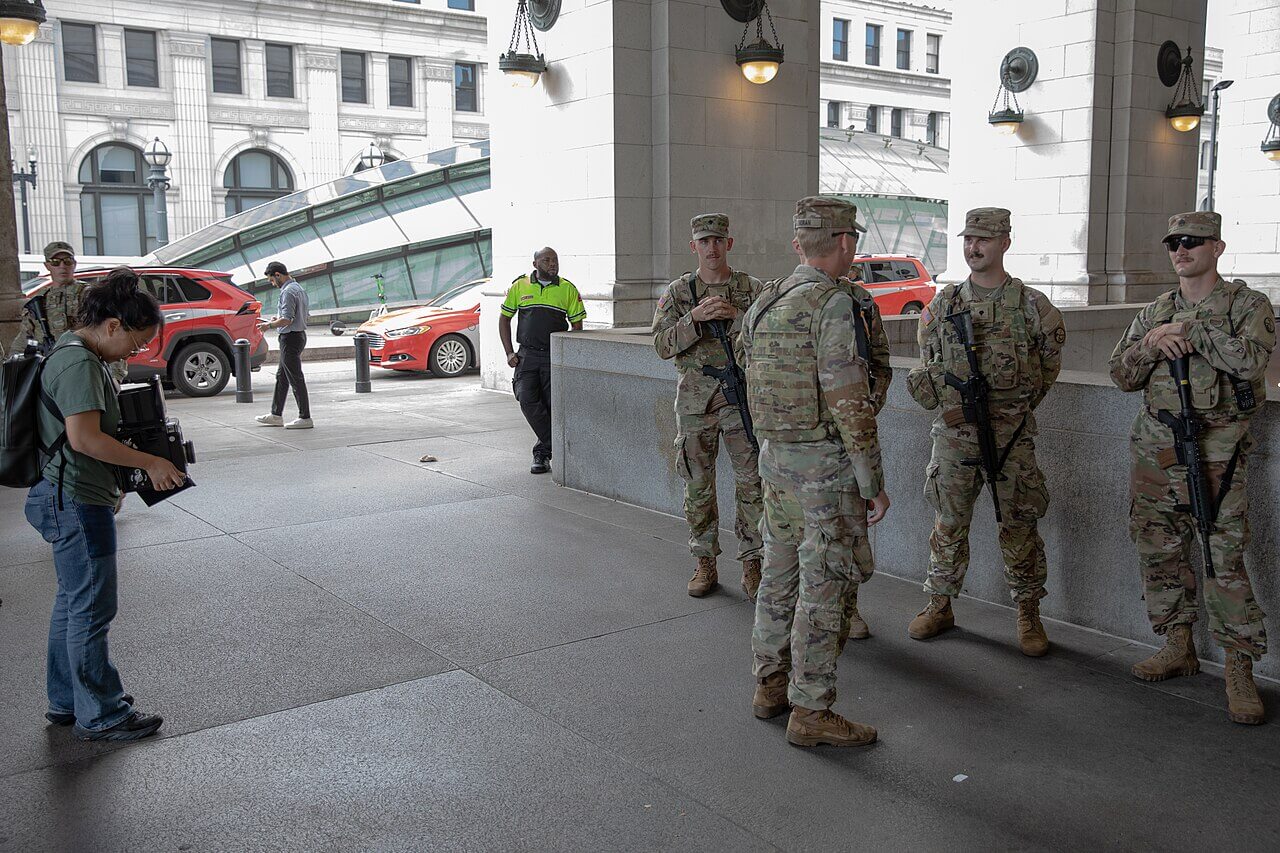
The deployment of National Guard units and the establishment of checkpoints in Washington, D.C., intensified concerns. Military presence in civilian spaces changes how people move, speak, and think. Even without confrontation, the psychological impact is real. People self-censor. Communities fragment. Trust erodes.
The Anatomy of a Police State
Political scientists describe police states as systems characterized by pervasive surveillance, suppression of dissent, militarized enforcement, propaganda, and the prioritization of control over liberty.
History offers stark examples. Nazi Germany and Stalinist Russia did not transform overnight. Institutions weakened gradually. Opposition was marginalized. Language hardened. Loyalty replaced competence.
The lesson is not that history repeats perfectly. It is that patterns recur.
What Comes Next?
The question is not whether America has already become a police state. The question is whether current trends point in that direction — and whether guardrails are strong enough to hold. So far, democratic guardrails in the form of “checks and balances” have largely failed—lower courts are left holding the line.
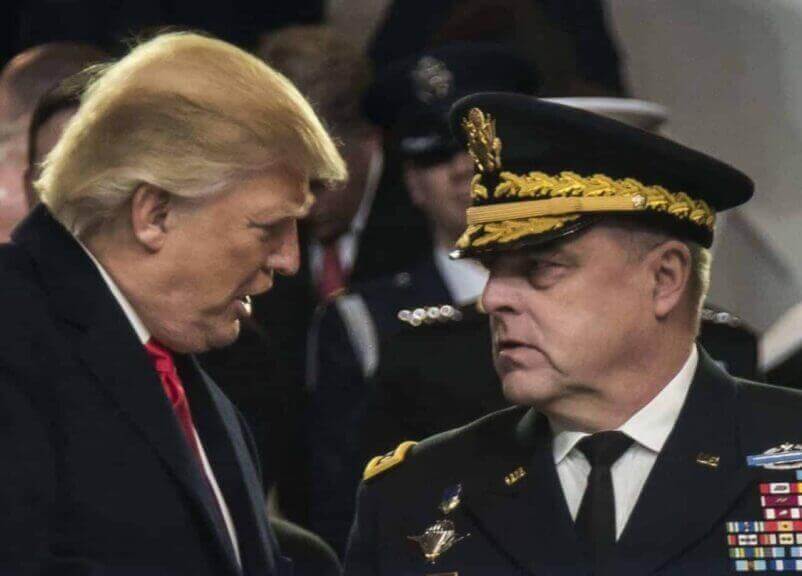
Former General Mark Milley described Trump as “fascist to the core.” Members of Trump’s first administration have publicly warned that internal resistance limited some of his dangerous actions during his first term. This time, there is no resistance.
Democracies do not survive on autopilot. They survive because citizens demand accountability.
Freedom is not lost in a dramatic single act. It is negotiated away, one “temporary emergency” at a time.
History has shown what happens when fear outweighs principle. The outcome is never stability. It is silence.
And silence, once normalized, is difficult to reverse.
FAQs
What is a police state?
A police state is a government that maintains strict control over its citizens through surveillance, repression, and authoritarian practices, often justifying its actions in the name of security.
How does a police state affect civil liberties?
A police state fundamentally undermines civil liberties, limiting free speech, assembly, and privacy. Citizens live in constant fear of surveillance and reprisal for dissent.
What historical examples illustrate police states?
Notable examples include Nazi Germany, Stalinist Russia, and various military dictatorships, where governments employed extreme measures to suppress opposition and maintain control.
How can citizens protect their freedoms?
Staying informed, engaging in civic activism, and advocating for transparency and accountability in government are crucial steps in safeguarding individual rights and freedoms.