

Update January 2025: President Donald Trump’s “reciprocal” tariffs were put in place on “Liberation Day,” April 2, 2025. This article was meant to educate people about tariffs prior to Trump’s taking office and implementing his plan. It’s worse than anticipated. He started a trade war with our allies and trading partners and just rolled out tariffs on every country (except Hungary, Russia, and Belarus…his buddies) and is calling them reciprocal even though the formula used to calculate the numbers doesn’t even make sense. Here’s everything you need to know.
Some companies have already met with employees to tell them that they won’t be getting Christmas bonuses because the company has to prepare for tariffs coming late January. Employees didn’t understand.
This article is meant to help everyone who’s confused about how tariffs affect American consumers. As Kamala Harris warned in one of her commercials: Tariffs will cost Americans on average an additional $4900 a year.
If you’ve been paying attention to the news, you’ve probably heard the term “tariff” tossed around in discussions about trade. But what does it really mean, and why does it matter to you, the average American consumer?
Let’s break it down in a simple, no-jargon way. We’ll go over what they are, how they work, why governments impose them, and how they can affect your everyday life.
What Are Tariffs?
A tariff is essentially a tax on goods imported into a country. Let’s say, for example, that a company in the U.S. wants to sell smartphones that were made in China. The U.S. government may decide to impose a tariff on those Chinese-made smartphones, meaning the company now has to pay an extra fee when bringing them into the U.S.
This tax is usually passed on to the consumer, which is why you might end up paying more for that smartphone, or for other products manufactured overseas.
How Do They Work?
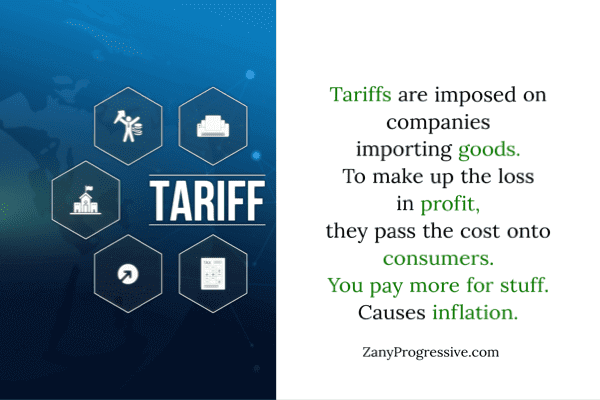
Basically, they increase the cost of importing goods from another country. When a government imposes a tariff, the price of those imported goods goes up. This happens because the company importing the product now has to pay that tax to the government, and to stay profitable, they often pass that extra cost onto consumers.
For example, if you’re shopping for a car, and that car was manufactured in Japan, a new tariff could make that car more expensive in the U.S. The higher cost could be a direct result of the tax that was applied to foreign-made cars.
Here’s a simple breakdown of the process:
Tariff Imposed: The government decides to place a tax on imports from a specific country or for a particular product.
Increased Costs: The company importing the goods now has to pay the fee.
Price Adjustment: The importer raises prices to cover the cost of the tax. (or they may absorb the cost themselves, depending on the situation.)
Consumer Impact: Consumers like you end up paying higher prices on goods and services that rely on foreign products.
When Does the Government Impose Them?
The U.S. government imposes tariffs for different reasons, but the most common ones are:
Protecting Domestic Industries: If the government believes that foreign companies are selling products to the United States at unfairly low prices (a practice known as “dumping“), it might impose tariffs to protect American businesses and jobs. For example, in the past, Chinese steel was sold in the U.S. at a much lower price than American steel, so tariffs were placed on Chinese steel to level the playing field. What it did was increase the cost for China to import steel in the U.S., which then increased the price of steel for buyers, making the difference in price between Chinese and American steel comparable.
Political or Trade Negotiation: Tariffs can also be used as a tool in international diplomacy. Governments sometimes impose tariffs on certain countries as a way to apply pressure in trade negotiations or to protest unfair trade practices.
Revenue Generation: While not the primary reason, tariffs can generate revenue for the government, especially on imported goods that are bought and sold in high volumes.
How Do Tariffs Affect Consumers?

Now, let’s get to the heart of the matter: how they impact you, the consumer.
Higher Prices: As mentioned earlier, when a tariff is placed on goods, companies commonly pass on the additional cost to consumers. This means you might see higher prices on everything from electronics to clothing, food, and even your morning coffee if the beans are imported.
Less Variety: When imposed on certain imports, they can lead to fewer choices on store shelves. For instance, if a popular foreign brand is hit with a tariff, it might be removed from the market entirely or replaced by a more expensive, less competitive alternative.
Changes in Trade: Sometimes, they prompt countries to look elsewhere for goods. For example, if the U.S. imposes tariffs on Chinese products, China might turn to other markets like Europe or Southeast Asia, which could result in changing global trade patterns.
We’re seeing this right now with American soybean farmers. China was the main exporter of American soybeans (meaning they bought them from our farmers). When Trump imposed tariffs on China, the country decided to stop buying soybeans from us and they now have an agreement to purchase them from Argentina.
American farmers are now struggling with a surplus of soybeans they have no buyer for. The money they’re used to making from sales to China have ended abruptly and they’re having a difficult time financially. There’s talk of the government “bailing them out” like it did during Trump’s first term when he imposed tariffs on China.
The trade war with China and other countries is also hurting ranchers in the U.S. and the price of beef in grocery stores has increased. Trump is talking about buying beef from Argentina to help lower prices for American consumers.
It seems complicated and messy because it is. Rather than imposing tariffs, causing issues in the U.S. economy, and needing to come up with solutions for them, why not just remove the tariffs or not impose them in the first place?
Potential Job Impact: Tariffs can sometimes lead to job gains in certain domestic industries, especially if foreign goods are priced out of the market and more American-made products are purchased. However, this effect isn’t always straightforward, and in some cases, job losses can occur if the cost of production becomes too expensive due to tariffs on key materials.
Example: The 2018-2019 U.S.-China Trade War
One of the most well-known examples of tariffs in recent history is the U.S.-China trade war, which began in 2018. The U.S. imposed tariffs on billions of dollars’ worth of Chinese goods in an effort to address trade imbalances and intellectual property concerns. In response, China imposed tariffs on U.S. goods.
Here’s a quick snapshot of how this played out:
The U.S. imposed tariffs on Chinese goods like electronics, machinery, and textiles. These taxes ranged from 10% to 25%, which increased the cost of these goods in the U.S.
China retaliated with taxes on U.S. goods such as soybeans, cars, and chemicals, impacting American farmers and manufacturers.
As we just discussed, soybean farmers were heavily impacted. In fact, they are currently bracing for more tough times ahead when the new tariffs are imposed. One article’s headline reads: U.S. Farmers Brace For New Trump Trade Wars Amid Tariff Threats. (See update above explaining how it’s currently playing out. Looks like the farmers were right to be concerned!)
American consumers felt the pinch as the price of imported goods increased. For example, the cost of Chinese-made smartphones, toys, and clothing went up, leading to higher prices in stores.
Visualizing the Impact
Chart 1: Average Tariff Rates Over Time (Post-2018)
| Year | Average Tariff Rate (%) |
|---|---|
| 2017 | 3.1% |
| 2018 | 13.4% |
| 2019 | 19.3% |
| 2020 | 19.3% |
As you can see, the average tariff rate on Chinese imports increased substantially in 2018 and remained high through 2020, leading to increased prices for goods like electronics, clothing, and furniture.
Chart 2: Impact on Consumer Prices (2018-2020)
| Product Category | Price Increase (2018-2020) |
|---|---|
| Electronics | +5-10% |
| Apparel | +2-5% |
| Home Goods | +3-8% |
| Automobiles | +3-7% |
The impact on prices varied by product, but the general trend shows noticeable price hikes, especially in categories like electronics and apparel.
It’s crazy to see those numbers now that we’ve experienced President Trump imposing 140% tariffs on China! Years ago, 19% tariffs caused price hikes for consumers.
Not only that, but the President has a 25% tariff on every country across the board (besides the countries run by his dictator buds) and has adjusted them up and down based on which country made him mad and which gave him a gift or sufficiently “kissed the ring.”
Tariffs: The Bigger Picture
So, what’s the takeaway ? Tariffs might seem like a small issue, but they can have a big impact on your finances. While they’re often used to protect domestic industries or as a bargaining chip in trade negotiations, they tend to result in higher prices for consumers, less choice in the marketplace, and sometimes there are unintended side effects on jobs and economic growth.
As consumers, we need to stay informed about how tariffs affect us—whether it’s that new tech gadget we’ve been eyeing or the price of our next family vacation.
The next time you hear about tariffs being imposed, you’ll understand the bigger picture of how it could impact not just trade, but your daily shopping habits too.