

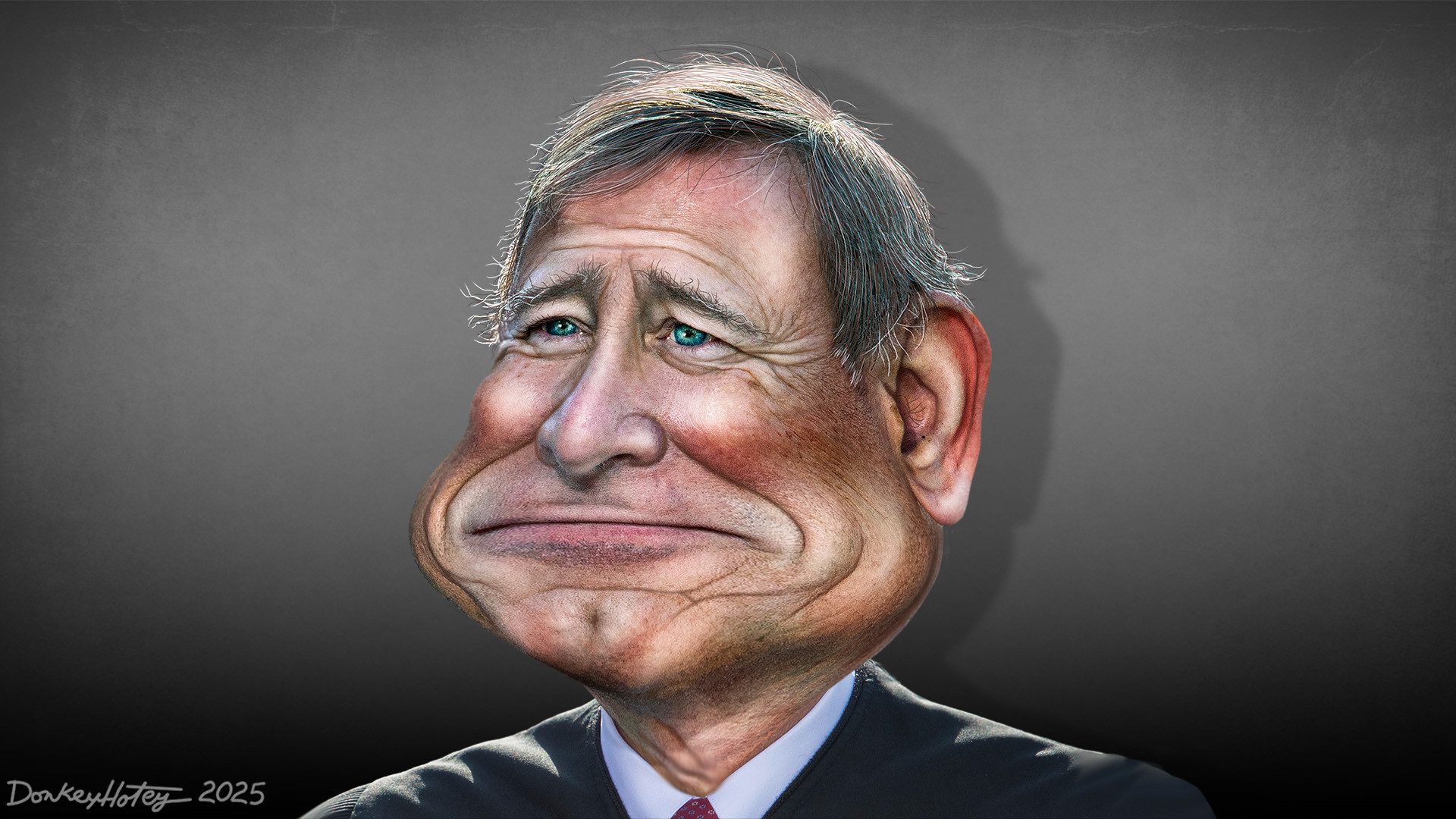
The Supreme Court is weighing a case that could quietly but profoundly reshape how the federal government works. At issue is whether presidents can fire leaders of independent agencies at will, even when Congress has explicitly protected those officials from political removal.
The dispute, sparked by Donald Trump’s firing of an FTC commissioner, puts nearly a century of constitutional precedent on the chopping block and threatens to tilt the balance of power sharply toward the White House, with consequences that could ripple through consumer protection, labor rights, and economic regulation for years to come.
What’s the Case All About?
At its core, Trump v. Slaughter is a constitutional clash over presidential power and agency independence. The dispute began when President Donald Trump fired Democratic FTC Commissioner Rebecca Kelly Slaughter in March 2025 — even though federal law says commissioners at independent agencies like the Federal Trade Commission can only be removed for cause (such as inefficiency or misconduct). Slaughter sued, and lower courts ruled that her removal was illegal under longstanding Supreme Court precedent that protects independent agencies from arbitrary political removal.
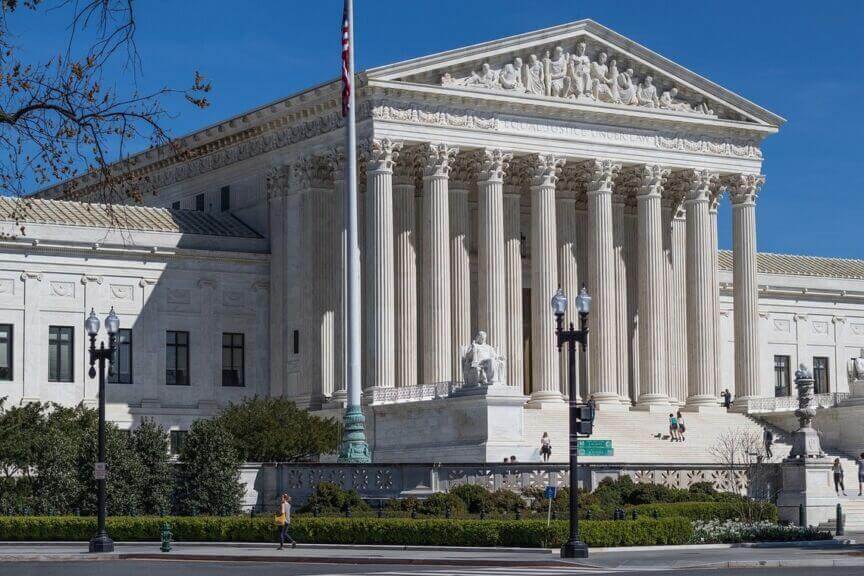
Now the Supreme Court is poised to decide two big questions:
- Whether statutory protections limiting the president’s authority to remove independent agency officials are constitutional.
- Whether the Court should overrule Humphrey’s Executor v. United States — a 1935 decision that has underpinned the independence of agencies like the FTC for nearly a century.
Why Humphrey’s Executor Matters
Humphrey’s Executor is a lynchpin of U.S. administrative law. The 1935 Supreme Court held that Congress can create “independent” agencies whose leaders serve fixed terms and can’t be removed by the president without good cause. That decision enabled the creation of expert, bipartisan boards like the FTC, the National Labor Relations Board, and many others — designed to be insulated from political winds so they can focus on complex technical duties such as consumer protection, antitrust enforcement, workplace rights, and more.
For decades, presidents of both parties respected that rule — even as independent agencies evolved and took on far more powerful roles than they had in 1935.
What Happened So Far in the Court
In December 2025, the Supreme Court heard oral arguments in the case, listening to the Trump administration’s push to expand presidential authority and strike down removal protections, while Slaughter’s side urged the court to preserve independent expertise and Congress’s power to create insulated agencies.
The conservative majority on the court — led by Chief Justice John Roberts and Justices like Amy Coney Barrett and Brett Kavanaugh — signaled strong sympathy to arguments that the president should have broader control over federal agencies and that the Humphrey’s Executor precedent may no longer make sense in the modern administrative state.
Several liberal justices, including Sonia Sotomayor, Elena Kagan, and Ketanji Brown Jackson, sounded alarms, warning that dismantling the legal bedrock of independent agencies could erode the checks and balances between branches of government and allow politicization of technical rule-making.
Meanwhile, the Court has already allowed Trump to keep Slaughter removed temporarily while it decides the case, and it has granted similar relief in other firings of agency board members — a strong hint at where the majority may ultimately rule.
Why This Matters Beyond the FTC
The stakes extend far beyond one commissioner or one agency:
1. Broad Impact on More Agencies
If the Court overturns or sharply limits Humphrey’s Executor, it could mean that the president can remove leaders of many independent agencies at will, including the FTC, National Labor Relations Board, Consumer Product Safety Commission, SEC, and others unless Congress redesigns them. (And do we anticipate this Congress redesigning anything?)
2. Shift in Separation of Powers
For nearly 90 years, Capitol Hill and the executive branch have worked within the framework set by Humphrey’s Executor — designing agencies with bipartisan membership and removal protections to foster expertise and stability. Undoing that framework would dramatically shift power toward the White House at the expense of legislative design and agency independence.
3. Practical Policy Consequences
Independent regulators currently make decisions that affect consumer prices, product safety, labor rights, financial stability, and technology markets. If these roles become subject to political reshuffling every few years, the consistency, technical depth, and non-partisan enforcement those agencies deliver could be jeopardized.
Editor’s Opinion
When it comes to politicizing critical decision-making roles, we are currently watching what happens when a President puts inexperienced and unqualified people in important cabinet positions. Shouldn’t that be enough to highlight the danger in giving the President authority over who is hired or fired at these agencies? Some things simply shouldn’t be politicized if we want to have a serious, functioning society.
Editor’s Opinion
The Broader Political Context
This case isn’t just legal — it’s one of the most significant constitutional fights of the decade:
It ties into longstanding debates over the unitary executive theory, a legal philosophy arguing that the president should have direct control over the entire executive branch.
It reflects a broader conservative effort to redefine or reinterpret the modern administrative state and reduce legal constraints on presidential authority.
It pits democratic accountability (where voters choose the president who controls the agencies) against institutional expertise, where governance is informed by technical professionals insulated from political pressures.
What Happens Next
The Court is expected to issue its decision by late spring or early summer 2026. That ruling could either:
- Affirm and reinforce the independence of agencies under Humphrey’s Executor, protecting current statutory safeguards; or
- Overturn or narrow that precedent, empowering presidents to remove independent agency heads at will — reshaping the balance of power in the federal government.
Either outcome will have far-reaching consequences for regulatory governance, separation of powers, and the role of expertise in policymaking.