


In a dramatic display of political tension and constitutional debate, the U.S. Senate narrowly voted on January 14, 2026 to block a war powers resolution aimed at limiting President Donald Trump’s ability to conduct further military actions against Venezuela without congressional approval.
The outcome underscores how deeply divided lawmakers are over executive war authority, and raises questions about the balance of power between Congress and the presidency.
The resolution, advanced by Senate Democrats and backed at one point by several Republicans, was designed to assert Congress’s constitutional role in authorizing acts of war.
But after intense pressure from the White House, two Republican senators reversed their support, allowing the measure to be dismissed in a 51–50 vote. Vice President J.D. Vance cast the tie-breaking vote to defeat the resolution, illustrating just how evenly split the chamber had become.
What Prompted the War Powers Effort?
At the heart of this political firestorm is the Trump administration’s controversial military intervention in Venezuela. In early January, U.S. forces carried out a surprise operation that resulted in the capture of Venezuelan President Nicolás Maduro and his wife — a move that stunned the international community and Congress.
While the administration insists that the operation was a legal law enforcement operation that was necessary to combat narco-terrorism and to “get our oil back,” critics argue it was a significant military incursion that should have required explicit congressional authorization.
The war powers resolution was part of a broader effort by lawmakers, particularly Democrats, to put legal limits on Trump’s ability to escalate military actions abroad.
Advocates of the resolution pointed to the U.S. Constitution, which grants Congress the sole power to declare war, and argued that the president had sidestepped this fundamental check.
Republicans who initially supported the measure said they were responding to growing unease within the party about Trump’s aggressive foreign policy stance, which has included threats of using military force in other contexts, such as Greenland.
But intense lobbying from the administration — including direct calls from Trump and assurances from Secretary of State Marco Rubio that no U.S. ground troops would be deployed — led to two key GOP defections, collapsing bipartisan support.
Parties Divide Over Interpretation
Republican Senate Majority Leader John Thune, argued that the resolution was unnecessary at this moment because, in his view, the United States was not currently engaged in a formal military operation in Venezuela.

“We have no troops on the ground in Venezuela. We’re not currently conducting military operations there,” Thune said on the Senate floor. He accused Democrats of using the measure as a partisan attack against the president rather than a serious effort to define war powers.
Democrats sharply rejected that framing. Senator Tim Kaine, the resolution’s sponsor, accused Republicans of dodging an essential debate about the legal and strategic consequences of the Maduro operation.
He warned that failing to rein in the president’s war powers could lead the United States into open-ended foreign entanglements without proper oversight.
Constitutional Stakes and Public Opinion
The clash isn’t just political; it’s constitutional. Since the War Powers Resolution of 1973, Congress has sought mechanisms to check presidential military action without congressional declarations of war. But presidents from both parties have often resisted such constraints.
The recent vote highlights just how unsettled this balance remains in 2026.
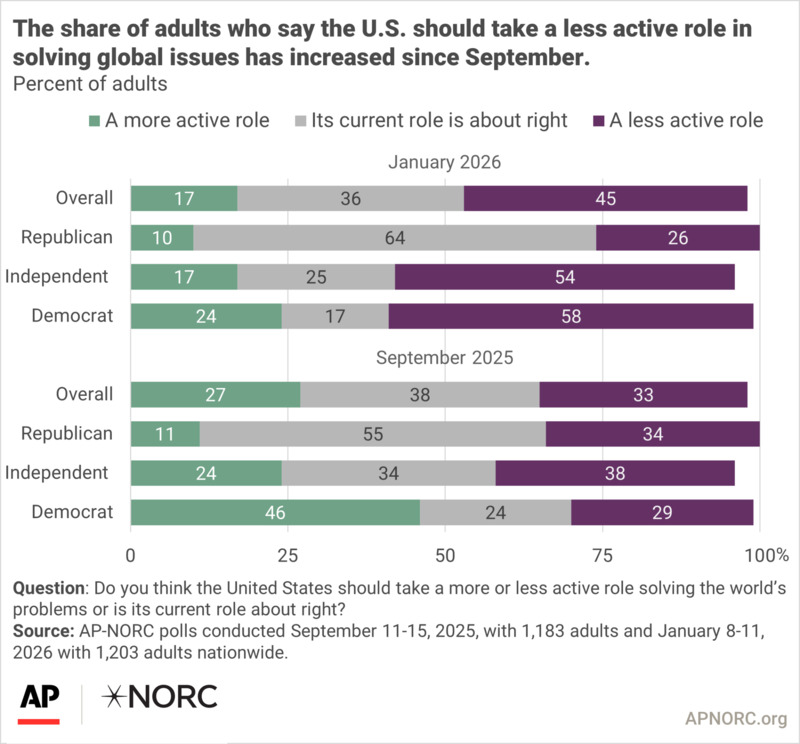
Public opinion appears to be shifting as well. A recent AP-NORC poll found that a majority of Americans believe President Trump has overstepped in his use of U.S. military force abroad, especially in relation to Venezuela. More than half of those surveyed said Trump’s foreign interventions have “gone too far,” and roughly six in ten disapproved of his handling of foreign policy overall.
What Happens Next?
Although the Senate defeated the war powers resolution, Democrats and some Republicans have signaled that the fight over executive military authority is far from over.
Similar legislation has been introduced in the House, and lawmakers on both sides of the aisle say they plan to press for additional votes that could further clarify the limits of presidential power.
Many analysts expect this debate to continue not just in Congress, but in the courts and among the public. The underlying issue — how much autonomy the executive branch should have in deploying U.S. military force without a formal declaration of war — touches on centuries-old constitutional principles that remain unresolved. As one scholar put it, the conflict over war powers is “a symptom of a larger struggle over the role of the United States in the world.”
For now, with the resolution defeated, the Trump administration has effectively maintained broad authority to conduct its campaign in Venezuela and beyond — but the razor-thin vote and the public’s growing unease suggest that the political pressure to redefine America’s war powers is only growing.