

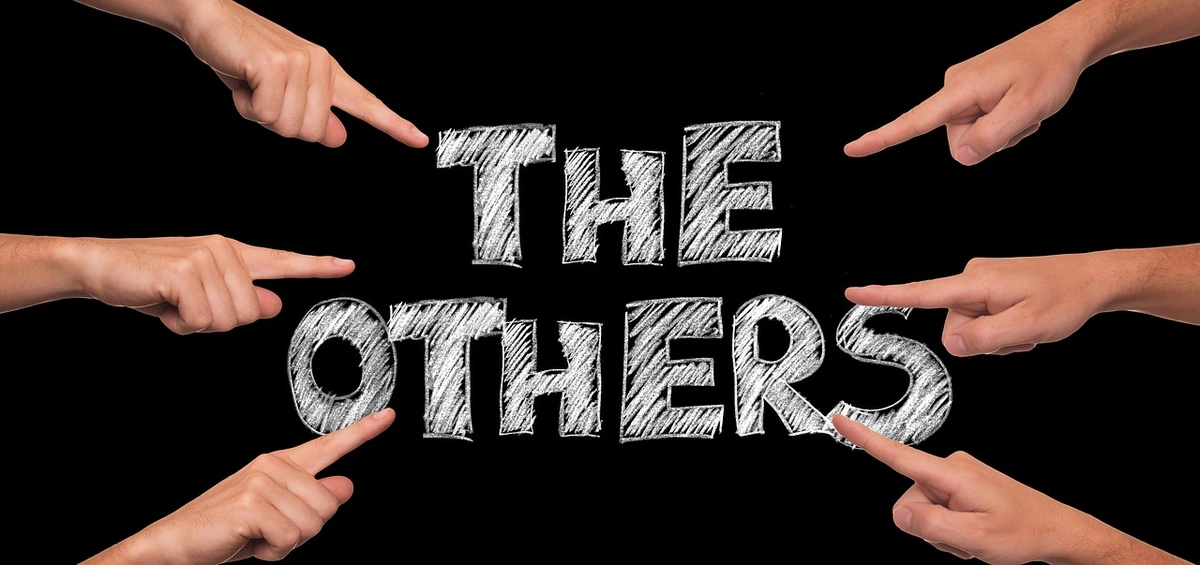
Every time you hear a politician accuse their opponent of doing exactly what they themselves are doing, you’re watching something psychologists have studied for over a century. It’s called projection, and in recent years, it has become one of the most powerful and frequently deployed tools in the Republican political playbook.
Understanding projection isn’t just an academic exercise. It’s essential for anyone trying to make sense of the often bewildering contradictions in American political rhetoric — and for recognizing when they’re being manipulated.
What Is Psychological Projection?
Sigmund Freud first identified projection as a defense mechanism in the late 1800s. In simple terms, projection happens when a person takes their own undesirable thoughts, feelings, or behaviors and attributes them to someone else. Instead of facing uncomfortable truths about themselves, the person essentially says, “It’s not me — it’s you.”
The American Psychological Association defines projection as the process by which a person attributes their own characteristics, impulses, or responsibilities to another person or group. It often serves as a way to avoid guilt, deflect criticism, or protect a fragile self-image.
A person who is dishonest might constantly accuse others of lying. A person who is cheating might obsessively suspect their partner of infidelity. The projection allows them to externalize the parts of themselves they can’t accept. President Trump’s constant accusations that Democrats are cheating in or “rigging” elections.
Carl Jung noted that projection doesn’t just affect individuals — it shapes entire societies, especially in times of political crisis. Psychologist Erik Erikson similarly argued that projection tends to intensify during periods of personal or political upheaval, when people feel most threatened and most need someone else to blame.
What makes projection especially dangerous in politics is that it doesn’t require conscious planning. While some politicians may deliberately use projective accusations as a calculated strategy, others may genuinely believe their own distortions.
Either way, the effect on the public is the same: confusion, misdirection, and a blurring of the line between who is actually doing harm and who is being falsely accused of it.
The “I Know You Are, But What Am I?” Strategy
Psychoanalyst Lance Dodes, in an interview with MSNBC, described the heavy reliance on projection in modern Republican politics as “primitive,” explaining that it bypasses logical argument entirely.
Rather than engaging with opponents on substance — which would require preparation, evidence, and nuanced reasoning — projection simply flips the accusation. The person doing harm accuses the other side of that exact harm, and suddenly the public has to sort out competing claims rather than examining the evidence.
Psychoanslyst Lance Dodes warns of the dangerous mental health issues of Trump—5 years ago.

This is not a subtle tactic. Scholars Chris Bell and Gary Senecal, writing for the Analytic Room, explained that projection works by making the important distinctions of a situation impossible to parse clearly. It creates a fog of confusion where the public struggles to tell the difference between reality and accusation.
In practical terms, it creates a false equivalence: if both sides are accused of the same thing, many people will simply throw up their hands and assume everyone is equally guilty — which benefits the person who is actually doing the thing they’re accusing others of.
Projection in Practice: The Republican Pattern
The examples are numerous, well-documented, and span years of political behavior.
“Rigged elections” and voter fraud. Perhaps the most consequential use of projection in modern American politics is the Republican Party’s relentless drumbeat about voter fraud and election rigging.
For years, Republican leaders have claimed that Democrats are stealing elections through widespread fraud. Yet multiple comprehensive investigations — including those conducted by Republican officials themselves — have consistently found that voter fraud in the United States is vanishingly rare.
The Brookings Institution examined the Heritage Foundation’s own voter fraud database and found only a handful of confirmed cases across millions and millions of votes cast in major swing states.
In Arizona, for example, Heritage documented just four cases of fraudulent voting in the 2020 general election out of more than three million ballots. The confirmed cases of voter fraud in the 2020 election were perpetrated by Republican voters.
Documented efforts to actually manipulate election outcomes have overwhelmingly come from the Republican side. These include aggressive voter purges disproportionately targeting Black and young voters, the filing of hundreds of thousands of voter registration challenges based on flimsy evidence, and of course the organized effort to overturn the certified results of the 2020 presidential election — an effort that led to criminal indictments of multiple Republican operatives and officials.
Fox News agreed to pay $787.5 million to settle Dominion Voting Systems’ defamation lawsuit after internal communications revealed that the network’s top personalities knowingly promoted baseless fraud claims.
The party that shouts loudest about stolen elections is the party whose members have been caught, charged, and in some cases convicted of actually trying to steal elections.
“Weaponizing” government. Republican leaders routinely accuse Democrats of “weaponizing” the Department of Justice and federal agencies against political opponents. Yet the second Trump administration has openly used federal power to target perceived enemies — from threatening to revoke the tax-exempt status of universities that don’t comply with political demands, to directing federal agencies to investigate and punish media outlets and individual critics.
The accusation of weaponization serves as preemptive cover: by claiming the other side did it first, the actual weaponization becomes harder to challenge.
“Threats to democracy.” In one of the most striking examples of political projection, Republican politicians and media figures have spent years accusing Democrats and progressives of being “threats to democracy” and “authoritarians.” These accusations have come while the party has simultaneously pushed to concentrate executive power, undermined the independence of the judiciary, attacked the free press, and worked to make voting harder for communities that tend to vote against them.
The Heritage Foundation’s Project 2025 blueprint openly proposed replacing nonpartisan civil servants with political loyalists across the federal government — the textbook definition of authoritarian consolidation of power.
“Fake news” and media manipulation. The branding of unfavorable reporting as “fake news” is itself a form of projection. By constantly accusing mainstream journalism of fabricating stories, Republican politicians and aligned media create a permission structure for their own misinformation.
Conservative media outlets have been caught promoting conspiracy theories, deceptively edited footage, and outright falsehoods — from the debunked claims in Dinesh D’Souza’s “2000 Mules” (for which D’Souza eventually apologized) to Project Veritas’s long record of misleading undercover operations that resulted in lawsuits and legal settlements.
Why Projection Works So Well
The psychological machinery that makes projection effective operates below conscious awareness for many people. Research has identified a phenomenon called the “backfire effect,” in which attempts to correct a false belief can actually strengthen that belief in the minds of those who hold it.
When people’s emotional attachments to a political identity are challenged, their defenses kick in and they double down.
Projection also exploits a cognitive shortcut most people rely on: if someone accuses another person of something with enough confidence and repetition, the accusation itself plants a seed of doubt, regardless of whether any evidence supports it.
Once that seed is planted, it’s extraordinarily difficult to uproot. People tend to remember the accusation long after the debunking has faded.
Right-wing media amplifies this effect through sheer repetition. When the same accusation is echoed across cable news, talk radio, podcasts, and social media accounts simultaneously, it creates the illusion of widespread corroboration. It becomes the political equivalent of an optical illusion — something that looks real but falls apart under scrutiny.
How to Recognize and Resist Projection
The first step in defending yourself against political projection is simply knowing what it is. When a politician accuses an opponent of something, ask yourself: is there evidence that the accuser is doing, or has done, the very thing they’re accusing the other side of? If the answer is yes, you’re likely looking at projection.
Second, follow the evidence rather than the rhetoric. Claims about voter fraud, government weaponization, or media dishonesty can be checked against actual data, court records, and verified reporting.
The gap between the accusation and the evidence is where the projection lives.
Third, be wary of false equivalences. Projection works best when it convinces people that “both sides” are equally bad, which neutralizes accountability. In reality, the scale and impact of misconduct is rarely symmetrical, and treating it as though it is only benefits the party doing the most harm.
Finally, seek out trusted, fact-based sources and be especially open to credible criticism that comes from within a political movement, not just from the opposition.
Research shows that corrections from within a person’s own political community are far more effective than those from the other side.
Projection is one of the oldest tricks in the psychological playbook. But knowing how it works is the first step toward making sure it stops working on you.