
Less than a week into Operation Epic Fury, the U.S. has unveiled an array of the Pentagon’s newest weapons systems against Iran — from AI-powered targeting to budget drones modeled after Iran’s own designs, to the first-ever shootdown of a manned fighter jet by an F-35.
The Trump administration isn’t just waging war. It’s showcasing a live-fire product demonstration.
And while Defense Secretary Pete Hegseth gloats about “punching them while they’re down,” six American service members are dead, at least 1,230 Iranian civilians and soldiers have been killed, and Congress has been sidelined from having any say in the matter.
Anthropic’s AI: Powering the War the Government Tried to Ban
Perhaps the most jarring revelation is that the Pentagon is actively using AI tools made by Anthropic — the same company the Trump administration blacklisted as a “supply chain risk” just one day before the bombs started falling.
The Wall Street Journal first reported that U.S. Central Command and other combatant commands worldwide have been using Anthropic’s Claude AI for intelligence assessments, target identification, and simulating battle scenarios.
The Pentagon has previously used AI to process documents, streamline logistics, and identify objects in drone feeds.
But this marks a significant escalation of AI’s role in active combat operations.
The contradiction is hard to miss.
On February 28, Trump directed all federal agencies to stop working with Anthropic after the company refused to grant the Pentagon unrestricted access to its technology — specifically declining to allow its AI to be used for mass surveillance of American citizens or fully autonomous weapons systems.
CEO Dario Amodei called those conditions non-negotiable “red lines.”
Trump called the company “leftwing nut jobs” on Truth Social. Emil Michael, the Pentagon’s technology chief, called Amodei a liar with a “God complex.”
Hours later, OpenAI signed its own deal with the Pentagon.
Discussion For the Comments
TIME OUT: So this means that the government will be conducting mass surveillance of Americans and allowing AI to control weapons with no human interaction, right? If those were the only two things Anthropic said it would not do and that got them “blacklisted,” then that means the government planned on using it for those purposes, right? I doubt DHS or the Pentagon would admit to using OpenAI for those purposes, although they already have, albeit indirectly. —RH Editor
But because Anthropic was given six months to wind down its military contracts, and because the war launched the very next day, Claude remained embedded in the military’s targeting infrastructure.
The result: the AI company the administration publicly vilified is quietly powering the most consequential decisions of the war.
Reverse-Engineered Iranian Drones, Fired Right Back at Iran
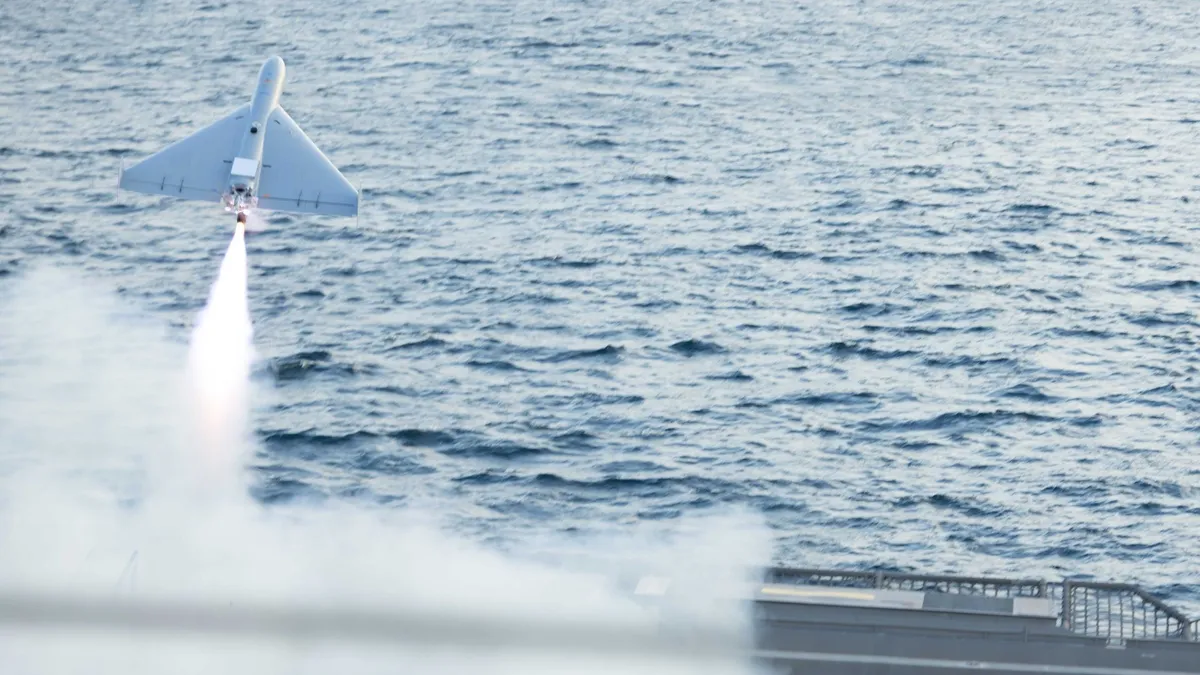
Among the most striking new weapons on display are the LUCAS drones — Low-cost Unmanned Combat Attack Systems.
These are one-way attack drones that cost roughly $35,000 each, and they are based directly on Iran’s own delta-wing Shahed design.
The same drone platform that Iran supplied to Russia for use in Ukraine and to Houthi rebels in Yemen.

CENTCOM chief Admiral Brad Cooper put a fine point on it in a video statement: the U.S. took Iran’s drone design, improved it, and fired the upgraded version right back at them.
The drones were launched by Task Force Scorpion Strike, a special operations unit that was only publicly revealed in December.

The message is less about military necessity and more about humiliation.
These are cheap, expendable weapons designed for volume — part of a broader Pentagon strategy called “affordable mass,” born out of lessons learned watching Ukraine’s drone warfare against Russia.
The idea is simple: flood the battlefield with low-cost weapons rather than relying solely on multi-million-dollar precision munitions that take months to replace.
Precision Strike Missiles Get Their Combat Debut
The war also marked the first combat use of the Precision Strike Missile, or PrSM — a Lockheed Martin ballistic missile designed to replace the aging ATACMS.
The PrSM is GPS-guided, can strike targets from roughly 250 miles away, and is fired from the HIMARS mobile rocket launcher that became famous during the Ukraine conflict.
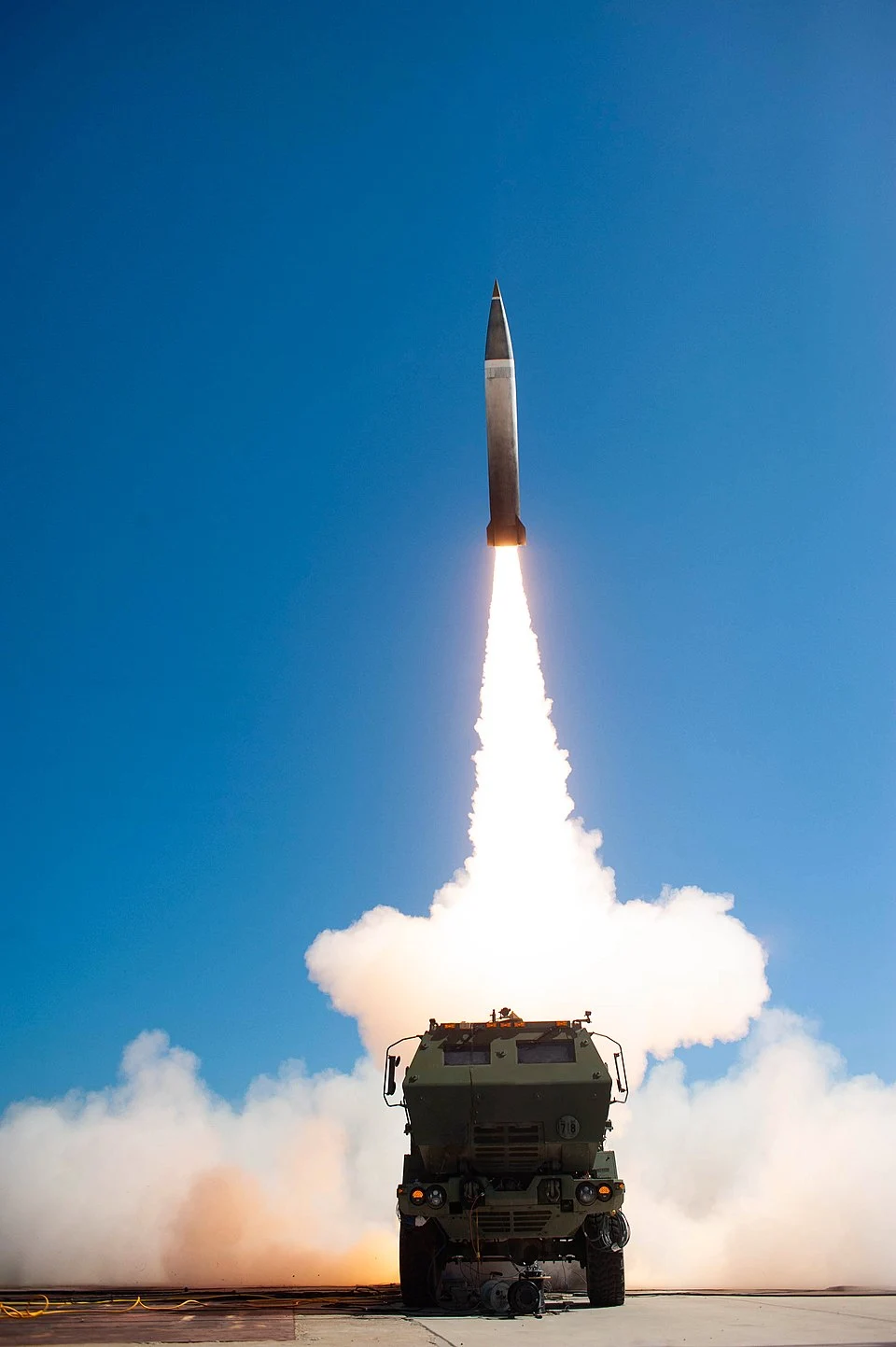
CENTCOM released footage showing HIMARS launchers firing what appeared to be PrSM rounds at Iranian targets on the war’s second day.
Admiral Cooper confirmed the missile’s use in his March 4 video statement (below), calling it an example of American troops “leveraging innovation to create dilemmas for the enemy.”

It’s a carefully chosen phrase. “Creating dilemmas” is Pentagon-speak for overwhelming the enemy with so many threats that they can’t respond to all of them at once.
With over 2,000 targets struck in the first 100 hours using more than 2,000 munitions — including Tomahawk cruise missiles, B-2 stealth bombers, and now PrSM rounds — Iran is facing exactly that kind of overload.
The F-35 Finally Gets its Kill
The F-35 has been one of the most expensive and controversial weapons programs in U.S. history, plagued by cost overruns, delays, and persistent questions about whether it could perform in real combat.
This week, the trillion-dollar jet got its answer.
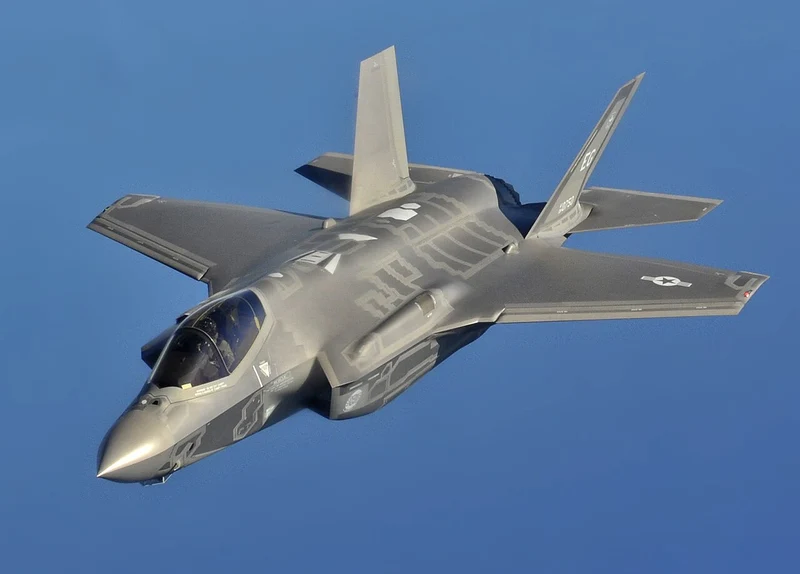
An Israeli Air Force F-35I — their customized version of the jet, called “Adir” — shot down an Iranian Yak-130 over Tehran on March 4.
It was the first time in history that an F-35 downed a manned fighter aircraft.
The Israeli Defense Forces called it a historic moment, and the engagement reportedly lasted only seconds.
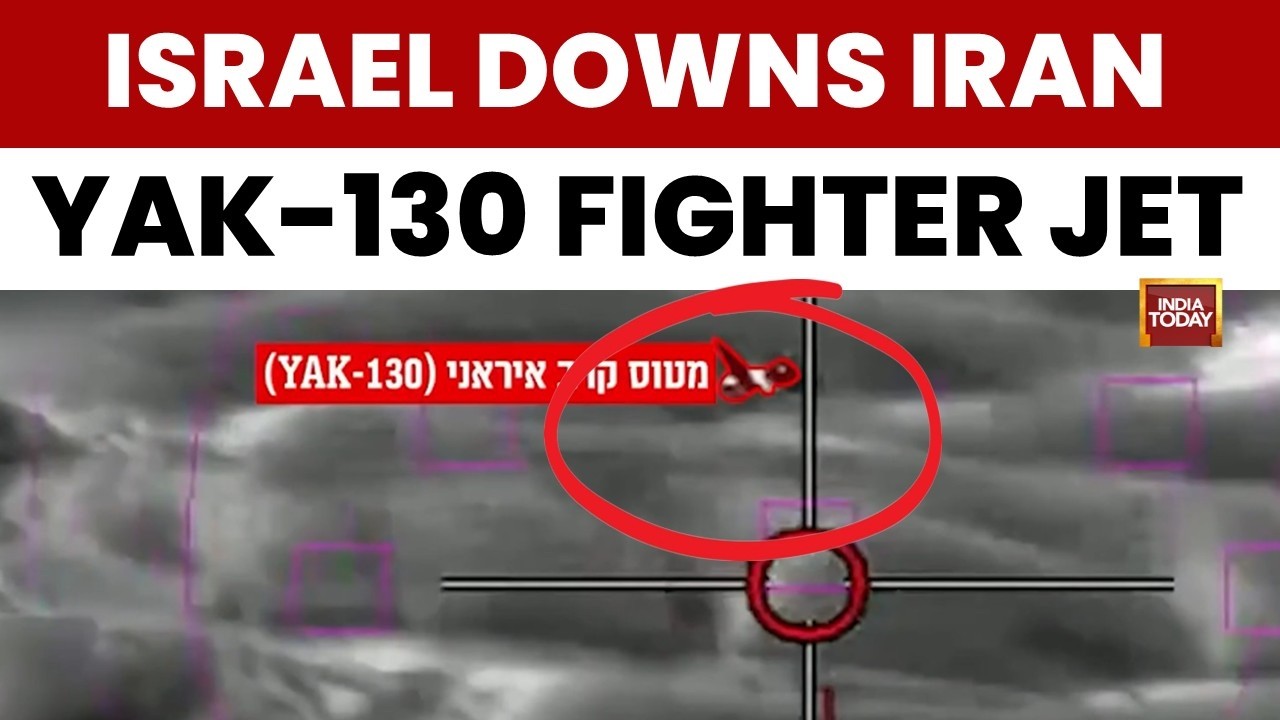
The Yak-130 is a Russian-made trainer jet that Iran had been flying on air patrol missions over Tehran, armed with short-range air-to-air missiles. It was no match for the stealth fighter.
The engagement was less a test of the F-35’s capabilities and more a demonstration of the overwhelming technological mismatch at play in this war.
The same day, British Royal Air Force F-35Bs recorded their first combat kill as well, shooting down Iranian drones over Jordanian airspace.
“We Are Punching Them While They’re Down”
At his Pentagon briefing on March 4, Hegseth delivered a performance that was part victory lap, part threat.
He declared that Operation Epic Fury had already delivered twice the air power of the 2003 Iraq “shock and awe” campaign and seven times the intensity of Israel’s previous strikes against Iran.
He described the Iranian navy as destroyed, invited reporters to “pick your adjective — combat ineffective, decimated, destroyed, defeated.”
He told reporters the war was designed to be unfair. That the U.S. was accelerating, not slowing down.
That “death and destruction from the sky, all day long” was the plan going forward.
And he bragged that the leader of the unit that allegedly tried to assassinate Trump had been killed. “Iran tried to kill President Trump,” Hegseth said, “and President Trump got the last laugh.”
This is the language of vengeance dressed up as strategy. And it’s coming from the person who holds the civilian authority over the entire U.S. military.
The Human Cost They Don’t Want You Focused On
While Hegseth was performing for cameras, Joint Chiefs Chairman General Dan Caine struck a markedly different tone. He named four of the six American service members killed by an Iranian drone strike in Kuwait:
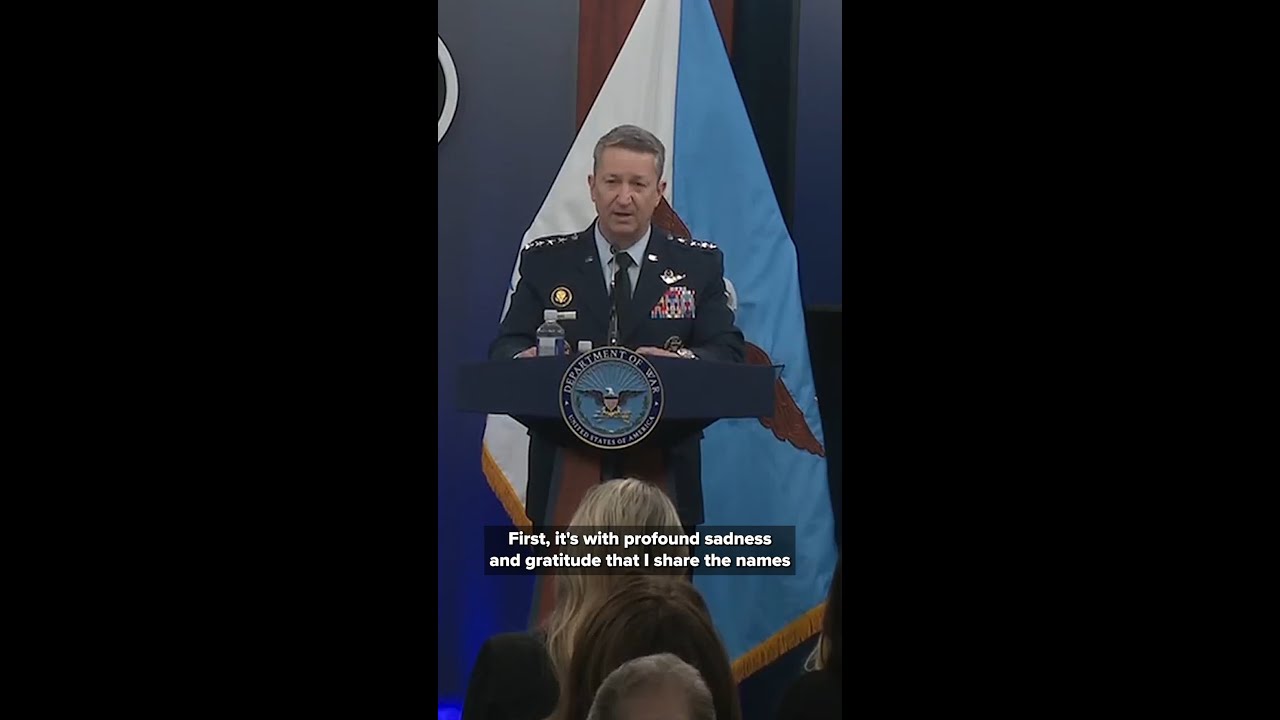
When reporters pressed on the deaths, Hegseth pivoted to blaming media coverage.
He accused the press of “only wanting to make the president look bad” and told them to report on the operation’s “success” instead.
In Iran, at least 1,230 people have been reported killed since the campaign began, including Supreme Leader Ayatollah Ali Khamenei.
Iran has fired back — roughly 400 missiles and over 800 drones in the first two days alone, many of which were intercepted but some of which struck targets in Israel and at U.S. bases across the Middle East.
The Senate voted 53-47 along party lines to block a bipartisan war powers resolution that would have required Trump to seek congressional authorization.
The war continues without a vote, without a declaration, and with a defense secretary who seems more interested in highlight reels than in the human beings on both sides who are paying the price.
What it All Means
The weapons are impressive.
The technology is real.
And the Iran war is providing the Pentagon with something it has wanted for years: a live combat laboratory to validate its most expensive investments.
But behind the PrSM launches and the AI-assisted targeting and the drone swarms, there are real people dying — American soldiers, Iranian civilians, and service members from allied nations.
The administration’s eagerness to showcase military hardware while dismissing questions about casualties reveals a set of priorities that are concerning (not unexpected).
The question isn’t whether these weapons work.
It’s who gets to decide when, where, and against whom they’re used — and whether the American public will ever get a meaningful say.