


As a deadline approaches for the Department of Justice to release a massive trove of unclassified materials tied to the Jeffrey Epstein case and federal investigations, Democratic lawmakers released another set of new Epstein photos on Thursday.
The images, drawn from tens of thousands of files obtained from the late financier’s estate, lack dates and explanatory context but have reignited public debate over Epstein’s extensive network and the government’s transparency obligations.
The rollout comes under the Epstein Files Transparency Act, a bipartisan law requiring the Justice Department to make public all unclassified documents related to Epstein within 30 days of the legislation’s enactment. Passed overwhelmingly by Congress and signed in November, the law’s deadline to publish the material is this Friday.
Uncaptioned and Undated Photos Raise Questions
The new Epstein photos, totaling nearly 70 in this tranche, includes photographs of Epstein with a range of public figures, photos of foreign passports with redactions, and disturbing visual content with no narrative text. Among the individuals pictured are technology leaders such as Microsoft co-founder Bill Gates and Google co-founder Sergey Brin, as well as philosopher and linguist Noam Chomsky, media figures, and political operatives.

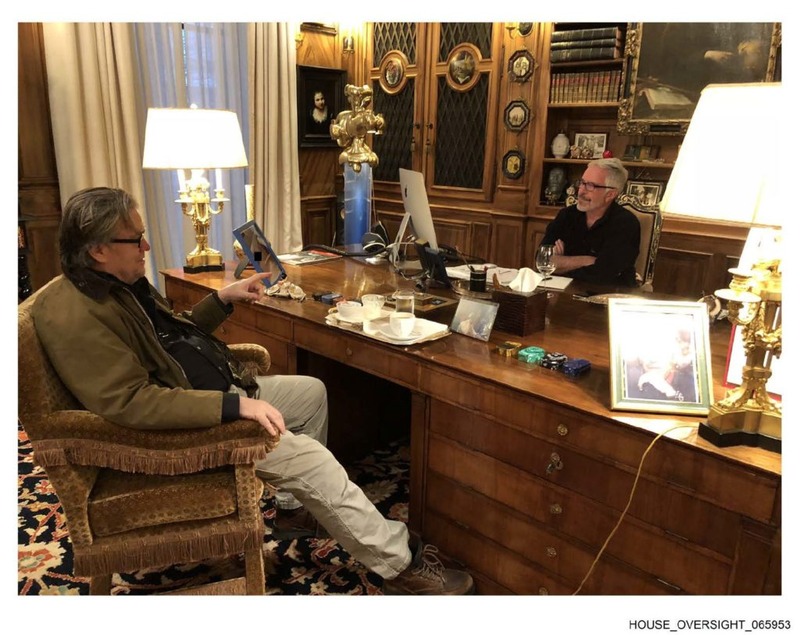
While the presence of any individual in estate photos does not imply wrongdoing or criminal association, the breadth of individuals depicted highlights the expansive social and professional web that Epstein cultivated before his death in 2019. Previous releases included images showing President Donald Trump, former President Bill Clinton, former British royalty, and other high-profile figures.


Some of the most unsettling visuals in this release are fragments of text and imagery that appear to reference Vladimir Nabokov’s novel Lolita, with excerpts seemingly written on the bodies of women(?) in photographs. Such material has drawn sharp criticism from survivors and advocacy groups as distressing and evocative of the abusive context in which Epstein operated.
Political Pressure on the Justice Department
House Democrats are making strategic use of these estate photos to underscore calls for rapid disclosure of the full Epstein files ahead of the Transparency Act deadline. Ranking Member of the House Oversight Committee Robert Garcia issued a statement alongside the release, stressing that the documented images are only a representative portion of the broader cache and insisting that the public deserves comprehensive access to the underlying files.


Republican officials on the committee have at times criticized these selective disclosures, accusing Democratic members of “cherry-picking” photos that could be used to shape a particular narrative. Still, the ongoing releases reflect bipartisan frustration with the pace and completeness of the DOJ’s preparations for the mandated public disclosure.
Meanwhile, internal sources within the Justice Department have described an intense effort to review and redact sensitive information in the thousands of pages of documents that accompany the photographic files. Officials are reportedly racing to meet the statutory deadline, a task made more difficult by minimal internal guidance and the sheer volume of material.
Survivor Voices and Legal Context

Victims’ advocates have expressed mixed reactions to the estate photo releases. While some appreciate the push for transparency and accountability, others have lamented the piecemeal nature of the disclosures and the lack of clear context around the images themselves. Redaction of personally identifiable details has been prioritized to protect survivors’ privacy, but advocacy groups say the emotional impact of seeing disturbing imagery without explanation can be profound.
The Epstein Files Transparency Act, central to this moment, was designed to ensure that documents and communications related to Epstein’s criminal activities and social network are accessible to the public unless legitimately withheld for national security or active law enforcement reasons. As the December 19 deadline nears, all eyes are on the Department of Justice to fulfill its legal obligations in a manner that is thorough and respectful of victims’ rights.
With several hours remaining before the statutory deadline, congressional leaders and advocacy groups have signaled that additional releases are possible if the DOJ does not comply in full. The unfolding developments may have lasting implications for how sensitive criminal investigation materials are disclosed in high-profile cases and could shape broader expectations around government transparency in the digital age.
For continuing coverage and analysis of this evolving story, stay tuned.