


The U.S. military announced on Monday that it carried out yet another strike on a boat in the Caribbean Sea, killing three people it claims were drug smugglers.
The attack brings the total death toll from the administration’s ongoing campaign of boat strikes to approximately 150 people — all killed without trial, without charges, and without any meaningful public evidence of wrongdoing.
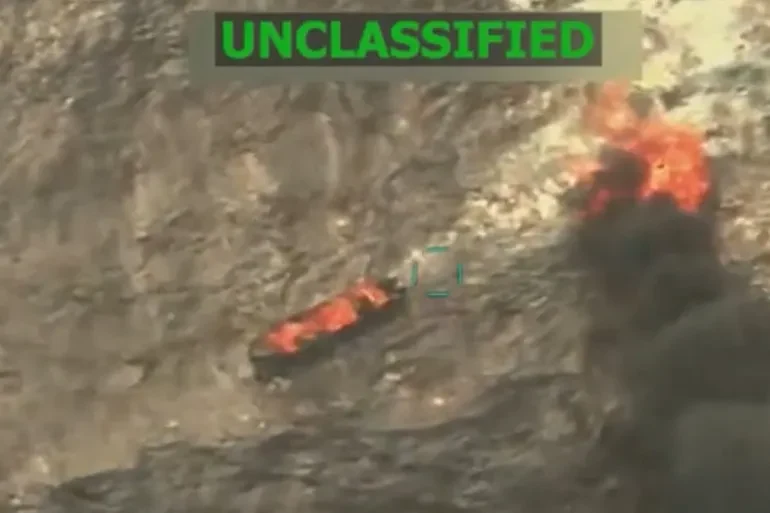
The U.S. Southern Command (SOUTHCOM) released footage showing a small vessel exploding and burning after the strike.
In a statement, the military said the boat was traveling along “known narco-trafficking routes” and that the three men killed were “narco-terrorists.” No U.S. military personnel were harmed.
This latest strike follows another attack just two days earlier — on Friday — in the Pacific Ocean, which also killed three people.
The pace of these killings has been relentless since the campaign began in September 2025, when the Trump administration started deploying military force against boats it claimed were carrying drugs.
A Campaign Without Accountability
What makes these strikes so alarming is not just the death toll, but the near-total absence of accountability or due process.
The Trump administration has repeatedly claimed that every targeted boat was carrying drugs, but the only evidence it has offered the public is grainy military footage of explosions.
No drugs have been publicly recovered. No suspects have been identified by name. No judicial process of any kind has taken place.
Human rights advocates have been sounding the alarm for months, calling these strikes what they plainly appear to be: extrajudicial killings carried out by the U.S. government on the open ocean.
United Nations experts have been equally blunt. Last year, they warned that the attacks “appear to be unlawful killings carried out by order of a Government, without judicial or legal process allowing due process of law.”
They also pointed out that these strikes on international waters violate international maritime law — rules that exist specifically to prevent powerful nations from using deadly force without oversight or restraint.
Real People, Not Just Numbers
Behind the Pentagon’s sterile language — “narco-terrorists,” “engaged in narco-trafficking operations” — are human beings.
These are people who were given no chance to surrender, no opportunity to be heard in court, and no presumption of innocence. They were simply killed.
The administration has argued, without evidence, that each bombing saves thousands of lives from overdose deaths. But there is no clear indication that this campaign has made any meaningful dent in the drug trade.
Drugs continue to flow. The only measurable result so far is a growing body count.
The Bigger Picture
The boat strikes are part of a broader pattern under the Trump administration — one defined by militarized responses to complex problems and a troubling disregard for the rule of law.
The campaign began during rising tensions with Venezuela and has expanded from the Caribbean to the eastern Pacific. It has continued even after U.S. forces abducted Venezuelan President Nicolás Maduro earlier this year.
Meanwhile, the administration’s commitment to fighting the drug trade rings hollow when examined closely. In December, Trump pardoned former Honduran President Juan Orlando Hernández, who was serving a 45-year sentence after being convicted of drug trafficking in a U.S. court.
The message is difficult to miss: accountability for drug trafficking depends not on the evidence, but on political loyalty.
What Comes Next
As the death toll rises and the strikes continue without meaningful oversight, the question facing the American public is a fundamental one: Should our military be authorized to kill people at sea based on suspicion alone, with no transparency and no legal process?
For 150 people and their families, that question has already been answered — with explosions, flames, and silence.