

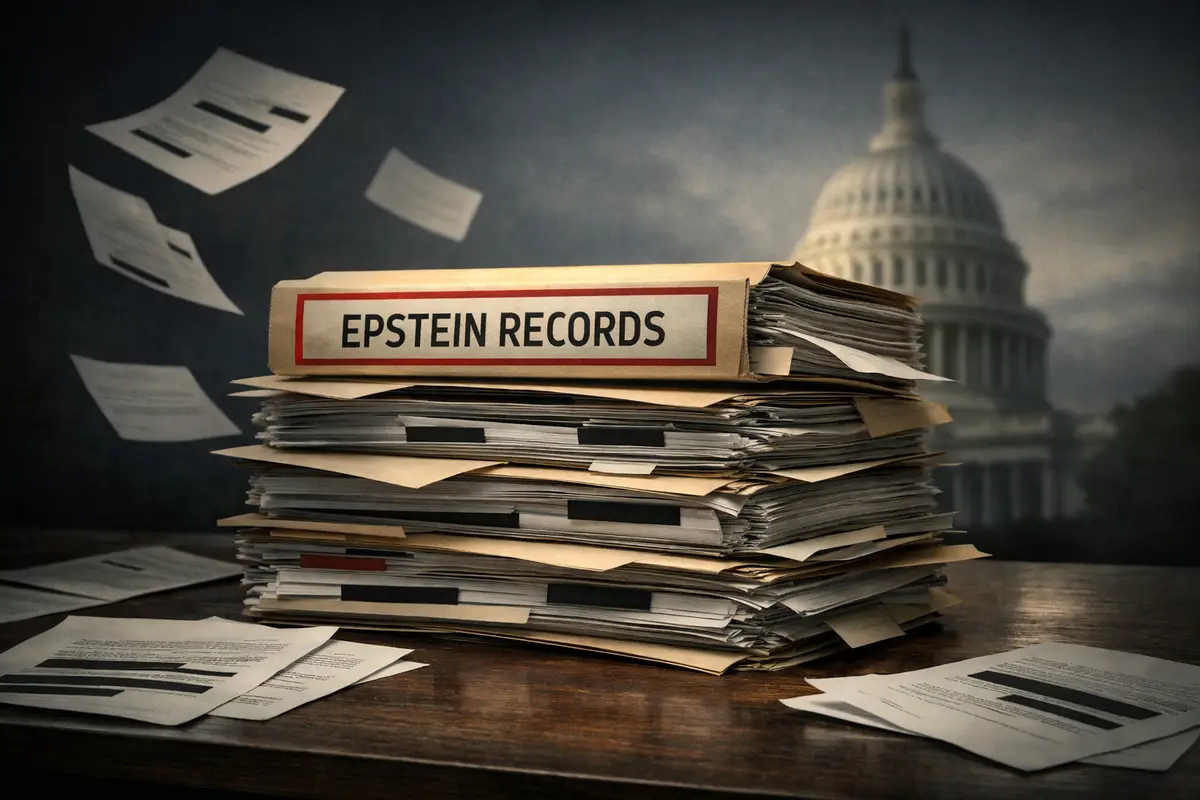
A sweeping new tranche of documents tied to the late financier and sex trafficker Jeffrey Epstein was released Tuesday morning by the U.S. Justice Department, representing one of the most extensive public disclosures of material related to federal investigations into Epstein’s crimes and entourage.
The unprecedented release comes under the Epstein Files Transparency Act, a law passed by Congress and signed by President Donald Trump in November that requires the federal government to make all unclassified Epstein-related files publicly accessible.
The documents — numbering tens of thousands of pages — include investigative records, flight logs, photographs, emails and other materials that have fueled intense public debate. Portions of the files draw fresh attention to Epstein’s network of associations with prominent figures, including former and current leaders, though no individual has been charged with crimes based solely on these disclosures.
Expanded Trump Mentions, Jet Flight Logs and Controversial Card
Among the most politically charged elements in Tuesday’s release are references to Donald Trump. A newly disclosed internal email from a federal prosecutor indicates that Trump flew on Epstein’s private jet at least eight times in the 1990s, a figure that contradicts some of his prior public statements denying such travel.
Some of those flights included Epstein associate Ghislaine Maxwell, who is serving a 20-year sentence for her role in sex trafficking.
The files also feature an image of a handwritten card purportedly sent by Epstein to Larry Nassar, the disgraced former Olympic team doctor serving a lengthy prison sentence for sexual abuse, that references “our president.” The Justice Department has publicly noted that such sensational documents may not be authentic, and that inclusion in the release does not mean the contents are factual.
The DOJ’s own social media statement accompanying the release emphasized that some claims against President Trump are “unfounded and false” and appear to have originated in documents submitted to the FBI around the 2020 election. The agency defended the transparency effort even as it acknowledged the need for careful redactions to protect victims’ identities.
The Redaction Process
Social media users have noted that even with redactions of information in these documents, it wasn’t difficult to learn which names had been hidden. One social media user claimed they were able to copy the redacted text and paste it into another document to reveal the hidden text.
Another user claimed that by viewing a document in Adobe Acrobat, they were able to search for names and have them located in the document even if they were redacted.
Political and Institutional Reaction
The partial release has stirred broad political reactions. Some lawmakers — including Senate Minority Leader Chuck Schumer and Representatives Ro Khanna (D-CA) and Thomas Massie (R-KY) — have criticized the Justice Department for not fully complying with the transparency law’s intent, particularly in light of heavy redactions and the pace of disclosures.
Schumer’s office has signaled possible legal action to compel further release, while Khanna and Massie have accused the DOJ of shielding key material.
Victims advocates and legal experts also have weighed in, saying that while the trove of files may offer new information, the redaction process and contextual gaps make it difficult for survivors and the public to fully assess the scope of Epstein’s activities and those connected to him.
Historical and Public Context
Epstein, who died in a federal jail cell in 2019 while awaiting trial on sex-trafficking charges, maintained relationships with a number of high-profile individuals across politics, business, and society before his conviction.
The Epstein Files Transparency Act, passed with overwhelming bipartisan support, was designed to address longstanding calls from victims and lawmakers for fuller disclosure of government documents relating to the case.
Earlier releases under the law have already included materials dating back decades, such as an FBI complaint from 1996 and photographs featuring Epstein with various well-known figures; none of those pictured have been charged with wrongdoing in connection with Epstein’s crimes.
Looking Ahead
For President Trump, who opposed the file release initially but signed the transparency law amid mounting pressure, the disclosures present a challenging public relations moment as the documents become a subject of political debate in a national election year. The administration has defended the process as compliant with the law while insisting that the materials should be understood within their proper context.
Officials at the Justice Department say additional batches of files will be released in the coming weeks as the redaction and review process continues. Analysts suggest that while headline-grabbing references may dominate headlines, the broader impact of full transparency could reshape public understanding of Epstein’s network and government responses to his criminal conduct.