

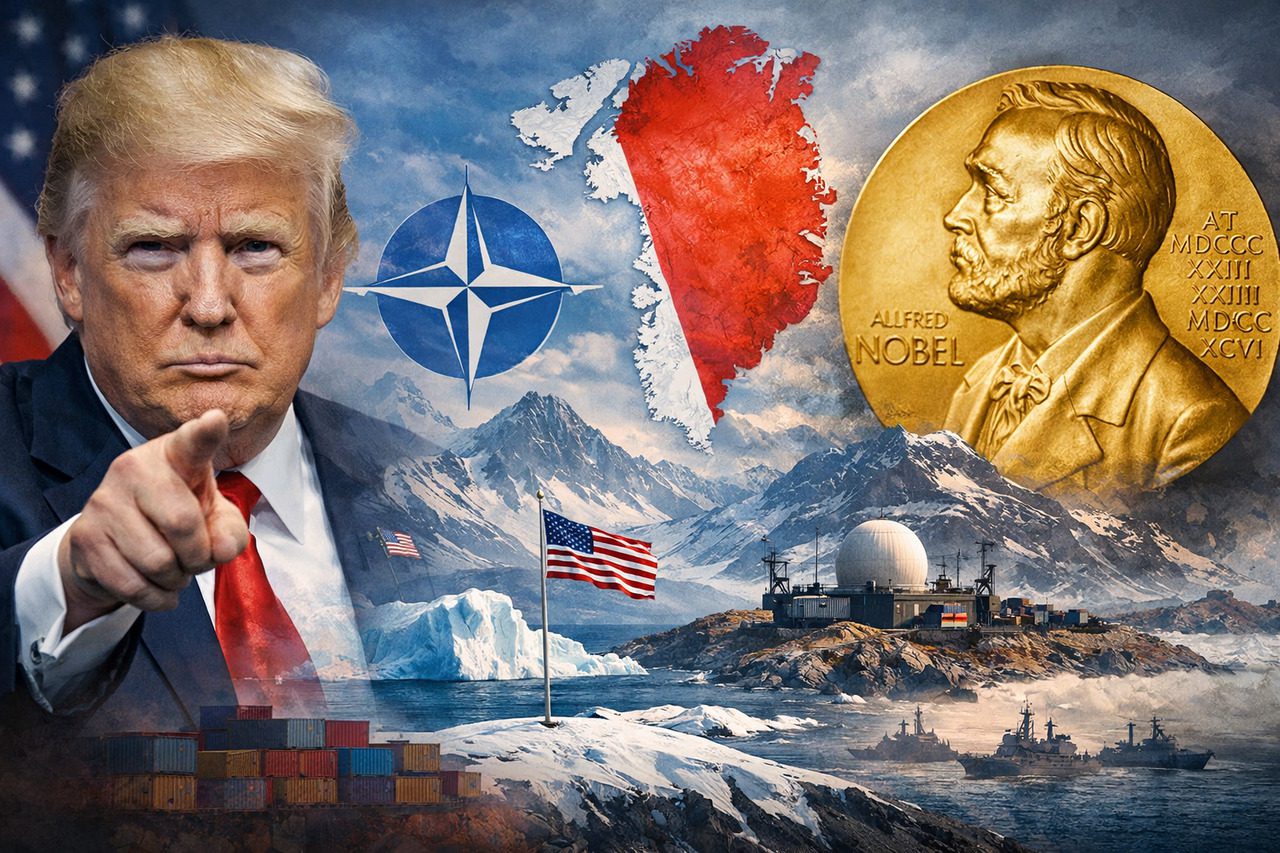
In what EU diplomats are calling an unprecedented and bewildering escalation, President Donald Trump has publicly linked his controversial push for control over Greenland with his failure to win the Nobel Peace Prize — in a letter to Norway’s prime minister that has rattled allies and raised serious questions about American foreign policy priorities.
According to the BBC’s reporting, Trump told Norwegian Prime Minister Jonas Gahr Støre that because Norway did not give him the Nobel Peace Prize — an honor he claims was deserved “for having stopped eight wars PLUS” — he “no longer feels an obligation to think purely of peace,” and can now focus on what he believes is in “the good and proper” interest of the United States.
‘Unhinged’ letter to Norway
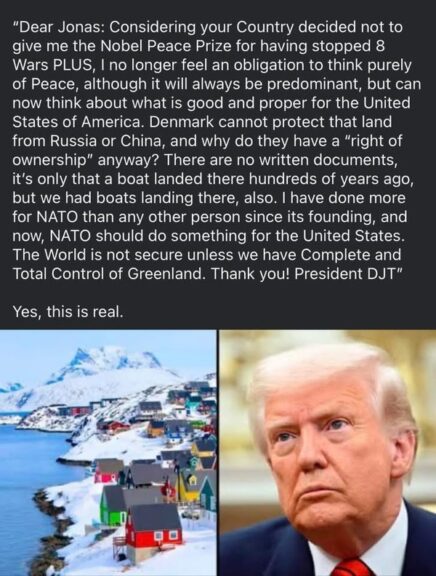
This comment came as part of a broader message that also renewed Trump’s call for “complete and total control of Greenland,” a semiautonomous Danish territory with strategic Arctic importance.
The message, first obtained by PBS NewsHour and confirmed by the Norwegian government, was shared with European diplomats and has been published in full by multiple outlets.
Trump’s connection between the Nobel Peace Prize and his Greenland ambitions is more than rhetorical bluster. In recent weeks, he has intensified pressure on Denmark and several NATO allies, including Norway and other European nations, demanding Greenland be ceded to the U.S. and threatening punitive trade measures if they do not agree.
Over the weekend preceding his message to Støre, Trump announced a 10% tariff on imports from eight NATO allies — Norway, Denmark, Sweden, France, Germany, the Netherlands, Finland, and the United Kingdom — starting February 1, with a plan to raise the levy to 25% by June if control of Greenland is not ceded.
Norway’s prime minister responded to Trump’s message by emphasizing that the Nobel Peace Prize is awarded by an independent committee, not by the Norwegian government. He reiterated the country’s firm support for the Kingdom of Denmark’s sovereignty over Greenland and called for de-escalation.
Reaction in Europe
European reaction to Trump’s tariff threats and his linkage of Greenland to the Nobel Prize has been markedly negative. Officials from several countries have denounced the idea of ceding territory under coercion or economic duress, asserting that tariffs will harm key transatlantic trade relationships and that sovereignty questions must be handled through legal and diplomatic channels, not ultimatums.
The strategic significance of Greenland goes beyond symbolic real estate. The island, sparsely populated but rich in mineral resources and critical for Arctic defense infrastructure, sits in a region where climate change is rapidly opening new shipping routes and drawing interest from global powers such as China and Russia. Trump has argued that U.S. control of Greenland is essential to national security and to monitoring potential missile and naval activities in the Arctic.
But the conflation of a personal grievance — losing out on a prestigious international award — with national policy is what is setting off alarms among foreign policy experts. Typically, Nobel Peace Prize winners are recognized for advancing diplomacy, conflict resolution, or human rights. Trump’s framing — that not receiving the prize liberates him from a commitment to peace — breaks sharply with historical norms and highlights how personal ego has become entangled with geopolitics.
Reaction inside U.S.
Critics inside the United States have also weighed in. Some lawmakers have publicly described the message as “unhinged,” saying it undermines traditional diplomatic channels and risks destabilizing NATO, the alliance that has served as a cornerstone of Western defense for decades.
Analysts warn that pushing allies to the brink with tariffs and threats could backfire, encouraging European nations to strengthen their defense cooperation independent of the U.S. and accelerating a fracturing of long-standing partnerships. They also note that Denmark and other allies have repeatedly made clear there is no appetite to negotiate sovereignty over Greenland under duress.
What this episode reveals is a troubling shift in how U.S. foreign policy decisions are justified and communicated. Rather than grounding strategy in international law, shared interests, or alliance consensus, the president’s public message — anchored in a perceived personal slight — risks transforming global diplomacy into a theater of ego.
For European partners, the stakes extend beyond Greenland. If alliances are subject to personal vendettas and transactional demands rooted in prestige rather than principle, the very foundations of collective security could be weakened. And for Americans watching, the situation raises urgent questions about the role of temperament, credibility, and strategic foresight in the nation’s leadership.
This story continues to evolve. European leaders are expected to meet this week to coordinate responses, and both diplomatic and economic developments could unfold quickly. Stay tuned for updates as this unprecedented saga over Greenland and the Nobel Peace Prize plays out on the world stage.