
Wales has done something no country has ever done before: it passed a law making it illegal for politicians to lie during election campaigns.
The Welsh Parliament — known as the Senedd — approved the legislation with overwhelming support, 50 votes to 1. And while the law won’t take effect until 2030 at the earliest, it raises a question Americans should be asking themselves right now: Why can’t we do the same thing here?
If it’s illegal for a company to lie in a commercial (false advertising), why should politicians, during a campaign where they are basically advertising themselves, be allowed to lie about their “product?” False advertising laws prohibit businesses from making materially misleading, deceptive, or untrue statements about products or services to consumers.
The answer is as frustrating as it is predictable. The First Amendment, as interpreted by the U.S. Supreme Court, essentially gives politicians a constitutional right to lie to voters. And the political class has shown zero interest in changing that.
What Wales Actually Did
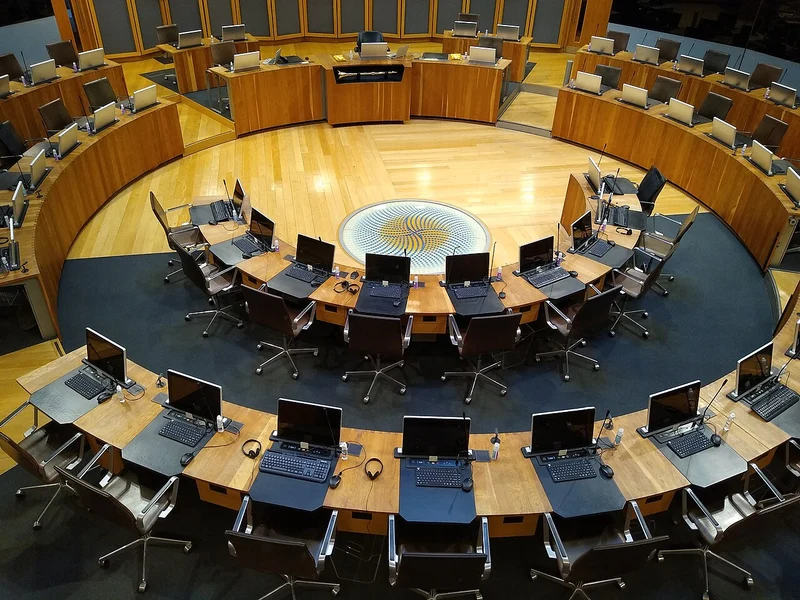
The new Welsh law creates the framework for a criminal offense targeting false or misleading statements of fact made during election campaigns with the intent to influence the outcome. It doesn’t ban politicians from lying in general — it’s narrowly focused on campaign periods.
Candidates who break the rules could face prosecution by police, adjudication by an electoral court, and disqualification from serving in the Senedd.
The bill also establishes a recall system, giving the Welsh public the power to remove politicians who violate conduct standards between elections. And it strengthens the Senedd’s internal code of conduct, which already requires members to “act truthfully” — making it the only legislature in the UK with such a rule on the books.
The effort grew out of the Senedd’s Standards of Conduct Committee, which examined the problem of declining public trust in politics and concluded that existing accountability mechanisms weren’t cutting it.
Giving the government power to criminalize lies could lead to an “endless list of subjects about which false statements are punishable.”
One lawmaker put the core frustration bluntly: lying flourishes in politics because politicians can get away with it.
Campaigners at Compassion in Politics, who spent four years pushing for the legislation, called it a political reset. Polling showed more than two-thirds of Welsh voters supported making political lying a criminal offense. Cross-party backing — from Labour, Plaid Cymru, the Conservatives, and the Liberal Democrats — reflected a rare consensus that dishonesty in elections had become an existential threat to democratic legitimacy.
Do you think a survey of the American public would result in the same kind of cross-party support? Would you like to be able to vote out a Representative between elections? Resist Hate says “YES!” Let us know what you think in the comments.
The Concerns Are Real, But Manageable
Not everyone is celebrating. Critics have raised legitimate worries about how “truth” gets defined, who decides when a statement crosses the line, and whether the law could chill legitimate political debate.
Civil liberties experts have pointed to the European Convention on Human Rights, which protects freedom of expression — including for politicians — and requires that any restrictions be clearly defined and proportionate.
The Senedd’s own standards committee initially stopped short of recommending a criminal offense, warning that the risks and unintended consequences might outweigh the benefits. Some Labour members cautioned against rushing through complex legislation just to score symbolic points.
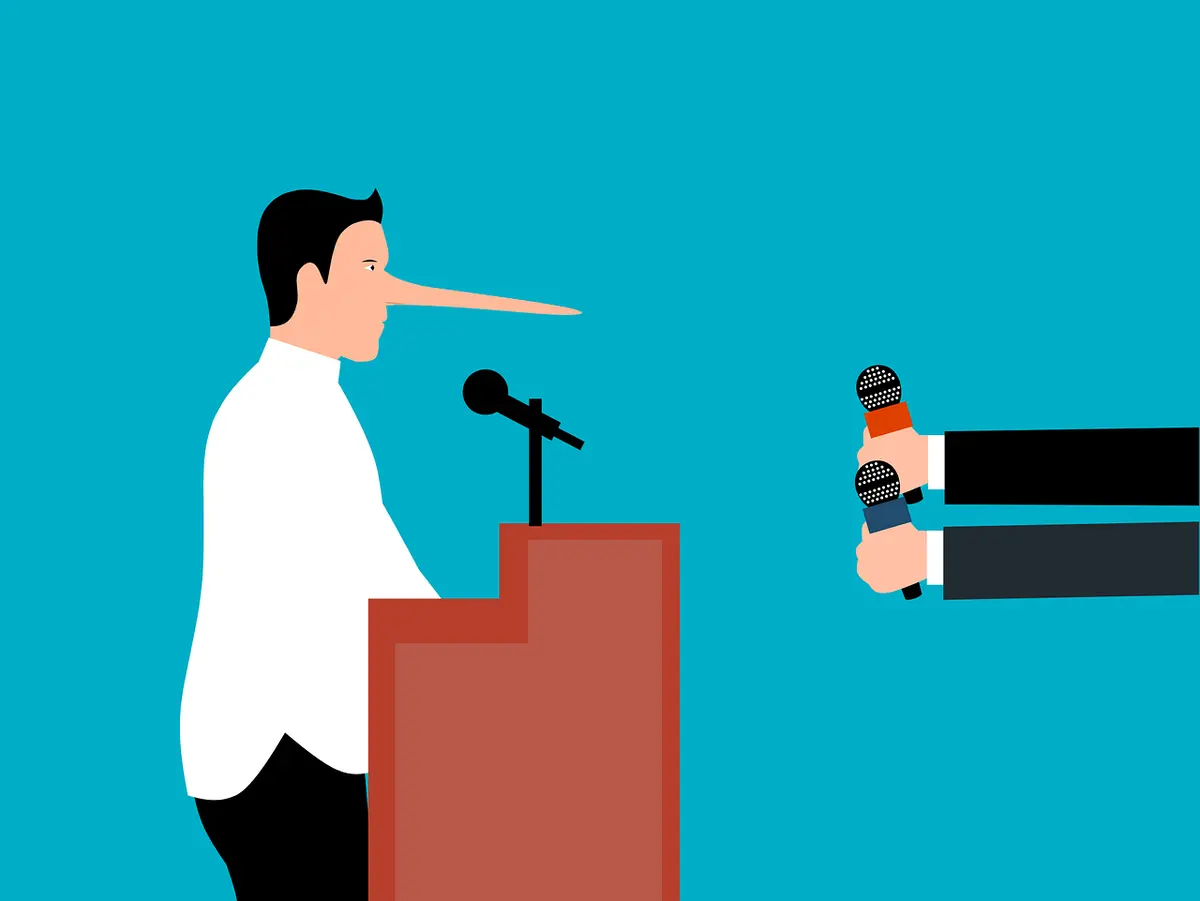
These are valid concerns. Political claims often involve interpretation, projection, and contested data. Drawing the line between a deliberate lie and a good-faith mistake — or a strategic exaggeration — is genuinely difficult.
But the Welsh approach accounts for this.
The law targets deliberately deceptive factual claims, not opinions or predictions.
It applies only during election campaigns, not to everyday parliamentary debate.
And it requires ministers to carefully define the offense through secondary legislation before anyone can be prosecuted.
The goal isn’t to police every stump speech. It’s to create real consequences for the kind of brazen, calculated dishonesty that voters have no realistic way to counter before ballots are cast.
Why This Can’t Happen in the United States
If you’re an American reading this and thinking “we need that here,” you’re not alone. Polling consistently shows large majorities of Americans want laws against lying in politics. A 2021 survey found 72 percent of respondents agreed that political ads misrepresenting the truth should be outlawed.
But under current U.S. constitutional law, it’s essentially impossible.
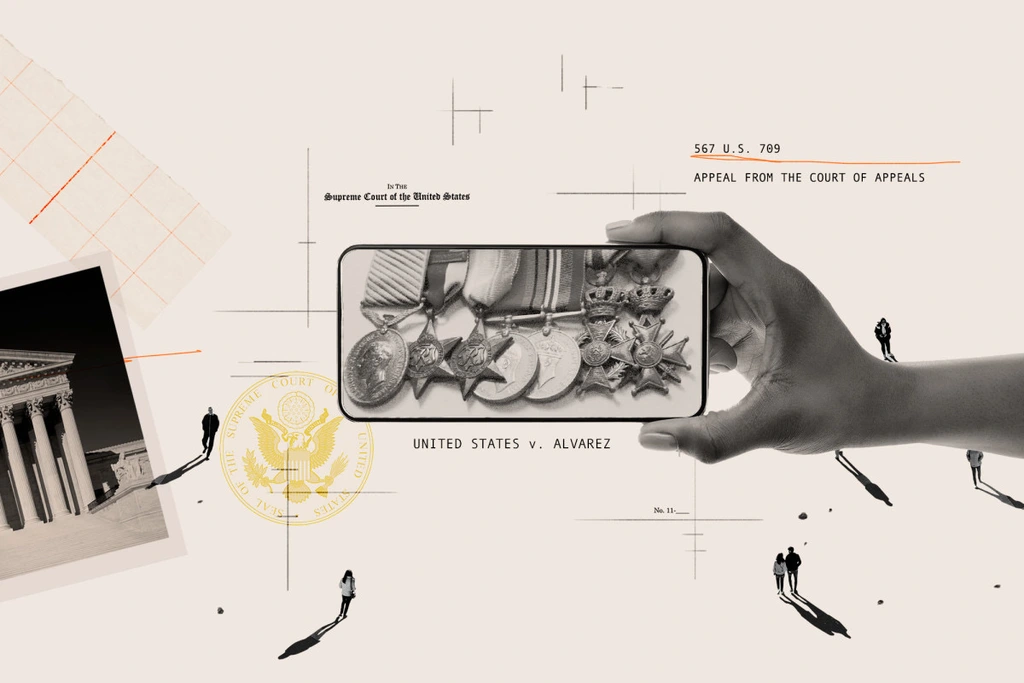
The landmark case is United States v. Alvarez (2012), in which the Supreme Court struck down the Stolen Valor Act — a federal law that made it a crime to falsely claim you’d received military medals.
Xavier Alvarez was a public official who lied about being a decorated Marine. The Court ruled that even his deliberate, verifiable lie was protected by the First Amendment.
Justice Anthony Kennedy, writing for the majority, declared that there is no general exception to the First Amendment for false statements.
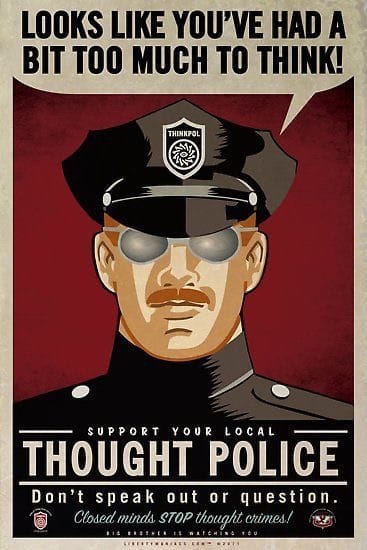
He warned that giving the government power to criminalize lies could lead to an “endless list of subjects about which false statements are punishable” — and cited George Orwell’s 1984 to argue that America’s constitutional tradition stands against creating a Ministry of Truth.
The ruling didn’t just protect Alvarez. It sent a clear signal to every state legislature considering laws against false campaign speech. Several states — including Ohio, Minnesota, and others — had laws on the books that banned knowingly false statements in political campaigns.
After Alvarez, those laws started falling like dominoes.
Ohio’s false campaign speech statute was struck down in 2014 after the Susan B. Anthony List v. Driehaus litigation. A federal judge ruled the law was unconstitutional because it couldn’t survive strict scrutiny — the highest level of judicial review, which requires the government to prove a law is narrowly tailored to serve a compelling interest.
The Sixth Circuit Court of Appeals upheld that ruling in 2016. Minnesota’s ban on false campaign speech was similarly struck down by the Eighth Circuit.
As of now, roughly 16 states still have some form of statute targeting false statements in elections, but most are narrowly drawn and rarely enforced. Legal scholars widely agree that any broad prohibition on political lying would be struck down under current First Amendment doctrine.
The First Amendment Protects Lies to Protect Democracy — But Is That Still Working?
The philosophical foundation of First Amendment protection for political lies is the “counterspeech” doctrine: the idea that the best remedy for bad speech is more speech, not government regulation.
If a politician lies, voters, journalists, and opponents can expose the lie. The marketplace of ideas will sort it out.
That theory made more sense when local newspapers fact-checked campaign claims and voters got their information from a handful of shared sources. It makes far less sense in an era of algorithmic echo chambers, AI-generated disinformation, and media ecosystems designed to amplify outrage over accuracy.
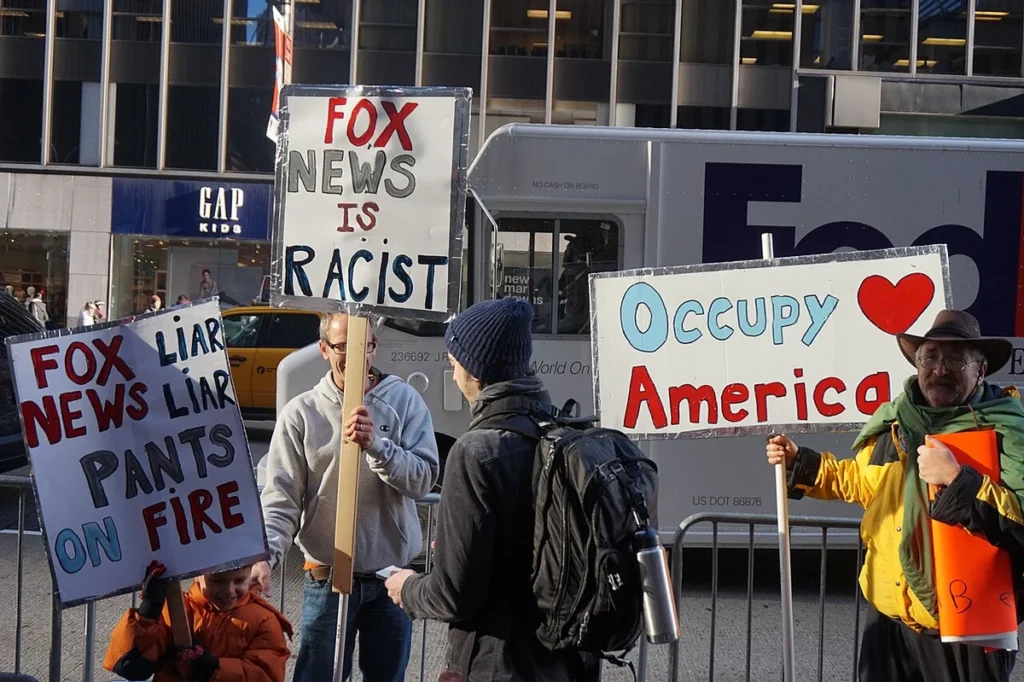
Constitutional law scholars have begun questioning whether the Alvarez framework is adequate for a democracy under siege from information warfare.
As one legal expert put it, Justice Kennedy’s opinion relied on a flawed understanding of the dangers facing democracy — prioritizing the threat of government censorship over the threat of unchecked political deception.
The George Santos case brought this tension into sharp relief. Santos fabricated virtually his entire biography — his education, his work history, his charity involvement — to win a seat in Congress.
Voters had no way to verify his claims before the election, and no legal mechanism existed to hold him accountable for the deception that got him elected. He was eventually expelled, but only after nearly a year of serving under false pretenses.
What Would It Take?
A Welsh-style law in the United States would require one of two things: either a constitutional amendment — which requires two-thirds of Congress and three-fourths of state legislatures — or a fundamental shift in how the Supreme Court interprets the First Amendment.
Neither is remotely likely in the current political environment.
Some scholars have proposed narrower approaches that might survive judicial review. Laws requiring disclosure of AI-generated campaign content, for example, have gained traction in multiple states, though even those face legal challenges.
Twenty-eight states have enacted laws regulating deepfakes in political communications, but courts have blocked some of them on First Amendment grounds — including a California prohibition law struck down in 2025.
Others have suggested treating elected officials as public employees whose speech rights are diminished in their official capacity, similar to how government workers can face discipline for lying on the job.
But this approach has gained little political support and would face its own constitutional challenges.
The uncomfortable reality is that the United States has constructed a legal system that makes it nearly impossible to punish politicians for lying to get elected — and one of its two major parties has turned that loophole into a governing strategy.
Wales Is Showing What’s Possible
Wales isn’t a perfect comparison. It’s a devolved legislature within the United Kingdom, operating under a parliamentary system with a different constitutional framework. It doesn’t have a First Amendment.
It operates under the European Convention on Human Rights, which protects free expression but allows proportionate restrictions in ways American law does not.


But what Wales has demonstrated is that a democracy can choose to treat voter deception as a serious enough threat to create legal consequences — without destroying free speech in the process. It’s proof of concept. It’s a model other democracies can study, adapt, and build on.
Americans are left with a system that protects the right of politicians to lie to their faces, then tells them the solution is to simply find better information. In an age of industrialized disinformation, that’s not a defense of liberty. It’s an abdication of democratic responsibility.
Wales looked at its broken trust between voters and politicians and decided to do something about it. The United States looked at the same problem and decided the Constitution won’t allow it.
The question worth asking is whether that’s really true — or whether it’s just what the people who benefit from the lying want everyone to believe.