

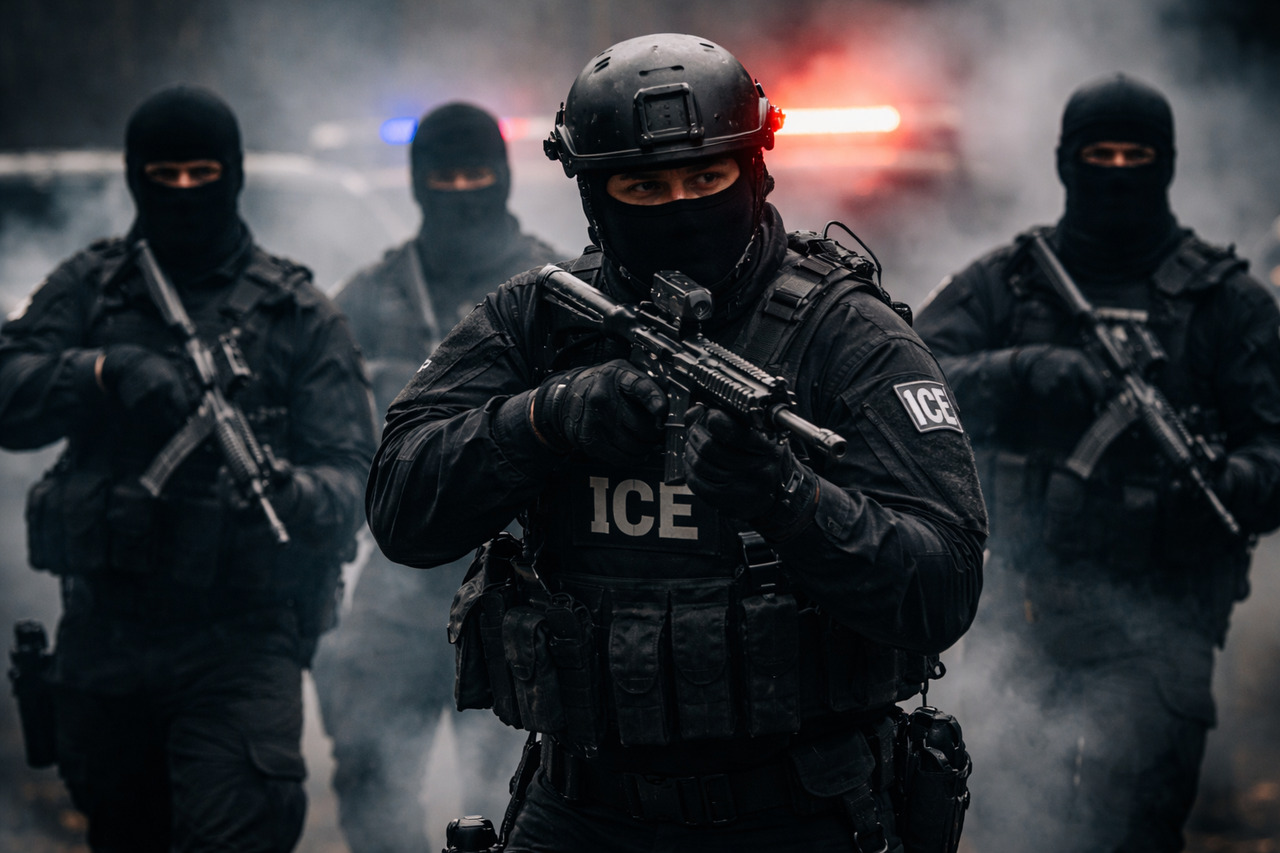
After a brief history of the use of violence to control society in fascist governments, we’ll examine the current situation in the U.S.—gratuitous violence and multiple shootings by a masked militia operating with impunity.
A militarized secret police force, accountable to no one but the U.S. President, with the largest budget of any law enforcement agency in the country (larger than the military budgets of other countries), is traveling from state to state to wreak havoc and chaos. They leave behind a trail of broken families, traumatized people, and in some cases, death.
Fascist regimes view violence not as a tragic failure of politics but as a legitimate tool of the state and the nation. In classic fascism—from Mussolini’s Italy to Hitler’s Germany—violence was woven into the ideology itself.
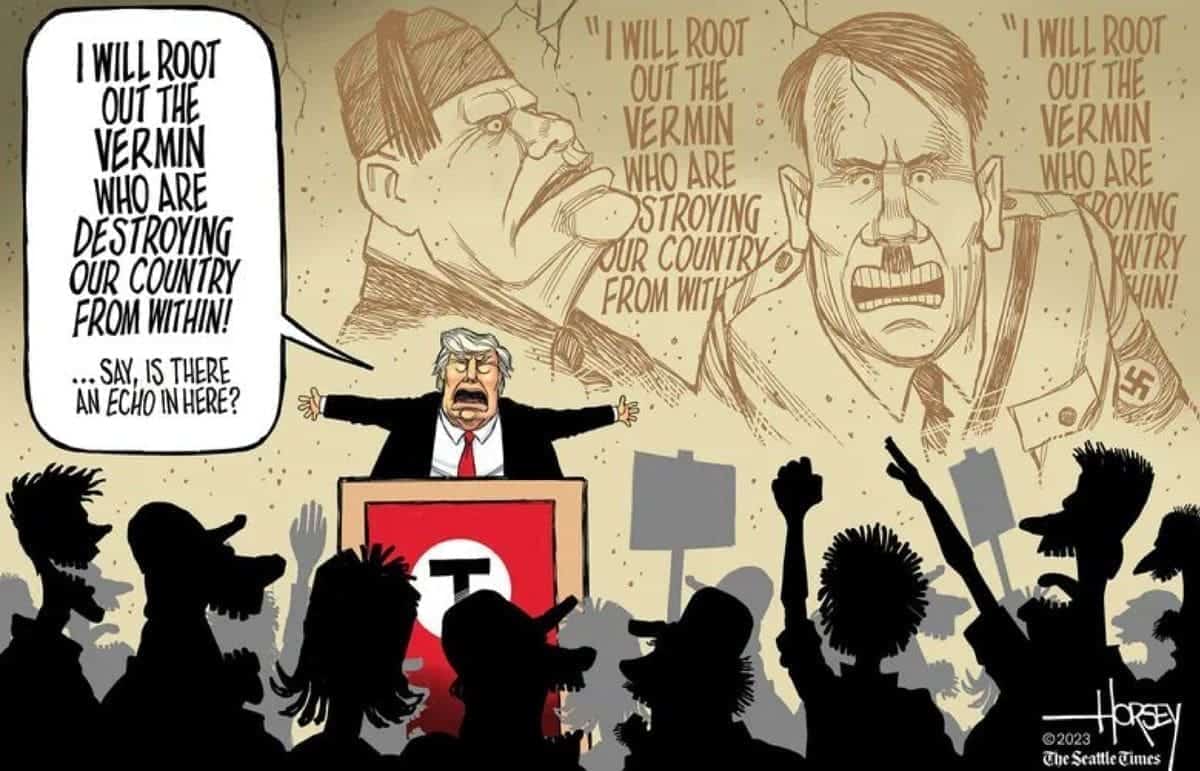
It was celebrated as energy, a means of purging weakness, and a method to forge unity through confrontation. Fascist leaders glorified mythic battles, marches, and “cleansing” force as necessary to achieve national rebirth (Make America great again).
This is not an accidental feature. Fascism rejects pluralism, nuance, and compromise. It treats opponents not as citizens with rights but as obstacles to the nation’s will.
In such a worldview, violence isn’t a last resort—it’s a normative mechanism for solving social conflicts because negotiation is seen as weakness (Some of our fellow Americans and politicians on the Right are celebrating the shooting in Minnesota because the victim was a “radical Leftist,” or according to Laura Loomer, a “communist”).
Dissent becomes disloyalty, and disagreement becomes a pretext for crackdown and punishment. Does any of this sound familiar? Hint: Pluralism denotes a diversity of views or ideologies, rather than a single approach or method.
Historians point to the Blackshirts in Italy and the SA (Sturmabteilung) in Germany as early examples of party-aligned militias that used intimidation, beatings, and murder to stifle dissent and enforce political uniformity. In these states, violence was ritualized, public, and tied to the state’s legitimacy. It wasn’t rogue behavior—it was an instrument of power.
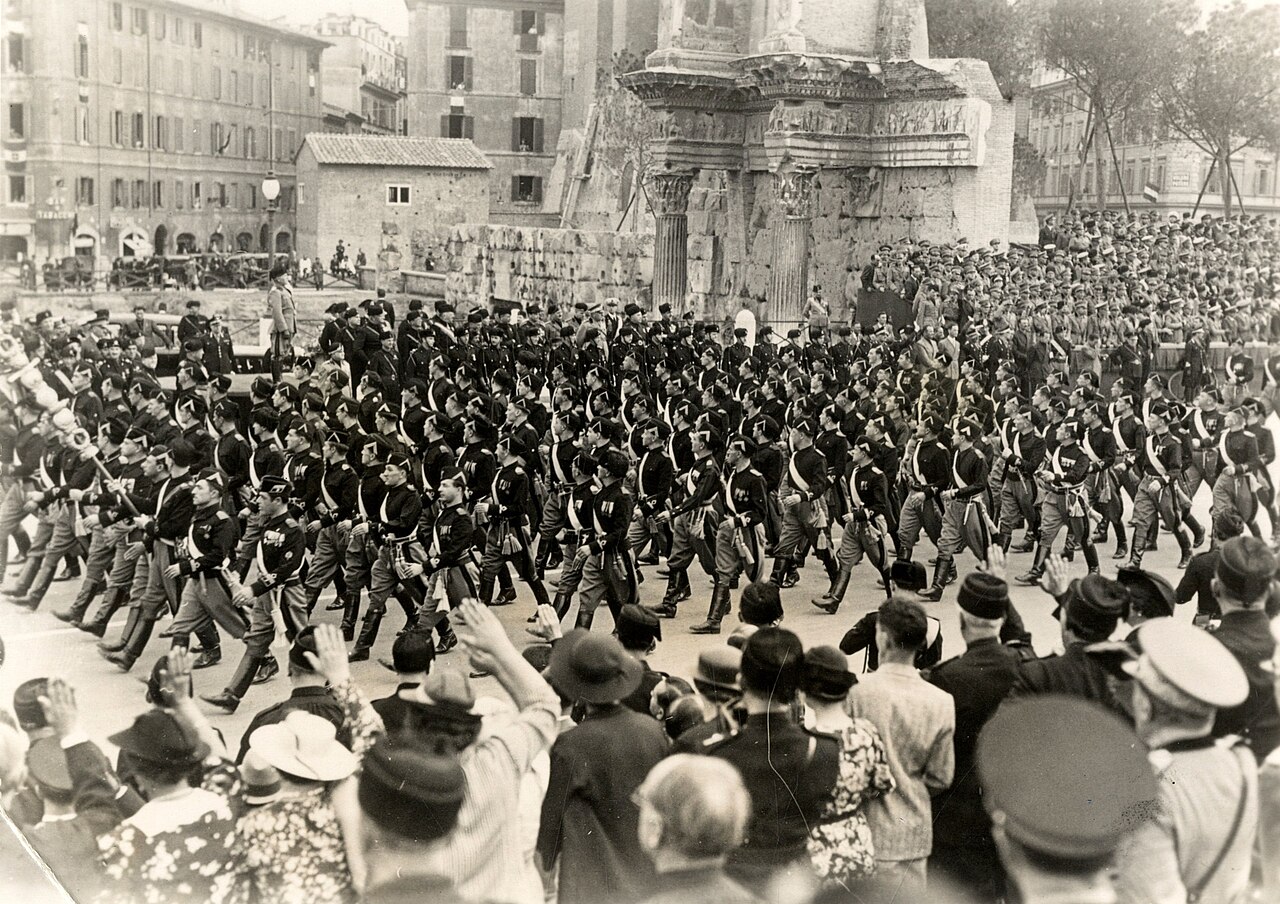
How Fascist Governments Use Violence to Control
Once a regime adopts that mindset, state violence becomes systematic. It isn’t random. It is targeted at specific groups defined as enemies, whether ethnic minorities, political opponents, migrants, intellectuals, or journalists.
Violence becomes policy enforcement, a way of reshaping society.
In Nazi Germany, “protective custody” soon became rounding up Jews, Roma, political opponents, gays, and others for concentration camps. The SS and Gestapo didn’t act because someone posed a serious threat on a given day—they acted to terrify, silence, and remove entire segments of society viewed as incompatible with the regime.
The message was explicit: Obedience or elimination.
Note: An Executive Order President Trump signed describes how the government is restricting entry of foreign nationals whose beliefs are “incompatible” with our culture. Based on the countries whose citizens are now restricted from coming to live in the United States, their use of the term “our culture” means “White.”
Executive-order-trumpSimilarly in Franco’s Spain and Salazar’s Portugal, violence was deployed against unions, leftists, and regional dissidents to maintain order. It wasn’t chaotic frenzy. It was organized, bureaucratic, and politically rationalized. Law became a wrapper for brutality.
This historic pattern shows that violence in fascist regimes serves three main purposes:
- Intimidation of Opponents: Brutality signals that resistance will be costly and futile.
- Spectacle of Power: Public force demonstrates the state’s supremacy over society.
- Normalization of Coercion: As violence becomes routine, fear suppresses civic engagement and dissent.
These mechanisms are not just history. They offer a way of viewing the present.
What We’re Seeing Now in the United States
In January 2026, the United States witnessed a new flashpoint. A U.S. Immigration and Customs Enforcement (ICE) agent shot and killed a 37-year-old woman, Renee Nicole Good, in Minneapolis. Eyewitnesses and video evidence suggest that Good was driving away rather than posing a clear, violent threat when she was fatally shot during a federal immigration operation.
Local officials and protesters dispute the federal narrative, arguing the use of lethal force was unjustified. National protests have erupted, and tens of thousands have marched under the banner “ICE Out For Good,” decrying what they see as excessive government violence and lack of accountability.
This incident is not isolated. Reports indicate multiple recent encounters in which federal immigration agents or related officers have fired weapons at civilians or engaged in aggressive assaults, raising questions about enforcement protocols.
Their aggression is not levied only against immigrants. Good was a U.S. citizen. A citizen and veteran was held for 3 days in solitary confinement in an ICE detention center—without clothes—before he was released with no charges.
George Retes, U.S. citizen and Iraq Army combat veteran, on his experience with ICE

Several agencies are tracking shooting incidents. According to The Guardian, U.S. immigration agents have been linked to 16 shootings since Trump took office this term.
Critics point out that the growing use of masked federal agents in communities, often without clear local oversight or transparency, echoes the tactics of states where force is normalized to achieve political ends.
When agents operate with anonymity, shielded from public scrutiny, and when investigations are controlled at the federal level—potentially limiting state access to evidence—the risk to civil liberties grows. In the Minneapolis case, federal authorities took control of the investigation and restricted state investigators’ access to evidence, heightening mistrust, and the belief that they will cover fir the agent who shot Good.
Another danger of using masked agents has already occurred: Men wearing military gear and masks have ordered women into unmarked vehicles, driven off, and sexually assaulted them. I mentioned early on that having federal agents in plain clothes or military gear without badges, hiding their faces, refusing to identify the agency they are with, and driving unmarked vehicles, makes it easy for impostors to abduct women, in broad daylight with witnesses around, and no one would intervene.
One of the first videos documenting ICE activity shared online was filmed by a witness of a woman who was being arrested by masked men and shoved into an unmarked van. The commentary conveyed frantic concern: “Is she being kidnapped? This looks like a kidnapping! How do we know?”
From the perspective of democratic norms, striking civilians with lethal force in enforcement operations—especially when accountability mechanisms are weak or nonexistent—undermines the rule of law.
Violence should be tightly regulated and transparently justified in democracies because public consent and civil rights are foundational. Excessive force, especially without independent investigation and accountability, destabilizes that foundation.
We are currently at a point of profound distrust in government officials and federal law enforcement agencies. Immigration and Customs Enforcement (ICE), Customs and Border Patrol (CBP), and the Federal Bureau of Investigations (FBI)—led by Kash Patel, are all suffering reputational damage.
The Danger of Normalizing Force
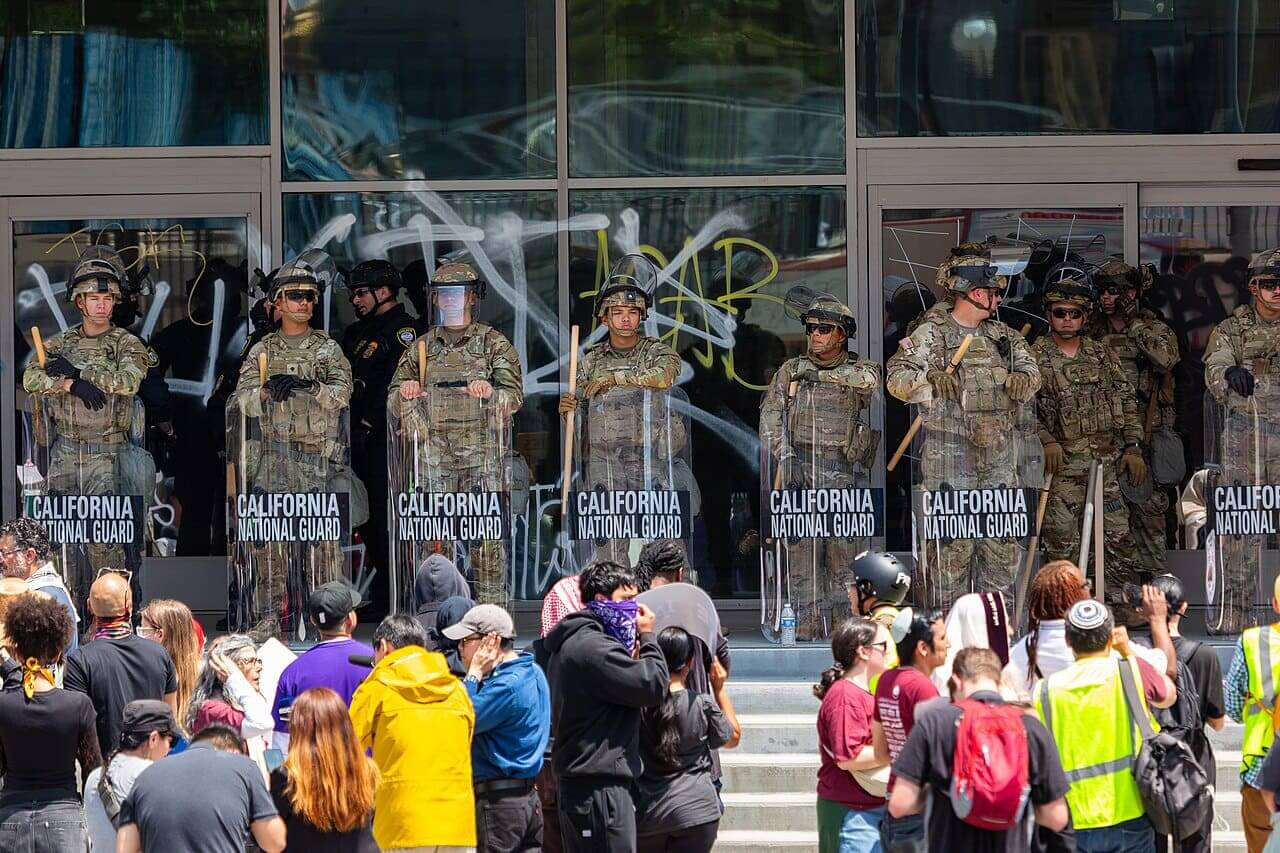
When state violence becomes commonplace and states sidestep local oversight, people begin to fear their government more than they trust it. (This is a dangerous tipping point for democracy. When the government of the people, for the people, and by the people, transitions from a purpose of providing for and helping citizens to purposefully harming them, democracy disintegrates. The President is now a fascist dictator, not a leader).
That’s how societies slip from democratic engagement into regimes where dissent is dangerous. Modern U.S. history has seen this tension before—debates over police shootings, militarized responses to protests, and National Guard deployments in American cities all reveal friction over how force is used and controlled.
What distinguishes a healthy democracy from an authoritarian one is that force is meant to protect rights, not silence dissent. The public airing of grievances, transparent investigations, and the ability of courts to check executive power are the safeguards.
We have watched the lower courts “hold the line” and do their part to be a check on the current administration. We have also watched Congress, big tech billionaires, law firms, media companies, and the Supreme Court join or bow down to a fascist regime.
The current moment in the United States—sparked by federal officers’ shootings and masked operations in local communities—crystallizes a broader question: will violence be normalized as a tool of governance, or will the public and institutions insist that force remain accountable and in service of justice?
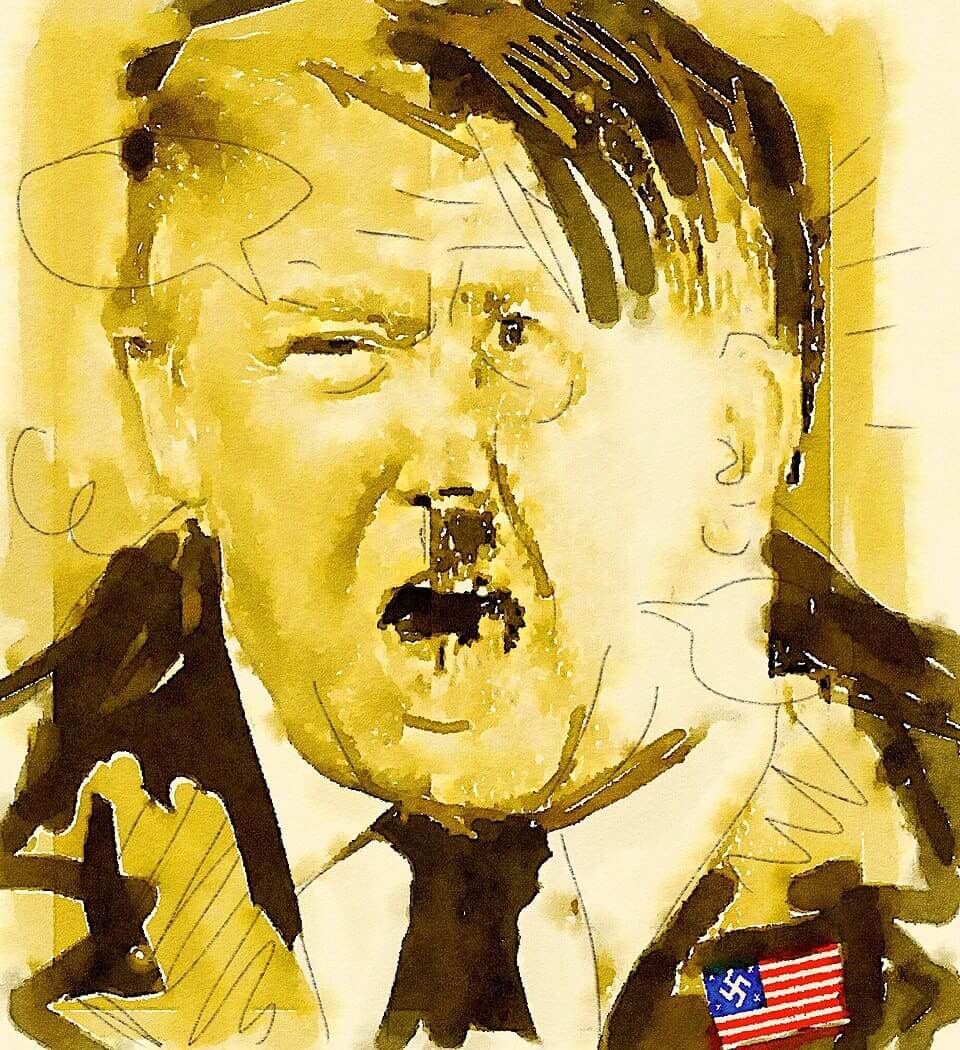
That question matters not just for immigrants and activists but for every citizen who cherishes constitutional rights.
History shows that once state violence becomes routine and unaccountable, it corrodes freedom. The story from Minneapolis is not just a news event. It is a test of whether or not a democratic society can restrain its coercive power and uphold the principles it claims to protect.
The Trump administration does not appear to be interested in restraining any of the violence in this country. In fact, the rhetoric and Truth Social posts from the President provoke, stoke, and encourage violence. He has made it very clear that he is only governing part of the country. He sees the rest of us as the “enemies from within.”
What do we do? Where do we go from here?
Has anyone else experienced the sinking realization that ‘no one is coming to save us?’ I’m generally positive and optimistic, but in the spirit of Resist Hate’s promise of “real talk” and “authentic commentary,” I’ll admit it: I’m starting to feel a little scared of what’s coming. Maybe because it seems like everyone else is just living their lives as if everything is normal?
I fear some people don’t comprehend just how close we are to losing democracy and what that means for the country.
Leave your thoughts in the comments below. Maybe we can drum up a little optimism?