
Well, look at the calendar. It’s Friday, December 19, 2025, and somewhere deep in a government office, a Justice Department official—is it Todd Blanche?—is probably polishing a towering stack of legal redactions with the fervor of a kid coloring a picture. The Epstein files release, we are told, is happening right on time — if you define “on time” the way Washington does.
That’s right: another monumental deadline in United States history has almost been met, in that delightful half-hearted way that makes bureaucratic promise-keeping look like an interpretive dance rather than a commitment. Read all about it here.
The Epstein Files Release and the Fine Art of Missing a Deadline
The Epstein Files Transparency Act—which, in a moment of genuine bipartisan spirit, Congress threw together and the President signed into law—sets a deadline for the Department of Justice to release all unclassified records about convicted sex trafficker Jeffrey Epstein. Simple premise, right? Release the stuff. Make it public. Let the sun shine in. You know: transparency, accountability, all that jazz.
Except, like most good things in American governance, it turns out to be more of a “transparency guided tour” where you get to see only what the driver thinks you should see.

Because on the very deadline day, Deputy Attorney General Todd Blanche told the world that yes, the DOJ will put out “several hundred thousand” documents, but no, they won’t actually put out all the documents. Not today. Not tomorrow. Maybe sometime later in the next couple of weeks. Possibly after Christmas. Or a long winter nap.
The Epstein Files Release is Happening in Slow Motion
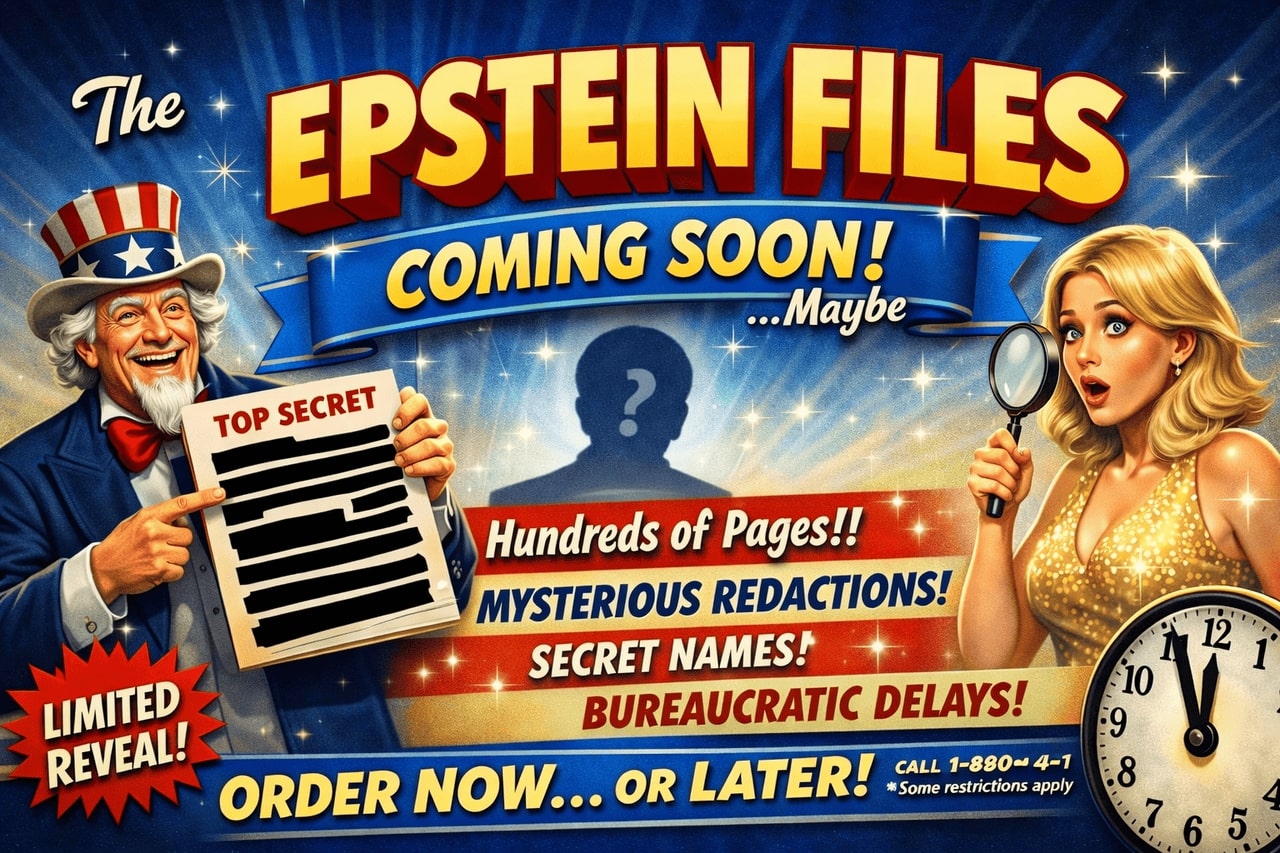
The administration has weaponized redaction like a toddler grips a crayon—furious, defensive, and mostly coloring everything black. Blanche explained they need extra time to ensure that no victim’s identity gets exposed. Which absolutely makes sense: protecting people is good.
But somehow that conscientious motive now seems to coincide with a version of “transparency” that looks like Swiss cheese… if you substituted every piece of cheese for an opaque government memo.
Didn’t they just have a 30-day advanced notice to do all this? Why didn’t they do it while thousands of FBI agents were redacting Trump’s name?

So here’s the deal, boiled down to its essence: the law says all of the files must be public within 30 days of enactment. The DOJ technically complied with part of that by announcing and partially delivering this monstrous digital cache. They also have promised more documents in coming weeks.
But they didn’t meet the deadline that Congress wrote into law. Politicians from both sides are screaming into the void at each other about who’s breaking the law first; Democrats are talking legal consequences, Republicans are worried about… whatever Republicans are worried about these days, and the president’s supporters are alternately shrugging and double-downing on secrecy.
If you were expecting a crisp moment of truth where dusty, incriminating evidence flies into the public domain like a dramatic final puzzle piece, you’re probably disappointed. Instead, we got a partial batch Epstein files release with a dash of congressional theatrics and a sprinkle of inter-branch finger-wagging.
You could describe it as a slow drizzle of disclosures filtered through the sieve of political caution.
Of course, headlines will now forever read like that late-night infomercial where the big reveal is always “coming soon,” just after this short message. And in news cycles already hyper-optimized for suspense and cliffhangers, this one is tailor-made: a blockbuster tease for readers who want real insight into Epstein’s networks, and a convenient “arrange your own interpretations here” placeholder for everyone else.
Meanwhile, Americans following this saga might feel like they’re watching a TV show where the season finale just turned into a two-season arc because someone lost the script.
But high drama aside, there’s one real takeaway: deadlines are windows of opportunity, not actual gates that close—especially when they involve government paperwork and potentially explosive information.
So yes, go ahead and read the Politico story. Because today isn’t some grand conclusion. It’s a chapter break in the ongoing novella of American transparency laws—where the hero rushes to meet the ticking clock, kind of misses it, and then winks at us while promising more next week.
And if you squint just right, you might even spot a moral somewhere in there about how not to do deadlines.