

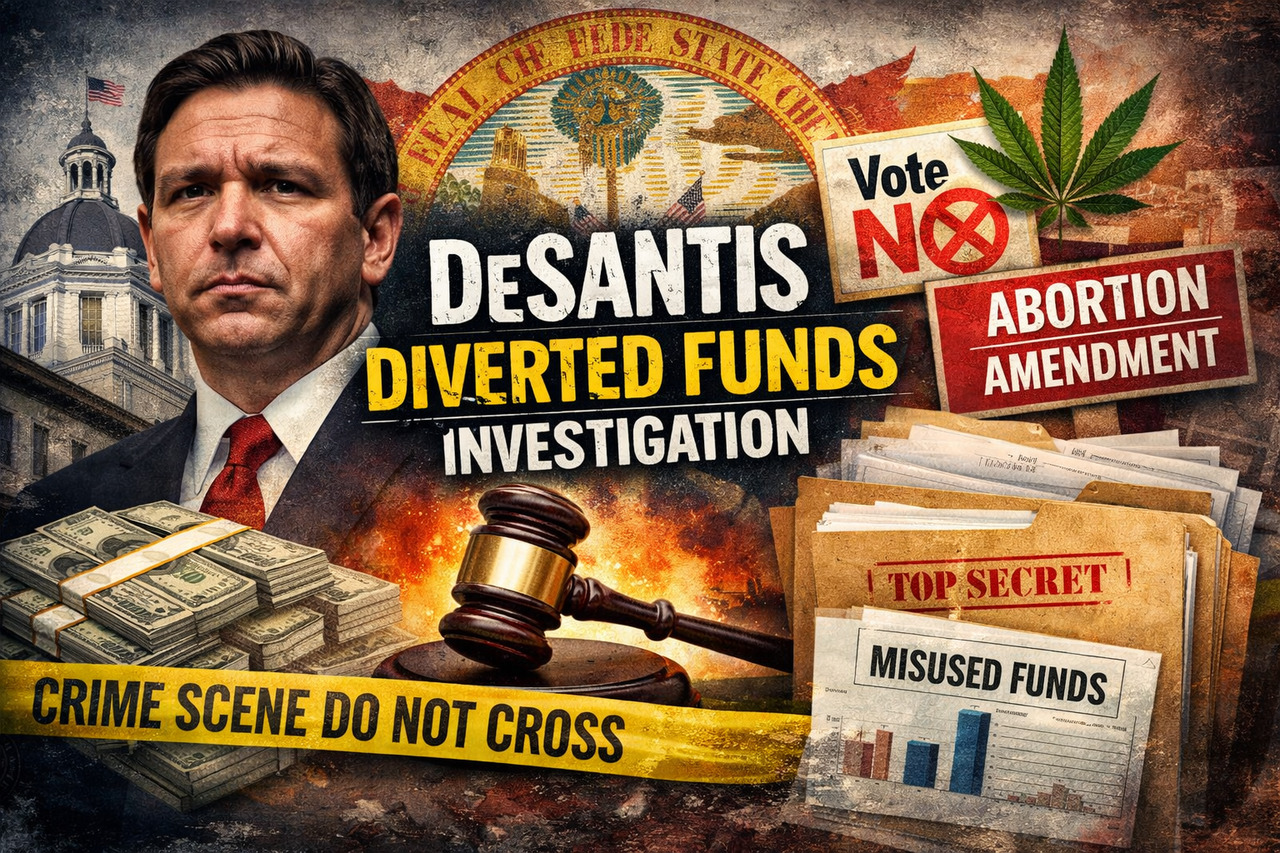
An explosive new investigation by the Miami Herald and Tampa Bay Times reveals that the DeSantis diverted funds investigation has uncovered more than $35 million in Florida taxpayer dollars redirected from child welfare and medical programs to support political campaigning against two major 2024 ballot measures.
The reporting raises urgent questions about public trust, legal boundaries and electoral influence as Floridians prepare for another high-stakes election cycle. Against the backdrop of rising costs for families, this financial pivot has reignited fierce debate across the state over how public resources should be used.
What the DeSantis Diverted Funds Investigation Found
According to the joint investigation, the DeSantis administration strategically repurposed at least $36.2 million in taxpayer funds originally allocated for healthcare, child welfare and opioid recovery programs. Rather than serving vulnerable Floridians, these funds were used to pay political consultants, lawyers and large media buys aimed at defeating two ballot initiatives: one to legalize recreational marijuana (Amendment 3) and another to expand abortion rights (Amendment 4).
Importantly, most of the money—about 79% of the total—came from healthcare-related accounts, including money earmarked to support opioid-affected communities. Investigators were able to trace hundreds of transactions through multiple state agencies to uncover how these public dollars flowed through the system.
It’s a complex web of transfers that culminated in a coordinated advertising campaign across TV, radio and social media. The ads featured exaggerated claims about marijuana and framed voter decisions in ways that critics argue were meant to influence election outcomes. While state officials insist the messaging was informational, opponents call it political advocacy in disguise.
The Hope Florida Controversy
One particularly striking strand of the DeSantis diverted funds investigation centers on the Hope Florida Foundation, a nonprofit established by First Lady Casey DeSantis. A reported $10 million from a Medicaid settlement with major healthcare contractor Centene was directed to the foundation shortly before ballots were mailed to voters. Those funds then made their way through two nonprofit groups with political ties before ending up with a political action committee campaigning against the marijuana amendment.
This portion of the investigation has already triggered a criminal investigation, focused on potential misuse of Medicaid settlement money and possible violations of state law. James Uthmeier, former chief of staff to the governor and now Florida Attorney General, has been a central figure in the controversy, with investigators probing whether transfers constituted improper financial manipulation.
Broader Legal and Ethical Implications
Under Florida law, it’s a misdemeanor for state officials to use public positions or funds to influence elections. Critics say that the timing and content of the ads, combined with the sources of funding, clearly crossed legal boundaries. Observers have described the actions as undermining voter trust and diluting resources intended for children and healthcare programs.
Despite this, officials involved in the spending have defended the activities as legitimate public service communication. They maintain that the ads were meant to educate voters on complex policy issues rather than explicitly advocate for specific ballot outcomes. This defense, however, has done little to quiet public outcry.
Political Context: Tight Ballot Outcomes
In the 2024 election, both Amendments 3 and 4 failed to reach the 60% supermajority required for passage, despite receiving majorities of votes. Amendment 3, which would have legalized recreational cannabis for adults, captured close to 57% support—just shy of the threshold. Similarly, Amendment 4, aimed at expanding abortion protections, received strong backing but also fell short.
Opponents argue that the scale of government-funded messaging likely influenced voter perceptions in the closing days of the election. Supporters of the governor, in contrast, contend that such messaging was within the scope of informing civic engagement. The DeSantis diverted funds investigation has, therefore, become a flashpoint in the broader debate about what constitutes permissible government communication during election cycles.
What Comes Next
As Florida prepares for more contested elections—including the 2026 midterms and state legislative battles—the fallout from this funding controversy is likely to shape political and legal landscapes. State lawmakers have already moved to enact stricter rules to prevent similar spending in the future, and cannabis advocates are organizing for another ballot initiative.
Meanwhile, the criminal investigation into the Hope Florida matter and related fund transfers continues. Its outcome could have significant implications not just for state politics but for broader discussions about transparency, accountability, and the ethical use of public funds.